

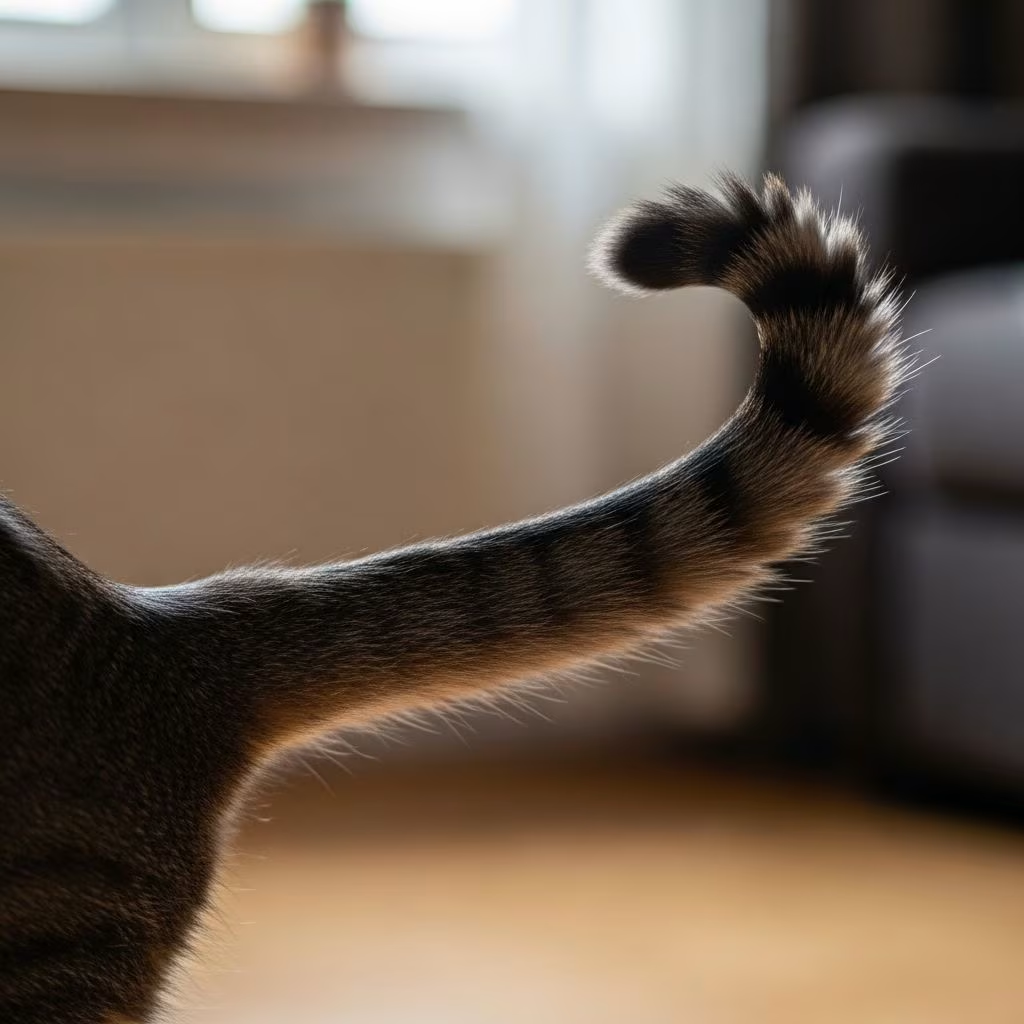
The tail of a cat serves as a dynamic communicator, revealing a spectrum of feelings through its positions and motions. Unlike dogs, where tail wagging often signals unbridled joy, cats employ a nuanced vocabulary of tail gestures to express confidence, irritation, excitement, or fear. By observing these movements closely, cat owners can enhance their understanding and responsiveness to their pet’s needs.
The Anatomy Behind the Messages
A cat’s tail consists of approximately 20-23 flexible vertebrae, allowing for a wide range of expressions. This appendage acts as a balance aid during leaps and a key element in non-verbal communication. Research indicates that tail positions often combine with ear and body postures to convey precise messages in social interactions. For instance, symmetrical ear movements paired with tail signals can predict positive or negative outcomes in cat-to-cat encounters.
Understanding this anatomy helps demystify why a simple wag isn’t always playful. Veterinary behaviorists note that physiological arousal, whether positive or negative, can trigger sweeping tail motions.
Upright Tails: Signals of Confidence and Greeting
When a cat holds its tail straight up, it typically broadcasts happiness and self-assurance. This vertical posture mimics how kittens greet their mother, signaling sociability and openness to interaction. Approach with an upright tail means your cat is inviting pets or playtime.
A variation is the question mark tail, where the base remains high but the tip curls slightly. This shape denotes a cheerful disposition and curiosity, often seen during friendly encounters. In human-cat dynamics, tail-up displays occur more frequently, suggesting a gesture of affiliation.
- Tail fully erect: Confident greeting, ready for affection.
- Question mark shape: Playful and inquisitive mood.
- Quivering tip: Heightened excitement upon seeing a favorite person.
Low and Slow Wags: Warning Signs of Discomfort
A tail held low and wagging side-to-side often indicates fear or submission. This motion differs sharply from canine enthusiasm, serving instead as a defensive signal. If accompanied by tucked ears or a crouched body, it suggests your cat feels threatened.
Similarly, a low flicking tail—quick, sharp movements—points to anger, stress, or upset emotions. PetMD experts describe this as a distance-increasing behavior, advising owners to back off to avoid escalation to hissing or swatting.
| Tail Position | Meaning | Recommended Response |
|---|---|---|
| Low wag (side-to-side) | Scared or submissive | Remove stressors, provide safe space |
| Low flick | Angry or stressed | Cease interaction immediately |
| Thrashing on ground | Irritated or annoyed | Stop petting, observe from afar |
Swishing and Thrashing: From Focus to Frustration
A slow, deliberate swish from side to side usually means intense concentration. Your cat might be stalking a toy, watching birds outside, or preparing to pounce. This predatory focus enriches their environment, so encourage it with interactive toys.
Contrastingly, rapid thrashing or thumping signals building aggravation. If petting transitions from purrs to tail whips, it’s a cue to halt. Ignoring this can lead to bites or scratches, as the cat seeks to create space. Twitching at the tip alone often accompanies mild irritation during non-playful moments or heightened focus while hunting.
Affectionate Wraps and Quivers: Bonds of Love
One of the most heartwarming gestures is when a cat wraps its tail around your leg or another cat’s body. This affiliative action mirrors human hugs, expressing trust and affection. It’s a voluntary invitation for closeness.
The quivering tail, with a high hold and vibrating tip, vibrates with excitement. Often directed at owners, it’s akin to a feline “I’m so happy to see you!”—resembling a subtle rattle.
Tail in Context: Reading the Full Picture
Isolated tail movements can mislead; context is crucial. A swishing tail during play is joyful, but the same while lying down might indicate pain. Sleep twitches are normal, reflecting dream states rather than distress.
Scientific analysis reveals tail-down positions dominate many cat interactions (75.6%), especially with erect ears on the receiver, leading to positive outcomes. Fluffed tails signal perceived danger, puffing up to appear larger. Ear-tail combos are pivotal: both erect ears with varied tails foster harmony, while mismatched or flattened ears predict conflict.
Common Scenarios and What They Reveal
- Greeting at the door: Upright or quivering tail shows eagerness.
- During petting sessions: Sudden thrash warns of overstimulation.
- Inter-cat meetings: Tail-up from one may inhibit aggression, per colony studies.
- Resting positions: Wrapped around body suggests fear or illness—vet check advised if prolonged.
Enhancing Communication with Your Cat
To respond effectively, mirror positive signals: approach slowly with upright posture. Provide enrichment like puzzle feeders to channel focus swishes productively. Track patterns in a journal to spot health issues early, such as persistent low tails.
Behaviorists emphasize multimodal reading—combine tail with whiskers, eyes, and vocalizations. This holistic approach builds trust, reducing surrender risks from misunderstood cues.
Health Implications of Tail Signals
Persistent unusual movements warrant attention. A frequently wrapped tail or avoidance swishes could signal pain, arthritis, or injury. Consult vets promptly, as early intervention improves outcomes. Neurological issues might cause involuntary twitches, distinguishable from emotional ones by consistency.
FAQs: Cat Tail Language Essentials
Why does my cat wag its tail when I pet it?
It could mean enjoyment if slow, but rapid wagging signals irritation—stop petting.
What if my cat’s tail is always twitching?
Context matters: play/hunt is fine; constant twitching may indicate stress or health concerns.
Do all cats use tails the same way?
Breed and personality vary expressions, but core signals like upright tails are universal.
Is tail wagging while sleeping normal?
Yes, it’s dreaming—similar to human REM twitches.
How can I tell if my cat is scared by its tail?
Low, slow wag or fluffing up indicates fear; pair with body language.
Expert Insights on Feline Communication
Studies like those analyzing 254 cat interactions underscore ears as primary influencers, with tails providing supplementary info. Principal scientists note sweeping wags reflect arousal levels. These findings empower owners to foster harmonious homes.
References
- Why Do Cats Wag Their Tails? — Purina UK. 2023. https://www.purina.co.uk/articles/cats/behaviour/common-questions/why-do-cats-wag-their-tails
- Interpreting Feline Behaviors (Part 2) — dvm360. 2022-10-12. https://www.dvm360.com/view/interpreting-feline-behaviors-part-2-
- Heads and Tails: An Analysis of Visual Signals in Cats, Felis catus — PMC (Peer-reviewed). 2021-09-22. https://pmc.ncbi.nlm.nih.gov/articles/PMC8469685/
- How to Read Your Cat’s Tail Language and Meaning — PetMD. 2024. https://www.petmd.com/cat/behavior/cat-tail-language



