

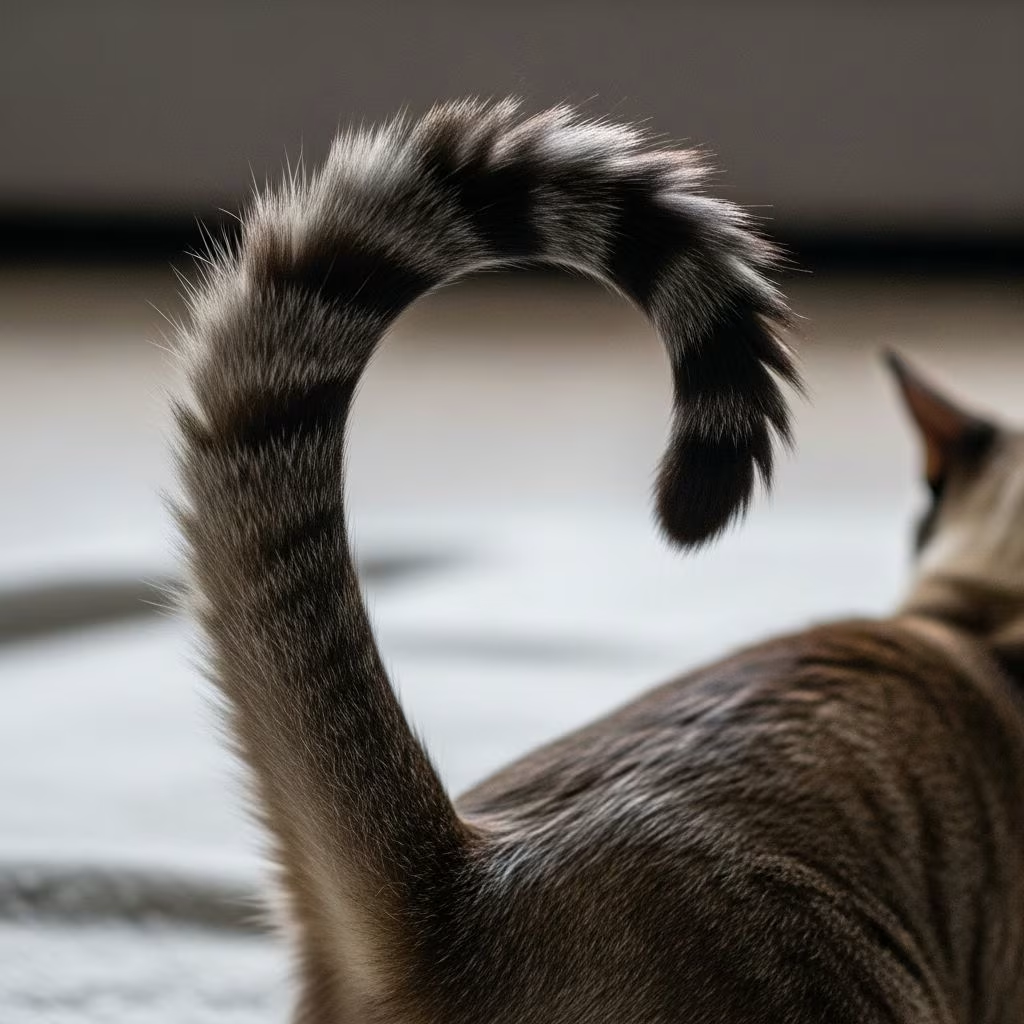
Cats communicate volumes through their tails, using positions and movements to convey emotions ranging from joy to frustration. Unlike dogs, whose wagging tails often signal pure happiness, feline tail signals are nuanced and context-dependent, revealing confidence, irritation, or defensiveness.
The Science Behind Feline Tail Signals
Research on domestic cats (Felis catus) highlights the tail’s role in social interactions. A study analyzing 254 cat-cat interactions found the tail-up display acts as a friendly signal, particularly in female cats and during approaches to humans, though ear positions often predict interaction outcomes more reliably. This visual cue helps regulate proximity and social bonds in multi-cat environments.
Observational data from cat colonies shows tail movements combine with body posture, eyes, and ears for full communication. Tail signals are especially prominent in human-cat dynamics, where a raised tail invites interaction.
Key Tail Positions and Their Meanings
Understanding specific tail postures provides immediate insights into a cat’s mood. Here’s a breakdown:
- Straight up tail: Signals confidence, sociability, and a friendly greeting. Cats approach with tails erect when feeling secure, mimicking kitten-mother interactions.
- Question mark or hooked tail: An upright tail with a curl at the tip indicates playfulness and amicability. It’s an invitation for interaction, though pet preferred areas like cheeks over the tail itself.
- Low or tucked tail: Suggests stress, fear, or defensiveness. A tail below back level conveys caution; tucked under the body signals submission or discomfort.
- Wrapped tail: Around another cat or human, it denotes affection and bonding, akin to a hug. Self-wrapping may indicate relaxation or protection.
These positions vary by breed; for instance, Persians naturally carry tails lower without distress.
Dynamic Tail Movements: Action Speaks Louder
Beyond static positions, tail motions add layers of meaning. Rapid changes often reflect shifting emotions.
| Movement | Meaning | Context |
|---|---|---|
| Thrashing or thumping | Irritation, annoyance, anger | During petting; signals ‘stop’ to avoid escalation to hissing or swatting |
| Slow swishing | Focus or mild agitation | Hunting or watching prey; can precede thrashing if overstimulated |
| Quick flick at tip | Excitement or curiosity | Paired with upright tail during greetings |
| Tail twining | Affection and friendship | With bonded cats or owners; strengthens social ties |
Changes in movement, like from relaxed swish to lashing during petting, indicate overstimulation. Respecting these cues builds trust.
Tail Signals in Cat-to-Cat Interactions
In feline social groups, tails facilitate harmony. The tail-up display correlates with positive outcomes like rubbing, more common in females. Erect ears paired with raised tails predict approach and affiliation, while mismatched positions lead to avoidance.
Cats in colonies use symmetrical ear and tail cues for mutual understanding. Unlike humans focusing on tails, cats prioritize facial signals like ears for interaction predictions.
Human-Cat Tail Communication
Your cat’s tail speaks directly to you. An upright tail upon greeting means they’re happy to see you and open to pets. A hooked tail invites play, but observe full body language—dilated pupils or flattened ears override tail positivity.
Thrashing during interaction warns of discomfort; cease petting immediately to prevent bites. Wrapping tails around legs mimics cat-cat bonding, showing trust.
Factors Influencing Tail Behavior
Tail signals aren’t isolated. Consider:
- Context: Environment, recent events, or health issues alter meanings. Pain may cause tucked tails.
- Individual differences: Age, breed, and personality affect baselines—kittens use tails more gregariously.
- Combined signals: Always integrate with ears (erect for positivity), whiskers, and posture.
Females display tail-up more frequently, aiding social cohesion.
Common Misinterpretations and How to Avoid Them
Don’t assume all wagging means happiness—feline ‘wagging’ often signals agitation, unlike canine joy. A still, low tail isn’t always fear; it could be relaxation in some contexts.
Overlooking transitions, like gentle swish to whip, risks mishandling. Study your cat’s patterns for accuracy.
Enhancing Your Bond Through Tail Awareness
Responding to tail cues fosters deeper connections. Greet with tail-up cats enthusiastically; give space to thrashers. Positive reinforcement during friendly signals strengthens associations.
Observe daily: Track tail during routines to learn personal quirks, improving care and reducing stress.
Frequently Asked Questions (FAQs)
Why does my cat’s tail twitch when I pet them?
A twitching tail tip shows pleasure or focus, but rapid twitching signals building irritation—stop petting.
What if my cat’s tail is always low?
Check for stress, pain, or breed traits. Consult a vet if persistent with other signs like hiding.
Is tail wrapping a sign of love?
Yes, it’s affiliative, like intertwining with friends, indicating comfort and affection.
Do all cats use tails the same way?
No, variations exist by sex, age, and socialization. Females use tail-up more.
How can I tell if tail movement means play?
Hooked tail with playful crouch and forward ears signals fun time.
Practical Tips for Daily Observation
- Watch tail at greetings: Upright means engage.
- Note changes during interaction: Thrash means pause.
- Combine with ears: Both erect predicts positivity.
- Journal patterns: Builds understanding over time.
- Respect signals: Enhances mutual trust.
Mastering tail language transforms guesswork into intuitive care, aligning with cats’ subtle communication style.
References
- Heads and Tails: An Analysis of Visual Signals in Cats, Felis catus — Animals (PMC). 2021-09-25. https://pmc.ncbi.nlm.nih.gov/articles/PMC8469685/
- How to Read Your Cat’s Tail Language and Meaning — PetMD. Accessed 2026. https://www.petmd.com/cat/behavior/cat-tail-language
- Cat Tail Communication — Ark-Valley Humane Society. Accessed 2026. https://www.ark-valley.org/cat-tail-communication/
- Deciphering Your Cat’s Tail Body Language — Wellness Pet Food. Accessed 2026. https://www.wellnesspetfood.com/blog/deciphering-your-cats-tail-body-language/
- Understanding Tail Language: What Your Cat Is Communicating — Wedgewood Pharmacy. Accessed 2026. https://www.wedgewood.com/blog/understanding-tail-language-what-your-cat-is-communicating/



