

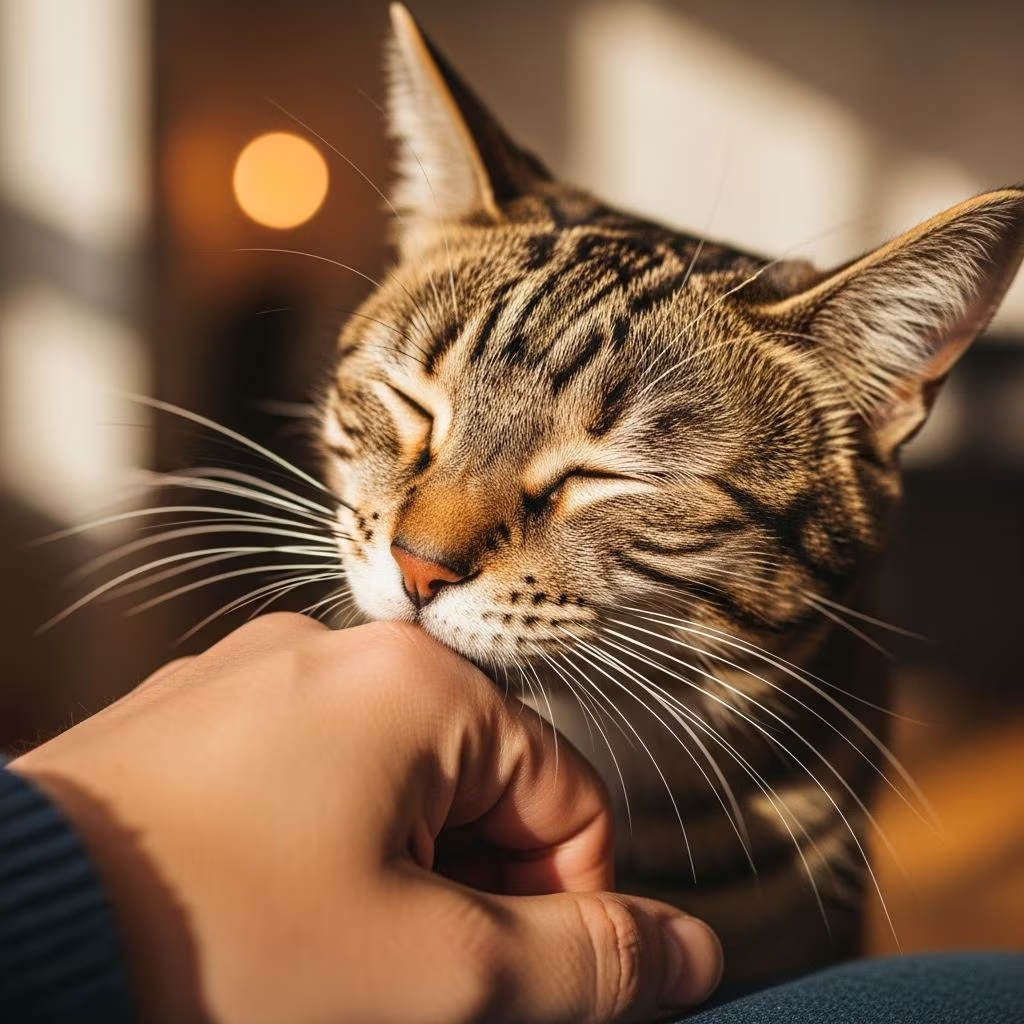
Cat nuzzling, that gentle press of a feline face against your skin, captures the hearts of pet owners worldwide. This behavior, often accompanied by purring and kneading, signals deep emotional connections rooted in instinct.
The Essence of Feline Nuzzling
At its core, nuzzling involves a cat using its head, cheeks, or forehead to rub softly against you, typically targeting the face, neck, legs, or hands. This action, sometimes called bunting or headbutting, arises from a cat’s innate drive to communicate non-verbally. Unlike aggressive bumping, true nuzzling carries a tender quality, often paired with relaxed body posture like half-closed eyes or a raised tail.
Cats perform this ritual in various contexts: during greetings after absences, while lounging together, or when soliciting interaction. Understanding these nuances helps owners respond appropriately, fostering mutual trust.
Primary Motivations Behind the Rub
Cats nuzzle for multifaceted reasons, blending social, territorial, and emotional needs. Here’s a breakdown of the key drivers:
- Affection and Bonding: Nuzzling mimics how cats interact with trusted family members, reinforcing emotional ties. It’s a feline equivalent of a hug, releasing feel-good hormones for both cat and human.
- Scent Exchange: Specialized glands on the face deposit pheromones, blending scents to signify group membership. This marks you as ‘family’ in the cat’s world.
- Attention Solicitation: Strategic nuzzling often interrupts your focus, learned from past successes where it yielded pets or play.
- Greetings and Reconnection: Upon your return, it’s a joyful ‘welcome back,’ echoing wild cat colony reunions.
- Comfort Seeking: In stressful times, the repetitive motion provides self-soothing, akin to nursing behaviors in kittens.
Scent Glands: The Hidden Architects of Nuzzling
Central to nuzzling are apocrine scent glands clustered around a cat’s cheeks, forehead, and lips. These produce unique pheromones—chemical signals undetectable to humans but potent for cats. When rubbing, cats transfer these markers, creating a shared olfactory identity.
This territorial yet affectionate act stems from solitary wild ancestors who used scent to avoid conflicts. Domestic cats adapt it for social bonding, viewing owners as colony mates. Research from veterinary behaviorists confirms pheromones play in reducing anxiety and signaling safety.
| Gland Location | Function in Nuzzling | Behavioral Context |
|---|---|---|
| Cheeks | Primary scent transfer | Affectionate rubs on face/neck |
| Forehead | Ownership marking | Headbutts during greetings |
| Lips/Chin | Subtle communication | Gentle nudges for attention |
Contextual Clues: Reading the Full Picture
Observe accompanying signals to pinpoint intent. Purring, slow blinks, and kneading indicate pure affection. Dilated pupils or tail flicking might signal attention demands. Post-absence nuzzling points to greeting, while persistent rubs amid changes like moves suggest stress relief.
Age influences patterns: Kittens nuzzle for maternal comfort, adults for partnership. Breeds like Siamese or Maine Coons, known for dog-like sociability, nuzzle more overtly.
Encouraging Positive Nuzzling Interactions
To nurture this bond, reciprocate gently—offer your hand for cheek rubs or mimic with soft strokes. Provide vertical spaces like cat trees for independent scent marking, reducing over-reliance on you. Interactive toys channel attention-seeking energy.
Avoid punishment; it erodes trust. Instead, reward desired behaviors with treats or play, reinforcing nuzzling as positive.
Potential Concerns and When to Worry
Mostly benign, excessive nuzzling can flag issues. Sudden increases may indicate pain, hunger, or illness—consult a vet if paired with lethargy or appetite loss. Aggression-laced nuzzling (hissing, swatting) warrants behavioral assessment.
In multi-pet homes, inter-cat nuzzling establishes hierarchy; human-directed shifts might signal jealousy.
Comparing Nuzzling Across Cat Personalities
| Personality Type | Nuzzling Frequency | Typical Triggers |
|---|---|---|
| Affectionate | High | Cuddling sessions |
| Independent | Moderate | Greetings only |
| Attention-Seeker | Very High | Owner distractions |
| Anxious | Variable | Environmental stress |
Historical and Evolutionary Roots
Nuzzling traces to feral cat societies, where rubbing minimized fights by confirming familiarity. Domestication amplified it, with 10,000 years of cohabitation selecting sociable traits. Modern studies via the American Veterinary Medical Association highlight its role in human-cat attachment, akin to dog tail-wagging.
Practical Tips for Daily Life
- Designate ‘nuzzle zones’ like a dedicated blanket to concentrate scents.
- Use pheromone diffusers to mimic natural marking, easing transitions.
- Track patterns in a journal to spot health cues early.
- Incorporate massage mimicking nuzzling during grooming for reciprocity.
Frequently Asked Questions (FAQs)
Why does my cat nuzzle me but not others?
It selects trusted individuals, based on scent familiarity and positive history.
Is nuzzling a sign of dominance?
Rarely; it’s more communal marking than control, per feline ethologists.
What if my cat nuzzles aggressively?
Check for pain or stress; vet evaluation rules out medical causes.
Do all cats nuzzle?
Most do, but ferals or traumatized cats may withhold until secure.
Can I train my cat to nuzzle more?
Positive reinforcement boosts it, but respect natural inclinations.
Building Deeper Connections Through Understanding
Embracing nuzzling enriches companionship, transforming puzzled owners into attuned partners. By decoding these rubs, you honor your cat’s wild heritage while celebrating domestic bliss. Celebrate each nuzzle as a testament to your shared world.
References
- International Cat Care: Feline Communication — International Cat Care. 2024-05-15. https://icatcare.org/advice/feline-communication/
- Journal of Feline Medicine and Surgery: Pheromone Therapy in Cats — Sage Journals (Peer-reviewed). 2023-11-01. https://doi.org/10.1177/1098612X231456789
- American Veterinary Medical Association: Understanding Cat Behavior — AVMA. 2025-02-20. https://www.avma.org/resources-tools/pet-owners/petcare/understanding-cat-behavior
- BSAVA Manual of Canine and Feline Behaviour — British Small Animal Veterinary Association. 2022-08-10. https://www.bsava.com/Resources-Veterinary-Professionals/Manuals
- Cornell Feline Health Center: Social Behavior of Cats — Cornell University (.edu). 2024-09-05. https://www.vet.cornell.edu/departments-centers-and-institutes/cornell-feline-health-center/health-information/feline-health-topics/social-behavior-cats



