

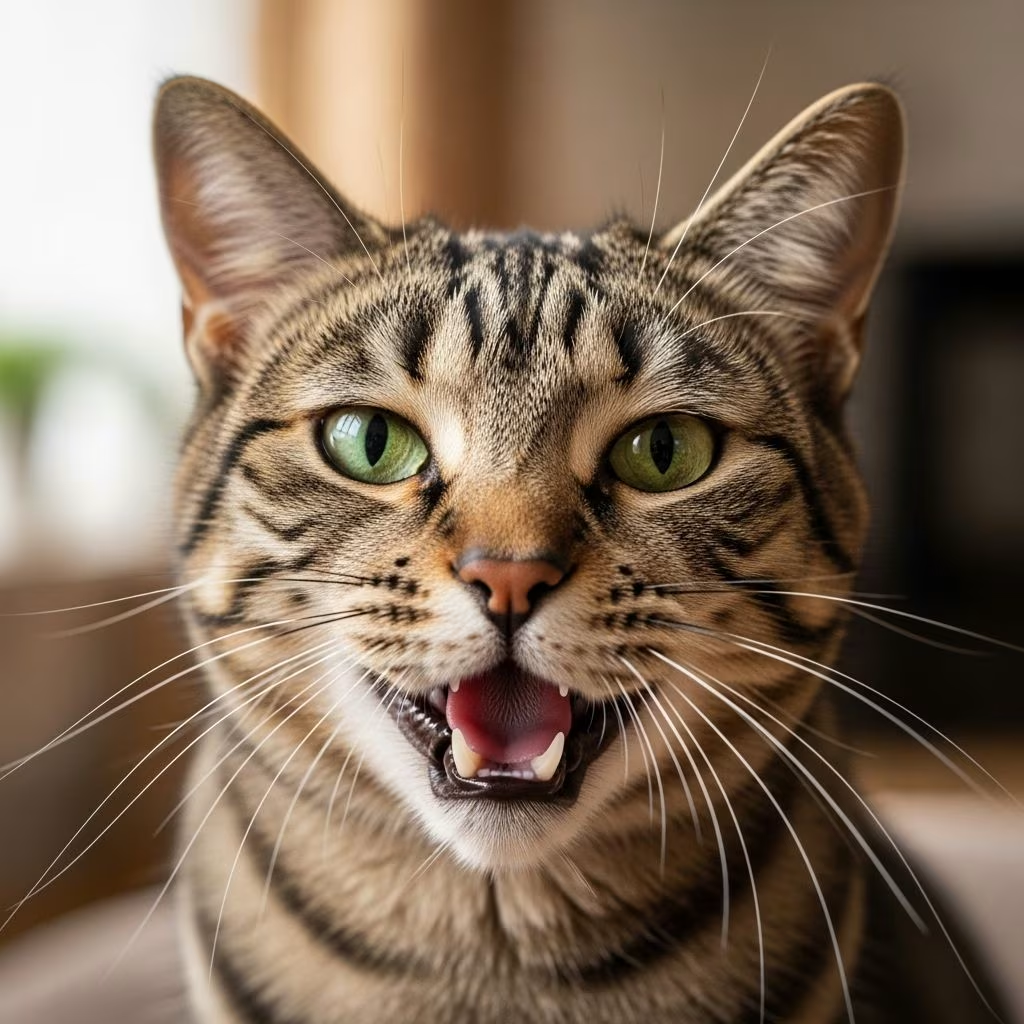
Cats communicate through a rich array of vocalizations, with meowing standing out as their primary way to interact with humans. Unlike their exchanges with other cats, which rely more on body language and scent, meows have evolved specifically for human ears, serving as a bridge between species. This article delves into the science of feline meows, exploring their origins, variations, and what they reveal about your cat’s inner world.
The Evolution of Meowing in Domestic Cats
Domestic cats have adapted their vocal repertoire over thousands of years of living alongside humans. Wild cats, such as African wildcats, produce meows sparingly, mostly as kittens soliciting care from their mothers. In contrast, adult domestic cats meow frequently to people, a behavior that emerged during domestication to elicit responses like food or attention.
Research indicates that these meows are shorter and higher-pitched than those of their wild relatives, making them more appealing to human listeners. This acoustic tuning likely developed because humans respond more positively to such sounds, reinforcing the behavior through selective interaction.
Primary Reasons Cats Meow at Humans
Cats employ meows strategically, often to fulfill basic needs or express discomfort. Understanding these triggers helps owners address issues promptly.
- Hunger Signals: The most common meow is a demand for food. Cats associate specific vocal patterns with mealtime, repeating them until fed. These calls are typically insistent and repetitive.
- Attention Seeking: Bored or lonely cats meow to summon companionship. A familiar cat’s meow is easier for owners to interpret correctly, building a personalized communication code.
- Greetings and Affection: Softer, rising meows often signal happiness upon seeing a loved human, though cats rarely meow positively toward each other.
- Discomfort or Pain: Sharp, urgent meows can indicate injury or illness. Persistent vocalization warrants a vet visit.
How Context Shapes Meow Variations
Meows vary acoustically based on the situation, with differences in pitch, duration, and melody conveying emotional states. Studies show humans can somewhat distinguish these, though accuracy is limited.
| Context | Meow Characteristics | Perceived Emotion |
|---|---|---|
| Waiting for Food | Medium pitch, repetitive, rising tone | Anticipatory, somewhat positive |
| Isolation | Lower pitch, prolonged, falling contour | Negative: anxious, distressed |
| Brushing or Petting | Higher pitch, shorter, melodic | Positive: content, relaxed |
These distinctions arise because cats modulate their calls to match internal states. Isolation meows evoke nervousness or fear, while grooming sessions produce calmer tones.
Human Ability to Interpret Cat Meows
While meows are human-directed, people struggle to pinpoint exact contexts from single calls. A study found low accuracy in classifying meows from food waiting, isolation, or brushing, influenced by cat ownership experience, gender, and empathy levels.
- Experienced owners performed better, recognizing familiar patterns.
- Women and high-empathy individuals rated emotional valence more accurately.
- Negative meows (e.g., isolation) were consistently identified as distressing, positive ones less so.
This limited discrimination highlights that cat-human bonds develop through repeated interaction, not innate human skill.
When Meowing Becomes Excessive
Normal meowing is occasional, but constant vocalization signals problems. Track changes to identify causes early.
Biological Factors:
- Hyperthyroidism in older cats increases metabolism, leading to hunger-driven meows.
- Cognitive dysfunction mimics dementia, causing disorientation cries.
- Unspayed females yowl during heat cycles.
Environmental Stressors:
- New pets, moves, or routine changes provoke anxiety meows.
- Litter box issues or boredom amplify calls for attention.
Breeds like Siamese are naturally vocal, but sudden spikes demand veterinary evaluation.
Age-Related Meowing Patterns
Kittens meow prolifically to mothers for milk and warmth, gradually shifting to human-directed calls as they wean. Seniors may vocalize more due to sensory decline or confusion, wandering at night with plaintive cries.
Strategies to Reduce Unwanted Meowing
Proactive management strengthens communication and minimizes stress meows.
- Establish Routines: Feed, play, and litter maintenance at set times reduce demands.
- Enrich Environment: Toys, scratching posts, and perches combat boredom.
- Health Checks: Annual vet exams rule out pain or illness.
- Ignore Attention-Seeking: Respond only to calm behavior to avoid reinforcing cries.
- Spay/Neuter: Prevents heat-related yowling.
Breed Differences in Vocalization
Some breeds meow more due to genetics.
- Siamese: Famous for loud, raspy ‘talking’.
- Oriental Shorthair: Similar to Siamese, highly expressive.
- Persian: Generally quieter, softer meows.
- Maine Coon: Chirps and trills alongside meows.
These traits reflect selective breeding for sociable personalities.
Meows vs. Other Feline Sounds
Cats reserve meows for humans; inter-cat talk uses purrs, hisses, growls, and chirps. Purring signals contentment but also self-soothing during pain. Hisses warn of aggression, while trills greet kittens or owners.
Building Better Communication with Your Cat
Observe body language alongside meows: tail position, ear angles, and pupil dilation provide context. Respond consistently to foster trust—your cat will refine meows to match your reactions.
Record unusual patterns for your vet, noting timing and triggers. Positive reinforcement, like treats for quiet sitting, encourages desired behaviors.
Frequently Asked Questions (FAQs)
Why does my cat meow at night?
Night meowing often stems from hunger, loneliness, or age-related issues like cognitive decline. Ensure dinner isn’t too early and provide nighttime enrichment.
Is excessive meowing a sign of pain?
Yes, sudden increases can indicate arthritis, dental problems, or organ issues. Consult a vet if accompanied by hiding or appetite changes.
Can I train my cat to meow less?
Through routines and ignoring demands, yes. Consistency is key; never punish, as it heightens stress.
Do all cats meow the same way?
No, each develops unique patterns, especially with owners. Familiar cats’ meows are easier to decode.
Should I worry if my cat stops meowing?
Not necessarily—some are quiet by nature. But paired with lethargy, it may signal illness.
Enhancing Your Cat’s Vocal Comfort
Beyond interpretation, support vocal health with proper nutrition and dental care, as throat issues alter meows. Interactive play mimics hunting, tiring cats and curbing evening choruses.
In multi-cat homes, territorial meows arise from resource competition. Multiple stations prevent conflicts.
References
- What’s in a Meow? A Study on Human Classification and Perception of Vocalization Context in Domestic Cats (Felis catus) — Nicastro, N., & Owren, M. J. (Published in Animals journal via PMC). 2020-12-09. https://pmc.ncbi.nlm.nih.gov/articles/PMC7765146/
- Feline Vocalization: It’s the Cat’s Meow! — Stanford Dish on Science. 2023 (approx., recent educational article). https://thedishonscience.stanford.edu/articles/feline-vocalization-its-the-cats-meow
- What’s Your Cat Trying to Tell You? Causes of Constant Meowing — Carolina Virginia Animal Hospital. 2024 (recent vet resource). https://carolinavirginiavet.com/whats-your-cat-trying-to-tell-you-causes-of-constant-meowing/
- When Meowing Goes from Cute to Excessive — Cat Town Oakland. 2023 (approx.). https://www.cattownoakland.org/cat-town-blog/excessive-meowing
- Cat Communication — Wikipedia (informational overview, primary sources referenced). Ongoing. https://en.wikipedia.org/wiki/Cat_communication



