

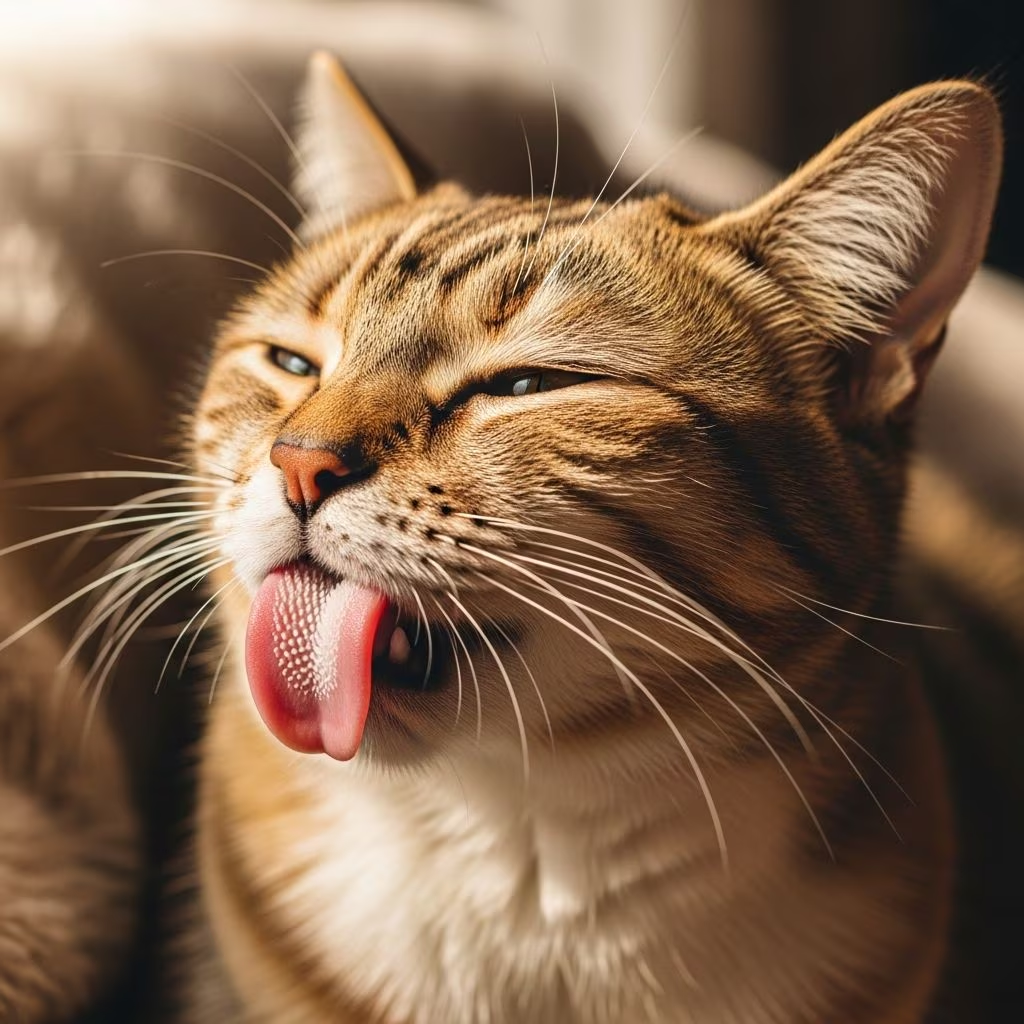
Cats communicate in subtle ways, and licking stands out as one of their most intriguing behaviors when directed at humans. This action, often perceived as a simple kiss, carries layers of meaning rooted in instinct, emotion, and environment. Understanding it helps strengthen the human-feline bond while spotting potential issues early.
The Instinctual Roots of Feline Licking
From kittenhood, licking forms a cornerstone of cat social life. Mother cats groom their litters not just for hygiene but to foster closeness and security. This allogrooming—mutual grooming among cats—extends to owners, signaling inclusion in the family unit. Adult cats replicate this to nurture relationships, viewing humans as non-competitive companions rather than threats.
Biologically, a cat’s tongue acts like a specialized tool, covered in papillae that rasp away dirt and distribute saliva containing antimicrobial properties. When aimed at you, it blends care with curiosity about your skin’s unique scents and tastes.
Affection and Social Bonding Through Licks
One primary motive is pure fondness. A gentle lick mimics the nurturing touches kittens receive, affirming you’re part of their trusted circle. Veterinary behaviorists note this as an affiliative gesture, strengthening emotional ties without overt displays.
- Family integration: Licking merges your scent with theirs, creating a unified group aroma that reassures the cat of belonging.
- Trust indicator: By grooming you, cats declare you’re no rival, a neutral-to-positive stance in their independent world.
- Comfort ritual: Endorphins released during licking provide a soothing ‘high,’ extending self-pleasure to shared moments.
Observe context: relaxed eyes and purring alongside licks confirm affection, distinguishing it from other drivers.
Territorial Marking and Scent Ownership
Cats are olfactory experts, using licks to imprint their signature pheromones from salivary glands. This ‘possession play’ claims you as territory, overwriting foreign odors like those from other pets or public spaces.
Experts describe cats as ‘scent machines,’ prioritizing their aroma above all. Post-pet or lick, they may self-groom to reinforce this dominance. Rubbing precedes or follows licks, amplifying the marking effect—less about love, more about ownership in feline logic.
| Behavior | Purpose | Human Equivalent |
|---|---|---|
| Rubbing + Licking | Scent deposition | Signing a possession |
| Self-lick after contact | Scent erasure | Reasserting personal space |
| Gentle human licks | Territorial inclusion | Family territory expansion |
Attention-Seeking and Learned Responses
Cats quickly learn licking yields reactions—pets, words, or even gentle rebukes, all preferable to ignore. This operant conditioning turns licks into a reliable attention button, especially for social cats craving interaction.
Negative reinforcement loops form too: pushing away still engages you, perpetuating the habit. Break it by redirecting to toys or ignoring until calmer.
When Licks Signal Stress or Anxiety
Not all licks are benign. Excessive, tense licking often masks unease, serving as displacement behavior to self-soothe amid changes like moves, new pets, or routine shifts. Cornell Feline Health Center experts link this to psychological comfort, akin to human nail-biting, potentially habituating if unaddressed.
- Triggers: Loud noises, visitors, loss of routine.
- Progression: From you to objects or self, risking compulsive disorders.
- Remedies: Enrich environment with play, consistency; vet-prescribed anti-anxiety aids if severe.
Monitor intensity: rapid, obsessive licks with agitation warrant professional checks to rule out medical roots like allergies or pain.
Medical and Physiological Factors
Beyond behavior, licks probe intriguing tastes—salty sweat, lotions, or food residues appeal to sensitive taste buds. Rarely, compulsive licking signals health woes: nutritional gaps, skin conditions, or hyperesthesia syndrome.
Vets recommend baseline exams for sudden upticks, as anemia or thyroid issues can manifest similarly. Differentiate by pattern: affectionate licks are sporadic and mutual; problematic ones relentless and isolating.
Normal vs. Excessive: A Comparison Guide
| Aspect | Normal Licking | Excessive Licking |
|---|---|---|
| Frequency | Occasional, 1-2 times/session | Constant, interrupts activities |
| Demeanor | Relaxed, playful | Tense, frantic |
| Context | During bonding time | Anytime, especially stress events |
| Aftermath | Cat content, moves on | Skin irritation, bald spots |
How to Respond to Your Cat’s Licks
Embrace affectionate licks with calm pets, redirecting if overzealous. For attention bids, offer alternatives like interactive toys to teach boundaries.
Stress-related? Identify stressors, provide safe spaces, and consult vets. Environmental enrichment—scratching posts, perches—reduces anxiety-driven habits. Never punish; it heightens stress.
Frequently Asked Questions (FAQs)
Is it okay for my cat to lick me?
Yes, occasional licks are harmless and bonding-focused. Limit if hygiene concerns arise, like open wounds.
Why does my cat lick me then bite?
This ‘love bite’ mix signals overstimulation. Redirect play to toys.
Should I worry if my cat licks me excessively?
Yes, if paired with other signs like hiding or aggression. Vet evaluation checks for anxiety or illness.
Do all cats lick their owners?
No, personality varies. Shy cats may rarely, bold ones frequently.
Can I stop unwanted licking?
Gently disengage, ignore, reward calm behavior. Consistency works.
Enhancing Your Bond Beyond Licks
While licks offer insights, deepen connection via play, consistent routines, and respect for independence. Observe body language holistically—tail flicks, ear positions—for fuller communication.
Nutrition and health checkups prevent behavioral mimics of issues. Pheromone diffusers aid anxious lickers. Ultimately, decoding licks reveals your cat’s world, fostering mutual understanding.
References
- The (very very weird) reasons cats lick people — BBC Science Focus Magazine. 2023. https://www.sciencefocus.com/nature/why-do-cats-lick-people
- Cats that Lick Too Much — Cornell University College of Veterinary Medicine. 2024-01-15. https://www.vet.cornell.edu/departments-centers-and-institutes/cornell-feline-health-center/health-information/feline-health-topics/cats-lick-too-much
- Why Does My Cat Lick Me? 7 Common Reasons — PetMD (Veterinary Partner). 2024. https://www.petmd.com/cat/behavior/why-does-my-cat-lick-me
- Why do cats lick humans? — VCA Animal Hospitals. 2023-11-20. https://vcahospitals.com/resources/behavior-cat/why-do-cats-lick-humans
- Why Does My Cat Lick Me So Much? — Blue Buffalo (Veterinary Scientific Affairs). 2024. https://www.bluebuffalo.com/articles/cat/why-does-my-cat-lick-me/



