

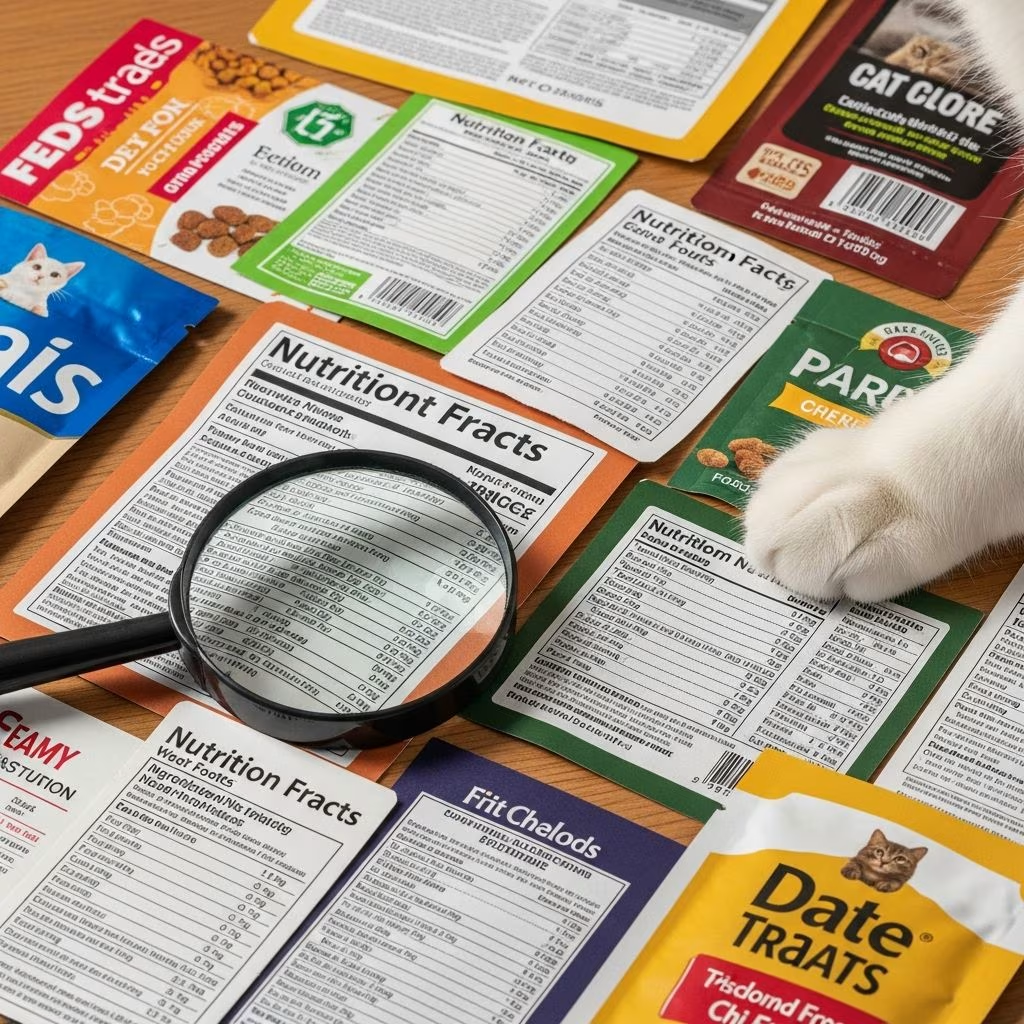
Understanding cat food labels empowers you to choose products that meet your pet’s specific dietary needs. Labels regulated by bodies like the AAFCO provide essential details on composition, nutritional value, and suitability for life stages.
Principal Display Panel: The Front Label Essentials
The front of cat food packaging, known as the principal display panel, delivers immediate key facts. It must clearly state the species—explicitly ‘cat food’ rather than just an image—and include the product name, brand, and net quantity in both imperial and metric units. This ensures consumers know exactly what they’re buying without ambiguity.
Product names follow strict naming conventions set by AAFCO. A name like ‘Chicken Feast’ requires at least 95% chicken by weight, while ‘Chicken and Tuna Dinner’ demands 95% combined from those sources, with chicken predominant since it’s listed first. Terms such as ‘with’ indicate at least 3% of that ingredient, offering flexibility but less prominence.
Guaranteed Analysis: Quantifying Nutrients
Found on the back or side, the guaranteed analysis lists minimum or maximum percentages of key nutrients on an as-fed basis. Essential elements include crude protein (minimum), crude fat (minimum), crude fiber (maximum), moisture (maximum), and often extras like linoleic acid, calcium, phosphorus, and vitamin A.
These figures help compare foods, but moisture content varies greatly between dry (around 10%) and wet (up to 78%) options, skewing direct comparisons. To evaluate fairly, calculate dry matter basis: subtract moisture percentage from 100, then adjust other nutrients accordingly. For instance, a wet food with 10% protein and 75% moisture has (10 / 25) x 100 = 40% protein on dry matter.
| Nutrient | Dry Food Typical Range | Wet Food Typical Range | AAFCO Adult Maintenance Min (Dry Matter) |
|---|---|---|---|
| Crude Protein | 26-50% | 8-12% | 26% |
| Crude Fat | 9-20% | 3-8% | 9% |
| Crude Fiber (Max) | 2-6% | 1-2% | Varied |
| Moisture (Max) | 10-12% | 75-82% | N/A |
This table illustrates typical values and AAFCO minima for adult cats, aiding quick assessments.
Ingredient Statement: From Predominant to Trace
Ingredients appear in descending order by weight, before processing. Named animal proteins like ‘chicken meal’ or ‘tuna’ should dominate the top spots for quality formulas, signaling high meat content vital for obligate carnivores. Watch for fillers—corn, wheat, or soy derivatives—high on the list, which may dilute protein quality and cause sensitivities.
Recognize ingredient forms: ‘chicken’ is fresh meat (70-80% water), while ‘chicken meal’ is rendered, concentrated protein (65%+ protein). By-products, if specified (e.g., ‘chicken by-products’), include organs and tissues, providing nutrients but sometimes stigmatized. Artificial preservatives like BHA/BHT are outdated; prefer natural options like mixed tocopherols.
- Prioritize named meat sources in the first three to five ingredients.
- Avoid excessive grain fillers or unnamed ‘meat meals.’
- Check for taurine, an essential amino acid for heart and eye health, often added.
Nutritional Adequacy: Proven for Life Stages
The adequacy statement confirms if the food is ‘complete and balanced’ for specific needs. AAFCO approves three formats:
- Formulated to meet AAFCO nutrient profiles for growth, gestation/lactation, or adult maintenance.
- Substantiated by AAFCO feeding trials, the gold standard involving animal testing.
- Comparable to a tested product, used for minor variants.
Kittens need growth formulas with higher protein/fat; seniors may benefit from maintenance or joint-focused blends. Treats lack this statement as they’re supplements.
Feeding Directions and Caloric Content
Directions specify daily amounts by weight and life stage, preventing over/underfeeding. Calorie statements (kcal/kg or per cup/can) enable precise portioning, crucial for weight management—cats average 200-300 kcal/day depending on activity.
Adjust for neutered, indoor cats needing fewer calories to avoid obesity, a common feline issue.
Regulatory Oversight and Manufacturer Details
FDA enforces basic labeling; AAFCO sets model regulations adopted by states. Look for the guarantor’s name and address, holding them accountable. Seals from AAFCO/FDA indicate compliance but not superiority.
Common Pitfalls and Smart Choices
Misleading claims like ‘lite’ require 25% fewer calories than standards. Ignore hype; focus on analysis and ingredients. Consult vets for medical diets.
FAQs
What does ‘crude protein’ mean on labels?
It guarantees minimum total protein, not source quality—animal vs. plant.
Is grain-free always better?
Not necessarily; balanced grains provide fiber, but cats thrive on meat-first formulas.
How to compare wet vs. dry food?
Use dry matter analysis for apples-to-apples nutrient evaluation.
What if no AAFCO statement?
Avoid for main diets; suitable only for treats/supplements.
Are by-products safe?
Yes, if named; they’re nutrient-dense organs.
Practical Tips for Label Savvy
Scan top ingredients, verify adequacy, calculate dry matter, and match to your cat’s age/activity. Transition foods gradually over 7-10 days to avoid digestive upset.
References
- Cat Food Labels: Nutrition Facts and Key Ingredients — Willow Glen Pet Hospital. 2023. https://willowglenpethospital.com/cat-food-labels/
- Reading Labels — AAFCO. 2024-01-15. https://www.aafco.org/consumers/understanding-pet-food/reading-labels/
- How To Read Pet Food Labels — Pet Food Institute. 2023-05-20. https://www.petfoodinstitute.org/how-to-read-pet-food-labels/
- How to Read and Understand Cat Food Labels — Hill’s Pet Nutrition. 2024. https://www.hillspet.com/cat-care/nutrition-feeding/how-to-read-a-cat-food-label
- How to read pet food labels — Banfield Pet Hospital. 2023-11-10. https://www.banfield.com/Wellness-at-banfield/Diet-nutrition-obesity/how-to-read-pet-food-labels
- A Consumer’s Guide: Overview of Pet Food Labels — Virginia Tech Extension. 2022. https://www.pubs.ext.vt.edu/content/dam/pubs_ext_vt_edu/FST/fst-434/fst-434.pdf



