

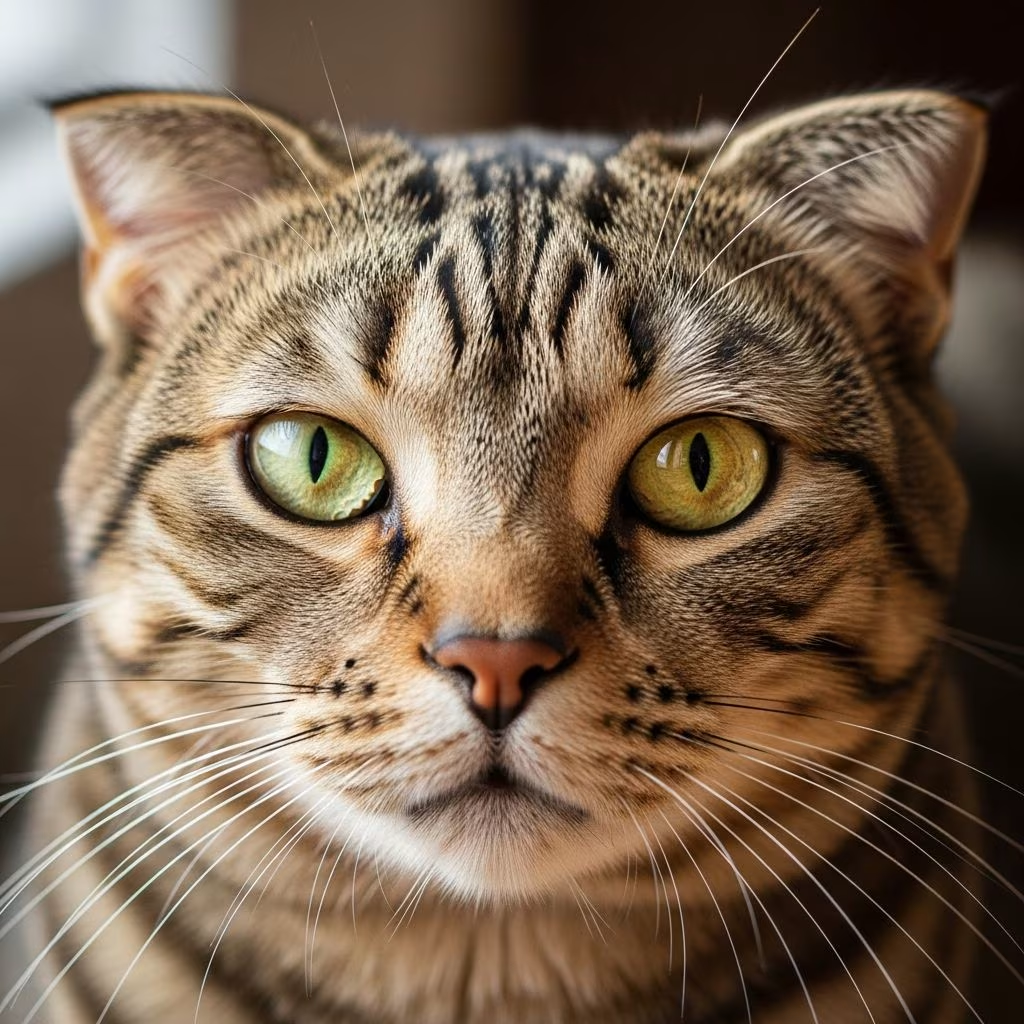
Cats possess a sophisticated system of nonverbal communication, with their faces serving as primary indicators of internal states. Research reveals that felines can produce up to 276 distinct facial movements during social interactions, far more expressive than commonly assumed. By observing elements like ears, eyes, whiskers, and mouth positioning, owners can discern contentment, curiosity, distress, or affection. This knowledge not only enhances human-feline relationships but also aids in early detection of discomfort or illness.
Understanding the Building Blocks of Feline Expressions
Cat faces feature key components that shift subtly to convey messages. Ears, with over 30 muscles, pivot to signal interest or threat. Eyes adjust pupil size and lid position to reflect arousal levels. Whiskers, or vibrissae, fan out or stiffen based on mood. The mouth rarely opens wide but tenses or relaxes to indicate tension. These features combine with body posture for full context, as isolated facial cues can mislead.
Signs of a Content and Relaxed Feline
A serene cat displays the epitome of trust and ease. Their ears sit softly forward, rounded at the tips without rigidity. Eyes often half-close or perform slow blinks, narrowing to slits with minimal pupil dilation. Whiskers drape loosely across the cheeks, neither fanned nor taut. The mouth remains gently closed, sometimes curving into a faint smile-like appearance.
- Ears: Forward and relaxed, slightly swiveling
- Eyes: Half-shut, slow blinking as a trust gesture
- Whiskers: Neutral, hanging sideways
- Mouth: Closed, no tension
This configuration invites interaction. Reciprocating the slow blink reinforces bonding, mimicking cat-to-cat affection signals. A cat in this state often stretches languidly or forms a ‘loaf’ position, reinforcing facial tranquility.
Curiosity and Heightened Awareness
When intrigue strikes, cats activate their predatory heritage. Ears erect sharply forward, capturing faint sounds. Eyes widen with constricted pupils, focusing intently like laser sights. Whiskers thrust ahead, sampling air currents for scent trails. The mouth stays shut, but nostrils may flare subtly.
- Ears: Perked upright and pivoted forward
- Eyes: Wide open, small pupils for precision
- Whiskers: Extended forward aggressively
- Mouth: Firmly closed
This alert mode primes them for pursuit or evasion. Accompanied by a high tail with tip twitch, it signals environmental engagement rather than alarm. Owners might notice head tilts as the cat assesses novel stimuli, such as window birds.
Indicators of Stress and Unease
Stress manifests through defensive shifts. Ears flatten sideways or backward, reducing profile vulnerability. Pupils dilate dramatically, eyes staring fixedly or squinting. Whiskers stiffen rigidly forward or pull back flat. The mouth tightens, occasionally parting to reveal gritted teeth.
- Ears: Flattened or twisted outward
- Eyes: Dilated pupils, tense stare
- Whiskers: Stiff and pinned
- Mouth: Pulled tight, possible hissing
These cues pair with crouched posture or tail lashing, urging space. Common triggers include loud noises, strangers, or territorial disputes. Prolonged stress risks health issues like over-grooming.
Expressions of Affection and Attachment
Love from a cat appears in softened features. Eyes soften with slow blinks or gentle gazes, ears tilting toward the recipient. Whiskers relax with slight fanning during proximity. The face may nuzzle forward in ‘bunting,’ depositing scent glands for marking.
- Ears: Slightly forward, relaxed lean
- Eyes: Soft, blinking rhythmically
- Whiskers: Loosely fanned
- Mouth: Neutral to playful open
Bunting combines affection with ownership claims. Responding with calm pets or blinks deepens mutual trust.
Anger, Fear, and Defensive Postures
Aggression or fear sharpens features aggressively. Ears pin flat against the skull, eyes narrow to slits or bulge with huge pupils. Whiskers splay stiffly outward, mouth snarls with bared fangs and raised lips.
- Ears: Pressed back tightly
- Eyes: Slit pupils or fully dilated
- Whiskers: Rigid and spread wide
- Mouth: Open with teeth exposed
Body arches, fur bristles, tail puffs and thrashes. This warns of imminent swats or bites; retreat immediately. Fear often underlies aggression, stemming from pain or overstimulation.
Spotting Pain and Discomfort Through Grimaces
Subtle pain alters expressions chronically. The Feline Grimace Scale, a validated veterinary tool, scores facial changes for acute pain assessment. Key signs include orbital tightening (squinted eyes), ear flattening, whisker retraction, and muzzle tension.
| Pain Indicator | Description | Score on FGS |
|---|---|---|
| Orbital Tightening | Eyes squinted, brows lowered | 2 |
| Ear Position | Flattened backward | 1-2 |
| Whisker Retraction | Pulled against cheeks | 1 |
| Muzzle Tension | Lips pulled up, nose wrinkled | 2 |
Scores above 4/20 suggest pain needing intervention. Unlike overt aggression, pain grimaces persist quietly. Consult vets for changes lasting over hours.
Comparing Common Feline Emotions
| Emotion | Ears | Eyes | Whiskers | Associated Body |
|---|---|---|---|---|
| Relaxed | Forward, soft | Half-closed, slow blink | Sideways loose | Stretched or loafed |
| Alert/Curious | Perked forward | Wide, small pupils | Forward stiff | Tail up, crouched |
| Stressed | Flattened side/back | Dilated, tense | Stiff forward | Low crouch, swishing tail |
| Affectionate | Leaning forward | Soft blink | Fanned relaxed | Rubbing, head-butting |
| Angry/Fearful | Pinned back | Slit or bulging | Splayed rigid | Arched, puffed tail |
This table summarizes patterns for quick reference, emphasizing holistic reading.
Practical Tips for Daily Observation
Integrate facial monitoring into routines. Note baselines during feeding or play. Track changes via journals, noting triggers. Use mirrors for shy cats. Avoid forcing eye contact, which stresses. For multi-cat homes, compare inter-cat vs. human-directed expressions.
- Establish normal expressions through consistent watching
- Pair face with tail/ posture for accuracy
- Respond appropriately: engage relaxed, space stressed
- Consult professionals for persistent anomalies
Frequently Asked Questions
What does a slow blink from my cat mean?
It signifies deep trust and affection, akin to a feline kiss. Return it to reciprocate.
Why are my cat’s pupils so big suddenly?
Dilated pupils indicate excitement, fear, low light, or stress. Context with ears/ears clarifies.
How can I tell if my cat is in pain from its face?
Look for prolonged grimace scale signs: squinted eyes, flat ears, tense muzzle. Seek vet care promptly.
Do all cats express emotions the same way?
Breeds vary slightly, but core signals like ear positions are universal across felines.
Can facial cues predict aggression?
Yes, flattening ears and staring pupils precede strikes. Give space to de-escalate.
Enhancing Communication for Healthier Cats
Mastering these cues fosters empathy, reducing misunderstandings. Proactive owners prevent escalations, spot illnesses early, and nurture joy. Research underscores cats’ 276+ signals as domestication’s gift, enabling profound interspecies rapport. Consistent observation transforms guesswork into genuine connection.
References
- A guide to a cat’s facial expressions — Cat in a Flat. 2023. https://catinaflat.com/blog/what_cats_facial_expressions_mean
- Cat Facial Expressions and Emotions Explained — The Refined Feline. 2024. https://www.therefinedfeline.com/cat-face-expressions-101-understanding-different-cat-emotions/
- Cat Body Language Guide: What is Your Cat Telling You? — YouTube (Jackson Galaxy). 2022-10-15. https://www.youtube.com/watch?v=oKyOaOkMCrk
- Decoding Cat Facial Expressions & Emotions — Taste of the Wild Pet Food. 2024. https://www.tasteofthewildpetfood.com/articles/training-and-behavior/decoding-cat-facial-expressions/
- Cat Body Language — Cats Protection. 2025. https://www.cats.org.uk/help-and-advice/cat-behaviour/cat-body-language
- A Guide to the Basics of Cat Body Language and Behavior — Zoetis Petcare. 2024. https://www.zoetispetcare.com/resources/cat-body-language-behavior
- Feline Grimace Scale — Feline Grimace Scale. 2023. https://www.felinegrimacescale.com



