

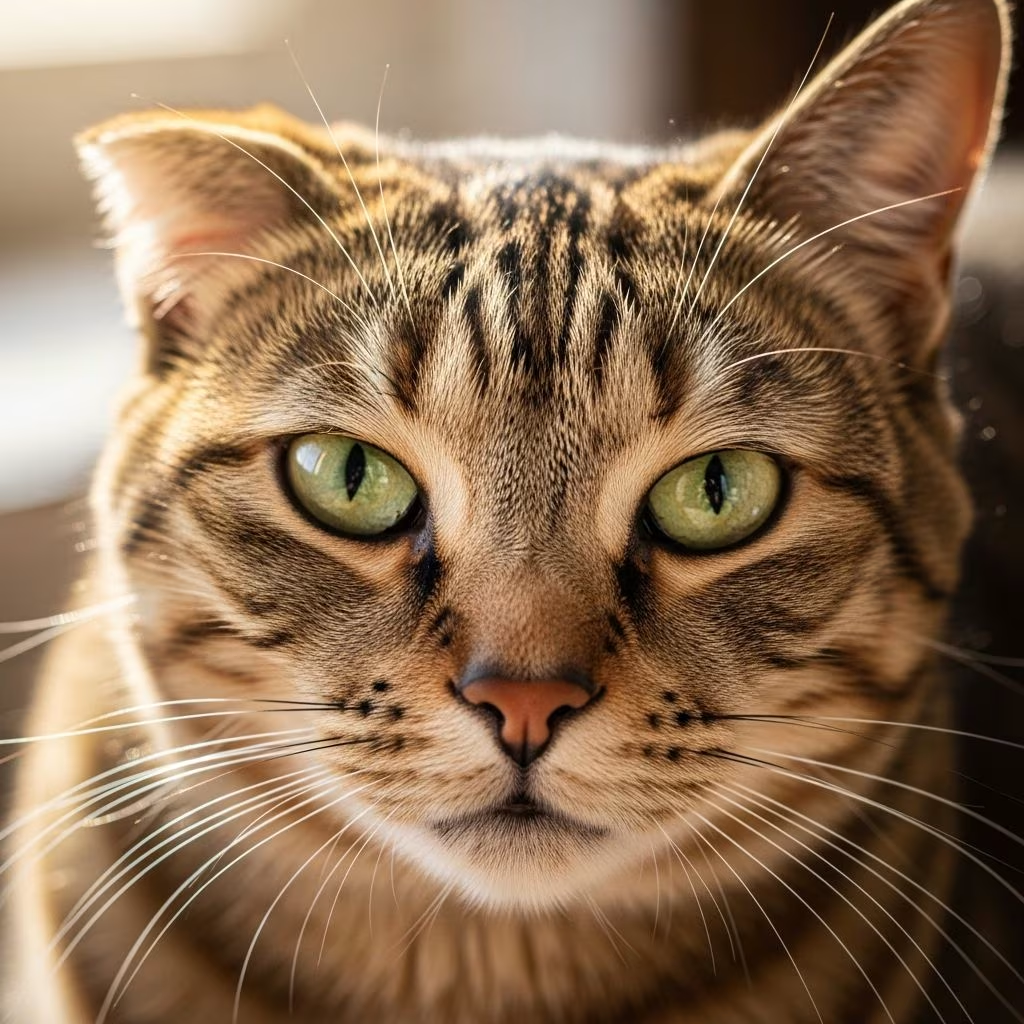
Cats are masters of subtle communication, relying heavily on non-verbal cues to express their emotions, needs, and intentions. Unlike dogs, whose signals are often overt, felines use a nuanced system of tail positions, ear orientations, body postures, eye expressions, and even vocalizations to convey messages. Understanding these signs not only deepens the bond between you and your cat but also helps prevent misunderstandings that could lead to scratches or stress. This guide breaks down the key elements of cat body language, drawing from veterinary insights and behavioral studies to equip you with practical knowledge.
Why Cat Body Language Matters
Interpreting your cat’s physical cues is essential for their welfare. Misreading signals can result in unwanted interactions, heightened anxiety, or overlooked health issues. For instance, a cat displaying defensive postures might be in pain rather than just grumpy. By learning these indicators, owners can respond appropriately—offering playtime when tails signal excitement or space when ears flatten in fear. Regular observation fosters trust and reduces behavioral problems like litter box avoidance or aggression.
Tail Talk: The Most Expressive Feline Feature
The tail acts as a feline mood barometer, with its position and movement revealing a spectrum of feelings from delight to distress. A straight-up tail often denotes confidence and sociability, inviting interaction, while rapid swishing typically warns of irritation.
- Vertical tail: Held high, this posture signals a happy, secure cat ready for greetings. It’s common during reunions or mealtimes.
- Question-mark curve: The tip bends like a hook, indicating playfulness. This is prime time for toys or laser pointers.
- Wrapping around: When curled around your leg or another cat, it shows affection and trust, akin to a handshake.
- Low and tucked: A sign of fear or submission; the cat feels vulnerable and prefers to be left alone.
- Thrashing or flicking: Quick, forceful movements mean annoyance or overstimulation—stop petting immediately to avoid bites.
Observing tail dynamics in context enhances accuracy. A puffed-up tail, for example, accompanies Halloween-cat arches during high fright or aggression.
Ear Signals: Listening with Eyes
Ears are highly mobile, pivoting to pinpoint sounds while betraying emotional states. Forward-pointing ears suggest curiosity and relaxation, whereas backward flattening screams ‘back off’.
| Ear Position | Meaning | Best Response |
|---|---|---|
| Forward and upright | Alert, interested, content | Engage with play or talk |
| Swiveling independently | Scanning environment, curious | Observe quietly |
| Slightly sideways (‘airplane’) | Irritated or uncertain | Give space, reduce stimuli |
| Flattened back | Fearful or defensive | Retreat slowly, no eye contact |
| Tightly pinned | Aggressive or terrified | Remove threats immediately |
These positions often pair with other cues; sideways ears with tail thumps amplify agitation warnings.
Posture and Stance: Reading the Whole Body
A cat’s overall body orientation provides context for finer details. Relaxed sprawls contrast sharply with tense crouches, reflecting comfort levels.
- Stretched flat: Belly exposed, limbs loose—utter relaxation. Safe to approach for cuddles.
- Upright walk with tail up: Confident strut; the cat feels dominant and friendly.
- Crouched low: Body hugging ground, tail tucked—fear or stalking mode. Distinguish by eyes: wide for prey drive, dilated for panic.
- Arched back, fur bristled: Defensive threat display; combined with hissing, it’s a clear ‘stay away’.
- Slight side-roll with claws out: Pre-attack readiness; ears back, teeth bared signal imminent defense.
Overstimulation during petting sessions often shows as frozen postures transitioning to twitches.
Eye Language: Windows to the Feline Soul
Cat eyes convey intensity through pupil dilation, blinks, and gazes. Slow blinks are trust signals, equivalent to a human smile, while stares provoke tension.
- Slow blink (half-closed): ‘I love you’ message; reciprocate to build rapport.
- Dilated pupils: Excitement, low light, or fear—context determines play versus flight.
- Narrowed slits: Anger or focus, often with flattened ears.
- Wide, staring: Threat assessment; avoid staring back to de-escalate.
- Third eyelid visible: Illness or extreme stress; vet check recommended.
Glassy or squinted eyes with hunkered posture may indicate pain.
Vocalizations and Facial Cues: Sounding the Alarm
While not purely body language, sounds amplify physical signals. Purring signals contentment but can mask pain; growls and hisses escalate warnings.
- Purr: Happiness or self-soothing during stress.
- Chirp/trill: Greeting or encouragement, especially maternal.
- Growl: Low threat; back off.
- Hiss/spit: Intense fear or defense; explosive and involuntary.
- Yowl/shriek: Peak panic, preceding swats or bites.
Facial tension like retracted lips or bared teeth precedes aggression.
Recognizing Stress, Fear, and Aggression
Stress manifests as tense muscles, displacement grooming, or litter issues. Fear curls the body small; aggression puffs it large. Key combos:
- Stressed: Low body, side ears, thrashing tail, lip-licking.
- Fearful: Crouched, tucked tail/ears, wide eyes, hissing.
- Aggressive: Arched, piloerection, pinned ears, growling to spitting.
Remove triggers promptly; persistent signs warrant professional help.
Happy and Relaxed Cats: Positive Indicators
Content cats display open postures: rolling for belly rubs (cautiously), rubbing cheeks (scent-marking), forward whiskers, and upright tails. Slow blinks and kneading confirm bliss.
Health Clues Hidden in Body Language
Changes like lethargy, hunched stances, or excessive hiding signal illness. Tucked tails with squinting eyes or third-eyelid show often precede vet visits. Monitor for shifts from baseline behavior.
Practical Tips for Better Communication
– Mimic slow blinks to reassure.
– Respect space during negative signals.
– Use interactive toys for playful tails.
– Introduce changes gradually to minimize stress.
– Consult vets or behaviorists for chronic issues.
Frequently Asked Questions (FAQs)
What does it mean if my cat’s tail is puffed up?
A puffed tail indicates fear or aggression, often with an arched back. Provide distance.
Why does my cat flatten its ears sometimes?
Flattened ears signal fear, irritation, or readiness to fight. Assess and remove stressors.
Is a cat showing its belly always okay to pet?
No—it’s a trust sign, but petting may trigger play-aggression. Start with chin scratches.
How can I tell if my cat is in pain via body language?
Look for hunched posture, low ears, squinted eyes, or hiding. Seek vet care promptly.
What if my cat hisses at me?
Hissing warns of discomfort. Stop interaction and identify causes like overstimulation.
References
- Understanding the Body Language of Your Cat — Purina. 2023. https://www.purina.com/articles/cat/behavior/understanding-cats/body-language-of-a-cat
- How To Read a Cat’s Body Language — PetMD. 2024-01-15. https://www.petmd.com/cat/behavior/cat-body-language
- The Definitive Guide to Cat Behavior and Body Language — Tuft & Paw. 2023. https://www.tuftandpaw.com/blogs/cat-guides/the-definitive-guide-to-cat-behavior-and-body-language
- Translating Feline Body Language — PAWS Chicago. 2022-06-10. https://www.pawschicago.org/news-resources/all-about-cats/understanding-cat-behavior/translating-feline-body-language/showpage
- Cat Body Language 101 — Fear Free Happy Homes. 2023. https://www.fearfreehappyhomes.com/video/cat-body-language-101/



