

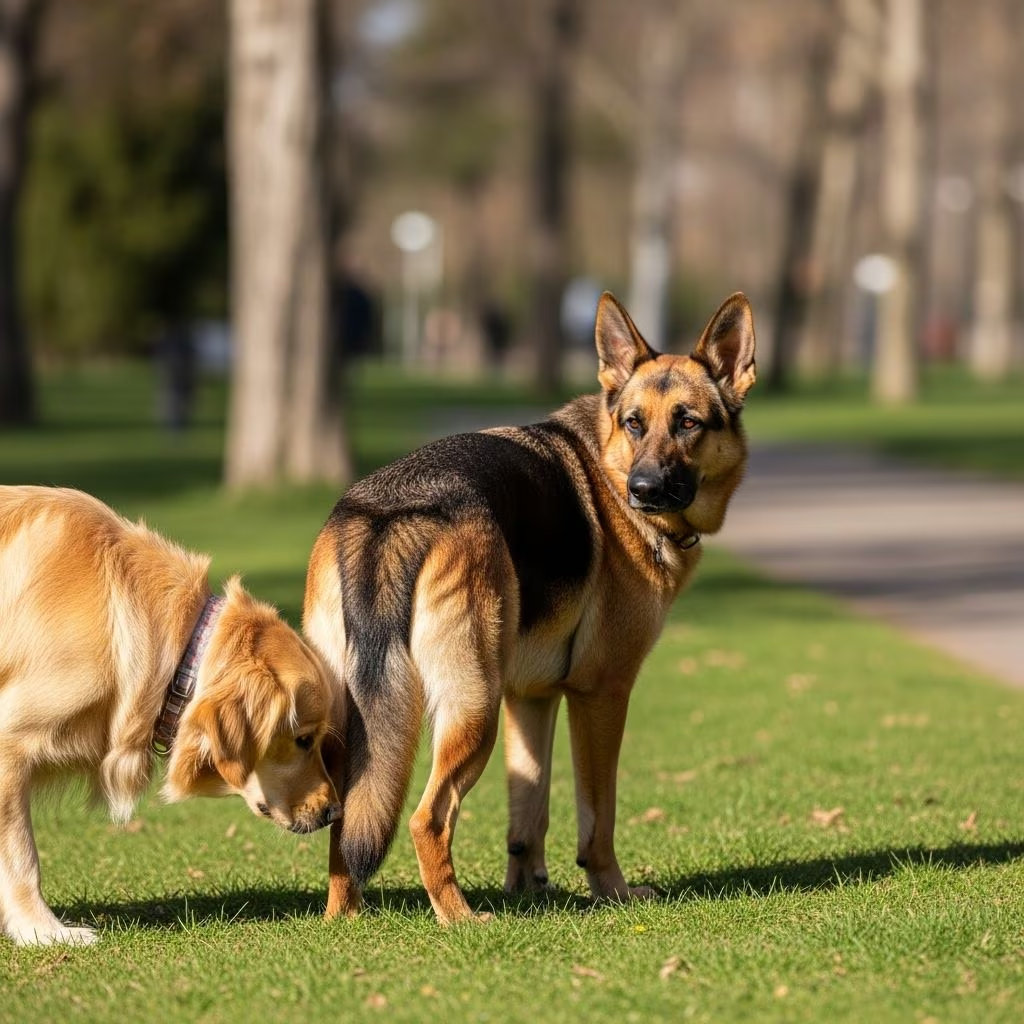
Dogs possess an extraordinary sense of smell that drives many of their social interactions, including the often awkward habit of sniffing human crotches and other dogs’ rear ends. This behavior stems from their reliance on scent for gathering vital information about identity, health, and intentions.
The Power of a Dog’s Nose: Nature’s Detection System
Canines have up to 300 million olfactory receptors, dwarfing the human count of about 6 million, enabling them to detect pheromones and subtle scents we cannot perceive. This superior olfaction allows dogs to interpret the world through chemical signals released by apocrine sweat glands concentrated in genital and anal regions.
These glands produce secretions rich in pheromones—chemical messengers that convey details like sex, age, diet, emotional state, and reproductive status. For dogs, a sniff is akin to reading a detailed profile, far more informative than visual cues alone.
Scent Glands: The Core of Canine Communication
Apocrine glands are most abundant around a dog’s anus and genitals, forming the basis for butt-sniffing rituals. Anal sacs on either side of the rectum release unique fluids that signal diet, health, and mating readiness. When dogs meet, they exchange this ‘status update’ mutually, establishing social bonds or hierarchies.
- Sex and reproductive status: Indicates if a female is in heat or a male has mated recently.
- Health indicators: Diet traces or illness markers reveal overall well-being.
- Emotional cues: Stress or excitement alters gland secretions.
Humans share similar apocrine glands in armpits and crotches, explaining why dogs target these areas. Unable to reach armpits easily, they focus lower, detecting pheromonal shifts from menstruation, pregnancy, or recent activity.
Why Target Human Private Areas?
Dogs sniff human crotches to assess newcomers or familiar people, using scents to gauge safety, recent contacts, or hormonal changes. A visitor might carry traces of other animals, food, or stress pheromones, helping the dog decide on friendliness.
This isn’t rudeness; it’s instinctual curiosity. Dogs may show heightened interest during hormonal fluctuations, as these amplify scents. Underwear theft often follows, as these items retain potent odors.
| Human Scent Source | Info Dogs Detect | Example Scenarios |
|---|---|---|
| Crotch/Armpit Glands | Pheromones, hormones | Menstruation, post-sex, pregnancy |
| Anal/Genital Area (Dogs) | Sex, diet, health | Mating readiness, recent meals |
| General Body Odor | Recent contacts, emotions | Other pets, stress levels |
Specialized Organs Enhancing Scent Analysis
Beyond the nose, dogs use the vomeronasal organ (Jacobson’s organ) in the roof of their mouth to process pheromones. This accessory olfactory system detects non-volatile chemicals, explaining open-mouth sniffing during investigations.
Dogs are often right-nostril dominant for novel scents, switching nostrils for familiar ones, linking to brain hemispheres processing new versus known information. This sophistication makes their sniffing highly efficient for social decoding.
Social Dynamics in Dog-to-Dog Sniffing
Among dogs, butt sniffing follows protocols: the dominant individual sniffs first, influencing hierarchy perceptions. Mutual sniffing builds familiarity, while one-sided approaches may signal submission or interest in mating.
Owners notice variations—playful pups sniff briefly, while anxious dogs linger. Excessive sniffing paired with mounting, growling, or tension warrants intervention to prevent escalation.
When Sniffing Becomes Problematic
While natural, crotch-sniffing embarrasses owners during greetings. It can signal boredom, overstimulation, or poor socialization. In multi-dog homes, obsessive sniffing might indicate anal gland issues or dominance disputes.
Signs of concern include:
- Repetitive targeting despite redirection.
- Aggression during sniffs.
- Sniffing accompanied by mounting or humping.
- Ignoring commands in social settings.
Practical Training Strategies to Redirect Instincts
Manage this behavior through positive reinforcement without punishment, which can increase anxiety-driven sniffing.
- Preempt greetings: Leash your dog before guests arrive and offer a toy or treat for focus.
- Teach ‘sit’ or ‘look’: Reward calm sitting during introductions, building an alternative response.
- Desensitize gradually: Expose to controlled scenarios, rewarding non-sniffing behavior.
- Exercise and enrichment: Tire dogs mentally/physically to reduce impulse-driven actions.
- Professional help: Consult trainers for persistent cases, ruling out medical causes like gland impactions.
Consistency across household members is key; mixed signals confuse dogs.
Health Factors Influencing Sniffing
Medical issues amplify sniffing: impacted anal glands cause scooting and excessive self-sniffing, prompting similar behavior toward others. Diet changes or allergies alter scents, drawing investigative noses.
Veterinary checks ensure no underlying problems, such as infections boosting pungent odors.
FAQs: Common Questions on Dog Sniffing
Is crotch-sniffing a sign of dominance?
No, it’s primarily information-gathering, not dominance. True dominance shows in body language like stiff posture or resource guarding.
Why do some dogs sniff more than others?
Breed, age, and socialization play roles. Hounds with elite noses investigate more; puppies learn from adults.
Can spaying/neutering stop this?
It reduces mating-driven sniffing but not curiosity-based ones. Training remains essential.
How quickly can I train it away?
With daily practice, improvements appear in weeks, though instincts persist lifelong.
Is it safe to let dogs sniff each other?
Yes, in neutral settings, but supervise to prevent fights, especially with unknowns.
Embracing Canine Instincts Responsibly
Understanding sniffing demystifies this quirk, fostering patience. By appreciating dogs’ olfactory world, owners build stronger bonds through targeted training. Equip your dog with skills for polite human interactions while honoring their natural drives.
References
- Why Dogs Sniff Crotches and How to Discourage It — Tom Hutton MD. 2025-01-30. https://tomhuttonmd.com/2025/01/30/why-dogs-sniff-crotches-and-how-to-discourage-it/
- Why Do Dogs Smell Crotches and Butts? — PetPlace. N/A. https://www.petplace.com/article/dogs/pet-behavior-training/why-do-dogs-smell-crotches-and-butts
- Dog Butt Sniffing Explained: 6 Reasons — Rover.com. N/A. https://www.rover.com/blog/why-dogs-sniff-butts/
- Why Do Dogs Smell Your Crotch? — Chewy.com. N/A. https://www.chewy.com/education/dog/training-and-behavior/why-do-dogs-smell-crotch
- Why Do Dogs Like to Sniff Crotches? — Psychology Today. 2014-08. https://www.psychologytoday.com/us/blog/canine-corner/201408/why-do-dogs-sniff-crotches



