

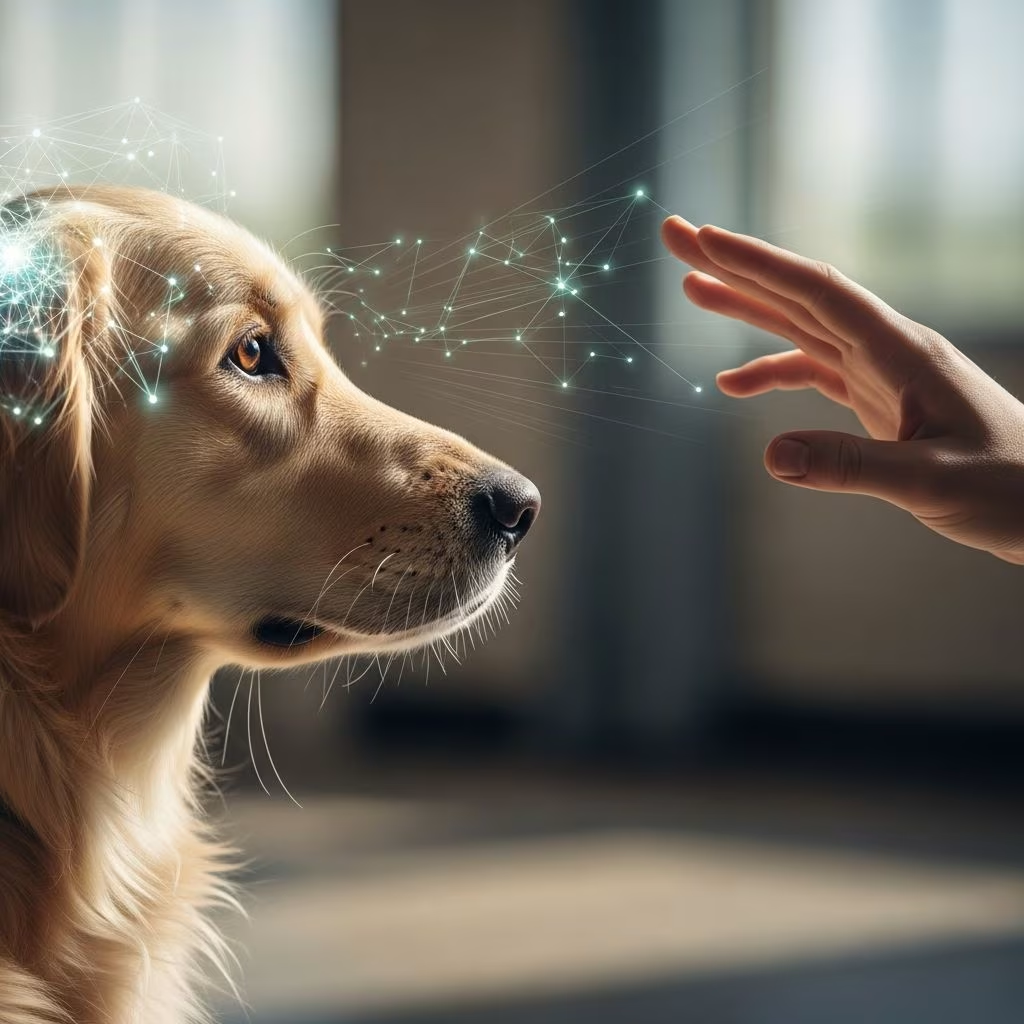
Dogs possess an remarkable talent for deciphering human body language, allowing them to navigate interactions with precision and empathy. This ability, honed over millennia of domestication, enables them to respond to our unspoken signals, fostering deeper connections between species.
The Evolutionary Roots of Human-Dog Signal Reading
Through selective breeding and cohabitation, dogs have evolved heightened sensitivity to human nonverbal communication. Unlike wild animals, domestic dogs excel at following human pointing gestures and discerning emotional states from facial cues, a skill rare among other species. Research from institutions like Tufts University highlights that dogs prioritize visual signals over verbal ones, observing the entirety of a human’s posture, movement, and expression to gauge intent.
This perceptual prowess stems from their pack-oriented ancestry, adapted to interpret social hierarchies and moods. When humans lean in or avert their gaze, dogs adjust their behavior accordingly, mirroring our emotional states to maintain harmony. Understanding this dynamic empowers owners to convey messages more effectively, reducing misunderstandings and enhancing training outcomes.
Facial Expressions: Windows to Human Emotions
Dogs are attuned to the subtlest shifts in human facial muscles, distinguishing joy from anger with impressive accuracy. A genuine smile, with crinkled eyes, signals friendliness, prompting tail wags and approach behavior. Conversely, furrowed brows or tightened lips indicate tension, often leading dogs to adopt appeasement postures like yawning or lip-licking.
- Happy faces: Relaxed mouth, raised cheeks – invites play and affection.
- Angry expressions: Narrowed eyes, flared nostrils – triggers avoidance or submission.
- Neutral or surprised looks: Wide eyes without tension – sparks curiosity and alert watching.
Studies, including those referenced by the American Kennel Club, confirm dogs differentiate these cues rapidly, responding within seconds. Owners can leverage this by practicing consistent expressions during commands, reinforcing positive associations.
Posture and Stance: Conveying Authority or Invitation
Your physical orientation speaks volumes to a dog. Standing tall with shoulders back projects confidence and leadership, encouraging calm obedience. Kneeling or crouching lowers your perceived threat level, signaling playfulness and approachability, ideal for bonding with shy pets.
| Posture Type | Dog Interpretation | Best Use Cases |
|---|---|---|
| Straight, upright stance | Authority, stability | Training sessions, calming excited dogs |
| Leaning forward | Interest, engagement | Greeting new dogs, play initiation |
| Turning sideways or away | Disinterest, de-escalation | Diffusing aggression, giving space |
| Crouched low | Friendliness, submission | Building trust with fearful dogs |
Direct confrontation, like looming over a dog, can evoke fear responses, as dogs perceive it as dominance. Instead, side profiles promote relaxation, aligning with their natural communication style.
Gestures and Pointing: Directing Attention with Precision
One of the most studied canine skills is following human pointing. Whether an index finger or an open palm gesture, dogs reliably track the indicated direction, outperforming chimpanzees in experiments. This facilitates games like fetch or search tasks, where a simple arm extension guides their focus.
Other gestures carry emotional weight: a waving hand might signal excitement, prompting bouncy responses, while palms up conveys openness and calm. Inconsistent gestures confuse dogs, leading to hesitation; consistency builds reliability.
Movement Patterns: The Rhythm of Interaction
The pace and fluidity of your movements dictate a dog’s arousal level. Slow, deliberate steps promote tranquility, mirroring relaxation techniques used in behavior therapy. Rapid, jerky motions, however, amplify excitement or anxiety, potentially escalating unwanted behaviors like jumping.
- Smooth, slow walks: Encourage settled demeanor during leashed strolls.
- Quick pivots or lunges: Signal play or chase, thrilling energetic breeds.
- Stiff, halted steps: Indicate caution, prompting dogs to pause and assess.
Humane Society insights note that dogs synchronize their gait to ours, adopting our tempo as a social cue. Mindful movement thus becomes a tool for emotional regulation in multi-dog households.
Eye Contact: Building Trust or Tension?
Prolonged staring challenges dogs, rooted in their aversion to direct threats in wild packs. Brief, soft gazes foster connection, rewarding dogs with treats reinforces this as positive. Patricia McConnell’s operant conditioning method teaches ‘watch’ cues effectively:
- Hold treat near eye level.
- Mark eye contact with a clicker or verbal praise.
- Release treat, repeating to associate gaze with rewards.
- Fade treat, cueing ‘watch’ verbally.
Avoid hard stares during tense moments; blink slowly to signal peace, as per canine communication experts.
Integrating Voice with Physical Signals
Dogs process tone alongside body language holistically. A cheerful lilt with upbeat posture amplifies motivation, while stern tones with rigid stances enforce boundaries. Mismatches, like happy words with crossed arms, sow confusion.
ASPCA observations reveal dogs mirror vocal inflections physically, calming to soothing whispers paired with gentle pets. Layering signals creates unambiguous directives, vital for obedience training.
Emotional Energy: The Invisible Bond
Beyond visuals, dogs sense stress hormones via scent and subtle tremors, responding empathetically. Tense owners yield anxious dogs; relaxed ones inspire serenity. This mirroring underscores therapy dog efficacy in hospitals.
To harness this, practice mindfulness: deep breaths steady your energy, influencing your dog’s state positively. Daily routines infused with calm presence fortify resilience against stressors.
Common Misinterpretations and How to Avoid Them
Hug attempts often distress dogs, mimicking mounts they view confrontationally. Opt for side-by-side pets. Petting heads feels dominant; chest strokes invite reciprocity.
Leaning over play bows misreads as aggression. Stay upright or crouch equally. Awareness averts conflicts, promoting safety.
Practical Training Exercises for Better Sync
Exercise 1: Mirror Game – Move slowly; reward matching calm. Builds attunement.
Exercise 2: Gesture Drills – Point to toys; praise follows. Sharpens directionality.
Exercise 3: Emotion Matching – Display happy/sad faces; note responses, reinforce positives.
Consistency across family members ensures uniform interpretation.
FAQs: Human-Dog Body Language Essentials
Why does my dog back away when I lean in?
Leaning towers over them, evoking threat. Approach sideways at their level.
Can all dogs read humans equally well?
Breeds like herding dogs excel; socialization enhances any dog’s skill.
How long until my dog learns my cues?
Weeks of repetition yield proficiency, varying by age and experience.
Does ignoring bad behavior work?
Turn away to withdraw attention, signaling disapproval non-confrontationally.
Should I mimic dog postures?
Play bows invite fun, but avoid dominant stances to prevent challenges.
Enhancing Daily Interactions Through Awareness
Observing your signals transforms routines. Walks become harmonious, mealtimes predictable, play invigorating. Invest in this knowledge for a fulfilling companionship, where miscommunications fade and intuitive bonds thrive.
References
- Dogs Understand Human Body Language: 8 Fascinating Signals They Read Every Day — OLK9 Iowa. 2023. https://olk9iowa.com/dogs-understand-human-body-language/
- Canine Communication – Interpreting Dog Language — Humane Society of Missouri. 2022-10-15. https://hsmo.org/portfolio-item/canine-communication-interpreting-dog-language/
- Dog Communication and Body Language — Tufts University Cummings School of Veterinary Medicine. 2024. https://sites.tufts.edu/collaborativeforshelterdogs/dog-behavior/dog-communication-and-body-language/
- Doggie Body Language Translated for Humans — Cesar’s Way. 2023. https://www.cesar.com/dog-care/socialization/doggie-body-language-translated-for-humans
- How Dogs Interpret Your Body Language — Whole Dog Journal. 2023-05-01. https://www.whole-dog-journal.com/lifestyle/human-focus/how-dogs-interpret-your-body-language/



