

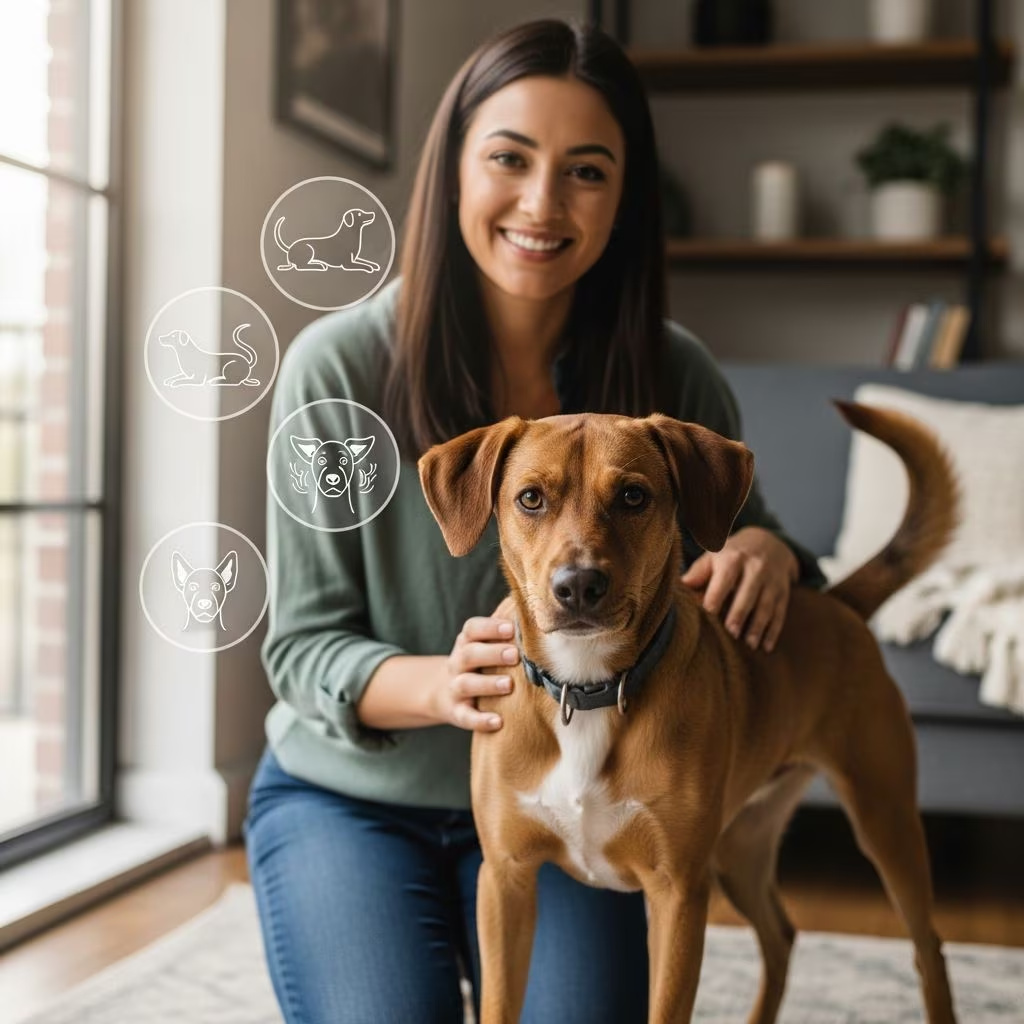
Dogs communicate primarily through visual signals rather than words, relying on intricate combinations of posture, facial expressions, and movements to express their inner states. Understanding these cues allows owners to respond appropriately, preventing conflicts and strengthening relationships.
The Foundation of Canine Expression
Canine body language forms the cornerstone of how dogs interact with each other and humans. Unlike vocalizations, which can be ambiguous, physical postures provide clear, immediate insights into a dog’s emotions and intentions. Key elements include tail position, ear orientation, eye contact, and overall body stance, all of which combine to paint a complete picture.
Observing the whole dog is crucial, as isolated signals can mislead. For instance, a wagging tail alone does not guarantee happiness; context from ears, eyes, and posture refines the interpretation.
Interpreting Tail Movements and Positions
The tail serves as a prominent communicator, with its position, speed, and direction revealing arousal levels and emotions. A neutral tail hangs relaxed, signaling calmness. When raised high and stiff, it often indicates alertness or dominance, while a tucked tail suggests fear or submission.
Tail wagging varies significantly. Broad, sweeping wags from side to side, especially those involving the whole rear end, denote relaxation and joy. Circular wags amplify this positivity, showing high contentment. Conversely, rapid, twitchy wags with a high-held tail can signal agitation or aggression, particularly if paired with forward-leaning posture.
- Broad side-to-side wag: Relaxation and greeting.
- Fast twitch wag: High arousal, possibly negative.
- Tail over back (flagging): Confidence or threat.
- Low or tucked: Anxiety or appeasement.
Ear Positions: Windows to Alertness
Ears offer vital clues about a dog’s focus and mood. Forward-pointing ears indicate interest or attentiveness, as the dog gathers information from its environment. Relaxed ears, whether perked or slightly back, accompany a content state.
Pinned-back ears close to the head signal fear or defensiveness, an attempt to appear smaller and less threatening. Upright and rigid ears with a tense body suggest readiness for action, potentially fight or flight.
| Ear Position | Meaning | Context |
|---|---|---|
| Forward and relaxed | Curiosity or happiness | Exploring new stimuli |
| Perked upright | Alertness | Potential movement |
| Pinned back | Fear or submission | Avoiding conflict |
Facial Expressions and Eye Signals
A dog’s face conveys nuanced emotions through eyes, mouth, and muzzle. Soft, squinting eyes paired with a relaxed mouth indicate comfort. Direct but gentle gaze shows trust, while a hard stare signals challenge or threat.
Whale eye—showing whites by averting the gaze—reveals unease or fear. Yawning, lip-licking, or tongue flicking often serves as stress relief or appeasement, calming tense situations. A closed mouth with tense jaw might precede growling.
- Soft gaze: Affectionate and calm.
- Hard stare: Confrontation.
- Lip licking: Appeasement or nausea precursor.
- Yawning: Stress displacement.
Body Postures: From Playful to Defensive
Posture reflects a dog’s intentions clearly. The play bow—front low, rear high—invites fun, often with bouncy movements and open mouth. Leaning into you shows affection and security.
Weight shifted back with lowered body indicates caution or submission. Forward weight distribution, especially with raised hackles, suggests offensive interest or aggression. Raised hackles (piloerection) along the back signals high arousal, from excitement to fear.
A paw lift outside hunting contexts denotes uncertainty or polite request. Rolling over exposes the belly in trust or submission.
Signs of Relaxation and Contentment
Relaxed dogs display loose muscles, open postures, and friendly signals. Look for:
- Circular tail wags.
- Leaning or rolling against you.
- Panting with soft eyes.
- Play bows during interaction.
These indicate a dog feels safe and happy, encouraging positive engagement.
Recognizing Stress and Fear Responses
Fearful dogs shrink their profile: tucked tail, pinned ears, averted eyes, and trembling. Whale eye, freezing, or retreating signal discomfort. Displacement behaviors like yawning or sniffing ground help de-escalate.
Passive submission includes nose aversion and paw raises to appease dominant figures. Active submission involves rolling over or nipping play. Ignoring these can lead to bites as a last resort.
Aggression Indicators and Warnings
Aggressive postures aim to intimidate: stiff body, forward lean, high tail, and snarling lips. Growling or barking accompanies these, escalating from subtle freezes to snaps.
Hackles up, direct stare, and mouth curling warn of impending action. Owners should create space, avoiding punishment that heightens arousal.
Health-Related Body Language Clues
Beyond emotions, postures reveal health issues. Limping, head hanging, arched back, or tucked abdomen suggest pain. Increased sleeping, grumpiness, or lip-smacking indicate illness. Tense postures or reluctance to interact warrant veterinary checks.
Practical Tips for Effective Communication
To converse fluently in dog language:
- Observe clusters of signals, not singles.
- Respect space during uncertainty.
- Mirror calm postures to reassure.
- Use play bows to initiate fun.
- Avoid direct stares with fearful dogs.
Practice in low-stakes settings builds skill, improving safety around unfamiliar dogs.
Common Misinterpretations to Avoid
| Myth | Reality | Correct Signals |
|---|---|---|
| Wagging always means happy | Arousal indicator | Check speed, direction, posture |
| Belly up is dominance | Submission or trust | Relaxed exposure |
| Stare shows love | Potential threat | Soft gaze for affection |
Building a Deeper Bond Through Awareness
Mastering these cues transforms ownership. Dogs feel understood, reducing frustration bites or shutdowns. Proactive reading prevents mishaps, especially with children or multi-dog homes.
Frequently Asked Questions (FAQs)
What does a fast tail wag mean?
A fast wag indicates high emotional arousal, which could be excitement or frustration. Assess accompanying body language for clarity.
How do I know if my dog is scared?
Look for tucked tail, pinned ears, whale eye, and avoidance behaviors like lip licking or yawning.
Is a play bow always playful?
Usually yes, but confirm with relaxed tail and open mouth; stiffness suggests otherwise.
What if my dog shows mixed signals?
Mixed cues indicate ambivalence, like approach-retreat conflict. Give space to resolve.
Can body language indicate pain?
Yes, signs include limping, tense posture, whimpering, or altered gait.
References
- How to Read Dog Body Language — American Kennel Club. 2023-05-15. https://www.akc.org/expert-advice/training/how-to-read-dog-body-language/
- Understanding Your Dog’s Body Language: A Guide To Canine Communication — Texas A&M University. 2025-03-13. https://stories.tamu.edu/news/2025/03/13/understanding-your-dogs-body-language-a-guide-to-canine-communication/
- Canine Communication – Interpreting Dog Language — VCA Animal Hospitals. 2024-01-10. https://vcahospitals.com/know-your-pet/canine-communication—interpreting-dog-language
- Canine Body Language — American Society for the Prevention of Cruelty to Animals (ASPCA). 2022-08-20. https://www.scanimalshelter.org/sites/default/files/Canine_Body_Language_ASPCA.pdf



