

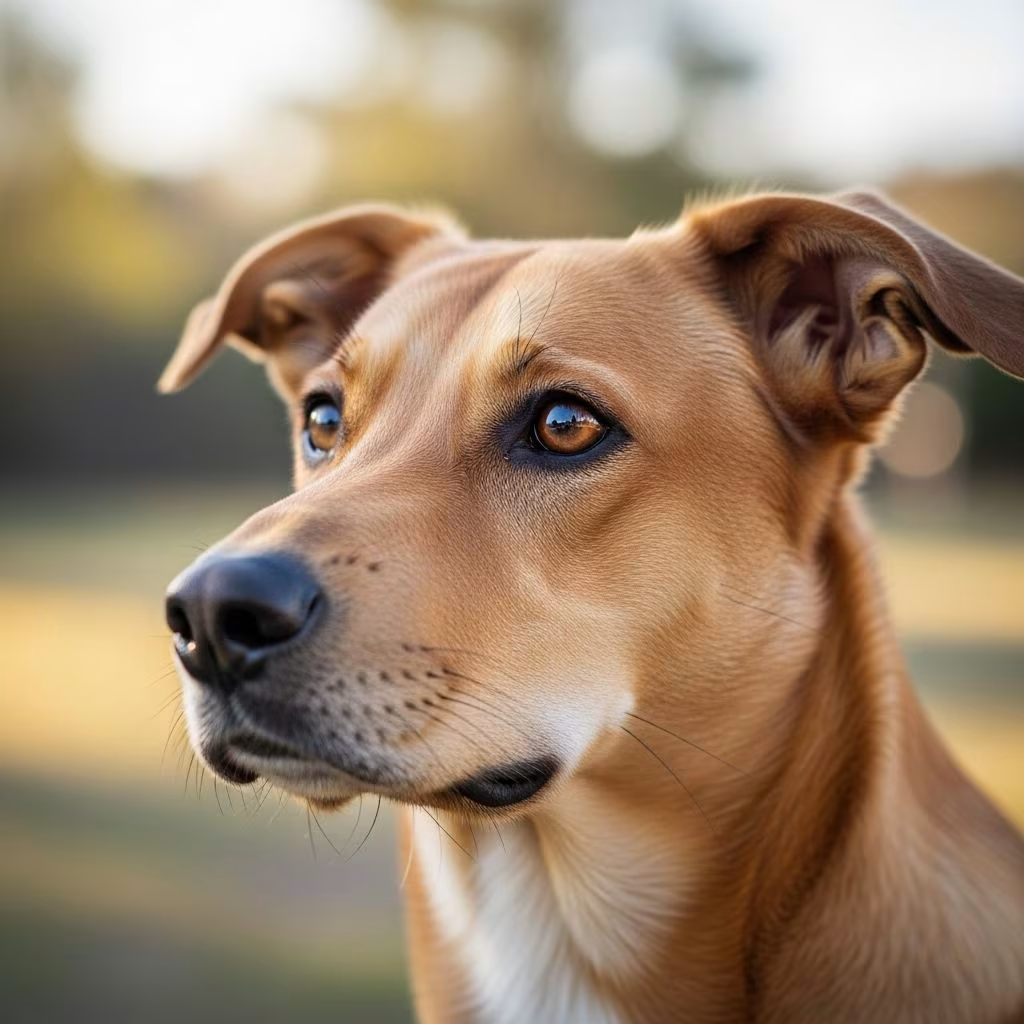
Dogs communicate primarily through body language rather than words, using postures, facial expressions, and movements to express emotions ranging from joy to fear. Mastering these signals fosters deeper connections, enhances safety during interactions, and allows owners to address needs promptly.
Why Understanding Dog Body Language Matters
Canine body language serves as a vital tool for interpreting intentions and emotional states, often more reliably than vocalizations like barks or whines. Unlike human communication, dogs rely heavily on visual cues such as tail position, ear orientation, and weight distribution to convey messages. Misreading these can lead to conflicts, bites, or unnecessary stress for both dog and owner.
Experts emphasize observing the entire body contextually, as isolated signals can mislead. For instance, a wagging tail alone doesn’t guarantee happiness; combined with stiff posture, it may signal agitation. Learning these cues improves training efficacy, detects health issues early, and promotes harmonious living.
Interpreting Tail Movements and Positions
The tail is one of the most noticeable canine signals, but its meaning varies by speed, direction, and height. A broad, slow side-to-side wag, often involving the whole rear, indicates relaxation and positive arousal, like during a joyful greeting.
Conversely, rapid, twitchy wags suggest high arousal that could be negative, such as frustration in a guarded dog. Tail direction matters too: left-biased wags (from the dog’s perspective) correlate with approach-friendly emotions, while right-biased ones signal avoidance. A high, stiff tail often denotes alertness or dominance, whereas a tucked tail signals fear or submission.
- Broad wag: Contentment and friendliness.
- Fast twitch: Heightened excitement or tension.
- Tucked low: Anxiety or appeasement.
- Rigid high: Confidence or potential threat.
Ear Positions: Alerts and Emotions
Ears provide clear insights into a dog’s focus and mood. Forward-pointing ears show interest or attentiveness, as the dog gathers information from sounds ahead. Relaxed ears in a neutral position suggest calmness, while those pulled back flat against the head indicate fear, submission, or defensiveness.
In playful or happy contexts, ears might flop loosely. Upright, forward ears paired with a tense body can signal readiness for action, like fight-or-flight preparation. Observing ear changes alongside other cues refines interpretation accuracy.
| Ear Position | Meaning | Context Example |
|---|---|---|
| Forward and perked | Alert/Interested | Hearing a familiar voice |
| Relaxed/neutral | Calm/Relaxed | Resting at home |
| Pinned back | Fearful/Submissive | Approached by stranger |
| Twitching rapidly | Agitated | Unwanted petting |
Facial Expressions and Eye Signals
A dog’s face reveals subtle emotions through eyes, mouth, and muzzle. Soft, squinting eyes with a relaxed gaze denote happiness or trust, often seen when leaning into contact. Direct stares can intimidate, signaling challenge, while averted eyes or ‘whale eye’ (whites visible) show unease or avoidance.
Open mouths with panting indicate relaxation or cooling, but closed tight mouths with lip licking suggest stress or nausea precursors. Yawns frequently serve as calming signals to de-escalate tension, not tiredness. Tongue flicks act as appeasement gestures during uncertainty.
Body Postures: From Playful to Defensive
Posture offers profound clues about intentions. The play bow—front low, rear high—invites fun, clearly signaling non-threatening play. Forward-leaning weight distribution shows interest or approach motivation, but with raised hackles or stiff tail, it hints at aggression.
A lowered, cowering stance makes the dog appear smaller, communicating ‘no threat’ amid fear. Raised paws often denote hesitation or insecurity outside hunting contexts. Hackles (piloerection) along the back indicate arousal, not always hostility—could stem from excitement or fear.
Signs of Relaxation and Contentment
Relaxed dogs display loose muscles, soft gazes, and circular tail wags, embodying joy. They may roll over for belly rubs, lean against owners, or lie down with exposed sides, trusting their environment fully. Ears vary but remain floppy, mouth slightly open in a ‘dog smile’.
These postures confirm a stress-free state, ideal for bonding activities like walks or play. Owners spotting these can reinforce positive experiences with praise or treats.
Recognizing Stress, Fear, and Aggression
Stress manifests in frozen bodies, lip licking, yawning, or displaced sniffing. Fearful dogs tuck tails, crouch, avoid eyes, and may whimper. Active submission includes rolling over or paw lifts to appease dominant figures.
Aggression escalates from subtle avoidance to snarls, head lowering, and forward lunges. Early detection via whale eye or pinned ears allows safe intervention, preventing bites. Health-related stress like limping or head-hanging warrants veterinary checks.
Common Misconceptions About Dog Signals
Many assume all tail wags mean happiness, ignoring context like speed and body stiffness. Ears back always don’t signal aggression; often it’s fear. Licking faces isn’t just affection—can be appeasement. Context is crucial for accurate reading.
- Myth: Tail wag = always friendly.
- Fact: Check wag style and posture.
- Myth: Growling means immediate attack.
- Fact: Often a warning to back off.
Practical Tips for Better Canine Communication
Observe holistically: scan from ears to tail. Practice in low-stakes settings like parks. Respect signals—back away from avoidance cues. Use positive reinforcement to encourage clear signals.
For multi-dog homes, watch inter-dog dynamics to prevent fights. Training classes with body language focus build skills. Apps or charts aid beginners in quick reference.
Health Indicators in Body Language
Changes like sudden limping, arched backs, or excessive sleeping signal pain or illness. Tense postures or reluctance for interaction prompt vet visits. Early recognition improves outcomes.
Frequently Asked Questions (FAQs)
What does a fast tail wag mean?
It indicates high arousal, which could be excitement or frustration—assess with body posture.
How do I know if my dog is scared?
Look for tucked tail, averted eyes, crouching, or whale eye.
Is yawning always tiredness in dogs?
No, it’s often a stress-relief signal to calm situations.
What is a play bow?
Front end down, rear up—invitation to play.
Can body language predict bites?
Yes, escalating signals like stiffening, growling, or lip curling warn of potential aggression.
Advanced: Breed Variations in Signals
Breeds differ: floppy-eared dogs show less ear cues, while pointing breeds use paws distinctly. Tail docking obscures signals, requiring posture focus. Adapt interpretations accordingly.
References
- How to Read Dog Body Language — American Kennel Club. 2023-05-15. https://www.akc.org/expert-advice/training/how-to-read-dog-body-language/
- Understanding Your Dog’s Body Language: A Guide To Canine Communication — Texas A&M University Stories. 2025-03-13. https://stories.tamu.edu/news/2025/03/13/understanding-your-dogs-body-language-a-guide-to-canine-communication/
- Canine Communication – Interpreting Dog Language — VCA Animal Hospitals. 2024-01-10. https://vcahospitals.com/know-your-pet/canine-communication—interpreting-dog-language
- Canine Body Language — American Society for the Prevention of Cruelty to Animals (ASPCA). 2022-08-20. https://www.scanimalshelter.org/sites/default/files/Canine_Body_Language_ASPCA.pdf
- Dog Body Language: Understanding Canine Communication — YouTube (Brenda Aloff reference). 2023-11-05. https://www.youtube.com/watch?v=t1Zcqp8IwnI



