

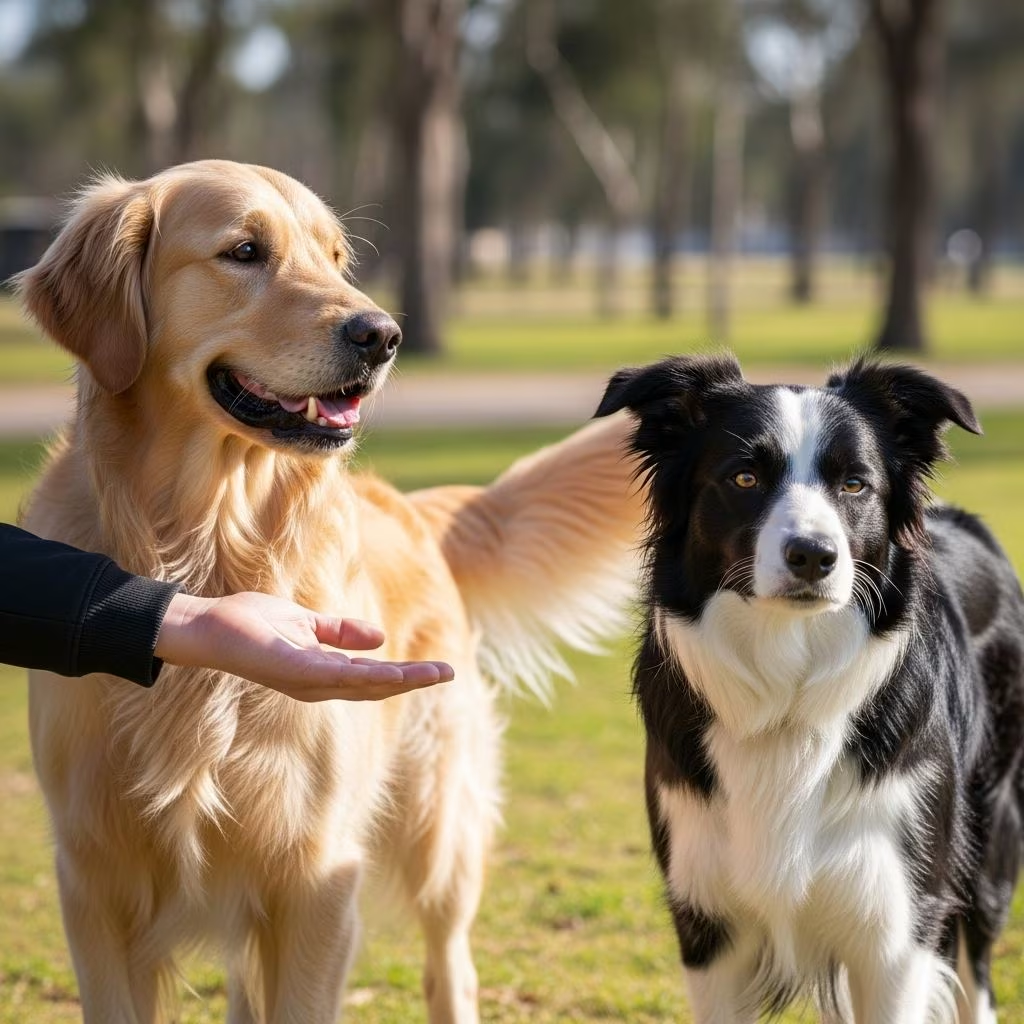
Dogs communicate primarily through visual signals rather than words, relying on postures, movements, and facial expressions to convey emotions and intentions. Mastering these cues allows owners to respond appropriately, strengthening the human-canine bond and preventing conflicts.
Why Body Language Matters in Dog-Human Interactions
Canine body language serves as the foundation of interspecies communication, encompassing tail positions, ear orientations, eye contact, and overall posture. Unlike vocalizations, which can be ambiguous, these visual signals provide nuanced insights into a dog’s emotional state, from contentment to distress. Veterinary behaviorists emphasize that misinterpreting these signals often leads to unnecessary stress or bites, particularly in multi-dog households or public settings.
Observing the entire body—rather than isolated parts—yields the most accurate readings. For instance, a wagging tail alone does not equate to happiness; context from ears, eyes, and stance is crucial. This holistic approach, recommended by organizations like the American Kennel Club (AKC), helps owners anticipate behaviors and intervene early.
Interpreting Tail Movements and Positions
The tail is one of the most noticeable canine signals, but its meaning varies by speed, direction, and height. A broad, slow side-to-side wag, often involving the whole rear end, signals relaxation and positive arousal, such as during greetings.
- Fast, twitchy wags: Indicate high arousal, which could stem from excitement, frustration, or aggression—observe accompanying stiff posture for negativity.
- High-held tail: Suggests alertness or dominance; a rigid wag here may precede defensive actions.
- Low or tucked tail: Conveys fear, submission, or discomfort, especially if clamped between the legs.
- Circular wags: A joyful, friendly indicator, often seen in happy, relaxed dogs approaching loved ones.
Research from Texas A&M highlights that tail direction can even reveal bias—left-biased wags for familiar, positive stimuli and right-biased for novel or threatening ones, though this requires close observation.
Ear Positions: Windows to Alertness and Emotion
Ears act as emotional barometers, adjusting to reflect a dog’s focus and feelings. Forward-pointing ears denote interest or attentiveness, as in play or hunting scenarios.
- Relaxed ears: Loose and slightly back in happy dogs, varying by breed—floppy ears may fold submissively.
- Pinned-back ears: Signal fear or appeasement, flattening against the head to appear smaller and less threatening.
- Upright and forward: Prepares for ‘fight or flight,’ showing heightened readiness.
Breeds with erect ears amplify these signals, while those with drop ears rely more on subtle shifts. Always pair ear cues with body posture for full context.
Facial Expressions and Eye Signals
A dog’s face reveals subtleties like stress or joy through eyes, mouth, and muzzle. Soft, squinting eyes with a relaxed gaze indicate comfort, while wide, staring eyes suggest tension.
- Whale eye: Whites visible as the dog averts gaze sideways, a fear signal often overlooked in greetings.
- Direct stare: Can be threatening; avoidance shows submission or politeness.
- Open mouth/panting: Normal in relaxed or hot dogs, but tense-closed mouths signal unease.
- Lip licking or yawning: Appeasement gestures to diffuse tension, not always hunger or tiredness.
VCA Hospitals notes that these micro-expressions escalate gradually unless heeded, preventing conflicts.
Posture and Weight Distribution: Reading Intentions
Body stance communicates confidence, fear, or playfulness. A balanced, loose posture reflects ease, while shifts reveal motivations.
| Posture Type | Description | Emotional Meaning |
|---|---|---|
| Forward lean/weight shift | Body low, weight on toes | Interest or offensive intent; appears larger |
| Crouched/hunched | Low to ground, belly tucked | Fear/submission; appears smaller |
| Play bow | Front down, rear up | Invitation to play; friendly |
| Raised paw | One front paw lifted | Uncertainty or pointing (breed-specific) |
ASPCA materials stress that raised hackles (piloerection) along the back indicate arousal, not always aggression—could be fear or excitement.
Recognizing Stress and Fear Responses
Stress manifests in displacement behaviors like yawning, lip-licking, or freezing. Chronic signs include avoidance or shutdown, signaling welfare issues.
- Appeasement gestures: Nose nudges, paw raises, or rolling over to expose belly—calming signals to de-escalate.
- Escalation signs: Stiffening, growling, or snarking if signals are ignored.
Early detection prevents bites; Texas A&M experts link ignored stress to health declines like lethargy or grumpiness.
Signs of Joy and Relaxation
Relaxed dogs display soft eyes, circular tail wags, leaning, or playful rolls. Open panting and loose muscles confirm positivity.
These states foster bonding—reciprocate with calm petting to reinforce trust.
Health Indicators Through Body Language
Body signals flag illness: limping, head-hanging, tense posture, or whimpering warrant vet checks. Lip-smacking may precede nausea.
Integrate observations with appetite and energy for comprehensive monitoring.
Practical Tips for Better Communication
- Observe holistically: Scan from ears to tail.
- Respect space: Avoid forcing eye contact or hugs.
- Practice reading: Watch unfamiliar dogs at parks safely.
- Use positive reinforcement: Reward calm signals.
- Consult pros: For persistent issues, seek certified trainers.
Frequently Asked Questions (FAQs)
What does a fast tail wag mean?
It signals high arousal—positive or negative—check other cues like posture.
Is whale eye dangerous?
Yes, it indicates fear; give space to avoid bites.
How do I know if my dog is in pain?
Look for tucked tail, limping, or tense body; consult a vet.
Can all dogs communicate the same way?
Breeds vary, but core signals are universal—context matters.
Why does my dog yawn around others?
Often stress relief, not tiredness—an appeasement signal.
Advanced Observations for Multi-Dog Homes
In groups, watch for hierarchies: dominant dogs stand tall with forward ears, subordinates avert eyes and tuck tails. Play bows maintain harmony; intervene if stiffness appears.
Training enhances clarity—teach ‘sit’ for greetings to reduce jumping.
References
- How to Read Dog Body Language — American Kennel Club. 2023-05-15. https://www.akc.org/expert-advice/training/how-to-read-dog-body-language/
- Understanding Your Dog’s Body Language: A Guide to Canine Communication — Texas A&M University. 2025-03-13. https://stories.tamu.edu/news/2025/03/13/understanding-your-dogs-body-language-a-guide-to-canine-communication/
- Canine Communication – Interpreting Dog Language — VCA Animal Hospitals. 2024-01-10. https://vcahospitals.com/know-your-pet/canine-communication—interpreting-dog-language
- Canine Body Language — American Society for the Prevention of Cruelty to Animals (ASPCA). 2022-08-20. https://www.scanimalshelter.org/sites/default/files/Canine_Body_Language_ASPCA.pdf
- Dog Body Language: Understanding Canine Communication — YouTube (Brenda Aloff reference). 2023-11-05. https://www.youtube.com/watch?v=t1Zcqp8IwnI



