

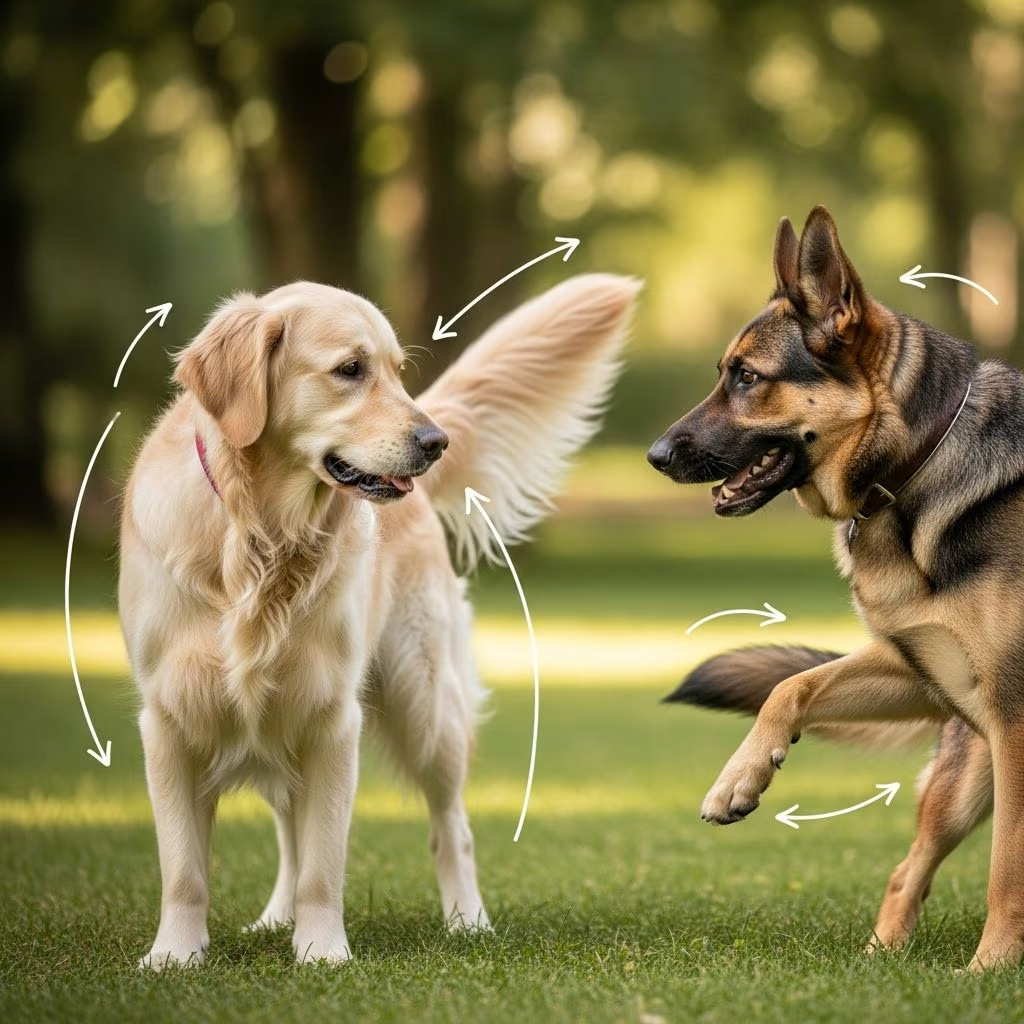
Understanding your dog’s non-verbal communication is key to building a stronger relationship and preventing misunderstandings. Dogs express a wide range of emotions through their bodies and sounds, from joy to discomfort. This guide breaks down these signals into clear categories, helping you respond appropriately to keep your pet safe and happy.
Why Reading Dog Signals Matters
Dogs rely on body language as their primary form of communication, often more telling than barks or whines. Misinterpreting a stiff posture as playfulness can lead to bites or stress. By observing the whole body—ears, eyes, tail, and posture—owners can detect early signs of fear or excitement, fostering trust and reducing anxiety.
Experts emphasize viewing signals holistically rather than isolating one feature, like a wagging tail, which can indicate various states from happiness to agitation. This awareness promotes safer interactions with unfamiliar dogs too.
Interpreting Tail Movements
The tail is a prominent indicator of a dog’s emotional state, but its position and motion provide nuanced information.
- Relaxed wag at mid-level: Signals contentment and friendliness, often seen during casual greetings.
- High, rapid wag: Indicates high arousal, which could mean excitement or overstimulation—watch accompanying body cues.
- Tucked under body: A clear fear response, where the dog feels threatened and seeks to appear smaller.
- Slow, stiff wag: Potential aggression or uncertainty; the dog is assessing the situation.
- Circular wag: Pure joy, especially towards owners, showing strong positive emotions.
Context is crucial—a tail wag alone doesn’t guarantee happiness. Combine with ear and body posture for accuracy.
Ear Positions and What They Reveal
Ears offer insights into a dog’s focus and feelings, varying by breed due to shape differences.
| Ear Position | Meaning | Example Context |
|---|---|---|
| Forward and perked | Alert, curious, or interested | Hearing a new sound or spotting a toy |
| Relaxed/neutral | Calm and comfortable | Resting at home |
| Flattened back | Fearful, submissive, or aggressive | Approached by a stranger |
Floppy-eared breeds show tension at the base; observe muscle tightness for stress. Pinned ears often precede defensive actions.
Facial Expressions: Eyes and Mouth
A dog’s face conveys subtle emotions through eyes and mouth tension.
- Soft gaze: Relaxed and trusting, with relaxed forehead.
- Whale eye (whites visible): Anxiety or discomfort; the dog avoids direct contact.
- Hard stare: Threatening; give space to de-escalate.
- Open pant: Content or cooling down; loose tongue.
- Lip licking/yawning: Stress appeasement, not hunger or tiredness.
- Tight lips or grimace: Fear or pain; may expose teeth in submission.
Frequent lip smacking can signal nausea or self-soothing under stress.
Overall Body Postures Explained
Posture integrates multiple signals for a full emotional picture.
- Loose and wiggly: Playful and happy; exaggerated during fun.
- Stiff and raised: Alert or dominant; hackles may rise.
- Play bow (front low, rear high): Invitation to engage safely.
- Crouched or cowering: Submission or terror; weight shifted back.
- Leaning or rolling over: Affectionate and relaxed.
Raised hackles (piloerection) indicate high arousal, not always aggression.
Recognizing Stress and Calming Signals
Dogs use subtle “calming signals” to diffuse tension and communicate peacefully.
- Head/body turn away
- Sniffing ground suddenly
- Slow blink or yawn
- Shake off (as if wet)
- Raised paw or freeze
- Play bow to redirect
These prevent conflicts; ignoring them risks escalation to growls or snaps. Stressed dogs may pant excessively, shed more, or self-groom.
Understanding Vocalizations
Sounds complement body language, adding context to visual cues.
- Soft whine: Seeking attention or mild distress.
- High-pitched bark: Excitement or play invitation.
- Low growl: Warning; paired with stiff posture.
- Whimper: Pain, fear, or separation anxiety.
- Bark with wagging: Friendly alert.
Vocalizations vary by individual; learn your dog’s baseline.
Postures Indicating Health Issues
Changes in body language can signal illness beyond emotions.
- Lethargy, head hanging: Possible pain or fatigue.
- Arched back, tucked abdomen: Gastrointestinal discomfort.
- Limping, tense stance: Injury; consult a vet promptly.
Sudden shifts from normal behavior warrant professional check-ups.
Common Misconceptions About Dog Behavior
Tail wagging always means happy: No—speed and height matter; fast high wag can signal aggression.
Licking means affection only: Often stress relief.
Smiling is joy: Could be an appeasement grin showing teeth in fear.
Practical Tips for Owners
To respond effectively:
- Observe the full body context.
- Give space for fear signals.
- Use positive reinforcement for calm behaviors.
- Socialize puppies to read signals early.
- Consult trainers for persistent issues.
Practice in low-stakes settings like parks to hone skills.
Frequently Asked Questions
What if my dog shows mixed signals?
Look for the dominant posture; fear often overrides play cues. Intervene gently.
Can all dogs communicate the same way?
Breeds vary slightly, but core signals are universal.
How do I teach my dog better signals?
Through consistent, reward-based training focusing on calm responses.
Is growling always bad?
No, it’s a communication tool; punishing it suppresses warnings.
What about puppies versus adults?
Puppies use more exaggerated appeasement; adults refine subtlety.
Enhancing Your Bond Through Awareness
Mastering these cues transforms ownership, reducing frustration and enhancing joy. Regular observation builds intuition, making daily life smoother for you and your dog.
References
- Understanding Your Dog’s Body Language: A Simple Guide for Pet Owners — Greyhound Homing UK. 2023. https://greyhoundhominguk.com/blogs/info-blogs/understanding-your-dog-s-body-language-a-simple-guide-for-pet-owners-introduction
- How To Read a Dog’s Body Language — PetMD. 2024-02-15. https://www.petmd.com/dog/behavior/how-to-read-dog-body-language
- Understanding Your Dog’s Body Language – A Guide to Canine Communication — Texas A&M University. 2025-03-13. https://stories.tamu.edu/news/2025/03/13/understanding-your-dogs-body-language-a-guide-to-canine-communication/
- Canine Communication – Interpreting Dog Language — VCA Animal Hospitals. 2023. https://vcahospitals.com/know-your-pet/canine-communication—interpreting-dog-language
- Reading Canine Body Postures — ASPCA. 2022. https://www.scanimalshelter.org/sites/default/files/Canine_Body_Language_ASPCA.pdf



