

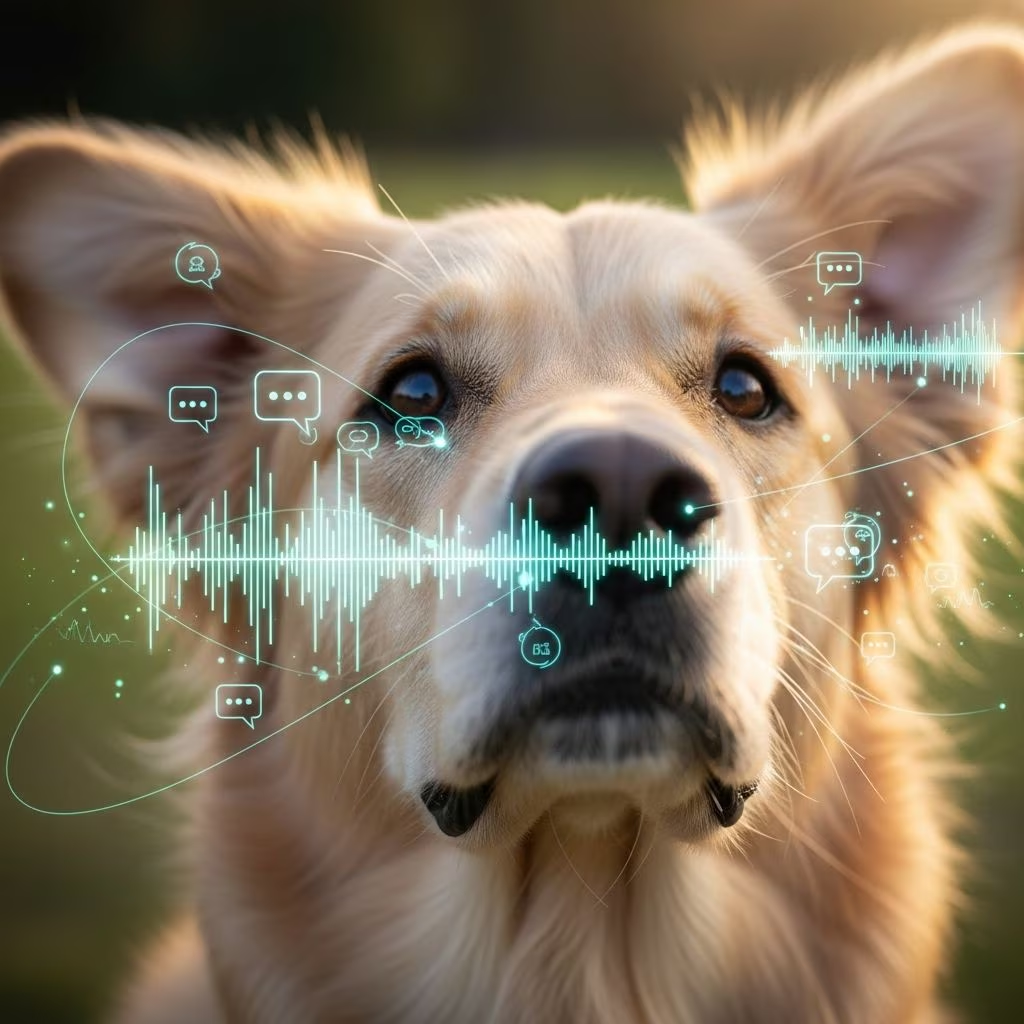
Dogs convey a wide array of messages to one another through a sophisticated blend of body postures, facial expressions, vocalizations, and chemical signals. These methods allow them to express emotions ranging from joy and playfulness to fear and aggression, ensuring smooth social interactions within packs or between individuals.
The Role of Body Postures in Dog Interactions
Body posture serves as the cornerstone of canine communication, revealing a dog’s emotional state and intentions without words. A relaxed dog typically displays loose muscles, a neutral tail position, and soft eyes, signaling contentment and openness to approach. In contrast, a stiff, forward-leaning stance with raised hackles indicates heightened arousal or defensiveness, often preceding more intense responses.
Dogs use posture to manage conflicts subtly. For instance, when feeling threatened, a dog might lower its body, tuck its tail, and avert its gaze to de-escalate tension, communicating a desire for peace. This graduated approach helps prevent fights, as subtle signals escalate only if ignored.
Key Postures and Their Meanings
- Play Bow: Front end lowered to the ground with rear elevated and tail wagging vigorously; invites fun and chase games.
- Cowering: Body hunched low, tail between legs; expresses fear or submission to avoid confrontation.
- Dominant Stance: Standing tall, head high, tail arched over back; asserts control in social hierarchies.
- Freeze Position: Sudden stillness with tense muscles; signals uncertainty or preparation for action.
Observing these postures in context is crucial, as individual experiences shape how dogs deploy them.
Understanding Tail and Ear Signals
Tail position and movement provide immediate insights into a dog’s mood. A high, stiff tail often denotes confidence or alertness, while a low or tucked tail suggests anxiety or submission. Circular wags indicate pure joy, differing from broad side-to-side swings that might mix excitement with uncertainty.
Ears forward and perked show interest or readiness, as in an alert dog scanning its environment. Pinned-back ears, however, signal fear or defensiveness, making the dog appear smaller and less threatening. Combined with tail cues, these create a clear picture: forward ears with a high tail mean approach with caution, while backward ears and low tail urge retreat.
| Signal | Meaning | Context |
|---|---|---|
| Tail High & Stiff | Alert/Dominant | Approaching stranger or rival |
| Tail Low/Tucked | Fear/Submissive | Threat perceived |
| Ears Forward | Interested | Curious about sound or sight |
| Ears Pinned Back | Nervous | Attempting to de-escalate |
Facial Expressions: Windows to Canine Emotions
Facial cues offer nuanced communication. Direct eye contact can threaten, prompting averting gazes in submissive dogs to signal non-aggression. Whale eye—showing whites—indicates worry, often with lip licking or yawning as stress relievers.
A soft, squinting gaze paired with an open mouth shows relaxation, while a hard stare with bared teeth warns of impending aggression. These micro-expressions help dogs gauge each other’s comfort levels rapidly.
Vocalizations: The Sounds of Canine Dialogue
Barks, growls, whines, and howls form the auditory layer of dog talk. Short, sharp barks signal alertness to intruders, with pitch and speed conveying urgency. Low growls warn of boundaries, escalating if unheeded, while high-pitched whines plead for attention or express discomfort.
Playful vocalizations include muffled barks during games, distinguishing fun from hostility. Dogs modulate volume and tone contextually, ensuring messages reach pack members effectively.
Common Vocal Signals
- High-pitched bark: Excitement or invitation to play.
- Growl: Warning to back off.
- Whine: Need or anxiety.
- Howl: Loneliness or territorial claim.
Olfactory Communication: The Invisible Network
Scents play a vital role, with pheromones from glands conveying identity, health, and status. Dogs sniff greetings meticulously, gathering history from urine marks and anal sac secretions. This chemical exchange persists longer than visual or auditory cues, aiding long-term recognition.
Recognizing Emotional States Through Combined Signals
Dogs rarely use isolated signals; clusters provide full context. A relaxed dog might pant softly, lean in, and wag loosely—prime for interaction. Anxious ones show tense posture, lip-smacking, and avoidance.
Happy/Relaxed: Loose body, circular wag, squinting eyes, leaning.
Fearful: Tucked tail, pinned ears, whale eye, shaking.
Aggressive: Stiff legs, raised hackles, snarling, forward stare.
Playful: Bouncy movements, play bow, open mouth grin.
Contextual Factors Influencing Communication
Environment, past experiences, and breed traits modify signals. Pointing breeds raise paws to indicate prey, while herders use stares for control. Neutered dogs may bark territorially but less intensely. Age matters too—puppies learn through maternal corrections.
Practical Tips for Interpreting Dog Signals
Watch holistically: note changes in baseline behavior. A sudden tail tuck in a usually confident dog signals distress. Avoid forcing interactions with unclear signals; let dogs communicate freely. Training enhances understanding—reward calm responses to build positive associations.
Health Indicators in Body Language
Persistent odd signals like limping, head-hanging, or lethargy point to illness. Lip-smacking might precede nausea, warranting vet checks. Early detection via communication cues saves lives.
FAQs
What does a fast tail wag mean?
A rapid, broad wag often shows excitement, but check ears and posture for full context—stiff signals might indicate stress.
Is raised hackles always aggression?
No, it signifies high arousal, which could be fear, excitement, or dominance.
How do dogs invite play?
Through the play bow: chest down, rump up, often with bouncy movements and yips.
Why do dogs lick lips when not eating?
Lip licking is a calming signal or stress response, like self-soothing.
Can all dogs communicate equally well?
No, personality and experience vary effectiveness; some are more expressive.
Enhancing Human-Dog Bonds Through Awareness
Mastering these signals fosters trust, reducing misunderstandings. Observe patiently, respect boundaries, and respond empathetically for harmonious relationships.
References
- Canine Communication – Interpreting Dog Language — VCA Animal Hospitals. 2023. https://vcahospitals.com/know-your-pet/canine-communication—interpreting-dog-language
- Understanding Dog Body Language — American Kennel Club. 2024-01-15. https://www.akc.org/expert-advice/training/how-to-read-dog-body-language/
- Understanding Your Dog’s Body Language – A Guide to Canine Communication — Texas A&M University. 2025-03-13. https://stories.tamu.edu/news/2025/03/13/understanding-your-dogs-body-language-a-guide-to-canine-communication/
- What is Your Dog’s Body Language Saying? — Animal Hospital of Peak Plaza. 2024. https://animalhospitalofpeakplaza.com/what-is-your-dogs-body-language-saying/
- Dogs Communicate Well Both Verbally and With Body Language — Whole Dog Journal. 2023-05-20. https://www.whole-dog-journal.com/behavior/dogs-communicate-well-both-verbally-and-with-body-language/



