

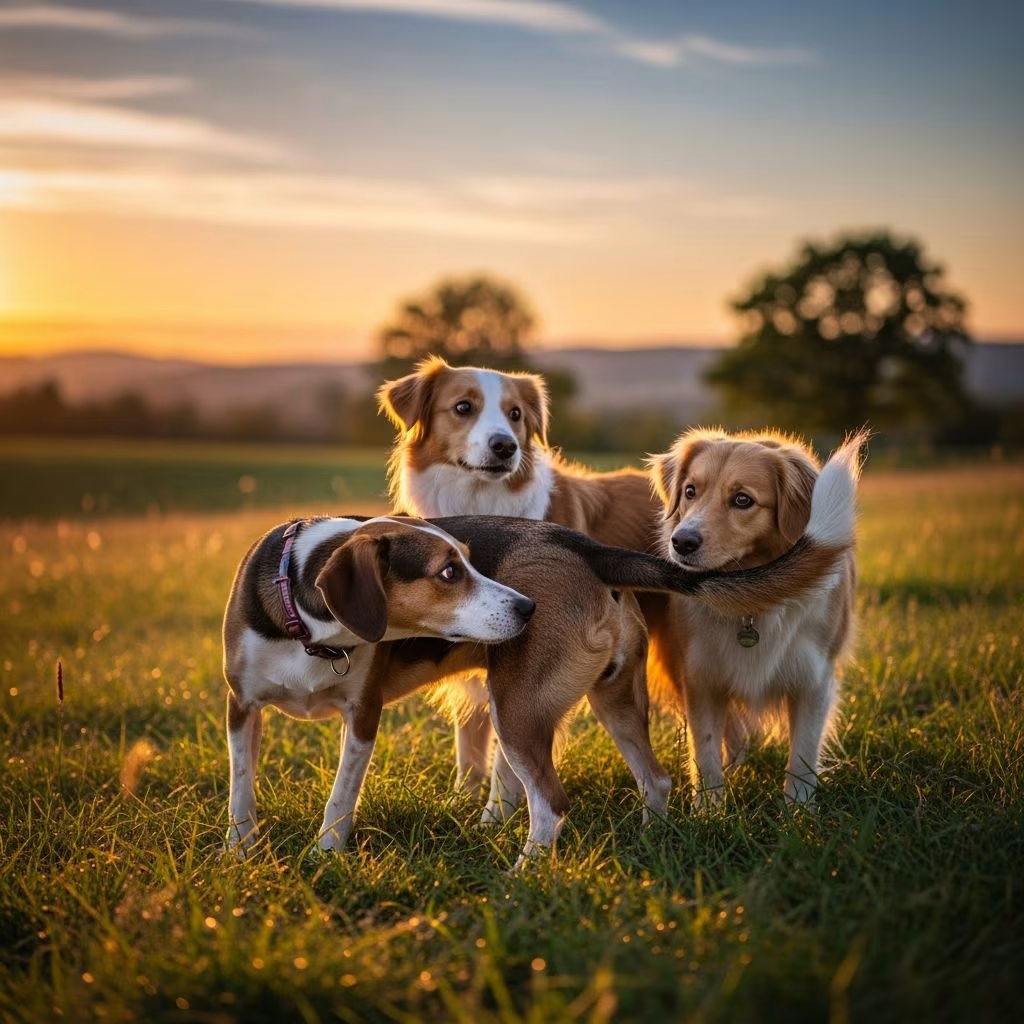
Dogs use rear-end sniffing as their primary greeting ritual, akin to humans exchanging business cards, to gather detailed profiles on age, health, diet, gender, and emotional state through chemical signals from anal glands.
The Extraordinary World of a Dog’s Nose
Canines possess an olfactory system vastly superior to humans, with up to 300 million scent receptors compared to our mere 6 million, enabling them to detect odors at concentrations 100,000 times lower. This acute sense dominates their perception, far outweighing sight or sound. Puppies emerge nose-ready, sniffing from birth while vision and hearing develop later.
A key feature is the vomeronasal organ, or Jacobson’s organ, in the mouth’s roof, specialized for pheromone detection—chemical messengers influencing behavior. Dogs curl their lips during intense sniffing to direct scents here, processing social cues invisible to us.
Anatomy Behind the Behavior: Anal Glands Explained
Positioned on each side of the anus, anal sacs produce a pungent fluid rich in unique compounds, released during defecation or under stress. This secretion coats feces, marking territory and broadcasting personal data.
The fluid’s composition varies by individual, influenced by genetics, diet, immune status, and hormones, creating a chemical fingerprint. Research on dogs and coyotes identifies trimethylamine and short-chain acids as primary odor contributors, explaining the fishy smell in gland issues.
What Intelligence Do Dogs Extract from a Sniff?
- Identity Basics: Gender, age, and breed lineage via distinct pheromone profiles.
- Health Status: Illness or wellness indicators through metabolic byproducts.
- Dietary Habits: Food types reflected in glandular secretions.
- Reproductive Info: Fertility cycles or recent mating in females.
- Mood and Temperament: Stress hormones signaling friendliness or aggression.
Sniffing exchanges act like a rapid data transfer, helping dogs assess friend or foe instantly.
Social Dynamics: Establishing Hierarchy and Bonds
During greetings, dogs alternate sniffs, with the initiator often deemed dominant. Right-nostril dominance processes novel scents first; left for familiar ones, linking to brain hemispheres for new versus known info.
This ritual fosters pack cohesion, similar to wild canids. Mounting attempts or prolonged sniffing may follow, signaling mating interest or status checks.
| Sniffing Pattern | Social Meaning | Body Language Cue |
|---|---|---|
| Quick mutual sniff | Friendly greeting | Relaxed tail wag |
| One-sided prolonged | Dominance assertion | Stiff posture |
| Avoidance or recoil | Disinterest or fear | Tucked tail |
| Followed by play bow | Invitation to interact | Lowered front, wagging |
Why Humans Get Sniffed Too
Dogs target human crotches due to apocrine glands there, analogous to canine anal sacs, emitting pheromones on sweat. Our upright posture places this area at nose height, prompting investigative sniffs despite lacking anal glands.
This isn’t rudeness but instinctual info-gathering on our health, stress, or familiarity.
When Sniffing Signals Trouble: Health Red Flags
Excessive butt obsession or scooting suggests anal gland impaction, common in small breeds or low-fiber diets. Signs include fishy odors, licking, or bloody discharge—prompt vet expression or dietary tweaks needed.
Behavioral extremes like aggressive sniffing with growling indicate anxiety; redirect with toys or training.
Training Tips to Curb Inappropriate Sniffs
- Teach ‘Leave It’: Use treats to interrupt and reward ignoring targets.
- Leash Control: Gentle redirection during dog park meets.
- Socialization Early: Expose puppies to varied greetings positively.
- Exercise Boost: Tire them out to reduce compulsive sniffing.
- Professional Help: For persistent issues, consult trainers.
Evolutionary Roots in Wild Ancestors
Wolves and coyotes mirror this, using anal scents for pack identity and territory. Domestication refined it for social living, but the instinct persists.
Across species, gland-based greetings occur, underscoring smell’s universality in animal societies.
Frequently Asked Questions
Is butt sniffing always friendly?
Usually yes, but watch for tension like raised hackles signaling wariness.
Can I stop my dog from sniffing other dogs?
Not entirely—it’s natural—but train manners for controlled settings.
Why does my dog sniff butts obsessively?
Possible gland blockage; vet check recommended.
Do all dogs do this?
Most, though some shy ones sniff less.
Is it hygienic?
For dogs, yes; regular grooming helps.
Embracing Canine Quirks
Understanding butt sniffing demystifies a core canine trait, enhancing bonds. Respect their nose-driven world for happier pets.
References
- Why Do Dogs Sniff Each Other’s Butts? — American Kennel Club. 2023-05-15. https://www.akc.org/expert-advice/training/why-do-dogs-sniff-butts/
- Why Do Dogs Sniff Each Other’s Butts? — Hill’s Pet Nutrition. 2024-02-10. https://www.hillspet.com/dog-care/behavior-appearance/why-do-dogs-sniff-each-others-butts
- Why Dogs Sniff Rear Ends — VCA Animal Hospitals. 2023-11-20. https://vcahospitals.com/know-your-pet/why-dogs-sniff-butts
- Why Dogs Sniff Butts — Rover.com. 2024-01-05. https://www.rover.com/blog/why-dogs-sniff-butts/
- Why Do Dogs Sniff Each Other’s Butts? — Britannica. 2022-08-12. https://www.britannica.com/video/dogs-each-other/-207927
- Why Dogs Smell Crotches and Butts — PetPlace.com. 2023-09-18. https://www.petplace.com/article/dogs/pet-behavior-training/why-do-dogs-smell-crotches-and-butts



