

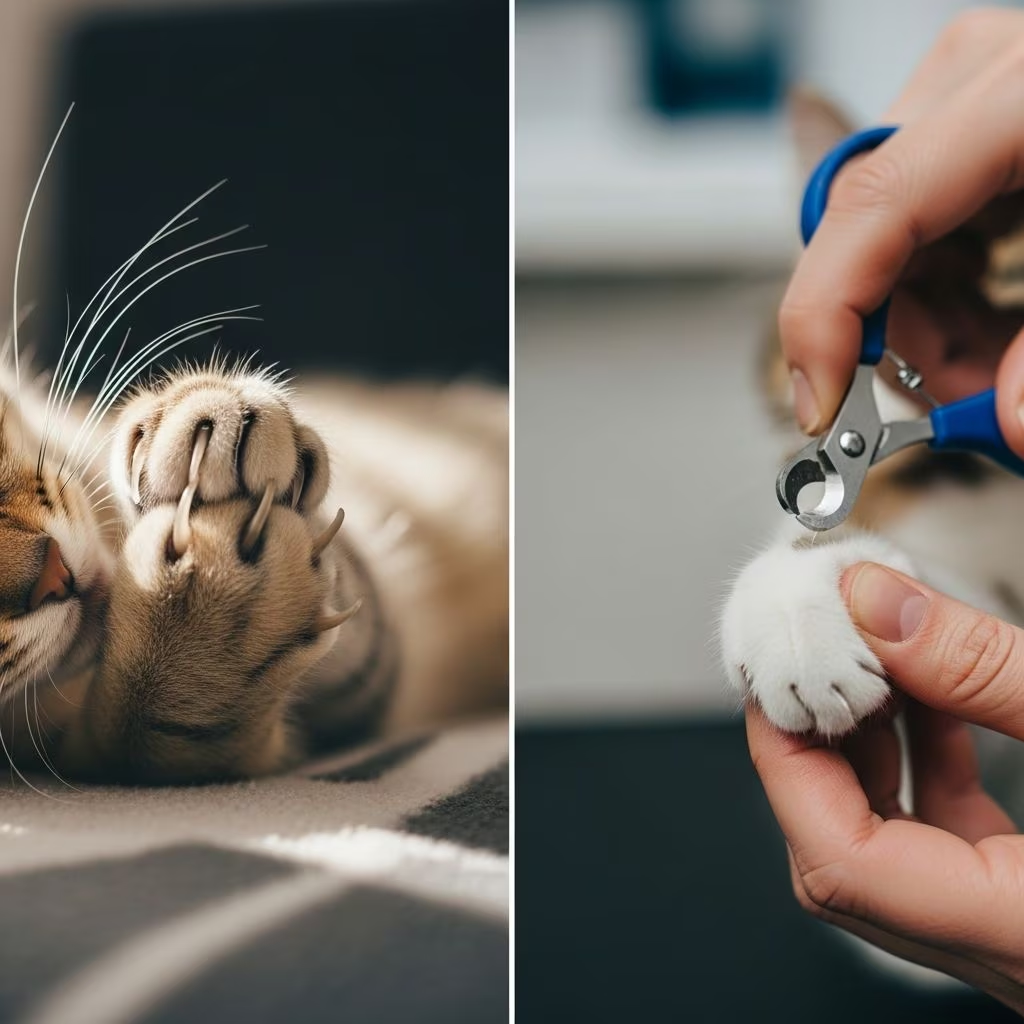
Declawing, or onychectomy, involves surgically removing the last bone of each toe on a cat’s paws, eliminating claws permanently. While some owners consider it for household protection, veterinary organizations highlight substantial health risks and advocate for alternatives.
Understanding the Declawing Procedure
The surgery severs the distal phalanx—the end bone of each front toe—using methods like scalpel, laser, or guillotine clippers. This is not a simple nail trim but an amputation that disrupts natural paw function.
- Scalpel method: Traditional incision requiring stitches, higher bleeding risk.
- Laser method: Seals tissue as it cuts, potentially reducing immediate pain and swelling.
- Guillotine clippers: Quick severance but possible bone fragment retention.
Performed under anesthesia, recovery demands strict pain management, litter changes to prevent infection, and restricted activity for weeks. Younger kittens under six months heal faster with fewer issues, but risks escalate with age.
Immediate Surgical Risks and Recovery Challenges
Any surgery carries anesthesia risks, but declawing adds specifics like hemorrhage—the most common issue—and infection.
| Risk | Description | Frequency |
|---|---|---|
| Hemorrhage | Excessive bleeding, worse in older cats | Most common |
| Infection | Bacterial entry at incision sites | Common, requires antibiotics |
| Pain | Acute post-op, needs multimodal control | Universal, varies by method |
| Wound Dehiscence | Reopening of incisions | Frequent in early recovery |
Cats often avoid litter boxes during healing due to paw soreness, leading to accidents. Owners must use soft bedding and monitor for lameness or chewing at paws.
Long-Term Health Complications
Studies show declawed cats face 3-7 times higher odds of chronic issues compared to intact cats.
- Chronic Pain: Phantom limb sensations, paw tenderness persisting years later.
- Back Pain: Altered gait from toe loss shifts weight, straining spine (odds ratio 2.9).
- Lameness: Abnormal walking, reluctance to jump, palmigrade stance.
- Retained Bone Fragments: P3 remnants cause regrowth, draining tracts, or abscesses.
A retrospective analysis linked declawing to increased overgrooming and joint misalignment.
Behavioral Changes After Declawing
Scratching serves stretching, marking, and defense; removal can trigger unwanted behaviors.
- Litter Avoidance: Odds ratio 7.2, due to foot sensitivity.
- Aggression/Biting: 3-4.5 times more likely, as claws were primary defense.
- Overgrooming: Excessive licking from stress or pain (odds ratio 3.06).
These shifts strain owner-cat bonds, sometimes leading to relinquishment.
Potential Benefits: When Might Declawing Be Considered?
Benefits primarily aid humans, not cats. The AVMA notes rare cases like injury risk despite alternatives.
- Prevents furniture damage and wall shredding.
- Protects vulnerable people: children, seniors, diabetics, immunocompromised from scratches or cat scratch fever.
- May preserve cat’s home if scratching caused rehoming threats.
Some clinics report smooth recoveries in kittens using lasers, but cons often dominate.
Legal Status and Veterinary Consensus
Declawing is banned in New York (2019 onward), Europe, UK, Brazil, Australia, New Zealand, Israel. Groups like AAHA, AAFP, ASPCA oppose routine use, calling it mutilation absent medical need (e.g., tumors).
AVMA neither endorses nor bans, stressing informed consent, alternatives first, and best practices if done.
Humane Alternatives to Declawing
Most experts prioritize training and tools over surgery.
| Alternative | How It Works | Effectiveness |
|---|---|---|
| Regular Trimming | Clip nails every 2-3 weeks with cat clippers | High, reduces damage |
| Scratch Posts | Sisal, cardboard varieties in multiple spots | Encourages proper scratching |
| Nail Caps | Soft vinyl covers glued on, last 4-6 weeks | Protects without removal |
| Deterrents | Sticky tape, citrus sprays on furniture | Redirects behavior |
| Training | Positive reinforcement for post use | Long-term success |
Combine methods: Provide 2-3 posts per cat, trim routinely, use caps for high-risk homes. Kittens learn fastest.
Costs: Surgery vs. Alternatives
Declawing: $600-$1,800 including exam, anesthesia, pain meds, follow-up. Alternatives: $20-50 initial (posts/caps), $10/month maintenance—far cheaper long-term.
FAQs
Is declawing just like a manicure?
No, it’s toe amputation, not nail trimming.
Does laser declawing hurt less?
It may reduce immediate pain, but long-term risks remain.
Can declawed cats go outdoors?
Not recommended; they lose defense against predators.
At what age is declawing safest?
Under 6 months, but still risky.
Will my cat hate me after declawing?
Possible aggression increase; bonds may suffer.
Expert Recommendations for Scratch Management
Start with multi-cat households or apartments: ample posts, play to expend energy. Consult vets for persistent issues. Soft paws products and Feliway diffusers aid redirection.
For medical vulnerabilities, weigh caps or rehoming over surgery. Prioritize cat welfare—claws are essential for balance, climbing, stretching.
References
- Cat Declawing: Pros, Cons, and Safe Alternatives — Pets Best. 2023. https://www.petsbest.com/blog/cat-declawing-safer-alternatives
- Declawing — AAHA. 2024. https://www.aaha.org/declawing/
- Cat Declawing: Pros, Cons, and Safer Alternatives — Shallowford Vet. 2023. https://shallowfordvet.com/cat-declawing-pros-cons-and-safer-alternatives/
- Declawing Cats — Sunnyside Veterinary Clinic. 2022. https://www.sunnysidevetclinic.com/declaw
- Cat Declawing — CareVet by Interstate. 2023. https://www.carevet.com/interstate/cat-declawing/
- AAFP Position Statement: Declawing — PMC / NIH. 2024-05-01. https://pmc.ncbi.nlm.nih.gov/articles/PMC11128892/
- Declawing — PAWS Chicago. 2019. https://www.pawschicago.org/fileadmin/media/images/News_Resources/Cat_Resources/CatResource_Declawing_2019-web.pdf
- Declawing of Domestic Cats — AVMA. 2019-07-23. https://www.avma.org/sites/default/files/resources/declawing_bgnd.pdf



