

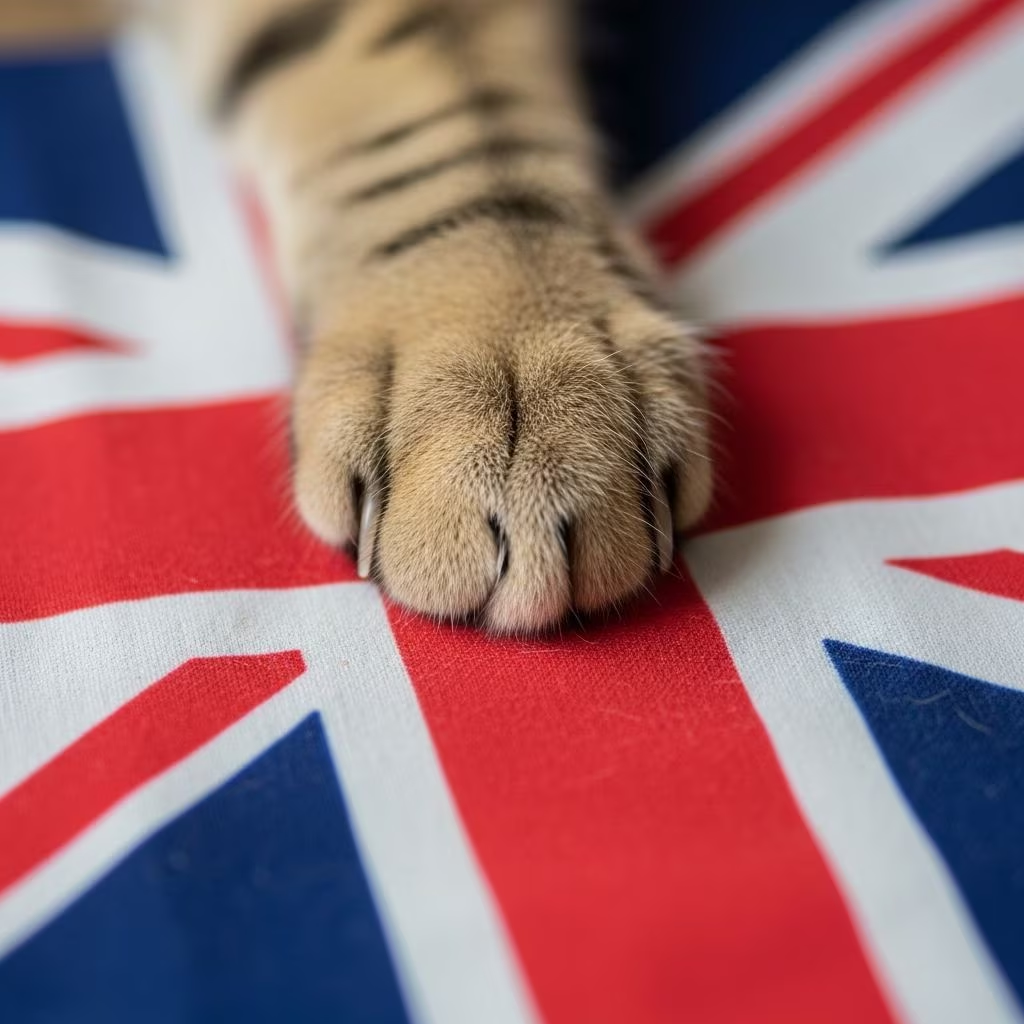
Declawing cats is prohibited throughout the United Kingdom under the Animal Welfare Act 2006, which classifies the procedure as an unnecessary mutilation causing undue suffering. This law reflects a commitment to allowing cats to perform natural behaviors like scratching without interference. Recent legislative updates have further strengthened protections by banning the importation of declawed cats, closing previous loopholes exploited by traders.
The Nature of Declawing and Its Impacts
Declawing, or onychectomy, involves surgically removing the last bone of each toe on a cat’s paws, equivalent to amputating the tips of human fingers. This invasive surgery often leads to immediate complications such as pain, infection, hemorrhage, and anesthesia risks. Long-term consequences include chronic pain, mobility issues, overgrooming, litter box avoidance, increased aggression, and biting behaviors.
Cats rely on their claws for essential functions: climbing, stretching, marking territory, and self-defense. Without claws, they experience ongoing distress, as scratching is a core instinct tied to physical and mental health. Veterinary organizations worldwide, including those in the UK, condemn elective declawing, advocating only for rare medical necessities.
Historical and Current UK Legislation
The UK’s prohibition on declawing stems from the Animal Welfare Act, which mandates that owners meet animals’ needs for a suitable environment, including opportunities for natural behaviors. Performing declawing violates this by causing harm without therapeutic benefit.
In a pivotal development, the Animal Welfare (Import of Dogs, Cats and Ferrets) Bill, passed in recent years, explicitly bans importing cats that have undergone declawing. This addresses a prior gap where declawed cats could enter the country for sale, despite the domestic ban. The legislation, supported by groups like Cats Protection and the RSPCA, also restricts imports of pregnant animals and those under six months old, curbing smuggling.
Enforcement has been bolstered at borders, empowering authorities to seize mutilated animals and prosecute offenders. This aligns with broader efforts against organized crime linked to pet trade.
Global Perspectives on Declawing Bans
The UK joins a growing list of regions rejecting declawing. Countries including Australia, New Zealand, and Switzerland have long prohibited it, recognizing its cruelty. In the United States, states like New York (2019), Maryland, Massachusetts, and California (effective 2026) have enacted bans, with cities like West Hollywood pioneering local ordinances.
| Region | Status | Key Date/Notes |
|---|---|---|
| United Kingdom | Banned (domestic & imports) | Animal Welfare Act 2006; Import Bill recent |
| California, USA | Banned (effective 2026) | AB 867; medical exceptions only |
| New York, USA | Banned | 2019 state law |
| Australia/New Zealand | Banned | Long-standing national prohibition |
| Switzerland | Banned | National welfare laws |
These bans are driven by veterinary consensus: major associations oppose routine declawing, favoring humane alternatives.
Health Risks Associated with the Procedure
- Short-term complications: Bleeding, swelling, infections, and adverse reactions to anesthesia.
- Long-term effects: Phantom pain, arthritis-like symptoms, back pain from altered gait, and residual bone spurs.
- Behavioral changes: Heightened aggression, reluctance to use litter boxes, excessive chewing or licking paws.
- Increased vulnerability: Declawed cats struggle to climb or escape threats, raising injury risks.
Studies and expert testimonies highlight that these issues persist lifelong, undermining any perceived convenience for owners. For immunocompromised individuals, experts recommend hygiene protocols over surgery.
Humane Alternatives to Manage Scratching
UK law encourages non-invasive solutions that respect cats’ needs. Effective strategies include:
- Regular nail trimming: Clip tips every 10-14 days using cat-specific clippers to blunt sharp edges.
- Claw caps: Soft vinyl covers glued over claws, lasting 4-6 weeks; available in various colors.
- Scratching posts: Provide vertical sisal or carpet posts in multiple locations; place near furniture initially.
- Environmental enrichment: Offer climbing trees, window perches, and interactive toys to redirect energy.
- Deterrents: Use double-sided tape or citrus sprays on furniture; positive reinforcement for using posts.
- Behavioral training: Reward desired scratching with treats; consult professionals for persistent issues.
Combining these yields high success rates, preventing damage without harm. Pheromone diffusers can reduce stress-related scratching.
Owner Responsibilities Under UK Law
Cat guardians must ensure five welfare needs: a suitable environment, diet, ability to exhibit normal behaviors, freedom from pain/disease, and companionship. Failure to prevent destructive scratching through alternatives could lead to neglect charges. Vets risk prosecution for performing illegal procedures.
Adopting from shelters? Many UK rescues disclose claw status and prioritize intact cats. Report suspected illegal declawing to authorities like the RSPCA.
Recent Enforcement and Advocacy Wins
The Import Bill’s passage marks a victory for organizations like Cats Protection, which highlighted declawing’s lifelong pain, and the RSPCA, noting a 700% rise in related mutilations over a decade. Cross-party support, including from veterinarians like Danny Chambers MP, underscores unified commitment.
California’s 2026 ban, praised by The Paw Project and HumaneVMA, mirrors UK progress, signaling a global shift.
Frequently Asked Questions (FAQs)
Is declawing ever allowed in the UK?
No, except in extreme medical cases vetted by a licensed veterinarian. Elective declawing is illegal.
Can I import a declawed cat to the UK?
No, the recent Import Bill prohibits this, effective alongside bans on cropped-ear dogs.
What if my cat scratches furniture?
Use trimming, caps, posts, and training. These resolve 90% of cases humanely.
Are there penalties for illegal declawing?
Yes, fines, imprisonment under the Animal Welfare Act, plus import seizures.
How do claw caps work?
Applied like false nails with pet-safe glue; they shed naturally, preventing damage for weeks.
Choosing the Right Scratching Solutions
Selecting posts: Tall (at least 90cm), sturdy, with varied textures. Train kittens early for best results. Multi-cat homes benefit from zoned resources to minimize conflict.
Monitor health: Sudden scratching changes may signal pain or stress; consult vets promptly.
References
- Welcoming the Animal Welfare Import Bill — Cats Protection. 2023 (approx.). https://www.cats.org.uk/mediacentre/pressreleases/cats-protection-welcomes-animal-welfare-import-of-cats-dogs-and-ferrets-bill
- California’s Bill To Ban Cat Declawing Will Take Effect in 2026 — Assemblymember Alex Lee’s Office. 2025-12-03. https://a24.asmdc.org/press-releases/20251203-californias-bill-ban-cat-declawing-will-take-effect-2026
- Tough new law will help see the end of cruel dog ear cropping — RSPCA. Recent (post-2023). https://www.rspca.org.uk/w/whatwedo/press/dog-ear-cropping-law-passed



