

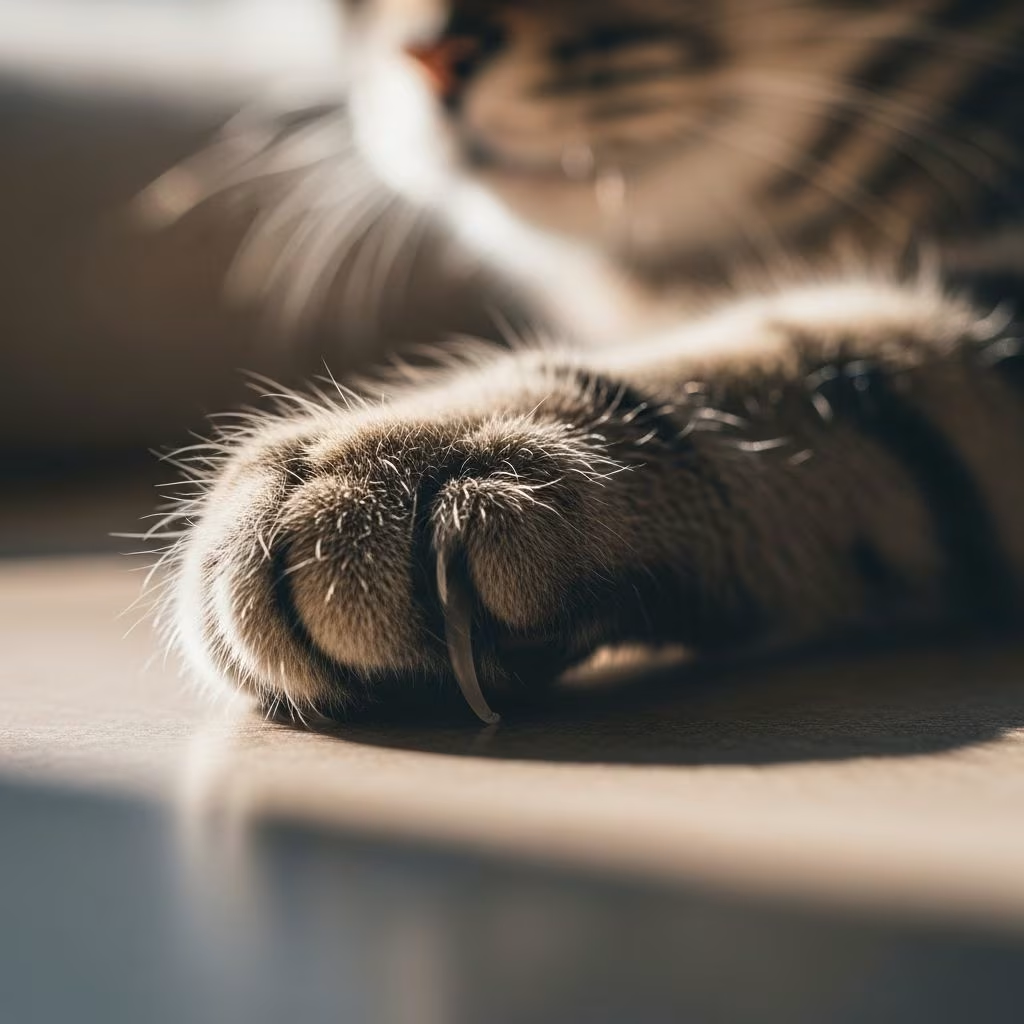
Declawing cats, medically known as onychectomy, is a surgical procedure that involves amputating the last bone of each toe to permanently remove claws. While some owners consider it for managing scratching, major veterinary organizations like the American Veterinary Medical Association (AVMA) and American Association of Feline Practitioners (AAFP) strongly oppose it as an elective procedure due to significant health risks and available alternatives.
What is Declawing?
Declawing is not a simple manicure but a partial amputation of the distal phalanx (third bone) in each toe of a cat’s paws. This surgery severs tendons, nerves, and ligaments, fundamentally altering the paw’s structure. Contrary to myths, it does not just remove the claw sheath; the entire bone must be excised to prevent regrowth.
Cats use their claws for essential functions like climbing, stretching, marking territory, and self-defense. Without them, cats lose vital natural behaviors, leading to potential physical and psychological issues. The procedure is typically performed on kittens under anesthesia, but recovery is painful and complications are common.
Declawing Procedure: How It’s Done
There are three primary methods for declawing, each carrying risks of pain, bleeding, and infection:
- Resco Clipper Method: Uses a sterile guillotine-style clipper to sever the third digit bone, similar to cutting through a human fingertip. This is the most common but can cause hemorrhage and requires stitches.
- Disarticulation: Involves surgically disconnecting ligaments to remove the entire third phalanx (P3). Scalpel blades are often used, increasing lameness risk with longer surgery times.
- Laser Declawing: Employs a CO2 laser for precision cutting, reducing bleeding and immediate post-op pain. However, it does not eliminate long-term complications and is significantly more expensive.
Regardless of method, best practices demand multimodal pain control before, during, and after surgery, yet studies show persistent issues.
Risks and Complications of Declawing
Declawing poses immediate and lifelong risks. Acute complications include hemorrhage (most common), infection, swelling, and anesthesia reactions. Long-term problems are even more concerning: declawed cats are 3-7 times more likely to suffer chronic back pain, lameness, inappropriate elimination, aggression, biting, and overgrooming.
A 2017 Journal of Feline Medicine and Surgery study found declawed cats at higher risk for back pain (OR 2.9), inappropriate urination (OR 7.2), and biting (OR 4.5). Retained P3 fragments, seen across all methods, exacerbate chronic pain. Behavioral changes like litter box avoidance stem from paw soreness, while defenselessness increases biting.
| Complication Type | Examples | Risk Increase (vs. Non-Declawed) |
|---|---|---|
| Physical | Chronic pain, lameness, palmigrade stance, nerve damage | 3-7x |
| Behavioral | Inappropriate elimination, biting, overgrooming | OR 3.0-7.2 |
| Surgical | Hemorrhage, infection, dehiscence | Common in 15-26% of cases |
Costs range from $600-$1,800, escalating with complications. Older cats face higher risks.
Pros and Cons of Declawing Cats
Pros (Owner-Focused):
- Prevents furniture damage and protects vulnerable people (e.g., immunocompromised, diabetics, seniors).
- May reduce cat scratch fever risk, though not eliminate it.
- Rarely, allows keeping cats that would otherwise be surrendered.
AVMA notes rare medical necessities like tumors, but not for behavior.
Cons (Cat Welfare): Outweigh pros per experts. Painful mutilation removes natural defenses, causes lifelong health/behavioral issues, and is banned in many places.
Is Declawing Legal?
Declawing is illegal for non-medical reasons in New York (2019, first U.S. state), UK, much of Europe, Brazil, Australia, New Zealand, and Israel. Other U.S. cities/states restrict it. AAFP and ASPCA discourage it universally, urging alternatives. Veterinary ethics demand full owner education on risks.
Alternatives to Declawing: Humane Solutions
Effective, non-surgical options manage scratching without harm:
- Regular Nail Trims: Clip every 1-2 weeks with cat-specific clippers to blunt claws.
- Nail Caps: Soft vinyl covers like Soft Paws last 4-6 weeks, pain-free.
- Scratching Posts: Provide varied textures (sisal, cardboard) in multiple locations; attract with catnip.
- Deterrents: Sticky tape, citrus sprays, or furniture covers on banned areas.
- Environmental Enrichment: Stress reduction via play, pheromones (Feliway), and proper litter.
- Training: Positive reinforcement redirects scratching; consult behaviorists.
These preserve cat welfare and resolve 90%+ of issues when consistent. Indoor-only living mitigates defense needs.
Recovery After Declawing
Post-op: Cats need e-collars, strict litter (non-clumping paper), pain meds (7-14 days min), and rest. Lameness lasts median 2 days but up to 54; full healing 4-6 weeks. Monitor for infection, hemorrhage. Many cats chew paws or avoid litter permanently. Kittens under 1 year recover faster, but risks persist.
Frequently Asked Questions (FAQs)
Is declawing the same as a nail trim?
No, declawing amputates the toe bone; trims just shorten claws painlessly.
Does declawing stop litter box use?
Yes, declawed cats are 7x more likely due to pain.
Can declawed cats go outside?
No, they can’t defend or climb, increasing dangers.
Is laser declawing better?
It reduces bleeding but not long-term risks like pain or fragments.
What if my cat scratches people?
Use trims, caps, training, and consult vets for medical checks.
Expert Recommendations
AAHA, AAFP, AVMA prioritize alternatives and pain management if medically required. Educate owners: surgery risks outweigh benefits for scratching. Choose adoption/keeping via humane methods over declawing.
References
- Cat Declawing: Pros, Cons, and Safe Alternatives — Pets Best. 2023. https://www.petsbest.com/blog/cat-declawing-safer-alternatives
- Declawing — American Animal Hospital Association (AAHA). 2024. https://www.aaha.org/declawing/
- Cat Declawing Pros, Cons, and Safer Alternatives — Shallowford Vet. 2023. https://shallowfordvet.com/cat-declawing-pros-cons-and-safer-alternatives/
- Cat Declawing — CareVet. 2024. https://www.carevet.com/interstate/cat-declawing/
- AAFP Position Statement: Declawing — American Association of Feline Practitioners (AAFP), PubMed Central (NIH). 2024-05-01. https://pmc.ncbi.nlm.nih.gov/articles/PMC11128892/
- Declawing — PAWS Chicago. 2019. https://www.pawschicago.org/fileadmin/media/images/News_Resources/Cat_Resources/CatResource_Declawing_2019-web.pdf
- Declawing of Domestic Cats — American Veterinary Medical Association (AVMA). 2019-07-23. https://www.avma.org/sites/default/files/resources/declawing_bgnd.pdf



