

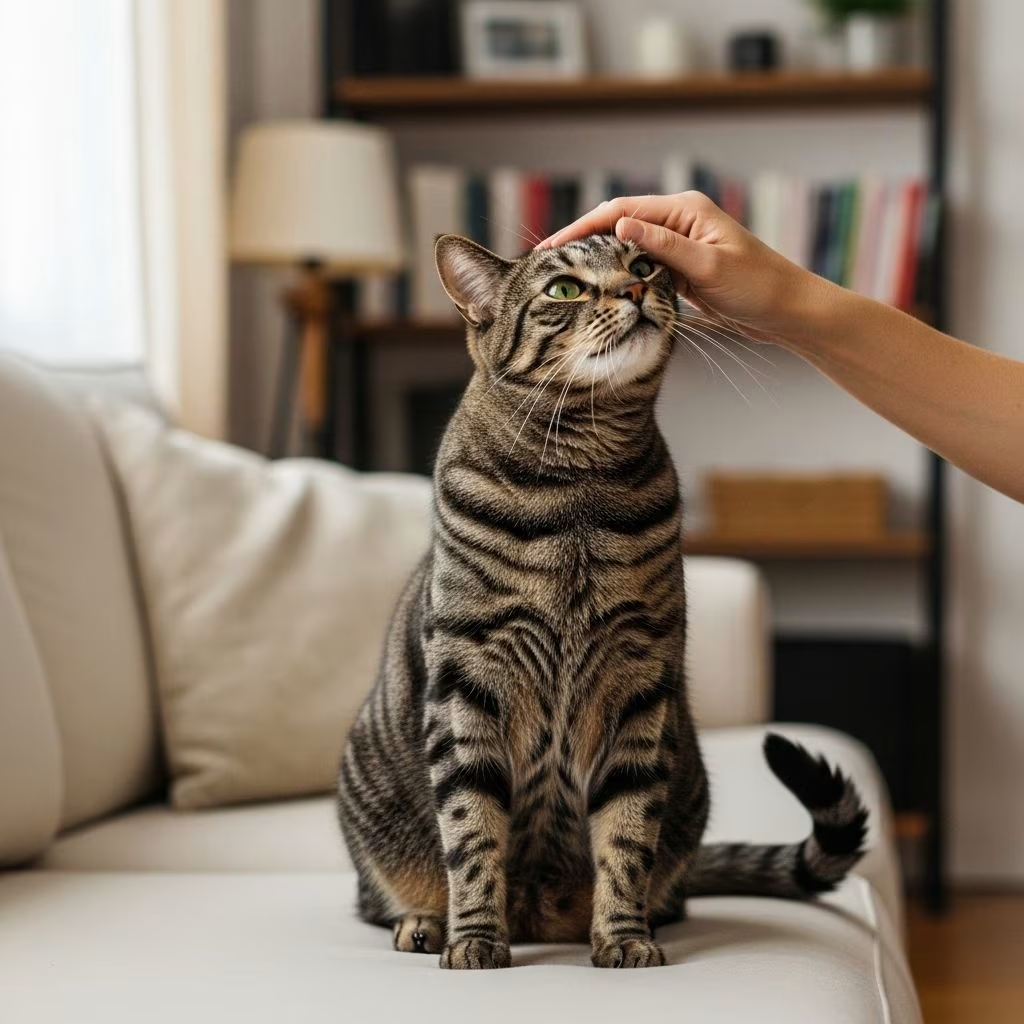
Dealing With Needy Behaviors In Your Adult Cat
Cat lovers everywhere understand the joy of having an affectionate feline companion. There’s nothing quite like the warmth of a purring cat on your lap or the comfort of their presence nearby. However, when your adult cat takes clinginess to an extreme level, constantly demanding attention and following you from room to room, it can become challenging to maintain personal space and complete daily tasks. If your adult cat exhibits Stage 5 Clinger behavior, you’re not alone. The encouraging news is that needy cat behaviors can be effectively modified with the right tools, techniques, patience, and persistence from you as a dedicated cat owner.
Understanding Needy Behavior Beginnings
Before we can address and modify needy behaviors in adult cats, it’s essential to understand why these behaviors develop in the first place. Excessive clinginess doesn’t occur randomly; there are specific, identifiable reasons behind your cat’s clingy demeanor. Understanding these root causes is the first step toward successfully addressing the issue.
1. Health Issues
Just as humans experience behavioral changes when we’re unwell, cats also exhibit different behaviors when they’re not feeling their best. When a cat is under the weather, even with minor health issues, their personality and behavioral patterns can shift significantly. Unwell cats may seek additional rest, spend more time sleeping, and actively pursue comfort from their caretakers. These health-related behavioral changes can manifest as excessive clinginess, constant following, and heightened demands for physical contact and reassurance.
It’s crucial to recognize that any significant behavioral change in your adult cat may indicate an underlying medical condition. Before implementing behavioral modification strategies, consult with your veterinarian to rule out health-related causes. Common medical issues that can trigger needy behavior include sensory decline, neuromuscular conditions affecting mobility, brain tumors, kidney dysfunction, and various endocrine system disorders. A thorough veterinary examination ensures that you’re addressing the actual cause of the behavior rather than simply treating the symptoms.
2. Accidental Reinforcement
Many cat owners unknowingly reinforce the exact needy behaviors they wish to eliminate. This accidental reinforcement is one of the most common reasons why clingy behavior persists and intensifies over time. When your cat meows excessively, seeks constant cuddling, or follows you like a shadow, these are all attention-seeking behaviors. However, if you respond to these behaviors by providing attention—whether it’s petting, talking, playing, or simply acknowledging your cat—you’re actually rewarding the behavior and encouraging it to continue.
From your cat’s perspective, their behavior is working perfectly. They’ve learned that meowing leads to your attention, that following you results in interaction, and that demanding cuddles brings physical contact. Over time, these behaviors become normalized and habitual. What started as an occasional attention-seeking behavior becomes an ingrained pattern. The key to breaking this cycle is understanding that you may have inadvertently taught your cat to be excessively needy through consistent, unintentional positive reinforcement.
3. Lack of Prior Guidance And Training
If you’ve adopted your cat as an adult rather than raising them from kittenhood, you’re inheriting behavioral patterns established long before your relationship began. Adult cats may have spent years in environments where needy behaviors were overlooked, tolerated, or even actively encouraged. These deeply ingrained patterns can be challenging to modify, but it’s certainly not impossible.
The advantage of understanding this factor is recognizing that the behavior isn’t your cat’s fault, nor is it necessarily a reflection of your current handling. Your cat simply learned certain behavioral patterns in their previous environment. With consistent, patient training and behavior modification techniques, even middle-aged and senior cats with set-in-their-ways personalities can learn new, more appropriate behavioral patterns.
Clingy Cat Solutions: Positive Reinforcement Training
The most effective approach to managing needy cat behavior involves positive reinforcement training. Unlike punishment-based methods, positive reinforcement focuses on rewarding desired behaviors while ignoring or redirecting unwanted ones. This method is not only more humane but also more effective for lasting behavioral change. The wonderful benefit is that training provides both mental and physical stimulation for your cat, improving their overall well-being while reducing clingy behavior.
Redirecting Attention Through Strategic Positioning
One practical solution involves managing your cat’s proximity while you work or engage in daily activities. Instead of completely preventing your cat from being near you, create an approved space where your cat can rest comfortably close by without interfering with your activities.
Set up a cozy cat bed or comfortable resting spot near your workspace—such as next to the table where you’re working. Use positive reinforcement by encouraging your cat onto this designated space with treats and praise. When your cat successfully settles onto the approved spot, reward this behavior with attention and affection. This approach satisfies your cat’s desire to be near you while maintaining your personal space and allowing you to work uninterrupted.
It’s important to note that timing matters significantly in behavioral training. If your cat is already on the table beside you, they have essentially achieved their goal. Any negative response at this point teaches little. Instead, redirect them when they’re considering the behavior and looking toward you with the intention of jumping on the table. You can physically pick up your cat and place them in the appropriate space, but the most effective learning occurs when you catch them in the moment they’re contemplating the unwanted behavior.
Establishing Boundaries Through Consistency
Consistency is absolutely paramount when modifying cat behavior. Your cat learns through patterns and repetition. If sometimes you reward clingy behavior with attention and sometimes you don’t, your cat will become confused and may actually intensify the behavior, hoping that persistence will eventually yield results. This is known as variable reinforcement, and it actually strengthens unwanted behaviors rather than eliminating them.
Establish clear boundaries and maintain them consistently. When your cat exhibits unwanted needy behavior—such as excessive meowing, jumping on furniture where they shouldn’t be, or pawing for attention at inappropriate times—respond consistently by either ignoring the behavior or redirecting it to an approved activity. Every family member who interacts with the cat should follow the same guidelines to prevent mixed messages.
Environmental Enrichment and Mental Stimulation
Many instances of clingy cat behavior stem from boredom and insufficient mental stimulation. Cats are intelligent, curious creatures that require regular engagement and environmental enrichment to maintain mental health and prevent destructive behaviors.
Interactive Play and Physical Activity
Dedicate 20 to 60 minutes daily to active play with your cat, split into multiple sessions if necessary. Engage your cat in games that encourage running, jumping, and quick directional changes. Feather wands, laser pointers, and ball toys can prompt your cat to bolt around the house and exert physical energy. Regular physical activity not only burns energy but also reduces stress and anxiety that might contribute to clingy behavior.
Puzzle Feeders and Treat Toys
Puzzle feeders and treat-dispensing toys provide dual benefits for your cat’s well-being. These interactive feeders require your cat to work for their food, engaging their problem-solving abilities and slowing their eating pace. The mental stimulation from puzzle feeders can reduce overall stress levels, improve digestion, and decrease the likelihood of behavioral problems. A simple change in how you present meals can trigger a cascade of emotional and behavioral improvements.
Vertical Climbing Spaces
Cats naturally love vertical environments where they can climb, perch, and survey their territory. Installing cat trees and other high-up spaces provides both physical exercise through climbing and jumping, as well as a comfortable resting place where your cat can relax and observe their surroundings. These spaces are especially effective when positioned near windows, allowing your cat to watch outdoor activity and remain mentally engaged throughout the day.
Visual and Passive Stimulation
Beyond interactive play, provide passive mental stimulation through visual enrichment. Install bird feeders outside your windows to attract birds and wildlife that naturally captivate cats’ attention. Additionally, videos designed specifically for cats—sometimes called “Cat TV”—can provide hours of passive entertainment through footage of birds, squirrels, and other animals. These visual stimuli keep your cat alert and engaged, reducing the urge to seek constant attention from you.
Breaking the Reinforcement Cycle
Perhaps the most challenging aspect of addressing needy cat behavior is learning to ignore your cat’s pleas for attention. Once you’ve ruled out medical issues, you can be confident that your cat’s constant meowing, yowling, and demanding behavior are simply attention-seeking tactics.
This is where most cat owners struggle because ignoring a crying cat feels counterintuitive and emotionally difficult. However, continuing to provide comfort and attention when your cat meows reinforces the very behavior you’re trying to eliminate. Every time you respond to your cat’s cry with interaction—whether it’s picking them up, talking to them, or even scolding them—you’re providing the attention they seek. To your cat, any attention is positive attention.
Breaking this cycle requires discipline and patience. Ignore the meowing, yowling, and demanding behaviors. Only provide attention and affection when your cat is calm, quiet, and exhibiting appropriate behavior. Reward peaceful, independent behavior with praise and treats. This shift teaches your cat that being clingy and demanding doesn’t work, while being independent and calm results in positive interactions with you.
Creating a Safe and Secure Environment
Your cat’s surroundings significantly influence their emotional state and behavior. If your cat is anxious or stressed, addressing these underlying emotions can substantially reduce clingy behavior. Create designated safe spaces where your cat feels secure and comfortable. This might be a specific room, a cozy corner with hiding spots, or a cat-specific furniture piece where they can retreat when feeling overwhelmed.
Additionally, establish a consistent daily routine for feeding, playtime, and interaction. Predictability helps cats feel secure and less anxious about when they’ll receive attention and resources, naturally reducing the need for constant reassurance.
Frequently Asked Questions About Needy Cat Behavior
Q: Why has my adult cat suddenly become more clingy?
Sudden changes in clinginess often indicate underlying health issues, so schedule a veterinary checkup first. Other reasons include changes in your routine, environmental stress, or accidental reinforcement of attention-seeking behaviors. Once medical issues are ruled out, evaluate recent changes in your home or schedule.
Q: How long does it take to change needy cat behavior?
Behavioral modification timeframes vary depending on how long the behavior has been established and how consistently you implement the new strategies. Generally, you should see initial improvements within 2-4 weeks of consistent training, though significant change may take several months.
Q: Can punishment help eliminate needy behavior?
Punishment is ineffective and counterproductive for modifying cat behavior. Punishing your cat for clingy behavior may increase anxiety and stress, actually worsening the problem. Positive reinforcement and redirection are far more effective and humane approaches.
Q: Should I ever ignore my cat’s needs?
No. There’s a difference between ignoring attention-seeking behavior and neglecting your cat’s actual needs. Your cat still requires regular feeding, fresh water, clean litter box access, and daily interaction. The key is providing these on your schedule rather than on demand through constant meowing.
Q: Is clingy behavior more common in specific cat breeds?
Some breeds are naturally more affectionate and social than others, which can sometimes be mistaken for neediness. However, clingy behavior can develop in any cat regardless of breed when health issues, insufficient enrichment, or accidental reinforcement occur.
References
- Older Cats with Behavior Problems — ASPCA. https://www.aspca.org/pet-care/cat-care/common-cat-behavior-issues/older-cats-behavior-problems
- Why is My Cat So Clingy? — Lolahemp. https://lolahemp.com/blogs/cat-health/why-is-my-cat-so-clingy
- Why Is My Cat So Clingy: 8 Reasons — Sploov Vets. https://www.splootvets.com/post/why-is-my-cat-clingy-suddenly
- Why Is My Cat So Clingy? – Managing Velcro Cats — Pet Honesty. https://www.pethonesty.com/blogs/blog/clingy-cat-behavior-why-it-happens-how-to-address-it



