

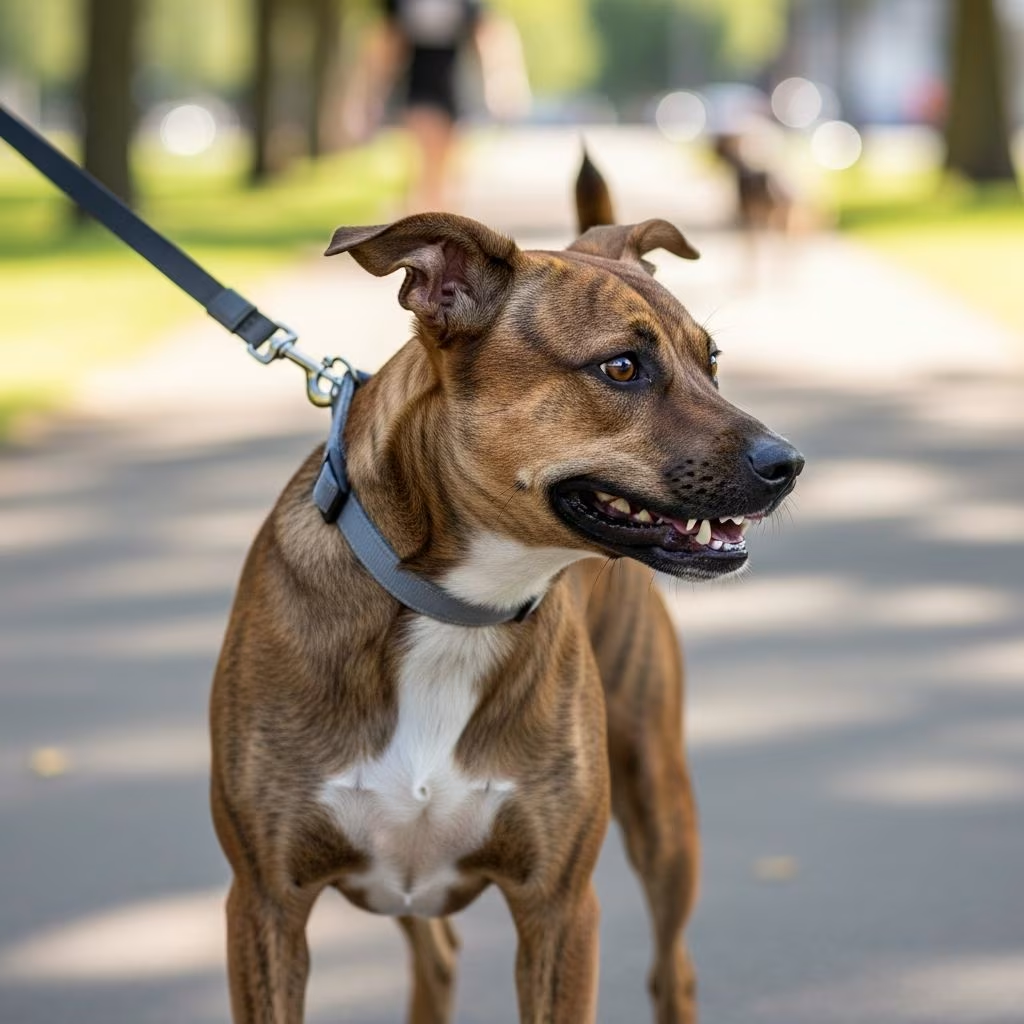
Understanding Leash Reactivity in Dogs
Does your dog lunge, growl, and bark at the end of his leash when he sees an unfamiliar person, dog, or object? If so, your dog is displaying a behavior called “leash reactivity.” This behavior can be frightening if you’re experiencing it for the first time—watching your sweet dog transform from calm to chaotic is unnerving. The good news is that leash reactivity is manageable with the right approach and understanding. Many dog owners face this challenge, and proven training methods can help you and your dog enjoy peaceful walks together.
Why Is Your Dog Acting This Way?
Understanding the root cause of your dog’s leash reactivity is crucial to addressing it effectively. There are two main reasons why dogs display leash reactivity: fear or frustration. Identifying which motivation is driving your dog’s behavior will shape your entire training approach.
Fear-Based Reactivity
A fearful dog wants to get away from the thing she’s afraid of, so she displays distance-increasing body language, such as snarling and growling. This is her way of communicating, “Hey, you! You make me uncomfortable! Stay away from me!” Fearful reactive dogs are trying to create space between themselves and perceived threats. These dogs are not being aggressive out of aggression—they’re being defensive out of anxiety or fear. Understanding this distinction is essential because it changes how you approach training.
Frustration-Based Reactivity
A frustrated dog, on the other hand, displays distance-decreasing body language, such as playful barking and bounciness. It’s his way of saying, “Hey, you look fun! Come meet me!” These dogs often want to interact with what excites them but cannot due to the leash constraint. A dog-friendly dog who sees another dog and desperately wants to greet them may bark and lunge in frustration. This type of reactivity, while stemming from a different emotion than fear, still requires careful management and training.
Identifying Your Dog’s Motivation
The first step in working with your dog’s reactivity is to determine the underlying cause through careful observation of his body language. Is he fearful or frustrated? The answer to that question will shape the behavior modification approach you use. This distinction is critical because using the wrong training technique for the wrong motivation can actually make the behavior worse.
The Role of the Leash in Reactive Behavior
The leash plays a surprisingly significant role in your dog’s reactive behavior. Understanding this connection helps explain why your dog may act perfectly fine off-leash or in certain environments but becomes reactive when leashed.
How Leashes Affect Fearful Dogs
Because of a perceived threat in the environment, a fearful dog’s body undergoes a physiological phenomenon called “fight or flight.” The leash creates an inability to flee—your dog cannot run away from the scary stimulus. Without the ability to escape, a fearful dog will instead try to create distance through “fight” behaviors, such as snarling and growling. The leash essentially traps your dog in a stressful situation with no escape route, forcing the dog to use aggressive displays to try to make the threat go away.
How Leashes Affect Frustrated Dogs
For a frustrated dog, the leash is keeping her from doing what she wants most—meeting or interacting with the exciting stimulus. This adds to her overall frustration. The leash becomes a barrier to achieving her goals, which can compound her emotional state and increase reactive behaviors.
Trigger Stacking and Its Impact
Your dog can also experience a phenomenon called “trigger stacking,” which means that multiple small triggers accumulate over a period of time. Each small trigger on its own may not push your dog over his threshold into reactivity, but when piled on top of each other, they do. For example, seeing a small dog one block away might be manageable, but if your dog sees a small dog every block for several blocks during a single walk, combined with other minor stressors like loud noises and unfamiliar people, your dog’s stress level builds until even a minor trigger sends him into a reactive episode. This is why some days your dog seems fine and other days he reacts to things that normally don’t bother him.
Training Techniques for Fear-Based Reactivity
To effectively change fear-based reactivity, you’ll need to change how your dog feels about the trigger. This is called counterconditioning. If your dog is fearful of other dogs, you have to teach him that dogs aren’t scary and there’s no need to be afraid. You can do this by having the trigger predict that something great is about to happen.
Step 1: Introduce the Marker and Treat
Start by teaching your dog a marker—a sound or word that means a treat is coming. This is typically a clicker or the word “yes!” Practice using the marker and then immediately giving your dog his favorite treat in quick succession in a non-threatening environment until he responds consistently. Your dog should become excited when he hears the marker because he knows something delicious is about to happen.
Step 2: Use the Marker Near Triggers
Begin your training sessions at a distance where your dog notices the trigger (such as another dog) but is not reacting. When your dog sees the trigger but remains calm, mark the behavior with your marker and immediately give him a high-value treat. This teaches your dog that the presence of the trigger predicts good things, not scary things.
Troubleshooting the Marker Method
If your dog doesn’t turn toward you in anticipation of the treat, he might not fully understand what the marker means in that particular environment, or you might be too close to his threshold. If the former, practice using the marker and then treating in quick succession in a non-threatening environment until he responds consistently. If the latter, adjust the threshold by increasing the distance between your dog and the trigger.
Step 3: Gradually Decrease Distance
As your dog becomes more comfortable, gradually decrease the distance between your dog and the trigger one foot at a time. Continue using the marker and giving treats if your dog doesn’t react. You may have to go back to marking him simply looking at the trigger and work up to marking his eye contact with you. Patience is essential during this phase—rushing the process often leads to setbacks.
Step 4: Emergency U-Turns
If your dog goes over his threshold and begins reacting, don’t panic. Simply increase the distance from the trigger with an “emergency U-turn” until he’s no longer upset, then continue training. This prevents your dog from rehearsing the reactive behavior and helps him learn that moving away from the trigger is a safe option.
Training Techniques for Frustration-Based Reactivity
The LAT (Look At That) game can be particularly helpful for frustration-based reactivity because it teaches a more appropriate response to exciting stimuli. The LAT game teaches your dog to look at exciting things and then look back at you for a reward, rather than lunging or barking.
Important Caution with Frustration-Based Reactivity
When dealing with frustration-based reactivity, avoid physically holding back your dog or restraining him more than necessary. This can increase his frustration and may lead to a redirection bite—where the dog, unable to reach the source of his frustration, turns and bites the nearest thing, which is often his owner. Techniques that physically restrain frustrated dogs can increase frustration through trigger stacking and cause the dog to lash out. The increased adrenaline due to excitement can easily tip over to the aggressive side if mishandled.
Important Distinction: Shutdowns vs. Real Progress
Sometimes owners see these training techniques being used with fear-based reactivity and the behavior stops instead of increasing. However, it’s important to understand what’s really happening. In some instances, the dog is so fearful that he “shuts down” and doesn’t display any behavior at all out of fear of what may happen to him. While this seems to fix the behavior in the short term, it usually leads to other, often worse behavior issues in the future because the underlying cause of the behavior hasn’t been addressed. The dog is not learning to feel safer; he’s learning to be afraid to respond.
Practical Training Steps for Leash Reactivity
Here’s a structured approach to managing reactivity toward other dogs, which applies similarly to reactivity toward other triggers:
Setting Up Structured Training Sessions
Begin by setting up controlled training sessions with the assistance of a helper—ideally a person with a calm, well-mannered, non-reactive dog on leash. This controlled environment allows you to manage variables and set your dog up for success.
Step-by-Step Training Process
1. Find the Right Starting Distance
With your dog on leash, approach to the point that your dog notices the other dog but is not yet reacting. This distance is crucial—too close and your dog will react; too far and your dog won’t be engaged with the training.
2. Reward Calm Behavior and Redirect
When you are far enough away that your dog can focus on you again, have fun with your dog using praise, toys, or treats. Make being near you and away from the stimulus rewarding.
3. Repeat and Build Positive Associations
Repeat the exercise several times in each session. Approach the other dog, and then lead your dog away before they react to the other dog, keeping the entire experience positive and fun. Your dog should begin to anticipate that approaching triggers leads to moving away and receiving rewards.
4. Build Anticipation of Movement
When your dog begins looking to you in anticipation of moving away at the end of the approach, you can use that behavior (looking away from the other dog) as a cue for moving some distance away. This is powerful because your dog is now choosing to look away from the exciting stimulus.
5. Gradually Decrease Distance
As your dog builds positive experiences with other dogs on leash, you can begin decreasing the distance between the dogs on subsequent approaches. This becomes possible because your dog will be more relaxed and confident in their new solution to what was previously a stressful situation.
Additional Management Tips
While you and your dog are building these new skills into lasting habits, it’s important to implement some management strategies:
Avoid Unpredictable Encounters: During the training process, avoid walks where unpredictable encounters with triggers might occur. This prevents your dog from practicing the reactive behavior and becoming frustrated when he can’t use the strategies he’s learning.
Respect Others’ Training Efforts: Even after your dog is comfortable on leash around other dogs, be aware that your dog doesn’t have to approach and meet every dog who comes your way. In fact, other people might be working on similar challenges with their dogs, and not approaching them can be of great help with their training efforts. A polite “no thank you” is perfectly acceptable.
Build Consistency Gradually: Leash reactivity training is not a quick fix. It requires patience, consistency, and realistic expectations. Most dogs show significant improvement within weeks to months, depending on the severity of the reactivity and the consistency of training.
Frequently Asked Questions About Leash Reactivity
Q: Can leash reactivity be completely eliminated?
A: While complete elimination depends on the individual dog and the underlying cause, most dogs can show significant improvement and learn more appropriate responses. The goal is usually management and teaching alternative behaviors rather than complete elimination of all reactive impulses.
Q: How long does leash reactivity training typically take?
A: The timeline varies depending on your dog’s age, history, the severity of reactivity, and training consistency. Some dogs show improvement within weeks, while others may need months of consistent training. Progress is not always linear—your dog may have good days and setback days.
Q: Is leash reactivity a sign of aggression?
A: Not necessarily. While leash reactivity can appear aggressive, it often stems from fear, frustration, or anxiety rather than true aggression. Proper assessment by a qualified trainer or veterinary behaviorist can help determine the underlying cause.
Q: Can I use punishment to stop leash reactivity?
A: Punishment-based methods are generally not recommended for leash reactivity and can actually make the problem worse. Positive reinforcement-based training is more effective because it addresses the underlying emotion (fear or frustration) rather than just suppressing the behavior.
Q: Should I let my reactive dog meet other dogs during training?
A: During the initial training phase, controlled meetings with calm, non-reactive dogs in structured settings are preferable to uncontrolled encounters. Always work with helpers who understand the training goals.
Q: What should I do if my dog reacts despite my training efforts?
A: If your dog reacts, perform an emergency U-turn to increase distance from the trigger, then reassess your starting distance or training pace. You may need to work with a professional trainer to modify your approach or identify factors contributing to the reactivity.
When to Seek Professional Help
While many owners can successfully manage leash reactivity with the techniques described here, some situations warrant professional assistance. If your dog’s reactivity is severe, if you’re unsure whether your dog is fear-reactive or frustration-reactive, if your dog has shown signs of aggression beyond reactivity, or if you’re not seeing progress after consistent training, consider consulting a certified professional dog trainer or veterinary behaviorist. These professionals can provide personalized guidance and help ensure you’re using the right techniques for your specific situation.
Conclusion
Leash reactivity is a challenging but manageable behavior problem. By understanding whether your dog’s reactivity stems from fear or frustration, recognizing the role of the leash in perpetuating the behavior, and using proven training techniques, you can help your dog develop new, more appropriate responses to triggers. Remember that progress takes time and consistency, but with patience and the right approach, you can transform your dog’s leash walks from stressful encounters into positive experiences for both of you.
References
- Dealing with Leash Reactivity — Best Friends Animal Society. 2024. https://bestfriends.org/network/resources-tools/dealing-leash-reactivity
- How to Manage Dog Leash Reactivity — Best Friends Animal Society. 2024. https://bestfriends.org/pet-care-resources/how-manage-dog-leash-reactivity
- Understanding Canine Behavior: The Missing Link in Understanding Dog Aggression — International Association of Canine Professionals. https://www.iacp.org
- Positive Reinforcement Training Methods Reduce Stress in Dogs — American College of Veterinary Behaviorists. https://www.acvb.org



