

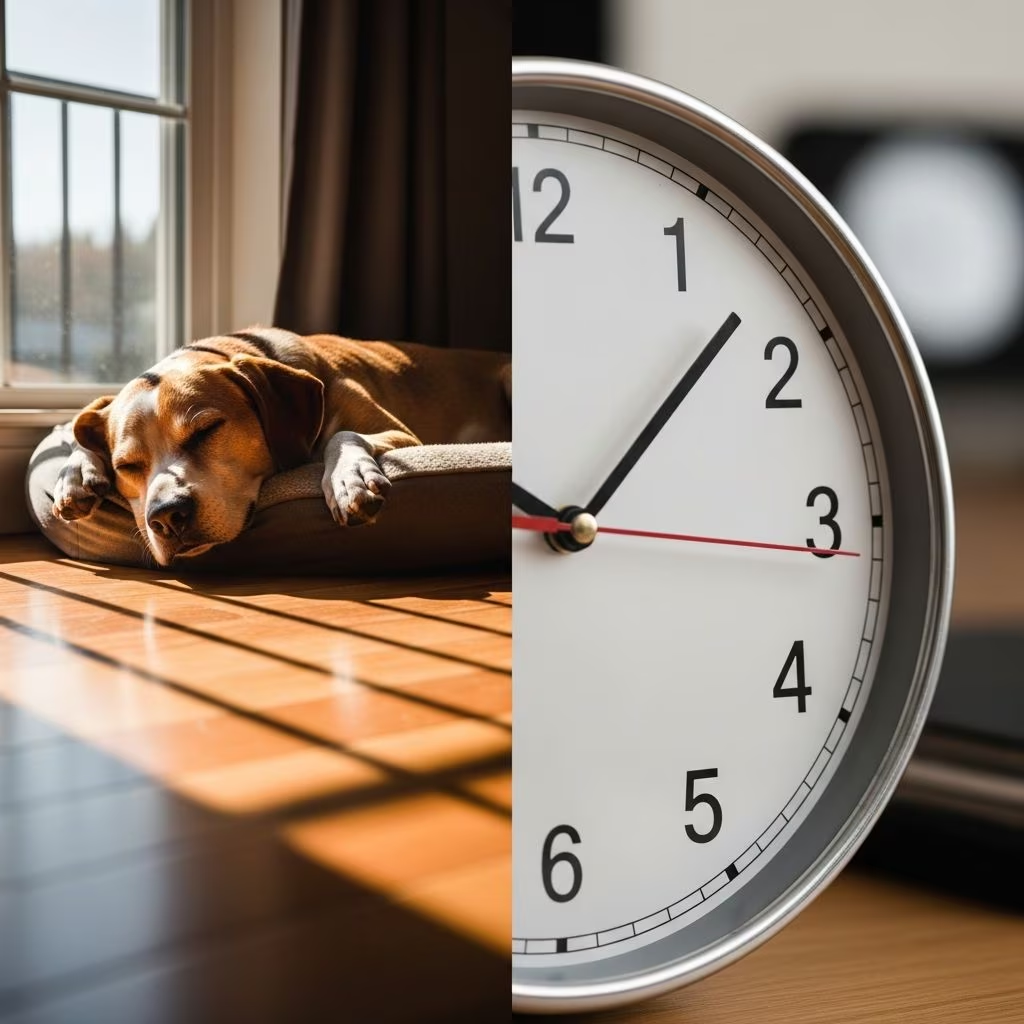
Daylight Saving Time (DST) transitions disrupt human routines, sparking debates on its necessity—a Business Insider poll indicates three out of five Americans favor abolishing it. Spring forward means lost sleep but gained evening light, while fall back offers an extra hour. As dogs sync to our schedules, pet parents wonder: do pups struggle too? Extensive human studies link DST to health risks like increased car crashes and strokes, but canine impacts remained unexplored until now.
A pioneering PLOS One study reveals not all dogs need adjustment time: companion dogs adapt seamlessly, but working sled dogs require one day. Led by Lavania Nagendran from the University of Toronto, researchers examined how this human-imposed clock shift affects Canis familiaris morning patterns, filling a critical research gap.
What the Study Found About Dogs and DST
During Ontario’s fall back DST (clocks set back one hour), scientists tracked 25 sled dogs (Huskies/Malamutes) at a reserve and 29 companion dog-caregiver dyads using accelerometers—motion devices akin to fitness trackers. All dogs were Huskies or Malamutes to eliminate breed variables. Activity focused on sunrise (natural cue), handler arrival (sled dogs), and caregiver wake-up (companions), comparing pre-DST week averages to three post-shift days.
Sled Dogs: Strict Routines Meet Disruption
Sled dogs’ rigid schedules clashed with DST. Pre-shift, handlers arrived at sunrise; post-shift, sunrise preceded arrival by an hour, causing mismatch.
- Day of DST (Sunday): Sled dogs ramped up activity before handlers arrived—significantly higher than pre-DST—likely compensating for delayed interaction.
- Post-DST Days 1-3: Sunrise activity dropped versus pre-DST, aligning with new handler timing. Activity normalized by day two, showing one-day adjustment.
This highlights working dogs’ reliance on human cues over solar ones, with brief heightened anticipation.
Companion Dogs: Flexible and Unfazed
Unlike sled dogs, companion dogs and caregivers showed no morning activity shifts on DST Sunday.
- Sunrise Activity: Unchanged pre- and post-DST, indicating internal clocks or home flexibility buffer changes.
- Post-DST Weekdays: Caregivers woke earlier, but dogs held pre-DST patterns—no adaptation needed.
Companion dogs’ variable routines foster resilience to abrupt shifts.
Age Matters: Senior Dogs Need Extra Care
Age influenced responses uniquely in companions. Older dogs exhibited reduced activity the first post-DST morning, unlike younger counterparts.
“We recommend caregivers of older dogs to be especially mindful in implementing sudden changes to daily routines,” Nagendran noted.
Seniors’ slower adaptability underscores gradual adjustments for vulnerable pups.
Why DST Affects Dogs Differently
Dogs possess circadian rhythms entrained by light, feeding, and social cues. Sled dogs’ fixed external schedules amplify disruptions, while companions’ home-based flexibility—variable wake times, indoor living—mitigates impact.
| Dog Type | Pre-DST Routine | Post-DST Change | Adjustment Time |
|---|---|---|---|
| Sled Dogs | Handler at sunrise | Sunrise 1hr early; less post-sunrise activity | 1 day |
| Companion Dogs | Flexible caregiver wake | No change in patterns | Immediate |
| Older Companions | Flexible | Reduced activity day 1 | Slower |
This table summarizes key divergences, emphasizing routine type’s role.
Practical Tips for Helping Dogs Adjust to DST
Though most dogs cope well, proactive steps aid smoother transitions, especially spring forward (sleep loss harder).
For Working or Highly Scheduled Dogs
- Shift feeding/walks gradually over 3-4 days pre-DST.
- Maintain consistent light exposure via dawn simulations.
- Monitor for stress: whining, pacing, appetite loss.
For Senior Dogs
- Implement incremental 15-minute routine shifts weekly before DST.
- Extra comfort: heated beds, pheromone diffusers.
- Consult vets for arthritis/sleep issue overlaps.
General Advice
- Use puzzle feeders for mental stimulation during odd hours.
- Track activity with apps mirroring study accelerometers.
- Fall back easier; prepare spring by napping strategically.
Flexible routines, per authors, optimize adjustment: “Our study comparing companion and sled dogs finds that flexible routines can help dogs better adjust to abrupt schedule changes like Daylight Saving Time.”
Broader Implications for Dog Well-Being
Beyond DST, findings illuminate how human schedules ripple to pets. Disruptions affect welfare via stress, eating, activity.
Future research could explore breeds, spring DST, global regions. This first study sets foundation, urging gradual changes for all schedule shifts: travel, shifts.
Dogs adjust faster than humans—who gripe weeks post-shift—but sensitivity varies. Tailor care to lifestyle/age for thriving pups.
Frequently Asked Questions (FAQs)
Do all dogs adjust the same to Daylight Saving Time?
No. Sled/working dogs need one day; companions adapt immediately, older ones slower.
Should I change my dog’s schedule before DST?
Yes, gradually for working/senior dogs: shift meals/walks 15 mins daily pre-transition.
Why were only Huskies/Malamutes studied?
To control breed effects; findings may generalize but warrant broader validation.
Does DST affect dog sleep like humans?
Study focused activity; sleep likely similar, tied to routines/light.
What if my dog seems stressed post-DST?
Increase play, maintain consistency, watch for prolonged issues—vet check.
Is fall back or spring forward harder for dogs?
Fall easier (extra hour); spring mimics sleep loss—prep accordingly.
References
- The impact of Daylight Saving Time on dog activity — Nagendran L, et al. PLOS One. 2025-01-29. https://pubmed.ncbi.nlm.nih.gov/39879143/
- These Dogs Take a Couple Days to Adjust to Daylight Saving Time — Kinship.com. 2025. https://www.kinship.com/dog-behavior/daylight-saving-time-adjustment-dog-study
- Working dogs take a day to adjust to Daylight Savings Time, but pets… — Phys.org. 2025-01. https://phys.org/news/2025-01-dogs-day-adjust-daylight-pets.html
- Working dogs take a day to adjust to Daylight Savings Time, but pets… — ScienceDaily. 2025-01-29. https://www.sciencedaily.com/releases/2025/01/250129162540.htm
- The impact of Daylight Saving Time on dog activity — PLOS One. 2025. https://journals.plos.org/plosone/article?id=10.1371/journal.pone.0317028



