

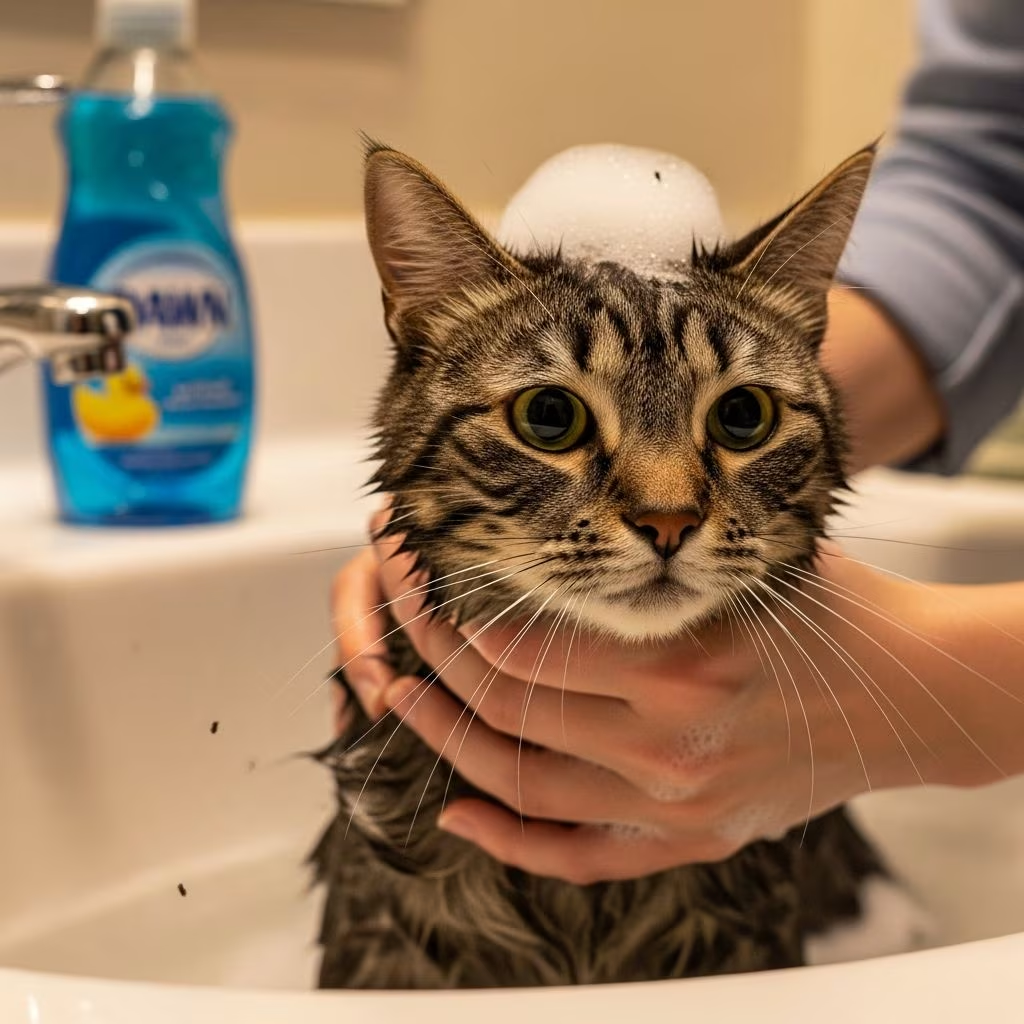
Many cat owners wonder whether household items like Dawn dish soap can serve as a practical solution for flea problems. While this common kitchen product may seem like an economical choice, the reality is more nuanced. Understanding how Dawn affects fleas, what it can and cannot accomplish, and the potential risks involved is essential for making informed decisions about your cat’s health.
Understanding How Fleas Survive in Water
Fleas possess a remarkable biological feature that allows them to resist water-based treatments: a waterproof exoskeleton. This outer shell creates a waxy coating that enables fleas to float on water rather than sink. This evolutionary adaptation has allowed fleas to survive in wet environments and resist drowning from simple water exposure. When you attempt to treat your cat with ordinary water alone, fleas can maintain their grip on your pet’s fur and continue their parasitic activities.
The introduction of dish soap, however, alters this dynamic significantly. When Dawn is mixed with water during a bath, the soap reduces the surface tension of the water and breaks down the protective oils on the flea’s exoskeleton. This dual action compromises the flea’s ability to float and causes it to sink, ultimately leading to drowning. The soap essentially strips away the very adaptation that allows fleas to survive water exposure in the first place.
The Immediate Impact: Adult Fleas Only
When used as intended—as a bathing solution for your cat—Dawn dish soap does eliminate adult fleas on contact. During a bath with Dawn-treated water, you may observe dead fleas falling from your cat’s coat within minutes. This immediate visible result is why many pet owners believe they have found an effective flea solution. However, this superficial effectiveness masks a more complex problem.
Adult fleas represent only a small portion of the total flea population living on and around your cat. While they are the most visible stage and the ones causing direct irritation and discomfort, they are merely the tip of the infestation iceberg. The complete flea lifecycle includes multiple developmental stages, each requiring different treatment approaches.
The Flea Lifecycle and Why Dawn Falls Short
Fleas progress through four distinct life stages: eggs, larvae, pupae, and adults. This complete transformation from egg to adult flea can occur in as little as two weeks under ideal conditions. Each stage presents unique challenges for treatment.
- Flea Eggs: These microscopic structures are laid by female fleas in your cat’s fur and throughout your home. Dawn has no effect on flea eggs whatsoever.
- Flea Larvae: After hatching, larvae feed on organic debris and flea feces in your cat’s environment. They remain unaffected by topical soap treatments.
- Flea Pupae: In their cocoon-like pupal stage, fleas are protected from most external treatments, including dish soap.
- Adult Fleas: Only at this stage does Dawn have any impact, and even then, only through direct contact during bathing.
Statistics show that adult fleas comprise approximately 5% of the total flea population in an infested home. This means that when you bathe your cat with Dawn, you are addressing at most 5% of the actual problem. The remaining 95% of the flea population continues to develop undisturbed, ready to mature into adults and restart the cycle.
Prevention and Long-Term Protection: The Missing Piece
Beyond its inability to address the complete flea lifecycle, Dawn offers no preventive benefits whatsoever. Once you rinse the soap from your cat’s fur, any residual effect disappears immediately. The soap does not create a barrier that repels future fleas or prevents new infestations from establishing themselves.
Female fleas are remarkably prolific, capable of laying up to 50 eggs daily during their lifespan. This reproductive capacity ensures that even if you successfully eliminate all visible adult fleas with a Dawn bath, new adults will emerge within days or weeks. Without ongoing prevention, your cat remains vulnerable to reinfestation from eggs and pupae that survive the initial treatment.
Potential Health Risks and Safety Concerns
While many assume that a dish soap safe for human hands must be safe for cats, this assumption is dangerous. Dawn is formulated for cleaning dishes and cutting through grease—functions that rely on potent chemical ingredients.
Skin and Coat Damage
Cats already suffering from flea infestation typically have compromised skin integrity. Flea bites cause inflammation, and constant scratching creates micro-tears and irritation. Introducing Dawn dish soap to already-damaged skin can exacerbate these conditions, leading to increased inflammation, potential secondary bacterial infections, and further discomfort for your cat.
Additionally, Dawn’s degreasing properties—which make it effective on dishes—can strip natural oils from your cat’s skin and coat. These oils serve critical protective functions, maintaining the skin barrier and preventing moisture loss. Their removal can lead to dryness, flaking, and long-term coat health problems.
Toxicity Through Ingestion
Cats are meticulous groomers, and after a bath, they will lick their fur to remove moisture and restore its natural condition. Any residual dish soap remaining in the coat can be ingested, introducing potentially toxic compounds into your cat’s digestive system. The surfactants and detergents in Dawn can cause gastrointestinal distress, including vomiting, diarrhea, and excessive drooling.
Allergic Reactions
Some cats may experience allergic or sensitivity reactions to the fragrances, dyes, or chemical compounds in dish soap. These reactions can range from mild itching and hives to severe systemic responses.
Limited Appropriate Uses for Dawn in Feline Care
While Dawn is not a suitable flea treatment, there are rare situations where it can serve a purpose in cat care.
Emergency Oil or Chemical Contamination
If your cat comes into contact with oil, grease, gasoline, or similar substances, a diluted Dawn bath may be appropriate as a temporary cleaning measure. In these emergency situations, removing the contaminant quickly takes priority over concerns about skin irritation. However, this use should be followed by a visit to your veterinarian for proper assessment and any necessary medical care.
Young Kittens Too Young for Standard Treatment
Conventional flea prevention products carry age restrictions, typically not approved for kittens under 8 weeks old. If a very young kitten has fleas, a gentle Dawn bath might be considered as a temporary measure while awaiting veterinary guidance. However, even in this scenario, veterinary consultation should be your first step, as some flea treatments are available for young kittens under professional supervision.
Comparison: Dawn Versus Veterinary Flea Treatments
| Treatment Method | Effectiveness on Adult Fleas | Effectiveness on Eggs/Larvae | Prevention Duration | Safety for Cats |
|---|---|---|---|---|
| Dawn Dish Soap | Yes (on contact only) | No | None | Moderate risk |
| Topical Treatments | Yes | Yes (depending on formula) | 4 weeks typically | High safety when prescribed |
| Oral Medications | Yes | Yes (some formulas) | 1-3 months | High safety when prescribed |
| Flea Collars | Yes | Yes (newer versions) | 8 months (newer collars) | High safety when prescribed |
What Veterinarians Actually Recommend
Veterinary professionals overwhelmingly recommend against using dish soap for flea treatment. The consensus in veterinary medicine is clear: if a product needs to function as an insecticide to kill fleas, it should be regulated and approved as an insecticide or pesticide, not marketed as a household cleaning product.
Modern veterinary flea treatments are specifically formulated to address multiple life stages, provide sustained protection, and minimize health risks through rigorous testing and regulation. These treatments fall into several categories, each with specific advantages.
Topical treatments applied monthly offer excellent flea control and often address ticks and other parasites simultaneously. Oral medications provide systemic protection by circulating through the bloodstream, killing fleas upon contact regardless of where they bite. Injectable treatments administered by veterinarians provide extended protection lasting months. Flea collars, particularly modern iterations, have evolved significantly and can now offer protection comparable to other prescription treatments.
Addressing the Cost Concern
One reason cat owners consider using Dawn is financial. Veterinary flea treatments require a prescription and represent an ongoing expense. However, this perspective overlooks the true cost of an untreated flea infestation.
Fleas transmit diseases including cat scratch disease and typhus. They can cause anemia in severe infestations and trigger allergic reactions in sensitive cats. An untreated infestation that spreads throughout your home becomes exponentially more difficult and expensive to manage, potentially requiring professional pest control services and environmental treatment. Additionally, fleas in your home can infest other pets and even bite humans.
The cost of preventive veterinary flea treatment is invariably less expensive than treating the complications of an established infestation.
Frequently Asked Questions About Flea Treatment
How quickly does Dawn kill adult fleas?
Adult fleas begin dying within minutes of contact with soapy water. You may observe dead fleas falling from your cat’s coat during the bath itself. However, this rapid kill only applies to fleas that come into direct contact with the soap solution.
Can I use any dish soap, or must it be specifically Dawn?
The mechanism works with any dish soap that creates surface tension reduction, though different brands may vary in concentration and ingredient composition. However, the same limitations and risks apply regardless of which brand you use. None are specifically formulated for animal use.
How often would I need to bathe my cat with Dawn to maintain flea control?
Because Dawn offers no residual protection and only kills adult fleas temporarily, you would theoretically need to bathe your cat repeatedly—weekly or more frequently—to keep pace with newly developing adults. This frequency is impractical, stressful for your cat, and damaging to skin and coat health.
Is there any harm in trying Dawn once as an emergency measure?
A single carefully executed bath with diluted Dawn, followed by thorough rinsing, is unlikely to cause permanent harm. However, it is not recommended as a first response when effective veterinary alternatives exist. If you do use it, follow up immediately with appropriate veterinary flea treatment.
Making the Responsible Choice
While the appeal of using a common household product for flea treatment is understandable, the evidence overwhelmingly demonstrates that Dawn dish soap is not an appropriate or effective solution for feline flea infestations. It addresses only a tiny fraction of the flea population, provides no protection against reinfection, and carries genuine health risks for your cat.
The most responsible approach is to consult your veterinarian about appropriate flea prevention options suited to your cat’s age, weight, and health status. Modern veterinary treatments are effective, safe, and increasingly affordable, particularly when compared to the consequences of untreated infestations.
References
- Does Dawn Dish Soap Kill Fleas on Pets: Benefits and Risks — Pet Friendly Box. 2024. https://petfriendlybox.com/resource-center/does-dawn-dish-soap-kill-fleas
- Dawn Dish Soap For Fleas in Your Yard: Does it Really Work? — Oasis Turf. 2024. https://www.oasisturf.com/blog/dawn-dish-soap-for-fleas-in-yard-does-it-work
- Fleas 201: The Dish Soap Myth — Risius Family Veterinary Services. 2023. https://risiusfamilyvet.com/fleas-201-the-dish-soap-myth/
- Can Dawn Dish Soap Kill Fleas? Vet Advice 2025 — Ask a Vet. 2025. https://askavet.com/blogs/news/can-dawn-dish-soap-kill-fleas-vet-advice-2025



