

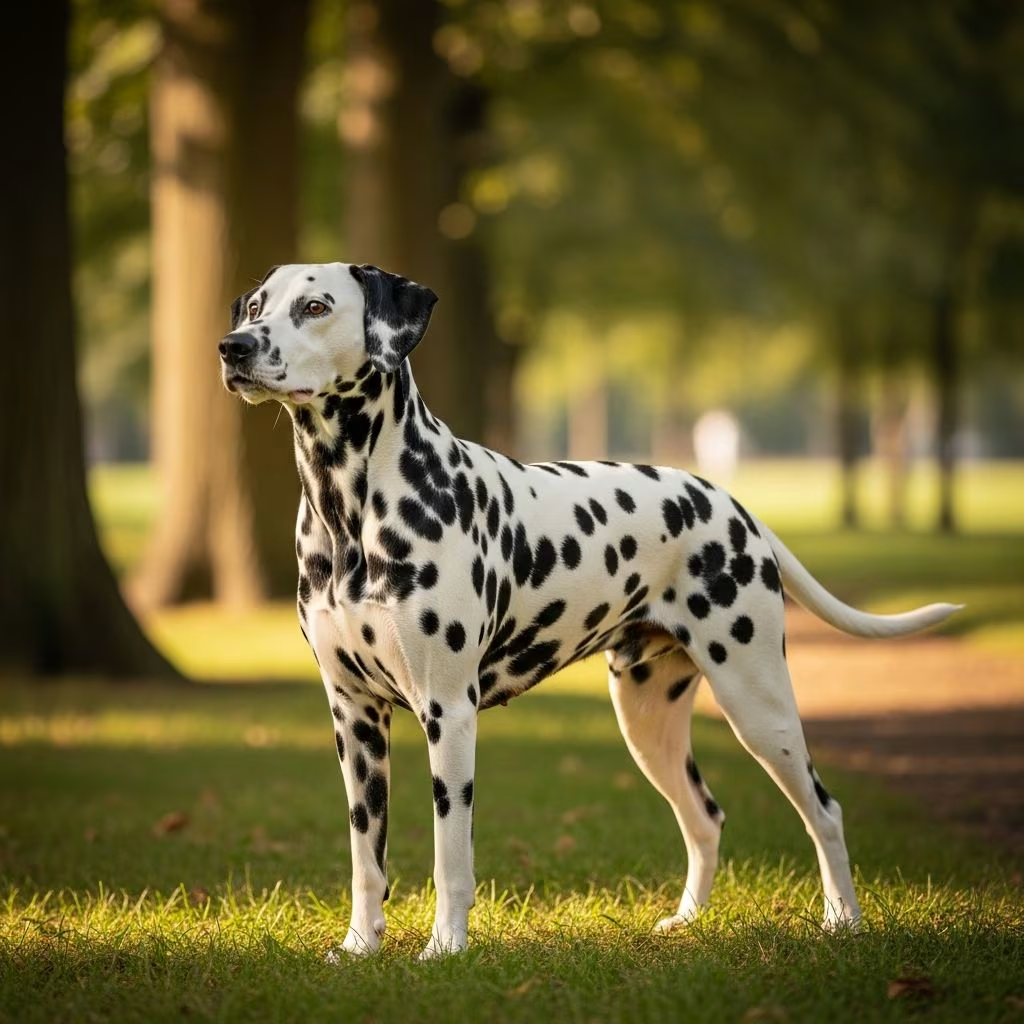
The Dalmatian stands out as one of the most recognizable dog breeds worldwide, thanks to its distinctive white coat adorned with black or liver-colored spots. This medium-sized, athletic canine has captivated hearts for centuries with its versatility, loyalty, and playful spirit. Originally serving in roles from hunting partners to carriage guardians, Dalmatians have evolved into beloved family pets while retaining their high-energy nature and protective instincts.
Tracing the Ancient Roots of the Spotted Breed
The exact origins of the Dalmatian remain shrouded in mystery, with evidence suggesting ties to the eastern Mediterranean region. Historical depictions of spotted dogs appear in ancient Egyptian artifacts and Greek frescoes, hinting at early ancestors that accompanied chariots and hunted alongside humans. By the 14th century, written records from Croatia describe a short-haired hunting dog with black spots, termed Canis Dalmaticus, primarily found in the Dalmatia region—though this coastal area of present-day Croatia likely popularized rather than birthed the breed.
Researchers propose that the Dalmatian emerged from crosses involving pointers and possibly Great Danes, resulting in a swift, endurance-focused dog ideal for working with horses. Nomadic groups, including Romani travelers, may have spread the breed across Europe, where it adapted to diverse tasks like herding, vermin control, and border guarding. Despite the name’s association with Dalmatia, 18th-century English archives confirm the breed’s cultivation primarily in England, solidifying its place in European canine history.
From Coach Dogs to Firehouse Icons
Dalmatians earned fame as carriage or “coach” dogs in 18th- and 19th-century England, particularly during the Regency era. Wealthy travelers prized their ability to trot tirelessly beside horse-drawn coaches, protecting horses and passengers from bandits while warding off stray dogs. Puppies were often raised in stables to foster a lifelong equine bond, with some running under axles—explaining the breed standard’s height limit of under 23 inches at the shoulder to avoid injury.
This horse affinity translated seamlessly to firefighting in the United States. As horses pulled fire wagons, Dalmatians cleared paths, guarded equipment, and alerted stations to approaching crews. Their bold presence made them enduring firehouse mascots, a tradition persisting today even in motorized fire departments. During both World Wars, Dalmatians served as messengers, showcasing remarkable stamina and courage.
- Key Historical Roles:
- Guarding noble carriages across Europe
- Protecting firehouse horses in America
- Hunting deer and vermin in rural areas
- Messaging in wartime operations
- Circus performers displaying agility
Physical Build and Signature Appearance
Dalmatians possess a muscular, symmetrical frame built for speed and endurance, typically weighing 45-70 pounds and standing 19-23 inches tall. Their short, dense coat is pure white at birth, with spots emerging around two weeks, growing denser over time. Black spots are standard, though liver (brown) variants exist, always round and well-defined—no blending or patches allowed per breed standards.
Their almond-shaped eyes convey alertness, complemented by pendulous ears and a long tail carried with a slight upward curve. This sleek design suits active lifestyles, from sprinting to long-distance runs, underscoring their athletic heritage.
| Physical Trait | Description | Ideal Measurements |
|---|---|---|
| Height | Males: 19-23 inches; Females slightly smaller | Disqualification over 23 inches |
| Weight | 45-70 lbs | Balanced to height |
| Coat | Short, white with black/liver spots | Spots ½-1 inch diameter |
| Build | Muscular, streamlined | Athletic proportions |
Temperament: Energetic Guardians with Heart
Beneath the playful exterior lies a watchful protector. Dalmatians are loyal to family, often aloof with strangers—a remnant of guarding duties—yet gentle with children when socialized early. Their intelligence shines in training, though high energy demands consistent outlets to prevent boredom-induced mischief like chewing or digging.
Friendly yet discerning, they thrive on human companionship, disliking isolation. Early exposure curbs excessive wariness, fostering outgoing adults. Paired with their stamina, this makes them excellent for active families, excelling in agility, obedience, and lure coursing.
Essential Training and Daily Exercise
High-energy Dalmatians require 60-90 minutes of vigorous daily activity—runs, hikes, or fetch—to channel their endurance. Mental stimulation via puzzle toys or obedience drills prevents hyperactivity. Puppy socialization classes build confidence, while positive reinforcement harnesses their smarts; harsh methods backfire with sensitive souls.
Start leash training young, leveraging their horse-trotting instincts. Advanced activities like canine freestyle or therapy work suit their versatility.
- Enroll in puppy kindergarten by 12 weeks.
- Aim for two structured play sessions daily.
- Incorporate scent games for mental fatigue.
- Use crate training for house manners.
Nutrition and Grooming for Optimal Health
Feed large-breed puppy formulas until 12-18 months to support joint development, transitioning to adult kibble with 25-30% protein for athletes. Portion control averts obesity; two meals daily suffice. Fresh water is crucial, especially post-exercise.
Grooming is low-maintenance: weekly brushing removes dead hair, with baths as needed. Check ears biweekly, trim nails monthly, and brush teeth regularly. Shedding peaks seasonally, earning their “velcro dog” nickname from spot-tracking fur.
Health Considerations and Genetic Screening
Dalmatians face breed-specific issues, notably deafness—affecting 10-30% unilaterally, 5-10% bilaterally—linked to the extreme white piebald gene. BAER testing screens breeding stock; liver-spotted pups (visible internally at birth) show lower risk.
Other concerns include urinary stones (high uric acid), hip dysplasia, and allergies. Annual vet checks, low-purine diets, and ample hydration mitigate risks. Reputable breeders screen parents via OFA/CHIC certifications.
- Common Health Issues:
- Deafness (genetic screening essential)
- Urolithiasis (diet-managed)
- Hip/elbow dysplasia
- Eye conditions like cataracts
Choosing and Welcoming a Dalmatian Puppy
Select breeders affiliated with clubs like the AKC or Dalmatian Club of America, prioritizing health-tested lines. Rescue organizations offer adults suited to experienced homes. Prepare with secure fencing, chew toys, and exercise routines. Puppies born deaf need special training but make devoted pets.
Lifespan averages 10-13 years with proactive care.
Frequently Asked Questions
Are Dalmatians good with kids?
Yes, when raised together and supervised; their playfulness matches active children, but teach gentle interactions.
Do Dalmatians shed a lot?
Moderately year-round, heavily seasonally—regular brushing helps.
Can deaf Dalmatians be trained?
Absolutely, using hand signals and vibrations; many compete successfully.
How much exercise do they need?
At least 1-2 hours daily of intense activity to stay balanced.
Are they hypoallergenic?
No, short coat sheds noticeably.
References
- Dalmatian History: From Carriage Dogs to Firehouse Mascots — American Kennel Club. 2023. https://www.akc.org/expert-advice/dog-breeds/dalmatian-history/
- Dalmatian dog — Wikipedia (citing primary historical records). 2024-01-15. https://en.wikipedia.org/wiki/Dalmatian_dog
- History/Origin of the Dalmatian — Croatian Dalmatian Club. 2022. https://ccdalmatians.com.au/historyorigin-of-the-dalmatian/
- Dalmatian History — Dalmatian Club of America. 2023. https://dalmatianclubofamerica.org/dalmatian-history/
- The Dalmatian Guide: History, Personality, Care, and More — The Farmer’s Dog. 2024. https://www.thefarmersdog.com/digest/dalmatian-guide-history-personality-care/



