

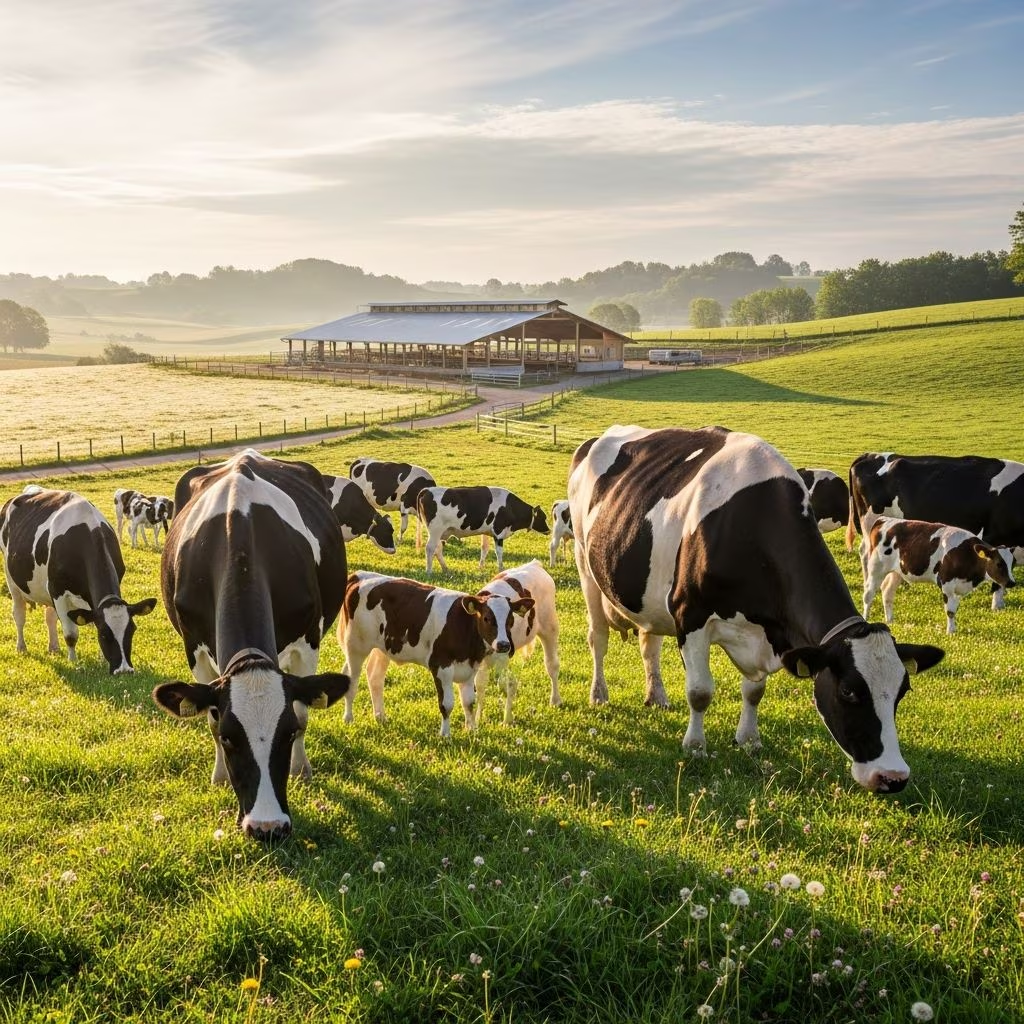
Effective health management in dairy herds is fundamental to achieving high productivity, reducing veterinary costs, and promoting animal welfare. By integrating proactive monitoring, balanced nutrition, and stringent biosecurity, farmers can minimize disease incidence and maximize milk yield.
Foundations of Proactive Health Monitoring
Daily observation forms the backbone of herd health programs. Farmers should prioritize tracking vital signs like body temperature and rumen function, particularly in the week following calving when cows are most vulnerable to metabolic disorders. Automated systems enhance this by providing continuous data on activity, rumination, and rest, allowing early detection of issues such as ketosis or displaced abomasum.
- Implement daily checks for fresh cows using thermometers and rumen bolus sensors.
- Use wearable tech to alert on deviations in behavior patterns.
- Record all observations in digital logs for trend analysis.
High-risk periods demand intensified scrutiny. Periparturient cows benefit from frequent visual inspections to spot signs of distress early, reducing emergency interventions.
Optimizing Nutrition for Peak Performance
A tailored feeding regimen supports immune function and prevents nutritional deficiencies. Diets must balance energy, protein, minerals, and vitamins, adjusted for lactation stage, pregnancy, and production levels. During late gestation, low-potassium forages help avert hypocalcemia.
| Lactation Stage | Key Nutritional Focus | Potential Risks if Neglected |
|---|---|---|
| Dry Period | Low potassium, high fiber | Metabolic disorders |
| Early Lactation | High energy, calcium balance | Ketosis, milk fever |
| Mid-Lactation | Protein optimization | Reduced milk yield |
Calves require immediate colostrum intake—10% of body weight within 24 hours—to bolster immunity. Avoid unpasteurized waste milk due to pathogen risks like Salmonella and Mycoplasma. Advanced apps enable precise ration adjustments based on real-time health data, minimizing waste and boosting efficiency.
Biosecurity Protocols to Safeguard the Herd
Preventing disease entry is more cost-effective than treatment. Establish barriers like footbaths, vehicle disinfection, and quarantine for newcomers. Limit visitor access and enforce hygiene among staff.
- Isolate sick or new animals for at least 30 days.
- Sanitize milking equipment between sessions.
- Screen bulk milk annually for pathogens like Staphylococcus.
These measures curb outbreaks of contagious diseases, maintaining herd uniformity and market compliance.
Reproductive Health and Efficiency
Reproduction drives herd replacement and profitability. Monitor estrus via activity trackers to time inseminations accurately. Optimal body condition at breeding—scored 2.75–3.25 on a 5-point scale—enhances conception rates.
Vaccinate strategically around weaning and breeding to fortify immunity. Clean, spacious facilities reduce stress, supporting hormonal balance.
Milking Hygiene and Udder Care
Mastitis remains a leading cause of economic loss and welfare compromise. Quarterly teat scoring and California Mastitis Tests on fresh cows, heifers, and dry-offs detect subclinical cases early. Ensure premilking sanitation, proper attachment, and post-dipping.
- Avoid forestripping to prevent liner slip injuries.
- Maintain vacuum levels and pulsation ratios per manufacturer specs.
- Culture positive quarters for targeted antibiotic therapy.
Consistent low somatic cell counts signal effective programs, qualifying herds for premium milk prices.
Facility Design for Comfort and Disease Control
Housing impacts health profoundly. Provide adequate lunge space, non-slip flooring, and ventilation to mitigate heat stress and lameness. Overcrowding elevates cortisol, suppressing immunity.
Group dry cows appropriately: far-off in spacious pens, close-up in maternity areas with soft bedding. Comfortable environments encourage rumination and rest, key health indicators.
Vaccination and Parasite Management
A herd-specific vaccination schedule targets prevalent threats like BVD, leptospirosis, and respiratory viruses. Time boosters for stress periods such as weaning or transport.
Regular fecal exams guide deworming, preventing resistance buildup. Integrate with nutrition to maximize vaccine efficacy.
Data-Driven Decision Making
Health programs thrive on analytics. Review treatment logs, disease incidence, and production metrics monthly with veterinarians. Standard operating procedures ensure consistency across staff.
Tools like Nedap Real Time systems flag anomalies instantly, enabling interventions that cut treatment frequency by up to 30% in adopting herds.
Staff Training and Welfare Standards
Empowered teams execute protocols flawlessly. Conduct hands-on sessions on handling, milking, and first aid. Emphasize low-stress techniques to avoid injuries.
Welfare audits verify compliance with benchmarks: cows lying down >12 hours daily, hock scores <2, and hairless patches minimal.
Common Challenges and Solutions
Seasonal heat spikes demand cooling fans and misters. Lameness protocols include weekly footbaths with copper sulfate. Economic pressures favor preventive over reactive care, yielding superior ROI.
Frequently Asked Questions (FAQs)
What is the most critical period for dairy cow health monitoring?
The first 7–14 days post-calving, when risks of ketosis, metritis, and hypocalcemia peak.
How often should mastitis screening occur?
Quarterly for high-risk groups, with annual bulk tank cultures.
Why prioritize colostrum in calves?
It provides antibodies against herd pathogens, reducing preweaning mortality.
Can technology replace daily visual checks?
No—tech supplements but doesn’t supplant farmer observation.
What biosecurity step yields the highest return?
Quarantining new animals prevents Johne’s and BVD introduction.
References
- Dairy Cattle Health Management: Best Practices for Healthy Herds — Electromech Agri. 2023. https://www.electromechagri.com/dairy-cattle-health-management-best-practices-for-healthy-herds/
- The Health Management Program in Dairy Cattle — Merck Veterinary Manual. 2023-10-15. https://www.merckvetmanual.com/management-and-nutrition/health-management-interaction-dairy-cattle/the-health-management-program-in-dairy-cattle
- Best Management Practices — Cornell University Animal Health Diagnostic Center. 2024. https://www.vet.cornell.edu/animal-health-diagnostic-center/programs/nyschap/modules-documents/best-management-practices
- Best Farming Practices for the Welfare of Dairy Cows, Heifers and Calves — PMC (NCBI). 2021-09-22. https://pmc.ncbi.nlm.nih.gov/articles/PMC8470115/
- Dairy handling and best practices — University of Minnesota Extension. 2024. https://extension.umn.edu/dairy/dairy-handling-and-best-practices



