

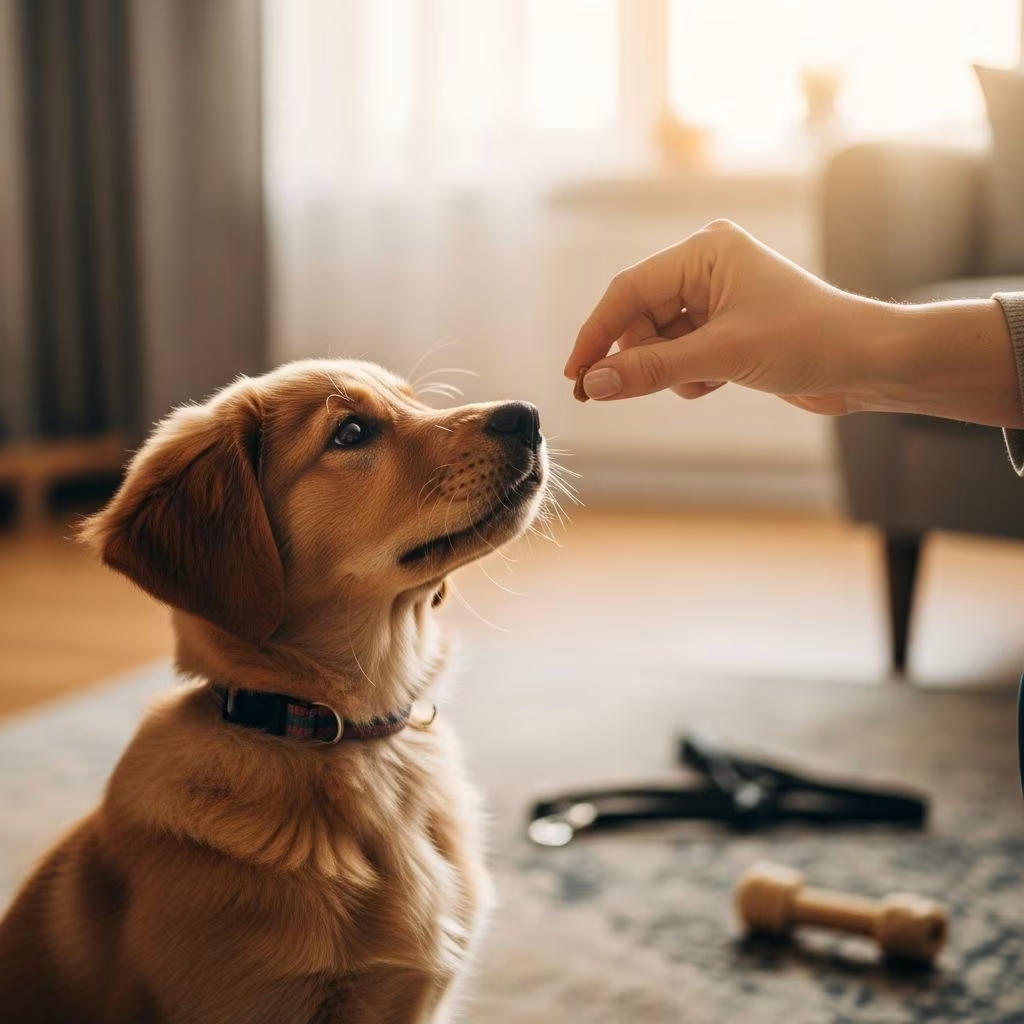
Daily Puppy Training: Integrate Training Into Your Puppy’s Daily Life
Training a puppy is one of the most rewarding yet challenging responsibilities of dog ownership. There is so much to teach puppies—where to potty, how to come when called, how to greet people politely, and countless other behaviors that shape them into well-mannered companions. However, formal training sessions alone aren’t enough to create lasting behavioral change. The most effective approach involves integrating training into your puppy’s daily routine, turning ordinary moments into valuable learning opportunities.
By weaving training into everyday activities, you’ll create a consistent learning environment that reinforces good behaviors throughout the day. This approach is not only more effective but also more sustainable, as it doesn’t require setting aside large blocks of time. Instead, you’re simply being intentional about the moments you already share with your puppy.
Building a Reliable Recall Through Daily Practice
One of the most critical skills to teach your puppy is a reliable recall—the ability to come when called, every time and happily. This command can literally save your puppy’s life in dangerous situations, whether they escape from a gate, approach a busy road, or encounter an unfamiliar dog.
Training a reliable recall is fundamentally about harnessing your puppy’s natural desire for good things and associating that positive feeling with your recall cue. The key is to say “come” before giving your puppy something they love. This might include:
- Before offering their favorite toy or chew
- Before heading outside for playtime
- Before a game of chase
- Before giving them a belly rub or affection
By consistently pairing the “come” command with rewards and exciting activities, your puppy begins to understand that responding to your cue leads to wonderful outcomes. Over time, your puppy will *want* to run to you when they hear that magic word.
Practice recall during walks by using high-value treats to reward your puppy when they check in with you. This is especially important as puppies approach adolescence and become increasingly distracted by the sights, sounds, and smells of the outdoor environment. If you can teach your puppy that it’s worth their attention to come over to you even during the excitement of a walk, you’re helping them establish a lifelong habit of responsiveness.
Mastering Potty Training Through Supervision and Rewards
Housebreaking is often the first formal training challenge new puppy owners face. However, successful potty training isn’t about punishing accidents—it’s about supervising your puppy carefully and reinforcing the correct behavior.
The foundation of effective potty training is your presence and attentiveness. You need to be outside with your puppy, actively supervising their activities and observing whether or not they actually eliminate. This supervision is critical because you can’t reinforce behavior you don’t see.
Make every bathroom event a training success by following these steps:
- Take your puppy outside on a consistent schedule
- Supervise them carefully to catch the moment they eliminate
- Immediately reward them with treats and praise
- Repeat this process until they reliably understand the connection between eliminating outside and receiving rewards
By giving treats immediately after every potty time, you’re clearly communicating to your puppy that they’ve done the right thing by going in the appropriate location. This positive association is far more effective than punishing accidents and creates a confident, well-housebroken adult dog.
Polite Greetings: “Four on the Floor” During Hellos
A common behavioral challenge that develops during puppyhood is jumping on people during greetings. While jumping might seem cute when your puppy is small, it becomes problematic as they grow. Jumping leads to torn clothes, scratched skin, knocked-over family members, and frightened guests.
The solution is to teach your puppy that staying calm and keeping all four paws on the floor is what earns them attention and treats. Whenever you come home or greet your puppy, reward them immediately for maintaining all four paws on the ground. This simple but consistent approach teaches them that polite behavior is far more rewarding than jumping.
If you prefer your dog to sit during greetings, reinforce them specifically for sitting when people approach. The key is to be proactive—start this training from day one so jumping never becomes an established habit. Your puppy will quickly learn that greetings are most rewarding when they’re polite.
Creating Positive Associations With Confinement Spaces
Many puppies struggle with spending time in their bed, crate, or designated spot, especially when their owner is busy. However, teaching your puppy to enjoy their own space is a valuable life skill that benefits both dog and owner.
Make hanging out in their space fun by associating it with positive experiences. When you need to work, eat dinner, or otherwise be unavailable to your puppy, provide them with something engaging to do. A stuffed Kong toy or puppy-safe chew toy turns their designated spot into a place of excitement rather than confinement.
The training lesson here is profound: your puppy learns that it’s enjoyable to be in that spot even when their person is occupied with something else. This prevents the development of separation anxiety and creates a well-adjusted dog who can entertain themselves and feel secure in their own space.
Check-Ins on Walks: Building Attention and Focus
Walking your puppy isn’t just about exercise—it’s an ongoing training opportunity. Puppies are naturally distracted by the outdoor environment’s endless sights, sounds, and smells. As they approach and enter adolescence, these distractions become even more compelling.
Train your puppy to check in with you during walks by using high-value treats as rewards. When your puppy naturally looks at you or comes near you during a walk, immediately reward this behavior. This teaches them that paying attention to you, even amid distractions, leads to positive outcomes.
Check-ins on walks serve multiple purposes:
- Build a strong bond between you and your puppy
- Teach your puppy to maintain focus despite environmental distractions
- Create a foundation for reliable recall in outdoor settings
- Establish a lifelong habit of attentiveness to you
By making walks interactive training sessions, you’re not just exercising your puppy—you’re building communication and trust that lasts a lifetime.
Play as a Training Tool: Teaching “Take It” and “Drop It”
Play is one of the most enjoyable aspects of puppy ownership, and it’s also a powerful training tool. Games like tug and fetch naturally teach valuable commands, particularly “take it” and “drop it.”
To teach “take it” and “drop it” through play:
- Show your puppy the toy and say “take it” as you present it to them
- Wave the toy around or drag it along the floor to make it enticing
- Once they take hold of the toy, play tug with them enthusiastically
- After a brief session, say “drop it” and place a high-value treat by their nose
- When they release the toy, give them the treat immediately
- Begin a new game of tug after saying “take it” again
This sequence teaches your puppy that “take it” means playtime begins and “drop it” means they get a reward—but importantly, “drop it” doesn’t always mean the end of play. You can repeat this cycle multiple times, and your puppy learns that cooperating with both commands leads to continued fun.
Play offers much more than just entertainment. It builds your relationship, teaches impulse control, and creates positive associations with commands you’ll use throughout their life.
Heeling Practice: Brief, Frequent Sessions Throughout Your Day
Teaching loose leash walking, or heeling, doesn’t require formal training sessions at the park. Instead, incorporate heeling practice into your everyday movement around your home and yard.
Use these micro-training moments:
- Walking to the bathroom
- Moving to another room to grab a book
- Heading to the kitchen for a snack
- Walking around your backyard
During these brief transitions, keep your puppy beside you and reward them with treats for walking at your side. Just a few seconds of focused heeling done several times a day is enough to build excellent leash manners. This approach is particularly effective because you’re training during movement you were already going to do anyway.
The cumulative effect of these brief, frequent sessions is impressive. Your puppy receives repeated reinforcement for loose leash walking in various contexts and locations, creating a reliable, generalized skill that transfers to formal walks outside.
The Philosophy Behind Integrated Daily Training
Integrated daily training is based on a simple principle: your puppy is learning from their environment all the time, whether or not you’re actively training them. The question is whether you’re being intentional about that learning process.
By weaving training into daily activities, you accomplish several important goals:
- Consistency: Your puppy receives regular, repeated reinforcement throughout each day
- Generalization: Skills trained in multiple contexts become more reliable and transferable
- Efficiency: You’re using time you already spend with your puppy for training purposes
- Bond-building: Training becomes a positive interaction that strengthens your relationship
- Long-term success: Integrated training creates lasting behavioral patterns rather than one-time lessons
Frequently Asked Questions
Q: How long should daily puppy training sessions be?
A: Rather than scheduling long formal sessions, aim for multiple brief training moments throughout the day. Puppies have short attention spans, so 5-10 minute sessions, repeated several times daily during normal activities, are more effective than one lengthy training block.
Q: What treats work best for puppy training?
A: Use high-value treats that your puppy genuinely loves and can consume quickly. Small, soft treats work best during training so your puppy can eat them rapidly and return focus to the task. Save special treats for particularly difficult behaviors or new commands.
Q: Can you train a puppy while they’re playing?
A: Absolutely. Play-based training is highly effective for puppies because they’re naturally motivated to engage with toys and games. Incorporating commands into play makes training feel like fun rather than work.
Q: How do I know if my puppy is learning during daily training?
A: Watch for increased frequency of the desired behavior. If you’re rewarding your puppy for checking in on walks, for example, you should notice them looking back at you more frequently over time. Consistency of response is a sign of successful learning.
Q: What should I do if my puppy ignores a command during daily training?
A: Don’t punish or repeat the command. Instead, make the task easier and set your puppy up for success. If they’re not responding, you may need to practice in a quieter environment, use higher-value treats, or break the skill into smaller steps.
Q: Is it ever too early to start integrated daily training?
A: No. You can begin simple training—like teaching your puppy their name or basic potty training—as soon as they come home. Even young puppies benefit from consistent, gentle guidance and positive reinforcement.
References
- How to Integrate Training Into Your Puppy’s Daily Life — Kinship. 2024. https://www.kinship.com/dog-behavior/daily-puppy-training
- Puppy Training 101: How to Train a Puppy — Kinship. 2024. https://www.kinship.com/dog-behavior/puppy-training
- The Power of Positive Reinforcement in Dog Training — American Kennel Club. 2023. https://www.akc.org/expert-advice/positive-reinforcement-training-dogs/
- Canine Learning and Behavior: How Dogs Learn and Retain Information — International Association of Canine Professionals. 2024. https://www.iacp.com/resources/dog-training-fundamentals



