

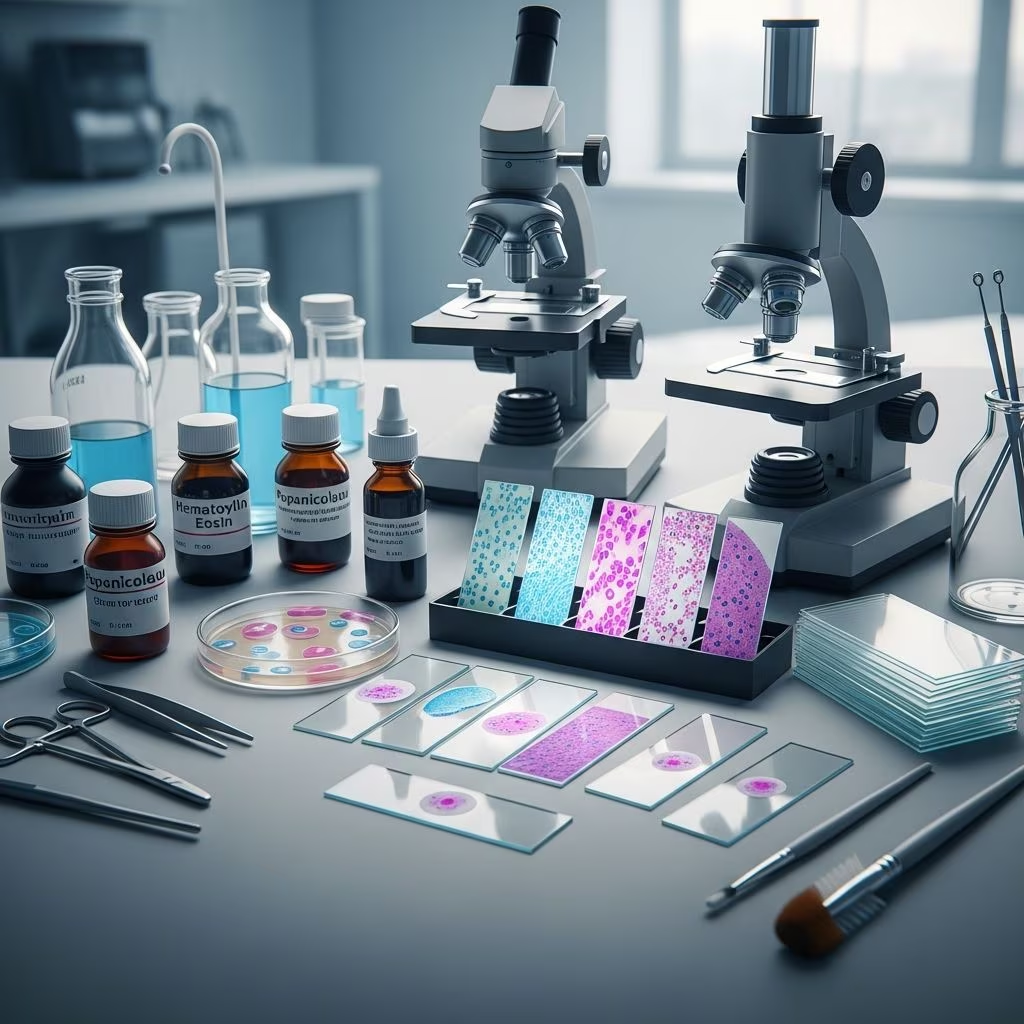
Cytology serves as a cornerstone of modern veterinary diagnostics, enabling quick assessments of cellular health from minimal samples. This technique examines individual cells or small clusters under a microscope to detect abnormalities indicative of disease, making it invaluable for everyday pet care.
The Foundations of Cytology in Pet Healthcare
In veterinary settings, cytology involves collecting cells from various body sites and staining them for microscopic review. Unlike biopsies requiring larger tissue samples, cytology uses tiny amounts of fluid or cells, offering speed and minimal invasiveness. Pathologists or veterinarians scrutinize cell size, shape, structure, and arrangement to identify issues like inflammation, infection, or neoplasia.
Common applications span skin lesions, ear discharges, bodily fluids, and aspirates from lumps. For instance, a simple ear swab can reveal yeast overgrowth, guiding immediate antifungal therapy. This accessibility positions cytology as a first-line tool in clinics.
Key Sample Collection Techniques
Effective cytology hinges on proper sample gathering. Veterinarians employ several methods tailored to the site:
- Exfoliative cytology: Relies on naturally shed cells from fluids like urine, sputum, or cerebrospinal fluid. Urine cytology screens for bladder issues, while sputum analysis detects respiratory pathogens.
- Abrasive cytology: Involves scraping surfaces such as skin or mucosal linings to dislodge cells. Ideal for ear canals or gingival margins.
- Fine-needle aspiration (FNA): Uses a thin needle to extract cells from palpable masses or organs. Common for lymph nodes, thyroid glands, or subcutaneous lumps.
Preparation is crucial: roll samples thinly on slides to avoid clotting, then air-dry or fix in alcohol before staining with dyes like Wright-Giemsa for cellular detail. Poor slides lead to artifacts mimicking pathology.
Interpreting Cellular Patterns
Microscopic evaluation begins at low power to survey cell populations and spot large entities like parasites. Higher magnification reveals fine details. Key patterns include:
- Inflammatory responses: Neutrophil dominance (>90%) signals acute bacterial infections; mixed cells suggest chronicity or fungi.
- Eosinophilic infiltrates: Prominent when eosinophils exceed 15%, often linked to parasites, allergies, or fungi in feline skin.
- Neoplastic features: Uniform cells with high nucleus-to-cytoplasm ratios indicate tumors; anisocytosis (size variation) and prominent nucleoli are red flags.
Artifacts like nuclear streaming—eosinophilic threads from ruptured nuclei—aid in outlining microbes but aren’t diagnostic.
Cytology in Common Veterinary Scenarios
Skin and Subcutaneous Issues
Skin cytology is routine for pruritic pets or lumps. Swabs from alopecic areas detect cocci bacteria (clusters of gram-positive spheres) or Malassezia yeast (peanut-shaped organisms), differentiating pyoderma from dermatitis. For masses, FNA distinguishes abscesses (degenerate neutrophils, bacteria) from lipomas (fat-laden adipocytes) or mast cell tumors (granulated purple cells).
Ear and Respiratory Conditions
Otitis cytology from cerumenous swabs quantifies rods, cocci, or yeasts, correlating rod-shaped bacteria with Pseudomonas. Respiratory lavages reveal eosinophils in allergic bronchitis or neoplastic populations in lung tumors.
Fluid Analysis and Internal Organs
Effusions from abdomen or thorax classify as transudates (low cells/protein) or exudates (high neutrophils/macrophages), pinpointing heart failure versus peritonitis. Bone marrow aspirates assess anemia etiologies via megakaryocyte counts.
Advantages and Limitations Compared to Biopsy
| Aspect | Cytology | Biopsy |
|---|---|---|
| Sample Size | Minimal cells/fluid | Large tissue core |
| Invasiveness | Low (needle/swab) | Higher (surgery) |
| Speed/Cost | Fast/inexpensive | Slower/costlier |
| Diagnostic Yield | Screening; may miss architecture | Definitive; shows tissue context |
Cytology excels in ruling out infections or guiding therapy rapidly but may not distinguish sarcoma subtypes, necessitating biopsy for confirmation.
Enhancing Cytology Accuracy
Optimal results demand quality control: multiple slides per sample, prompt staining, and experienced interpretation. In-house exams provide instant insights, while complex cases go to clinical pathologists. Digital cytology apps now aid remote consultations.
Future Directions in Cytological Diagnostics
Advancements like automated cell counters and molecular add-ons (e.g., FISH for aneuploidy) promise higher specificity. Liquid-based preparations reduce obscuring blood/mucus, improving human Pap analogs for veterinary oncology.
Frequently Asked Questions (FAQs)
What if cytology shows abnormal cells?
Abnormalities prompt further tests like biopsy or culture. Your vet will discuss risks and next steps.
Is cytology painful for my pet?
Most procedures are quick with minimal discomfort; sedation is rare for FNAs.
How long do results take?
In-clinic: minutes; lab-submitted: 24-72 hours.
Can cytology diagnose cancer definitively?
Often suggestive, but biopsy confirms tumor type and grade.
Who performs cytology interpretation?
Vets for routine cases; board-certified pathologists for nuanced findings.
References
- Cytology (Cytopathology): What It Is, Types & Procedure — Cleveland Clinic. 2023-10-12. https://my.clevelandclinic.org/health/diagnostics/21714-cytology
- Cytology 101: How to get the most from your samples (Proceedings) — dvm360. 2022-05-15. https://www.dvm360.com/view/cytology-101-how-get-most-your-samples-proceedings
- How Is a Cytology Test Done? — American Cancer Society. 2024-01-08. https://www.cancer.org/cancer/diagnosis-staging/tests/biopsy-and-cytology-tests/cytology-types.html
- Cytology – Collecting Cells from Surfaces — VCA Animal Hospitals. 2023-11-20. https://vcahospitals.com/yorba-regional/know-your-pet/cytology—collecting-cells-from-surfaces
- Everyday Medicine: Cytology — The Animal Medical Center. 2017-12-06. https://www.amcny.org/blog/2017/12/06/everyday-medicine-cytology/
- Dermatology Diagnostics: Cutaneous Cytology — Today’s Veterinary Practice. 2023-07-14. https://todaysveterinarypractice.com/cytology/dermatology-detailsdermatology-diagnostics-cutaneous-cytology/



