

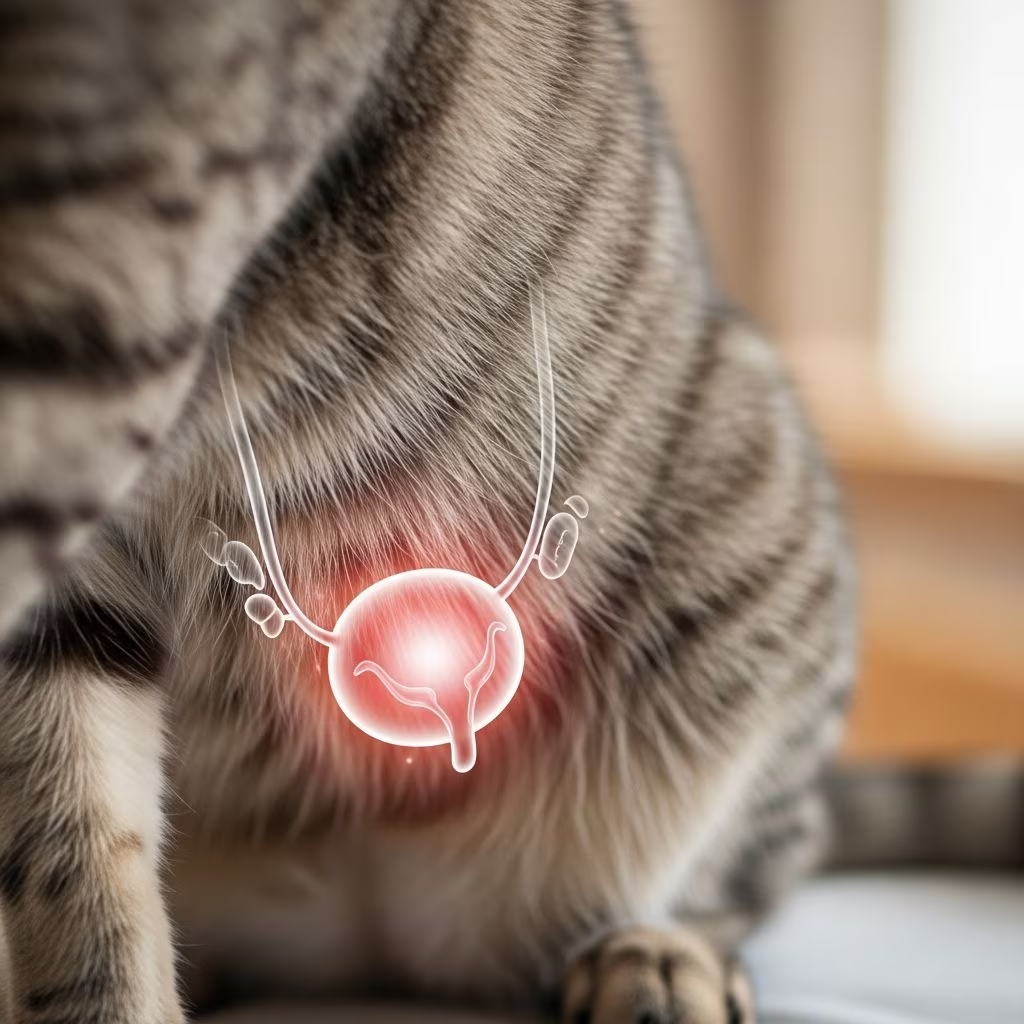
Understanding Cystitis and Lower Urinary Tract Disease in Cats
Feline lower urinary tract disease (FLUTD) encompasses a range of conditions affecting the bladder and urethra in cats, with feline idiopathic cystitis (FIC) being the most common form. This condition is responsible for approximately 7 to 8% of all feline admissions to veterinary clinics, making it a significant concern for cat owners and veterinary professionals alike. Cystitis refers to inflammation of the bladder, which can cause considerable discomfort and behavioral changes in affected cats. Understanding the nature of this condition, its underlying causes, and available treatment options is essential for cat owners seeking to provide the best care for their feline companions.
What Is Feline Idiopathic Cystitis?
Feline idiopathic cystitis is a condition characterized by inflammation of the bladder in cats without an identifiable underlying cause. The term “idiopathic” means that despite thorough investigation, the exact cause remains unknown. This distinguishes FIC from other forms of FLUTD that may result from specific factors such as bacterial infections, urinary calculi, or anatomical abnormalities. FIC is considered a multifactorial condition, meaning that multiple contributing factors likely play a role in its development and recurrence. These factors may include stress, diet, environmental conditions, and individual susceptibility.
Clinical Signs and Symptoms
The clinical signs of feline cystitis and lower urinary tract disease typically appear suddenly and can vary in severity. Recognizing these symptoms early allows for prompt veterinary attention and appropriate management. Common signs include:
Primary symptoms of feline cystitis include:
– Pollakiuria (increased frequency of urination)- Dysuria (pain during urination)- Stranguria (straining to urinate)- Hematuria (blood in the urine)- Periuria (urination outside the litter box)- Excessive licking of the genital area- Painful or distressed vocalizations during urination- Changes in urination patterns or habits
In acute episodes, cats may show signs of discomfort, anxiety, and behavioral changes. Some cats may become reclusive or exhibit increased grooming behavior. It is important to note that while some cats display obvious signs of pain, others may show subtle behavioral changes that could easily be missed by an owner.
Distinguishing Between Acute and Chronic Presentations
Feline cystitis can present in different patterns, each requiring consideration when planning management strategies. Acute episodes of cystitis typically resolve within 7 days with or without treatment, though clinical signs often persist for 2 to 3 days before improvement is noted. However, approximately 50% of cats that experience an acute episode of FIC have a recurrent episode within one year. Some cats develop multiple recurrent episodes, with up to 15% experiencing frequent recurrences, while another 15% may develop persistent forms of cystitis. These recurrent and persistent presentations require more comprehensive diagnostic evaluation and long-term management strategies.
Potential Complications
One significant complication to be aware of is urethral obstruction, which can occur in male cats with FIC. Urethral obstruction is a serious emergency condition that prevents urine from passing through the urethra. Male cats are at particular risk due to their narrower urethra compared to females. Signs of urethral obstruction include inability to urinate, severe straining, vocalizations indicating pain, a firm and painful abdomen, and progressive lethargy. This condition requires immediate emergency veterinary attention, as it can become life-threatening within 24 to 48 hours if left untreated.
Diagnosis of Feline Lower Urinary Tract Disease
Accurate diagnosis is crucial for developing an appropriate treatment plan. However, the diagnostic approach may vary depending on whether the cat is experiencing a first-time episode or recurrent problems.
Initial Assessment
When a cat presents with lower urinary tract clinical signs, the veterinarian will conduct a thorough physical examination and collect a detailed history from the owner. For young cats experiencing their first episode of symptoms, the clinical presentation alone may be sufficient for diagnosis, as signs typically resolve within 2 to 3 days. Therefore, extensive diagnostic workups may not be necessary in these initial cases.
Diagnostic Procedures for Recurrent Cases
In cats with recurrent episodes or persistent symptoms, more comprehensive diagnostics are indicated. These may include:
Essential diagnostic tests:
– Urinalysis to examine urine composition and identify abnormalities- Urine culture to rule out bacterial infection- Abdominal imaging (radiographs or ultrasound) to visualize the urinary tract- Bloodwork to assess kidney function and overall health status- Urethrocystoscopy, which allows direct visualization of the bladder and urethra- Exploratory cystotomy with histopathology in select cases
Urethrocystoscopy and exploratory cystotomy are typically reserved for cats experiencing persistent or frequent recurrent episodes and are used primarily to rule out bladder cancer, which while rare in cats, must be excluded in these cases. During exploratory cystotomy, the bladder is surgically opened to allow visual inspection and collection of tissue samples for laboratory analysis.
Treatment Approaches for Feline Cystitis
Because the underlying cause of idiopathic cystitis remains unknown, there is no medication that directly treats the condition. Instead, treatment focuses on managing symptoms and preventing recurrence through a multimodal approach.
Pain Management
The most important aspect of managing acute episodes is easing your cat’s discomfort. Veterinarians may prescribe pain relievers such as butorphanol or buprenorphine, which are low-dose opioids suitable for feline patients. Gabapentin, a medication from a different drug class, may also be used to control pain and provide anxiolytic effects. Pain relief is essential not only for the cat’s comfort but also to reduce stress, which can perpetuate the condition.
Anti-inflammatory Medications
Anti-inflammatory painkillers, particularly NSAIDs, are commonly used in the short-term to help reduce pain and settle bladder inflammation. While inflammation is a significant component of FIC, it should be noted that studies have not definitively demonstrated that NSAIDs alone resolve the condition. These medications are typically used to provide comfort during acute episodes rather than as a long-term solution.
Stress Reduction
The primary treatment objectives in cats with acute presentations are to reduce stress and sympathetic output while providing pain relief. Stress plays a crucial role in the development and recurrence of FIC, making stress reduction a cornerstone of management strategy. Synthetic feline pheromones such as Feliway may help reduce stress and anxiety when used as a spray on bedding and furniture or as a plug-in diffuser.
Emerging Treatments
Recent research has explored innovative treatment options for severe cases. Low-dose radiation therapy has shown promising results in clinical studies, with most treated cats experiencing improvement and many never having another episode of cystitis. Additionally, some veterinarians recommend injections of polysulfated glycosaminoglycan (PSGAG), a substance that helps protect the bladder lining. While not definitively proven, these injections may help cats recover faster from FIC episodes by replacing the protective layer on the bladder wall.
Nutritional Management and Dietary Changes
Diet plays a crucial role in managing feline cystitis. One of the most important changes is switching from a dry diet to a wet diet in the form of canned food or pouches. This dietary modification helps increase water intake and produces more dilute urine, which is less irritating to bladder tissue. Many veterinarians recommend prescription diets specifically formulated for urinary health, such as Hill’s c/d, Hill’s c/d Multicare Urinary Stress, Royal Canin Urinary SO, or Royal Canin Multicare Urinary and Calm. These diets are typically high in antioxidants and omega-3 fatty acids, which help combat inflammation.
Additionally, increasing overall water intake through multiple water bowls, water fountains, or other methods can help encourage frequent urination and maintain a healthy urine specific gravity. Always consult with your veterinary team before making dietary changes to ensure the new diet is appropriate for your cat’s individual needs.
Environmental Modification and Enrichment
Environmental changes aimed at reducing stress and enriching the home environment are among the most effective long-term management strategies for FIC. These modifications might seem minor but can make a significant difference in your cat’s overall well-being. Key environmental modifications include:
Environmental enrichment strategies:
– Providing multiple litter boxes, ideally in different locations- Maintaining clean, easily accessible litter boxes- Offering hiding spaces and vertical territory- Providing interactive toys and mental stimulation- Establishing a consistent daily routine- Minimizing exposure to stressful stimuli- Creating a calm, quiet environment
Boredom and stress are significant contributors to FIC recurrence, so providing adequate enrichment is essential. Cats with FIC may benefit from referral to a veterinary behaviorist who can provide specialized guidance on environmental modification and stress reduction techniques.
Supplemental Therapies
Several supplemental approaches may help support cats with FIC, though more research is needed on their efficacy. L-Tryptophan and Alpha-Casozepine are supplements that may help decrease stress in cats. Acupuncture might also help cats who routinely experience FIC. These complementary therapies should always be discussed with your veterinary team and used in conjunction with conventional treatment rather than as replacements.
Long-Term Management and Recovery
Most cats with FIC will improve significantly with increased water intake, environmental enrichment to relieve boredom and stress, and dietary modifications. In general, cats tend to improve as they age, suggesting that maturation and reduced stress reactivity play a role in disease resolution. However, some very severe cases may be more difficult to manage and should be discussed with the veterinary team and, if necessary, a feline specialist veterinarian and behaviorist.
When to Seek Emergency Care
While most cases of feline cystitis are manageable on an outpatient basis, certain situations require immediate emergency veterinary attention. Seek emergency care if your cat shows inability to pass urine, repeated straining without producing urine, signs of severe pain when urinating, a swollen or firm abdomen, extreme lethargy, vomiting, or collapse. These symptoms may indicate urethral obstruction or other serious complications that require prompt intervention.
Frequently Asked Questions About Feline Cystitis
Q: Can antibiotics cure feline idiopathic cystitis?
A: Antibiotics are not effective for treating FIC unless a bacterial infection is present, which is uncommon. For many years, cats with FIC were inappropriately treated with antibiotics, and the apparent improvement was often coincidental as signs naturally resolved. Diagnostic testing, including urine culture, should be performed to determine if a bacterial infection is present before prescribing antibiotics.
Q: How long do acute episodes of cystitis typically last?
A: Acute episodes of cystitis typically resolve within 5 to 7 days, whether treatment is instituted or not. However, in a large majority of cats with FIC, clinical signs resolve within 2 to 3 days. If symptoms persist beyond 3 to 5 days of therapy, further diagnostics and treatment adjustments are indicated.
Q: Is FIC more common in male or female cats?
A: FIC occurs in both male and female cats, though males are at higher risk for urethral obstruction, a serious complication. The overall incidence of FIC appears relatively similar between sexes, but the potential severity of complications differs.
Q: Can stress really cause cystitis in cats?
A: Yes, stress is a significant risk factor in FIC development and recurrence. This is why reducing stress through environmental modification, providing enrichment, and maintaining a stable routine are key components of FIC management. Stress-related changes in the nervous system and immune response can contribute to bladder inflammation.
Q: What is the prognosis for cats with recurrent FIC?
A: Most cats with recurrent FIC improve significantly with comprehensive management including environmental modification, dietary changes, and stress reduction. While some cats may experience ongoing episodes, the frequency and severity often decrease with appropriate management. Some very severe cases may be challenging to manage and may require specialist consultation.
References
- Current Thoughts on Pathophysiology and Treatment of Feline Idiopathic Cystitis — Today’s Veterinary Practice. 2024. https://todaysveterinarypractice.com/urology-renal-medicine/current-thoughts-on-pathophysiology-treatment-of-feline-idiopathic-cystitis/
- Study’s Cystitis Remedy so Effective that NC State Ready to Offer Treatment to Cats — NC State College of Veterinary Medicine. 2024. https://news.cvm.ncsu.edu/studys-cystitis-remedy-so-effective-that-nc-state-ready-to-offer-treatment-to-cats/
- Feline Idiopathic Cystitis (FIC) in Cats — International Cat Care. 2024. https://icatcare.org/articles/feline-idiopathic-cystitis-fic-in-cats
- Feline Idiopathic Cystitis (FIC) in Cats — PetMD. 2024. https://www.petmd.com/cat/conditions/urinary/feline-idiopathic-cystitis-fic-cats
- Cystitis in Cats: Emergency Signs & Urgent Care Steps — Global Society of Veterinary Surgeons. 2024. https://gsvs.org/blog/cystitis-cats-emergency-urgent-care/
- Feline Idiopathic Cystitis (FIC) – PDSA — People’s Dispensary for Sick Animals. 2024. https://www.pdsa.org.uk/pet-help-and-advice/pet-health-hub/conditions/stress-cystitis-feline-idiopathic-cystitis-in-cats
- Cystitis in Cats — Battersea Dogs & Cats Home. 2024. https://www.battersea.org.uk/pet-advice/cat-advice/cystitis-cats



