

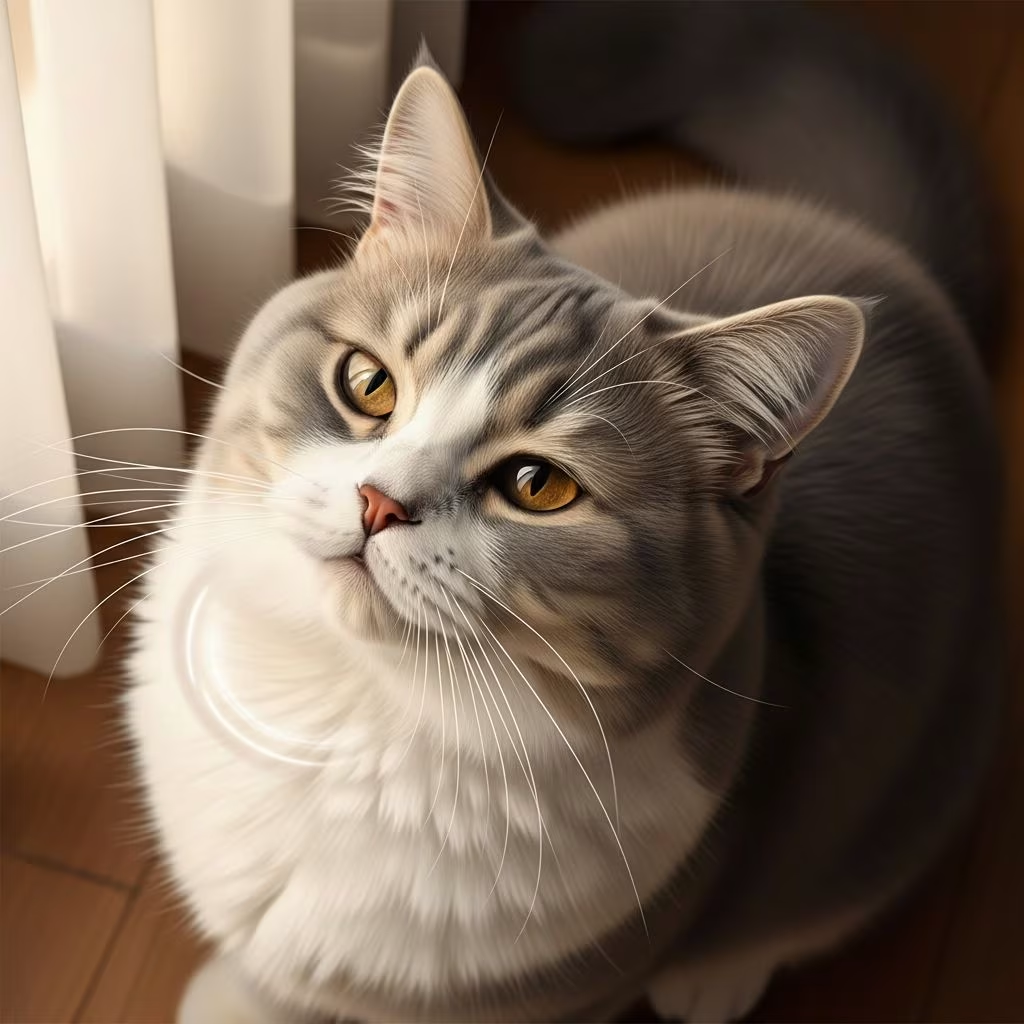
While most cats purr to express contentment, not all exhibit a diverse range of purr variations. Cyril, a particularly vocal feline, demonstrates six distinct purr types, each conveying unique emotions and needs. This article delves into Cyril’s purring catalogue, drawing from observations by veterinary expert Dr. Karyn and supported by recent genetic research on feline vocalization.
Cyril enjoys a pampered life with free access to the house and a dedicated cat-only room, free from canine intruders. His calorie-controlled diet is his main gripe, but his purring repertoire reveals layers of personality beyond simple happiness. Other cats in the household purr too, but Cyril’s variations stand out, offering insights into nuanced cat communication.
Cyril’s Catalogue of Purrs
To date, six individual purr types have been identified in Cyril. These range from basic contentment to excited indulgence, each triggered by specific stimuli. Understanding these can help owners interpret their cats’ emotional states more accurately.
1. The Entry Level Purr
This foundational purr serves as Cyril’s default sound of mild satisfaction. Triggered by a glance, his name, or casual petting, it requires minimal effort to sustain. It’s a steady, low rumble indicating basic comfort and attention-seeking without intense emotion.
Characteristics:
- Soft, consistent vibration
- Activated by eye contact or naming
- Maintained by absent-minded strokes
- Signals relaxed contentment
This purr forms the baseline for more complex variations, much like a cat’s standard ‘hello’ to its environment.
2. The Inquisitive Purr
Conveying curiosity and mild excitement, this purr emerges when Cyril investigates novel activities or potential food sources. Accompanied by sniffing and snuffling, it reflects a happy willingness to engage: “I don’t know what you’re doing, but it seems interesting and I’m happy to be part of it.”
Often transitioning from the entry-level purr, it features a softer tone with exploratory behaviors. Owners might notice this during kitchen prep or unwrapping packages, as the cat draws closer to assess opportunities.
3. The Food Purr
Food ignites Cyril’s deepest rumble. Starting from inquisitive levels, it escalates into a gravelly vibration during meals. Cyril multitasks prehension, swallowing, breathing, and purring, with interruptions for big gulps or enthusiastic licks.
This purr persists through the entire meal, dialing back to entry-level during grooming. It’s a testament to how appetite amplifies feline vocalization, blending satisfaction with survival instinct.
| Purr Type | Trigger | Sound Quality | Behavior |
|---|---|---|---|
| Entry Level | Attention | Steady low rumble | Relaxed petting |
| Inquisitive | Novelty/Food scent | Soft with sniffing | Exploration |
| Food | Eating | Deep, gravelly | Multitasking meal |
4. The Tentative Purr
Similar to the inquisitive but more cautious, this softer purr includes more sniffing than snuffling. Cyril uses it near potential threats, like the dog Kodah, showing wariness while remaining engaged. The tone is gentler than entry-level, balancing happiness with vigilance.
To untrained ears, it mimics inquisitive purrs, but subtle differences in delivery reveal hesitation. This highlights cats’ ability to modulate purrs based on perceived safety.
5. The Catnip Purr
Catnip (Nepeta cataria) triggers euphoria in sensitive cats like Cyril. The container’s sound summons him, leading to rolling, dilated pupils, and a pant-like purr. Deep rumbles alternate with shallow breaths, aiding nepetalactone absorption via sinuses and vomeronasal organ.
This inebriated cadence reflects heightened excitement. Not all cats react; genetics determine sensitivity, with Cyril and Alex exemplifying strong responses.
6. The Blissful Purr
The most distinctive, this loud purr combines deep chuffing and high-pitched whistling. Cyril deploys it while kneading on laps, circling heads, or displacing devices. Often with drooling and a ‘gooey’ expression, it’s shared by Clutch and Alex.
Dr. Karyn’s favorite, it may trigger human endorphins, acting as a natural antidepressant. Its uniqueness separates it from others, emphasizing profound affection.
Purrfect Communication
Whether Cyril consciously controls these purrs or they reflect physiological emotional states remains unclear—likely the latter. They reveal personality layers, enhancing human-feline bonds. Recent studies link purring variation to genetics, particularly the androgen receptor (AR) gene on the X chromosome.
Research from Kyoto University analyzed 280 neutered mixed-breed cats, finding short-type AR genes correlate with more purring and vocalization, especially in males. Long-type alleles, more common in purebreds, reduce vocalization—possibly an adaptation to human reliance.
Cats purr via laryngeal muscle relaxation controlled by brain nerves, aiding kitten-mother communication when blind and deaf. Domestication introduced longer AR variants absent in wild relatives like leopard cats. This genetic insight explains why cats like Cyril purr diversely, aiding welfare by flagging silent distress in less vocal cats.
Genetic factors influence purring frequency:
- Short AR alleles: Higher purring/vocalization (common in mixed breeds)
- Long AR alleles: Quieter cats (purebreds, domestication trait)
- Males: More vocal with short alleles
- Females: Potential aggression links
Owners should observe non-vocal cues in quieter cats to ensure well-being. Cyril’s repertoire exemplifies how purring enriches communication, fostering deeper understanding.
Do your cats exhibit varied purrs? Sharing observations helps decode these subtle signals.
Frequently Asked Questions (FAQs)
What causes different purr types in cats?
Different purrs stem from emotional states affecting physiology, modulated by genetics like AR gene variants. Cyril’s six types respond to attention, food, caution, catnip, and bliss.
Why do some cats purr more than others?
Short-type androgen receptor genes promote more purring, per a PLoS One study of 280 cats. Mixed breeds often carry these, while purebreds have quieter long-type alleles from domestication.
Is purring always a sign of happiness?
No—purring occurs in contentment, hunger, stress, or healing. Context like tone and behavior clarifies meaning, as in Cyril’s tentative purr near dogs.
How does catnip affect purring?
Nepetalactone stimulates sensitive cats, causing euphoric rolling and pant-like purrs for deeper inhalation. Genetics determine response intensity.
Can human health benefit from cat purrs?
Purring frequencies (25-150 Hz) may promote healing and reduce stress via endorphins. The blissful purr’s chuffing could enhance this effect.
Are genetic purr differences linked to welfare?
Yes—less vocal cats (long AR) risk overlooked distress. Owners should monitor body language.
References
- Cyril’s Purring Repertoire: 6 Different Purrs & Their Meanings — Catster (Dr. Karyn). 2023. https://www.catster.com/felines-weekly/cyrils-purring-repertoire/
- Cats purr more than others: New study — Countryfile. 2024-10-15. https://www.countryfile.com/animals/pets/cats-purr-more-others-new-study
- Why some cats purr more than others finally decoded — AOL (PLoS One study, Kyoto University). 2024. https://www.aol.com/why-cats-purr-more-others-053821971.html



