

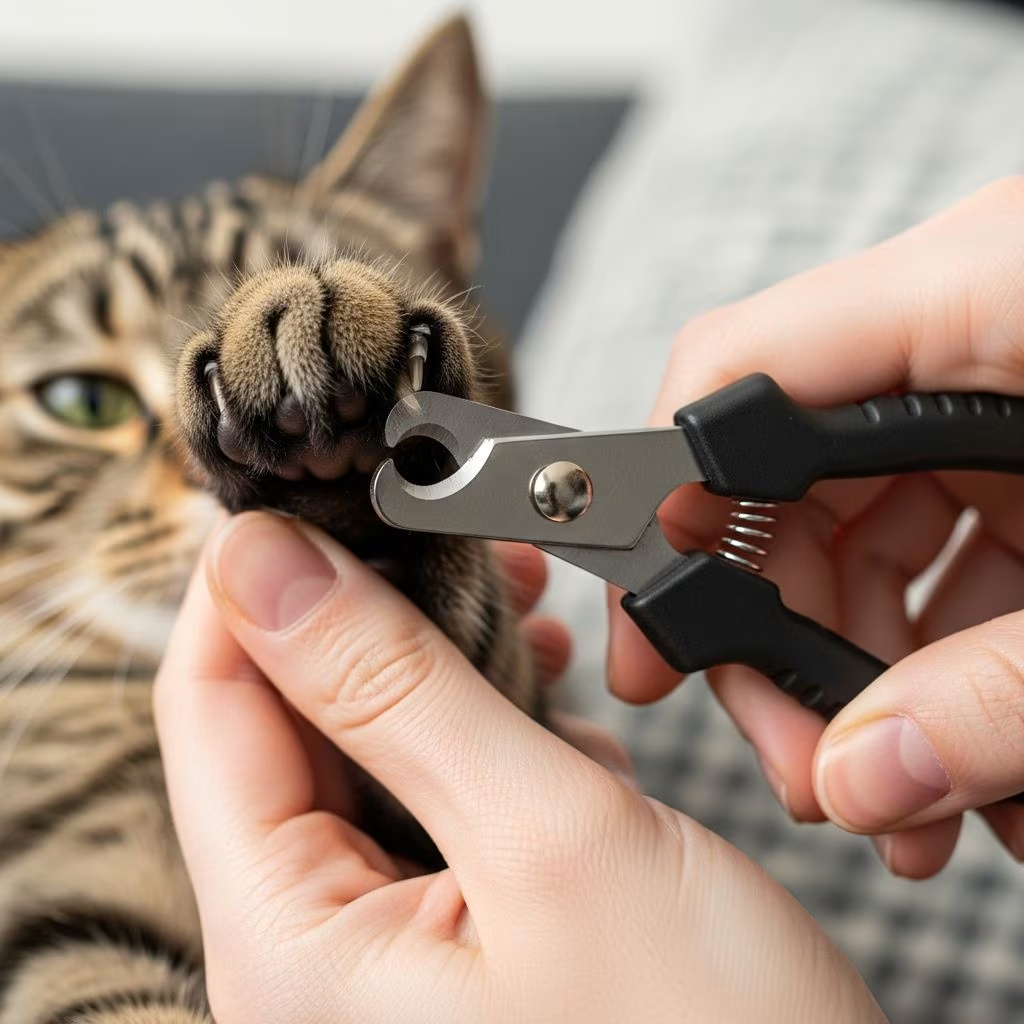
Trimming your cat’s nails can feel like an impossible task, especially with wiggly kittens or adult cats who hate paw handling. A recent viral video shows content creator Ish (@isheverything) using an unusual method: biting his kitten Fifi’s neck scruff to keep him still while clipping claws. The heartwarming bond between Ish and Fifi is clear, but is this technique safe for pet owners to replicate at home? We consulted cat behaviourist Lucy Hoare to break down the science, risks, and better alternatives.
The Viral Video That’s Captivating Cat Lovers
In the now-popular clip, Ish announces he’s retrying nail trimming on Fifi, whose overgrown claws have been scratching his skin. Inspired by another video, Ish places the sleepy kitten on a table and gently bites the scruff of Fifi’s neck—mimicking a mother cat’s grip. Shockingly, Fifi goes limp, allowing Ish to clip multiple nails without struggle. ‘As soon as you hold their neck, they’re literally calm,’ Ish explains, calling Fifi his ‘son.’
The video exploded on social media, sparking debates: Does this hack solve the eternal cat nail trimming battle? Viewers praised the duo’s cuteness, but experts urge caution. Mother cats do carry kittens by the scruff for transport, triggering an instinctive relaxation reflex in young felines. However, humans attempting this raise serious safety and welfare concerns.
What Cat Behaviourists Say About the Scruffing Hack
Lucy Hoare, a certified cat behaviourist, reviewed the video and shared her professional verdict: this method is not recommended for humans. While Fifi appeared calm—likely due to his youth and the innate scruff reflex—the technique poses risks to both cat and owner.
- Risk to humans: A sudden wiggle could lead to scratches or bites near the face, especially if the cat panics.
- Risk to cats: Scruffing removes control, potentially causing anxiety, stress, or pain if the grip tightens during resistance.
Traditional hand-scruffing (pinching the loose neck skin) is also outdated, per modern veterinary guidelines. The International Cat Care organization and RSPCA advise against it, favoring positive reinforcement instead. ‘It’s practical for mothers but not comforting for cats,’ Lucy notes. Fifi showed no distress, but older or sensitive cats might react negatively, leading to fear of handling.
Why Mother Cats Scruff Kittens—And Why Humans Shouldn’t
In feline biology, the scruff hold activates a primal reflex: kittens go limp to be safely carried without injury. This works because queens have the precise mouth strength and instincts honed by evolution. Humans lack these—our teeth and jaws can’t replicate the gentle, secure grip.
| Method | Used By | Effect on Kitten | Safe for Humans? |
|---|---|---|---|
| Mouth Scruffing | Mother Cats | Instinctive calm, no emotional distress | No—risk of injury |
| Hand Scruffing | Humans (outdated) | Stressful, removes agency | Discouraged |
| Positive Handling | Owners/Vets | Builds trust, reduces fear | Yes—recommended |
Attempting mouth scruffing at home could harm the human-cat bond. If Fifi associates nail time with discomfort, future grooming becomes harder. Lucy confirms: ‘No emotional response in this case, but individual cats vary—fearful ones could develop aversions.’
Safe, Stress-Free Ways to Trim Your Cat’s Nails
Good news: You don’t need risky hacks. Experts recommend gradual desensitization from kittenhood. Adult cats can learn too with patience. Here’s a step-by-step guide endorsed by vets and behaviourists.
- Prepare tools: Use cat-specific guillotine clippers (sharp, spring-loaded). Avoid human nail tools—they crush instead of cut.
- Pair with positives: Show clippers, offer treats/favorites. Repeat daily without clipping.
- Handle paws gently: Touch paws during petting sessions, rewarding calm. Squeeze toes to extend claws.
- Clip in short sessions: Start with one paw, one nail. Go slowly; end on a high note.
- Timing matters: Trim when cat is drowsy post-meal or play. Enlist help for holding (gently, towel optional).
Frequency: Every 4-6 weeks for indoor cats. Only clip the clear tip before the pink quick (blood vessel). If unsure, seek a vet or groomer.
Signs Your Cat’s Nails Need Trimming
- Claws catch on fabrics or leave marks on skin/furniture.
- Cat limps or avoids hard surfaces.
- Visible hooks curling over toe pads.
- Overgrowth from age, illness, or inactivity.
Neglect leads to split nails, infections, or mobility issues. Kittens need early training for lifelong ease.
Common Nail Trimming Mistakes to Avoid
Many owners struggle due to pitfalls. Steer clear of these:
- Forcing restraint: Builds fear; use burrito-wrap towels only if needed, with breaks.
- Clipping the quick: Causes bleeding/pain—stop if blood appears, apply styptic powder.
- Rushing sessions: Short, frequent wins over marathon battles.
- Ignoring body language: Ears back, tail thrash, growling? Abort and retry later.
Alternatives to At-Home Trimming
Not every cat tolerates DIY. Options include:
- Vet/groomer visits: Professional, quick, ~£10-20/session.
- Scratch posts: Natural filing; provide varied textures.
- Soft paws/caps: Adhesive covers for temporary protection (safe if applied properly).
- Declawing: Never recommended—banned in many places, causes lifelong pain/behaviour issues.
Building Trust for Grooming Success
Prevention is key. From 8 weeks, integrate handling into play. Use pheromone diffusers (Feliway) for anxious cats. Consistency pays off: Most cats accept trims within weeks.
Lucy emphasizes: ‘Any procedure involves discomfort, but habituation minimizes it. Go slow, use breaks, reward heavily.’
Frequently Asked Questions (FAQs)
Is biting a cat’s scruff like the viral hack safe?
No. It risks scratches/bites to you and stress to the cat. Vets strongly advise against it.
How often should I trim my cat’s nails?
Every 4-6 weeks for indoor cats. Check weekly; trim as needed.
What if I cut the quick?
Apply styptic powder or cornstarch to stop bleeding. Monitor for infection; consult vet if severe.
Can I train an adult feral cat for nail trims?
Yes, with patience. Start slower, use high-value treats. Progress may take months.
Are nail caps a good alternative?
Yes for scratch control. Replace every 4-6 weeks; most cats adapt well.
Final Verdict on the Viral Hack
While Ish and Fifi’s video is adorable, don’t replicate the mouth-scruffing method. Fifi seems content due to his trusting bond and youth, but risks outweigh rewards for most. Prioritize force-free techniques for a happy, scratch-free life. Your cat will thank you with purrs instead of paws.
References
- International Society of Feline Medicine (ISFM) Cat Friendly Guidelines — International Cat Care. 2023-05-15. https://icatcare.org/advice/handling-and-examining-your-cat/
- Guide to Trimming Your Cat’s Nails — American Animal Hospital Association (AAHA). 2024-02-10. https://www.aaha.org/your-pet/pet-owner-education/ask-aaha/cat-nail-trimming/
- Scruffing Cats: Why It’s Harmful — RSPCA Knowledgebase. 2023-11-20. https://www.rspca.org.uk/adviceandwelfare/pets/cats/behaviour/scruffing
- Feline Behavior and Welfare: Maternal Care — Journal of Feline Medicine and Surgery (Peer-reviewed). 2022-07-01. https://journals.sagepub.com/doi/full/10.1177/1098612X221099999
- Positive Reinforcement in Cat Grooming — Association of Pet Behaviour Counsellors (APBC). 2024-01-05. https://www.apbc.org.uk/pet-behaviour/cats/grooming



