Cuterebra Infection in Cats: Recognition and Care
Understanding botfly parasites and effective treatment options for feline cuterebriasis.
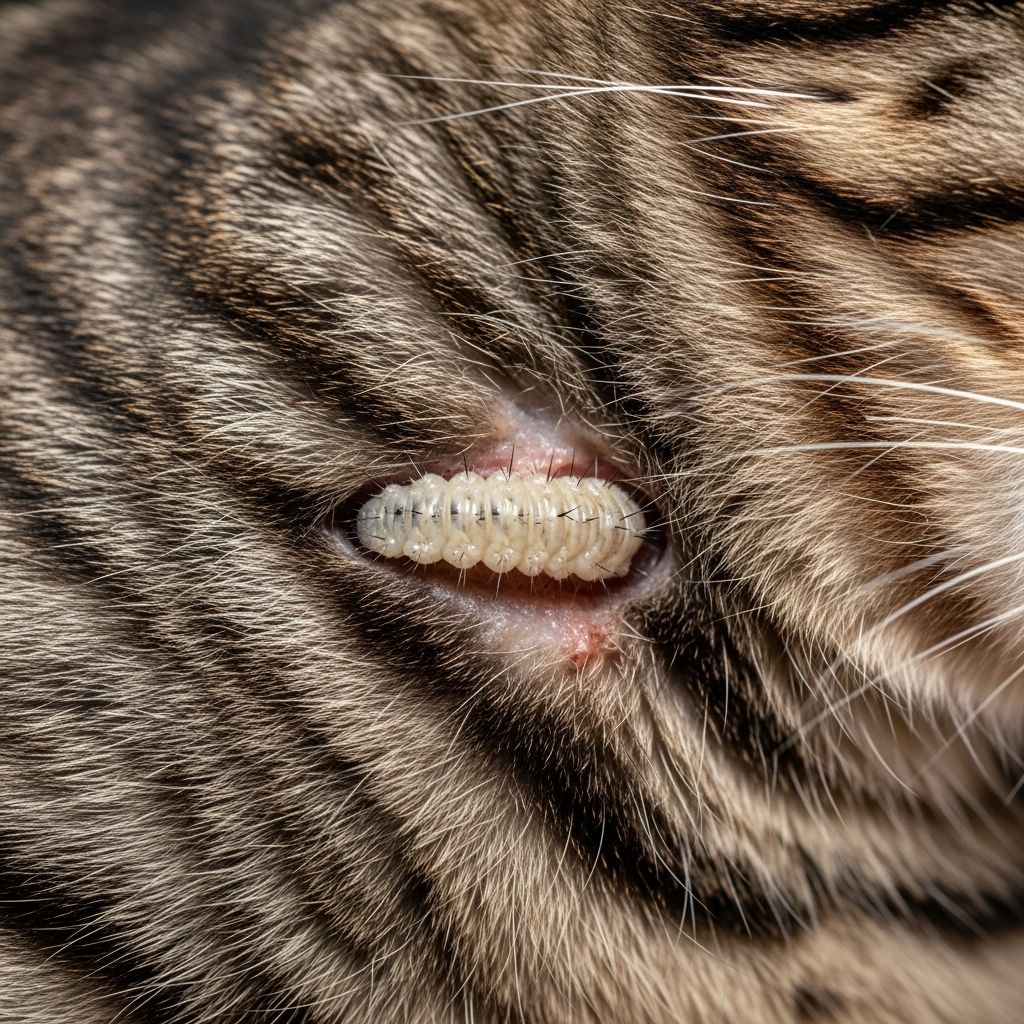
Cuterebra, commonly known as botflies, represent a parasitic threat to outdoor and indoor-outdoor cats in North America. These insects lay their eggs near rodent and rabbit burrows, and when cats explore these environments, they may inadvertently become hosts for the developing larvae. Understanding this parasitic infection, recognizing its symptoms, and knowing available treatment options can help cat owners protect their pets from potential complications and ensure prompt veterinary intervention when needed.
What Is Cuterebra and How Does Infestation Occur?
Cuterebra is a genus of parasitic flies whose larvae develop within the skin of various mammals, including cats, dogs, and rabbits. The adult female botfly lays her eggs in areas frequented by small rodents and rabbits, particularly near burrow entrances and in tall grass. When a cat passes through or explores these contaminated areas, the eggs may contact the cat’s skin or mucous membranes. Once the eggs hatch, the larvae penetrate the skin and establish themselves subcutaneously, creating a parasitic relationship that can last several weeks.
The larva’s development progresses through three distinct growth phases, known as instars. This developmental cycle typically spans two to three months while the larva remains embedded in the host’s tissue. During this period, the larva creates a small breathing hole through which it exchanges oxygen via its posterior spiracles, allowing it to survive and grow while causing inflammatory changes in surrounding tissues.
Recognizing Cuterebra: Identifying Clinical Signs
Early detection of cuterebra infection can significantly improve treatment outcomes and reduce the risk of secondary complications. However, identifying this parasitic infection requires understanding its characteristic presentation and how it evolves over time.
Initial Presentation and Symptom Development
In the early stages of cuterebra infection, external signs are often subtle or completely absent. Most cases remain undetectable until the larva enlarges and becomes a noticeable subcutaneous swelling that owners can feel or observe beneath the skin. The most distinctive feature is a small breathing hole visible in the overlying skin, which may enlarge as the larva matures and approaches the end of its developmental cycle.
The typical manifestation of botfly infestation appears as a seeping, nodular skin lesion that resembles a furuncular lesion or abscess. These lesions commonly appear in specific body locations, with the majority clustered around the face, neck, shoulders, thorax, and lateral body surfaces.
Regional Distribution and Location Patterns
While most cuterebra infections involve subcutaneous nodules in accessible areas, some larvae may migrate to atypical locations. Notably, most cysts containing bots are found around the face or neck. In cases where larvae invade deeper tissues or organ systems, the clinical presentation becomes more variable and potentially more serious.
Most cats with subcutaneously localized larvae show minimal signs of disease or distress. The infection often goes unnoticed until the owner discovers the characteristic nodule during petting or grooming.
Diagnostic Approaches and Veterinary Evaluation
Diagnosing cuterebra infection typically does not require complex laboratory procedures. Visualization of the characteristic skin opening with the posterior portion of the larva visible inside the lesion provides straightforward confirmation. Veterinarians can often diagnose the condition through physical examination alone, particularly when the breathing hole and surrounding nodule are evident.
In some instances, diagnosis occurs only after the larva has already departed from the skin. When this happens, owners may notice a deep abscess or secondary skin infection developing in the empty cyst cavity. Secondary bacterial infections are common after larval departure and frequently cause more significant tissue damage than the primary parasitic attack.
Serious Complications: When Cuterebra Becomes Dangerous
While most cuterebra infections remain localized to subcutaneous tissues and resolve with appropriate treatment, certain circumstances can lead to severe complications requiring intensive veterinary intervention.
Ocular and Ophthalmic Involvement
One serious complication occurs when larvae penetrate ocular structures. Rarities, larvae may enter the anterior chamber or globe of the eye, causing chemosis, blepharospasm, serous ocular discharge, and exudative uveitis. This presentation may result in blindness due to extensive retinal or corneal damage. Surgical removal of larvae from ocular tissues is recommended, though visual prognosis depends on the extent of tissue involvement.
Neurological Manifestations
Neurological disease represents one of the most serious complications of cuterebra infestation and is reported more frequently in cats than in dogs. When larvae migrate through brain tissues, they can cause profound neurological dysfunction. Clinical signs vary considerably, ranging from acute status epilepticus with no recovery to multiple neurological deficits including head tilt, unilateral or bilateral central blindness, head pressing, cognitive dysfunction, continuous vocalization, proprioceptive deficits, and circling.
These neurological presentations typically exhibit acute onset followed by rapid progression, often becoming fatal. More rarely, some cases may progress more gradually over weeks or months, though long-term survival remains uncommon.
Systemic and Multi-organ Involvement
In uncommon cases, cuterebra larvae may establish themselves in respiratory, aural, or other systemic locations, causing respiratory compromise, hearing loss, or generalized inflammatory responses. Systemic inflammatory response syndrome has been documented in both dogs and cats, with disseminated intravascular coagulopathy reported in dogs.
Treatment Options and Removal Procedures
The approach to treating cuterebra infection depends on the timing of diagnosis, the larva’s developmental stage, and the location and number of infections present.
Mechanical Extraction and Surgical Removal
Mechanical extraction remains the primary treatment for subcutaneous cuterebra infections. The procedure involves careful removal of the larva, either with or without sedation or general anesthesia, depending on the lesion’s location and the number of larvae requiring removal.
For mature larvae fully developed within a cyst, veterinarians expand the cyst opening and carefully extract the larva using forceps, taking precautions to avoid crushing the organism during removal. Smaller, less developed larvae require removal through careful surgical dissection. If the cat has multiple cuterebras requiring simultaneous removal, or if the lesion is located in delicate areas such as the face or neck, sedation or general anesthesia ensures patient comfort and procedural safety.
Following extraction, the area undergoes thorough flushing and cleaning to remove debris and prevent secondary infection. In some cases, a small incision may be made around the breathing hole to facilitate larval removal in one intact piece.
Adjunctive Medical Therapies
Several medications support the removal process and manage complications. Steroid therapy is recommended to reduce inflammation and prevent allergic reactions when the cuterebra is removed. Pretreatment with antihistamines such as diphenhydramine before extraction may reduce the risk of anaphylactic hypersensitivity reactions.
Antibiotics are typically prescribed to combat secondary bacterial infections, which commonly develop in the empty cyst following larval departure. Analgesics may be administered to manage pain associated with the lesion and removal procedure.
Systemic Treatment with Ivermectin
For cases involving migrating larvae or deeper tissue involvement, ivermectin has demonstrated effectiveness against Cuterebra species. Dosing typically ranges from 0.1 to 0.3 mg/kg. When treating presumptive cerebrospinal cuterebriasis, ivermectin may be administered orally.
Corticosteroid therapy is recommended alongside ivermectin to prevent additional inflammatory damage during treatment. Prednisone dosing for cats with upper respiratory involvement may include 1 mg/kg orally every 12 hours for three weeks, followed by once-daily dosing for an additional three weeks. Alternatively, dexamethasone may be administered intravenously at 0.1 mg/kg concurrent with ivermectin for up to three daily treatments.
Post-Extraction Wound Management
After the larva has been removed, whether surgically or because it spontaneously departed, veterinarians clean and debride the infected area. Surgery may be required to close the injured site in some cases. This prevents complications from secondary bacterial colonization and promotes proper tissue healing.
Important Considerations During Treatment
Certain precautions are essential when managing cuterebra infections. Crushing the larva during removal may trigger anaphylactic responses in sensitive individuals. It is critical not to rupture the larva during removal, as this can release inflammatory substances and increase the risk of severe allergic reactions.
Treatment approaches designed to kill the larva in place may incite additional inflammation, potentially leading to complications. For this reason, mechanical extraction without larval destruction remains preferable whenever possible.
Prevention Strategies for Cat Owners
The most effective approach to cuterebra infection involves prevention rather than treatment after infestation occurs.
Environmental and Behavioral Prevention
The best preventative measure is keeping cats indoors or restricting outdoor access through enclosed pens or catios. This eliminates exposure to areas where adult female botflies lay their eggs near rodent and rabbit burrows.
For cats requiring outdoor access, leash walking in controlled environments reduces exposure to high-risk habitats. In rural settings where complete prevention through confinement may be difficult, additional precautions become necessary.
Pharmaceutical Prevention Options
Some veterinarians recommend flea and tick preventatives such as Revolution for outdoor cats, though this represents off-label use and efficacy specifically against Cuterebra remains untested. The rationale is that medications killing fleas and ticks may also eliminate other external parasites, though definitive evidence for cuterebra prevention is lacking.
Prognosis and Recovery Expectations
The prognosis for uncomplicated subcutaneous cuterebra infections is generally favorable. After the larva is removed and secondary bacterial infections are appropriately treated with antibiotics, the lesion usually closes and heals within one to two weeks in normal hosts.
However, cases involving complications such as neurological involvement, ocular penetration, or systemic disease carry significantly more guarded prognoses. Neurological manifestations, in particular, often result in poor outcomes despite aggressive treatment.
When to Seek Veterinary Care
Cat owners should contact their veterinarian immediately upon discovering a suspicious nodule with a breathing hole, particularly if the lesion appears on the face, neck, or shoulders during late summer or early fall when cuterebra activity peaks. Additionally, any neurological signs such as seizures, unusual vocalizations, head pressing, or behavioral changes warrant urgent evaluation, as these may indicate cuterebra migration to the central nervous system.
Even after the larva spontaneously exits the skin, veterinary evaluation remains important to address secondary bacterial infections and prevent complications.
References
- Cuterebriasis in Dogs and Cats — Today’s Veterinary Practice. 2024. https://todaysveterinarypractice.com/parasitology/cuterebriasis-in-dogs-and-cats/
- Cuterebra (Botfly) or Warbles in Cats — VCA Animal Hospitals. https://vcahospitals.com/know-your-pet/cuterebra-or-warbles-in-cats
- Cuterebra species — rabbit bot — Learn About Parasites, Western College of Veterinary Medicine, University of Saskatchewan. https://wcvm.usask.ca/learnaboutparasites/parasites/cuterebra-species-rabbit-bot.php
- Cuterebriasis — Companion Animal Parasite Council (CAPC). https://capcvet.org/guidelines/cuterebriasis/
- Neurological manifestations of feline cuterebriasis — PubMed Central. https://pmc.ncbi.nlm.nih.gov/articles/PMC2808293/
- Cuterebra in Pets: Prevention & Treatment — Prosper Trail Animal Hospital. https://www.prosperanimalhospital.com/post/cuterebra
Similar Articles







Read full bio of medha deb