

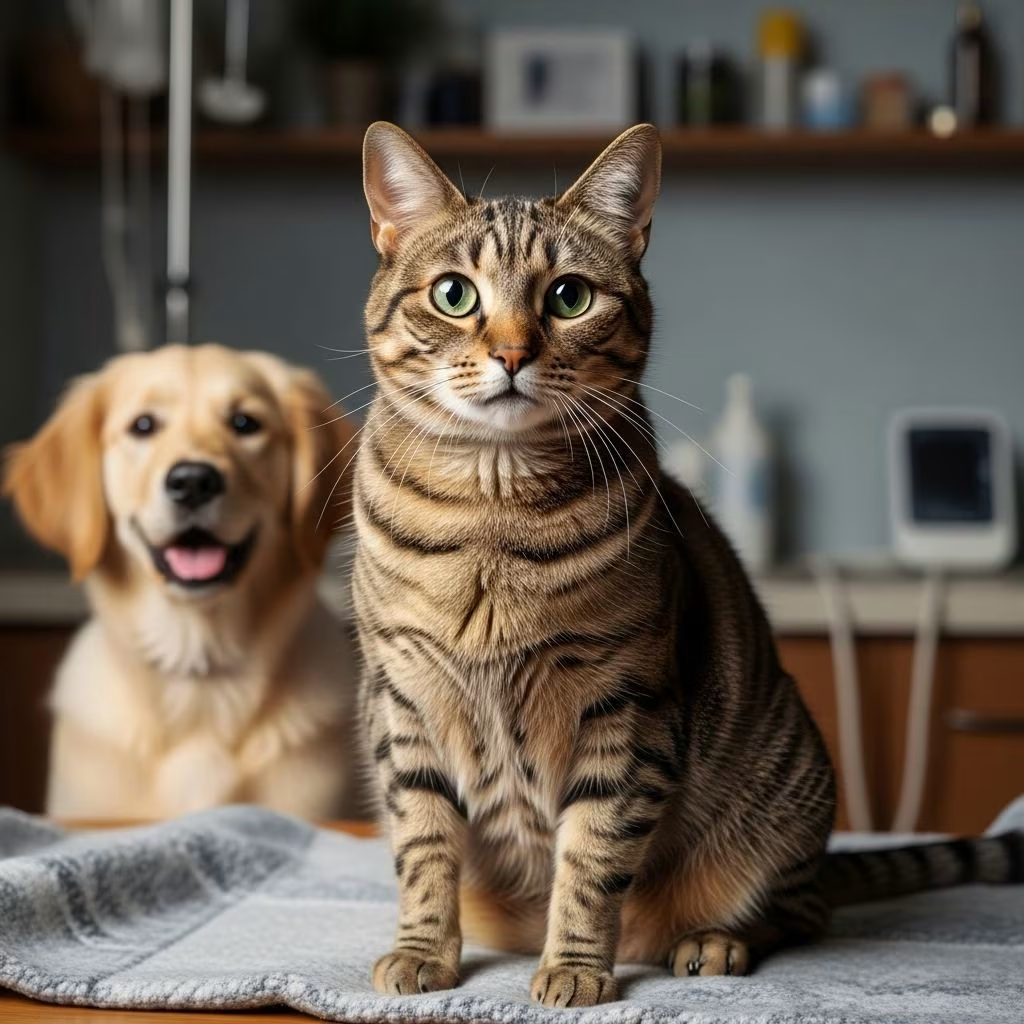
Cushing’s syndrome, medically termed hyperadrenocorticism, represents a prevalent endocrine disorder primarily affecting middle-aged to older dogs, with rarer occurrences in cats. This condition arises from excessive cortisol production, leading to widespread physiological disruptions. Understanding its mechanisms, manifestations, and interventions is crucial for pet owners and veterinarians alike.
Understanding the Pathophysiology
At its core, Cushing’s syndrome stems from an imbalance in the hypothalamic-pituitary-adrenal axis. In the predominant pituitary-dependent form (PDH), a pituitary gland tumor overproduces adrenocorticotropic hormone (ACTH), prompting the adrenal glands to secrete surplus cortisol. Alternatively, adrenal-dependent hyperadrenocorticism (ADH) results from direct adrenal tumors, either benign or malignant, autonomously producing cortisol independent of pituitary signals. This excess glucocorticoid exerts catabolic effects, weakening immunity, altering metabolism, and compromising multiple organ systems.
In dogs, PDH accounts for roughly 85% of cases, while ADH comprises the rest. Cats exhibit similar patterns but with nuances, such as frequent concurrent diabetes mellitus complicating diagnosis. Epidemiological data indicate higher incidence in small breeds for PDH and larger breeds for ADH, with neutered females showing elevated risk in some studies.
Recognizing Clinical Manifestations
Symptoms in affected pets are diverse, reflecting cortisol’s systemic impact. Common signs in dogs include:
- Excessive thirst (polydipsia) and urination (polyuria), often leading to household accidents.
- Ravenous hunger (polyphagia), resulting in potential weight gain despite muscle wasting.
- Abdominal distension due to fat redistribution and weakened abdominal muscles, creating a pot-bellied appearance.
- Skin changes: thinning, fragility, alopecia (hair loss particularly on flanks and trunk), recurrent infections like pyoderma, and poor wound healing.
- Panting, lethargy, and exercise intolerance from muscle atrophy.
- Systemic issues: hypertension, mild diabetes-like hyperglycemia, and increased susceptibility to infections.
Cats may present with polyuria/polydipsia, fragile skin prone to tearing, and diabetes mellitus overshadowed by hypercortisolism. Unlike dogs, cats less commonly show polyphagia or pot-bellied stance. These signs develop insidiously, often mistaken for normal aging until advanced stages.
Diagnostic Approaches
Diagnosing Cushing’s requires a multifaceted strategy, starting with history, physical exam, and baseline labs. Routine tests often reveal:
| Lab Finding | Typical Abnormality | Significance |
|---|---|---|
| Complete Blood Count (CBC) | Stress leukogram (lymphopenia, neutrophilia, eosinopenia) | Glucocorticoid-induced white cell shift |
| Chemistry Panel | Elevated ALP (alkaline phosphatase), mild hyperglycemia, hyperlipidemia | Cortisol-mediated enzyme induction and metabolic changes |
| Urinalysis | Low specific gravity, proteinuria | Impaired concentrating ability |
Endocrine screening follows, with the low-dose dexamethasone suppression test (LDDST) as a sensitive initial screen. However, its specificity falters in non-adrenal illnesses, necessitating recovery before retesting. Urine cortisol:creatinine ratio (UCCR) offers high sensitivity but similar specificity issues. Confirmatory tests include ACTH stimulation, high-dose dexamethasone suppression, or endogenous ACTH levels to differentiate PDH from ADH. Advanced imaging like abdominal ultrasound or MRI pinpoints tumor locations.
Treatment Modalities
Management hinges on the form and severity. PDH, being most common, relies on lifelong medical therapy.
Medical Management
Trilostane (Vetoryl®), FDA-approved for both PDH and ADH, inhibits adrenal cortisol synthesis at 1-3 mg/kg PO every 12 hours with food. Monitoring via ACTH stimulation tests ensures dosing: initial checks at 2 weeks, then every 3-4 months. Mitotane (Lysodren®) destroys cortisol-producing adrenal cells but requires cautious loading and is less favored now. Contraindications for trilostane include renal/hepatic disease, pregnancy, or certain cardiac meds.
Surgical Interventions
For ADH, adrenalectomy removes the tumor, potentially curative if non-metastatic. PDH may benefit from hypophysectomy (pituitary removal), achieving 80% remission in specialized centers, though risks include diabetes insipidus and hormonal supplementation needs. Bilateral adrenalectomy suits feline cases. Surgery demands expertise due to complications.
Radiotherapy and Alternatives
Radiation targets pituitary tumors in PDH, offering remission in select cases. For atypical or refractory hyperadrenocorticism, other agents may be explored.
Post-treatment, clinical improvements like reduced thirst appear within weeks, but skin/haircoat recovery lags months. Lifelong monitoring prevents over- or under-suppression.
Prognosis and Long-Term Care
With trilostane, most dogs enjoy 2-4 years of quality life, with survival varying by tumor type and comorbidities. Untreated, complications like diabetes, hypertension, or infections shorten lifespan. Cats respond less predictably to meds, favoring surgery. Owners must commit to frequent vet visits, bloodwork, and sign vigilance.
Supportive care includes:
- Dietary management for polyphagia and hyperglycemia.
- Antibiotics for infections.
- Blood pressure control.
- Environmental adaptations for mobility.
Prevention and Risk Factors
No direct prevention exists, but early detection via routine senior wellness exams aids. Risk factors: age (7+ years), breed predispositions (e.g., Poodles, Dachshunds for PDH), and sex (neutered females).
Frequently Asked Questions (FAQs)
What breeds are prone to Cushing’s in dogs?
Small breeds like Poodles, Terriers, and Dachshunds for PDH; larger breeds for ADH.
Is Cushing’s curable?
PDH is managed lifelong; ADH may be cured via adrenalectomy if feasible.
How often are follow-up tests needed?
Every 2 weeks initially, then 3-4 months once stable.
Can cats get Cushing’s?
Yes, but rarely; often with diabetes.
What if my pet has side effects from meds?
Contact vet immediately; dose adjustments or alternatives possible.
Emerging Research and Considerations
Ongoing studies refine diagnostics and therapies, including minimally invasive pituitary surgeries. Pet owners should consult board-certified internists for complex cases. Awareness empowers proactive care, enhancing pet longevity.
References
- Cushing’s Disease in Dogs: Signs and Treatment — MedVet. 2023. https://www.medvet.com/cushings-disease-in-dogs/
- Cushing Disease (Pituitary-Dependent Hyperadrenocorticism) in Animals — MSD Veterinary Manual. 2024-02-01. https://www.msdvetmanual.com/endocrine-system/the-pituitary-gland/cushing-disease-pituitary-dependent-hyperadrenocorticism-in-animals
- Cushing’s Disease in Dogs — VCA Animal Hospitals. 2023. https://vcahospitals.com/know-your-pet/cushings-disease-in-dogs
- Cushing Syndrome (Hyperadrenocorticism) in Animals — Merck Veterinary Manual. 2024. https://www.merckvetmanual.com/endocrine-system/the-adrenal-glands/cushing-syndrome-hyperadrenocorticism-in-animals
- Treating Cushing’s Disease in Dogs — U.S. Food and Drug Administration (FDA). 2023-05-15. https://www.fda.gov/consumers/consumer-updates/treating-cushings-disease-dogs
- Cushing’s Syndrome — Cornell University College of Veterinary Medicine. 2024. https://www.vet.cornell.edu/departments-centers-and-institutes/riney-canine-health-center/canine-health-information/cushings-syndrome



