

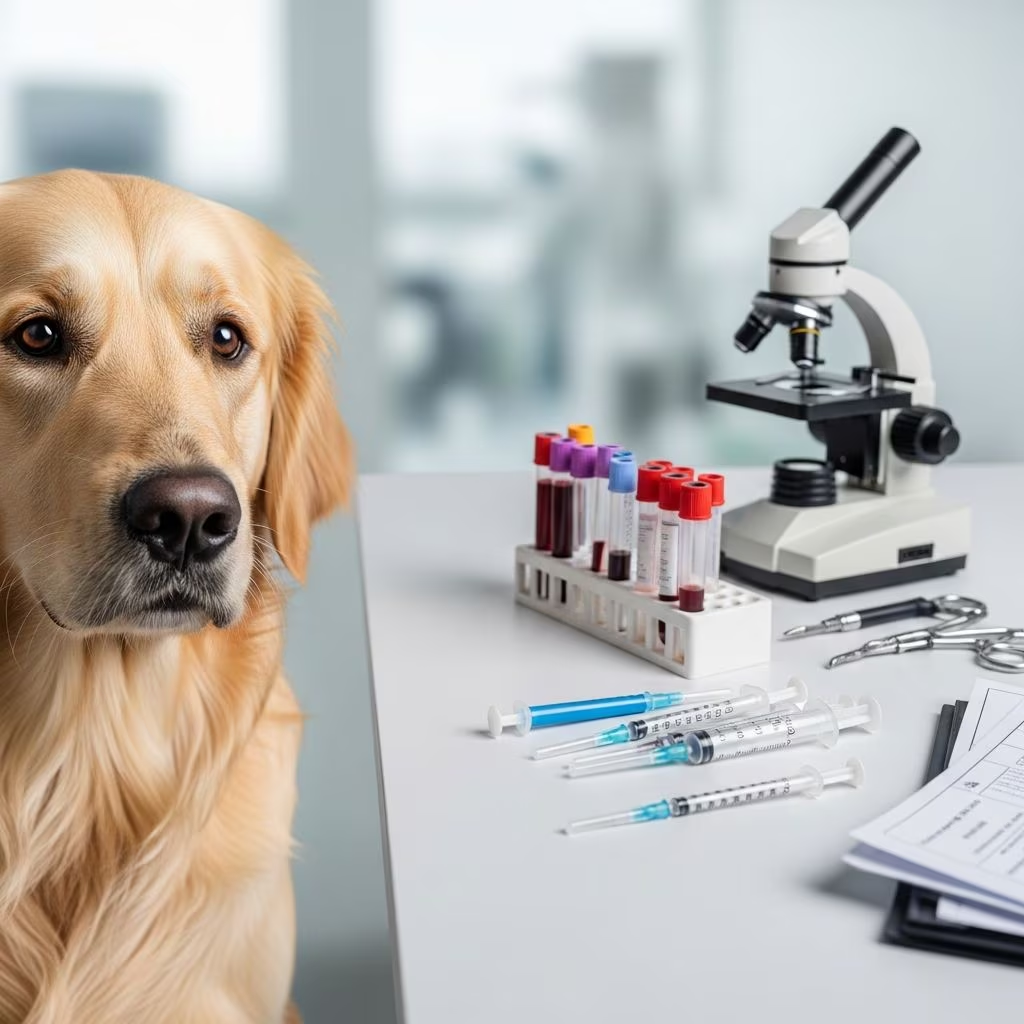
Understanding Cushing’s Disease Testing in Dogs
Cushing’s disease, medically known as hyperadrenocorticism (HAC), is a common endocrine disorder in dogs that results from excessive cortisol production. Accurate diagnosis is crucial for effective treatment and management of this condition. If your veterinarian suspects your dog may have Cushing’s disease based on clinical signs and initial examination, several diagnostic tests can confirm the diagnosis and determine the underlying cause.
Initial Diagnostic Steps
Before specialized endocrine testing begins, your veterinarian will conduct a thorough evaluation of your dog’s health status. This initial assessment provides essential information that guides subsequent diagnostic decisions and helps identify any concurrent health conditions that might affect test results.
Physical Examination and History
The diagnostic process starts with a comprehensive physical examination and detailed medical history. Your veterinarian will ask about the onset and progression of symptoms, current medications, and any previous health issues. During the physical exam, your veterinarian will assess your dog’s general condition, looking for classic signs of Cushing’s disease such as a potbelly appearance, hair loss, thin skin, and signs of skin infections. Mentioning all current medications is particularly important, as some drugs can affect test results or complicate diagnosis.
Baseline Laboratory Testing
Initial laboratory work includes a complete blood count (CBC) and biochemistry profile. These tests provide valuable supportive information, though they are not diagnostic for Cushing’s disease on their own. Dogs with Cushing’s disease typically show specific laboratory patterns that support the clinical suspicion of the disease.
Common laboratory findings include:
- Stress leukogram on CBC (a characteristic pattern of white blood cell changes)
- Elevated alkaline phosphatase (ALP), a liver enzyme
- Mild to moderate increase in alanine aminotransferase (ALT)
- High cholesterol and triglycerides
- Dilute urine with lower concentration
- Protein in the urine
These findings, combined with clinical signs, suggest the need for specific endocrine testing to confirm Cushing’s disease.
Primary Screening Tests for Cushing’s Disease
Two main diagnostic tests are used as screening tools for suspected Cushing’s disease in dogs. According to the 2012 ACVIM consensus statement, the low-dose dexamethasone suppression test is recommended as the screening test of choice for spontaneous Cushing’s syndrome.
Low-Dose Dexamethasone Suppression (LDDS) Test
The LDDS test is a screening tool designed to detect excess cortisol production in dogs with suspected Cushing’s disease. This test evaluates the pituitary-adrenal axis’s ability to respond appropriately to suppression by an external glucocorticoid.
How the LDDS test works:
- An initial blood sample is collected to measure baseline cortisol levels
- A low dose of dexamethasone (a synthetic glucocorticoid) is administered to the dog
- Blood samples are taken at specific intervals (typically 4 and 8 hours after injection) to measure cortisol levels
- In healthy dogs, dexamethasone suppresses cortisol production, causing levels to drop significantly
- In dogs with Cushing’s disease, cortisol levels remain elevated despite dexamethasone administration
The LDDS test is sensitive for detecting most cases of spontaneous Cushing’s disease and helps differentiate between different types of the condition. However, results must be interpreted carefully, as certain medications and concurrent illnesses can affect outcomes.
ACTH Stimulation Test
The ACTH stimulation test is another important diagnostic tool, particularly for identifying iatrogenic Cushing’s disease (caused by excessive glucocorticoid medication). This test directly stimulates the adrenal glands to assess their cortisol production capacity.
ACTH stimulation test procedure:
- A baseline blood sample is drawn to measure resting cortisol levels
- ACTH (adrenocorticotropic hormone) is administered intramuscularly or intravenously
- A second blood sample is collected approximately one hour later to measure post-stimulation cortisol levels
- In dogs with Cushing’s disease, cortisol remains elevated in both samples
- In healthy dogs, cortisol levels may increase slightly but remain within normal limits
The sensitivity of the ACTH stimulation test for spontaneous canine Cushing’s disease ranges from 57% to 95%, with sensitivity in pituitary-dependent cases reaching 80% to 83%. Specificity ranges from 59% to 93%. This test is considered the gold standard for diagnosing iatrogenic Cushing’s disease and is also used to help differentiate between different forms of spontaneous disease.
Additional Diagnostic Tests
When screening tests suggest Cushing’s disease, additional tests may be performed to determine the underlying cause and guide treatment decisions. These tests help differentiate between pituitary-dependent hyperadrenocorticism (PDH) and adrenal-dependent hyperadrenocorticism (ADH).
Urine Cortisol to Creatinine Ratio (UCCR)
The UCCR test measures the ratio of cortisol to creatinine in a urine sample collected over 24 hours. This test can help identify dogs with excessive cortisol production, though it is less specific than blood-based tests. Elevated ratios may support a diagnosis of Cushing’s disease, but results must be confirmed with other diagnostic methods.
Endogenous ACTH Measurement
Measuring endogenous ACTH levels helps differentiate between pituitary-dependent and adrenal-dependent Cushing’s disease. In pituitary-dependent disease, ACTH levels are typically elevated or within the upper normal range. In adrenal-dependent disease, ACTH levels are typically low or undetectable. This distinction is crucial because it determines treatment options and prognosis.
High-Dose Dexamethasone Suppression (HDDS) Test
The HDDS test uses a higher dose of dexamethasone than the LDDS test and can help differentiate between pituitary-dependent and adrenal-dependent disease. Dogs with pituitary-dependent Cushing’s disease typically show cortisol suppression with high-dose dexamethasone, while dogs with adrenal-dependent disease do not.
Imaging Studies for Cushing’s Disease Diagnosis
Imaging plays an important role in confirming the presence of tumors and assessing the extent of disease. Different imaging modalities provide varying levels of detail and help guide treatment decisions.
Abdominal Ultrasound
Abdominal ultrasound is often the first imaging choice for evaluating dogs with confirmed Cushing’s disease. This non-invasive technique provides detailed images of the adrenal glands and helps assess their size and shape.
Ultrasound findings in different types of Cushing’s disease:
| Finding | Pituitary-Dependent PDH | Adrenal-Dependent ADH ||———|————————–|———————-|| Adrenal gland appearance | Normal or enlarged, symmetrical | Moderate asymmetry || Size pattern | Bilateral enlargement possible | Marked asymmetry || Contralateral gland | Normal size | Atrophy (< 4-5 mm width) || Tissue architecture | Preserved | Destroyed or disorganized |
Ultrasound can also detect other important findings such as hepatomegaly (enlarged liver), bladder distension, and characteristic mineralization patterns in soft tissues that occur with Cushing’s disease.
Computed Tomography (CT) and Magnetic Resonance Imaging (MRI)
CT and MRI are more advanced imaging techniques that provide superior soft tissue detail compared to ultrasound. These imaging modalities are particularly valuable for:
- Identifying vascular invasion by adrenal tumors
- Detecting metastatic disease
- Assessing invasion into the vena cava or adjacent tissues
- Identifying pituitary tumors and evaluating their size and location
- Planning surgical intervention when adrenalectomy is considered
MRI is particularly useful for pituitary imaging, as it can identify the characteristic “pituitary flush” (early enhancement of the posterior pituitary) that may be absent or displaced by pituitary tumors.
Chest X-rays
Chest radiographs are recommended if your dog is experiencing respiratory symptoms or to screen for potential cancer metastases. Cushing’s disease can affect the lungs through mineralization of bronchi and pulmonary tissue, and chest X-rays help evaluate these changes.
Special Considerations for Testing
Several factors can influence the accuracy and interpretation of Cushing’s disease diagnostic tests. Understanding these considerations helps ensure reliable results.
Concurrent Illness and Test Accuracy
Concurrent serious illness can significantly affect test results and lead to false positives. If your dog has other health conditions, your veterinarian may recommend postponing Cushing’s disease testing until the concurrent illness is controlled or resolved. This ensures that any positive results accurately reflect Cushing’s disease rather than the effects of other conditions.
Retesting and Serial Evaluation
In some cases, initial screening tests may be negative despite clinical signs highly suggestive of Cushing’s disease. If your veterinarian maintains high clinical suspicion and the initial test is negative, retesting in three to six months may be beneficial, particularly if your dog’s clinical signs progress. Multiple negative tests with a suggestive presentation warrant consideration of additional diagnostic approaches.
Medication Effects
Certain medications can interfere with Cushing’s disease diagnostic tests. It is essential to inform your veterinarian about all medications your dog is currently receiving, including over-the-counter supplements and recently administered medications. Your veterinarian may recommend temporarily discontinuing certain medications before testing or may adjust test interpretation based on current medication use.
Interpreting Test Results
Understanding what test results mean is crucial for informed decision-making about your dog’s care. Test results must always be interpreted in the context of clinical signs, physical examination findings, and laboratory abnormalities.
Positive test results typically indicate:
- Elevated cortisol levels that fail to suppress appropriately with dexamethasone
- Excessive cortisol response to ACTH stimulation
- Laboratory patterns consistent with cortisol excess
- Imaging findings suggestive of pituitary or adrenal pathology
Once Cushing’s disease is confirmed, additional testing helps determine whether the disease is pituitary-dependent or adrenal-dependent, guiding treatment recommendations and prognosis.
Frequently Asked Questions About Cushing’s Disease Testing
Q: Is there a single definitive test for Cushing’s disease?
A: No, there is no single definitive diagnostic test for Cushing’s disease. Instead, veterinarians must combine clinical signs, physical examination findings, baseline laboratory abnormalities, and specific endocrine tests to confirm the diagnosis.
Q: How long does it take to get Cushing’s disease test results?
A: Most basic screening tests provide results within one to three business days. More specialized tests like imaging studies may require additional time for scheduling and interpretation.
Q: Can Cushing’s disease be diagnosed with just a blood test?
A: While blood tests are essential for diagnosis, they should be combined with clinical signs, physical examination findings, and often imaging studies for a complete diagnostic evaluation. No single blood test definitively confirms Cushing’s disease.
Q: What should I expect during Cushing’s disease testing?
A: Testing typically involves blood draws, possibly multiple visits for timed samples, and potentially imaging studies such as ultrasound. Your veterinarian will explain the specific procedures and what to expect based on which tests are recommended for your dog.
Q: Why does my dog need imaging if blood tests confirm Cushing’s disease?
A: Imaging helps determine whether Cushing’s disease is pituitary-dependent or adrenal-dependent, which is essential for choosing appropriate treatment options and establishing prognosis for your dog’s condition.
Conclusion
Diagnosing Cushing’s disease in dogs requires a comprehensive approach combining physical examination, baseline laboratory testing, specialized endocrine tests, and often imaging studies. The low-dose dexamethasone suppression test and ACTH stimulation test are the primary screening tools, each with specific advantages and applications. Once Cushing’s disease is confirmed, additional tests help determine the underlying cause and guide treatment decisions. Working closely with your veterinarian ensures accurate diagnosis and appropriate management of this common endocrine disorder.
References
- Cushing’s Disease in Dogs: Symptoms, Diagnosis, and Treatment — PetMD. 2024. https://www.petmd.com/dog/conditions/endocrine/cushings-disease-in-dogs-symptoms-diagnosis
- Diagnosing and Managing Cushing’s Syndrome in Dogs — Veterinary Practice. 2024. https://www.veterinary-practice.com/article/cushings-syndrome-in-dogs
- Cushing’s Disease in Dogs Part 2: Diagnostic Approach — Today’s Veterinary Practice. 2024. https://todaysveterinarypractice.com/endocrinology/cushings-disease-dog-diagnostics/
- Cushing’s Disease in Dogs — VCA Animal Hospitals. 2024. https://vcahospitals.com/know-your-pet/cushings-disease-in-dogs
- Cushing’s Syndrome — Cornell University College of Veterinary Medicine. 2024. https://www.vet.cornell.edu/departments-centers-and-institutes/riney-canine-health-center/canine-health-information/cushings-syndrome
- Cushing Disease (Pituitary-Dependent Hyperadrenocorticism) in Animals — Merck Veterinary Manual. 2024. https://www.merckvetmanual.com/endocrine-system/the-pituitary-gland/cushing-disease-pituitary-dependent-hyperadrenocorticism-in-animals
- Treating Cushing’s Disease in Dogs — FDA. 2024. https://www.fda.gov/consumers/consumer-updates/treating-cushings-disease-dogs



