

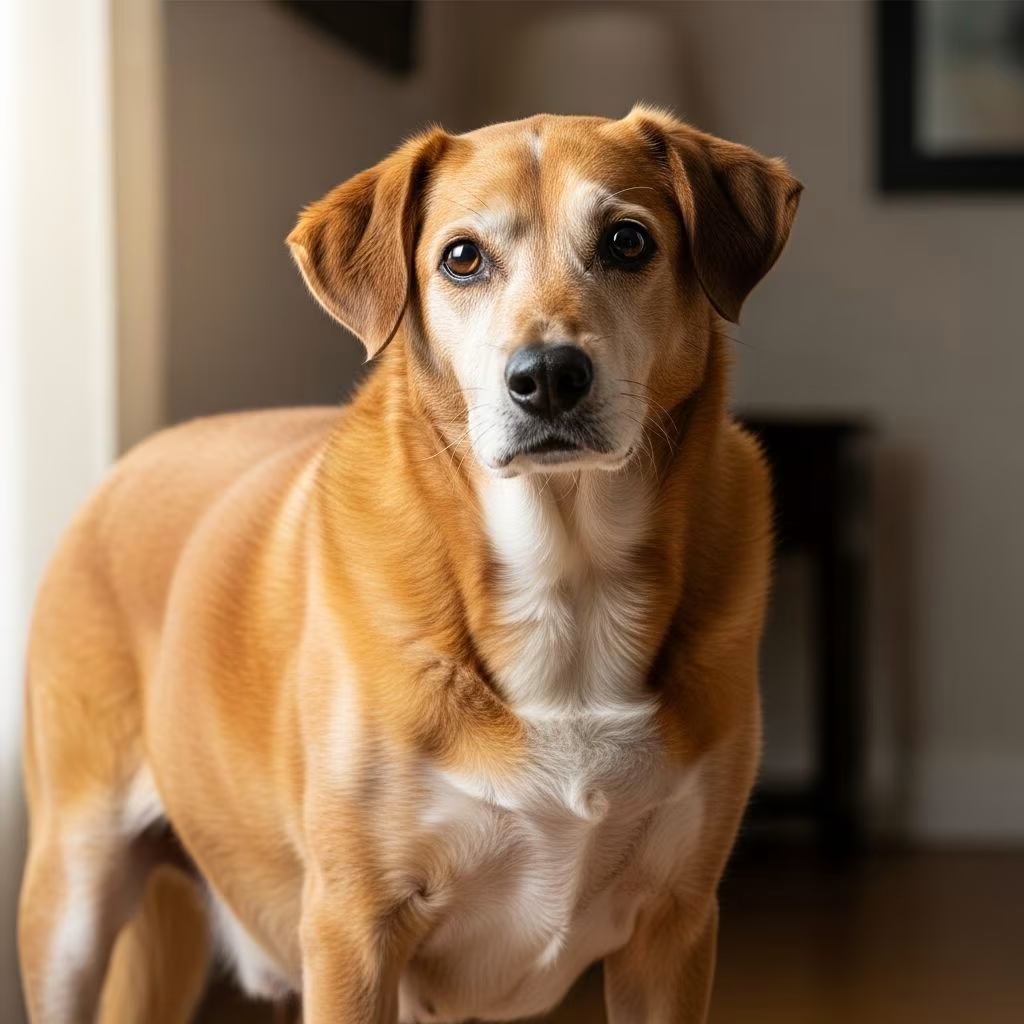
Cushing’s disease, medically termed hyperadrenocorticism, arises when a dog’s body overproduces cortisol, a vital hormone for stress response, metabolism, and immune function. This excess disrupts normal bodily processes, leading to various health challenges that require vigilant management.
Understanding the Role of Cortisol in Canine Physiology
Cortisol, produced by the adrenal glands, helps dogs handle stress, regulate blood sugar, and suppress inflammation. In healthy dogs, its levels fluctuate predictably—rising in the morning and falling at night. When production becomes chronically elevated, it harms organs, weakens immunity, and alters metabolism, paving the way for Cushing’s symptoms.
Primary Causes of Excess Cortisol Production
Three main factors drive Cushing’s in dogs: pituitary-dependent issues, adrenal tumors, and medication side effects.
- Pituitary-Dependent Hyperadrenocorticism (PDH): Accounting for about 85% of cases, a benign pituitary gland tumor overproduces ACTH, signaling the adrenals to release too much cortisol. The tumor lacks regulatory feedback, causing adrenal enlargement.
- Adrenal-Dependent Hyperadrenocorticism: Roughly 15% of instances stem from tumors directly on one or both adrenal glands, autonomously pumping out cortisol without pituitary involvement.
- Iatrogenic Cushing’s: Prolonged steroid use, like prednisone for allergies or arthritis, mimics cortisol overload, suppressing natural production and atrophying adrenal glands.
Recognizing Early Warning Signs
Symptoms develop gradually, often mistaken for aging. Key indicators include:
- Excessive thirst (polydipsia) and urination (polyuria), sometimes causing household accidents.
- Ravenous hunger leading to begging or weight gain despite a potbellied appearance from weakened abdominal muscles.
- Symmetrical hair loss (bilaterally symmetric alopecia), especially on flanks, starting at the tail base.
- Thin, fragile skin prone to infections, bruising, and slow-healing wounds.
- Lethargy, panting, heat intolerance, and muscle wasting.
Owners might notice their dog drinking from toilets, panting excessively, or developing a sagging belly. These signs typically appear in middle-aged or senior dogs, particularly Poodles, Dachshunds, Terriers, Boxers, and Beagles.
Diagnostic Approaches for Confirmation
Veterinarians use a multi-step process to diagnose Cushing’s, as symptoms overlap with diabetes, kidney disease, or hypothyroidism.
| Test | Purpose | Details |
|---|---|---|
| Complete Blood Count (CBC) & Chemistry Panel | Screen for abnormalities | Detects elevated liver enzymes (ALP), high cholesterol, and low urine specific gravity. |
| Low-Dose Dexamethasone Suppression Test (LDDST) | Assess cortisol suppression | Cortisol levels remain high 8 hours post-injection in affected dogs. |
| ACTH Stimulation Test | Evaluate adrenal response | Measures cortisol before/after synthetic ACTH; exaggerated response indicates Cushing’s. |
| Abdominal Ultrasound | Visualize glands | Identifies adrenal tumors or enlargement. |
| Endogenous ACTH Level | Differentiate PDH vs. adrenal | High in PDH, low in adrenal-dependent. |
These tests, often combined, ensure accuracy, ruling out mimics. Diagnosis may take weeks due to fluctuating cortisol.
Treatment Strategies Tailored to the Cause
Treatment focuses on lowering cortisol, alleviating symptoms, and preventing complications like diabetes or infections. It’s typically lifelong for PDH and adrenal cases.
Medication for Pituitary-Dependent Cases
The mainstay for 85% of dogs is oral therapy:
- Trilostane (Vetoryl): FDA-approved, it inhibits an enzyme in cortisol synthesis. Dosed once or twice daily with food; monitoring via ACTH stim tests every 1-3 months initially.
- Mitotane (Lysodren): Chemotherapeutic that selectively destroys cortisol-producing adrenal cells. Requires loading and maintenance phases with strict monitoring for side effects like vomiting.
Side effects include lethargy, anorexia, and diarrhea; dose adjustments prevent over-suppression.
Managing Adrenal Tumors
Surgery to excise the tumor offers a potential cure if benign and unilateral, but risks include metastasis and surgical complications. Most cases use trilostane or mitotane.
Handling Iatrogenic Cases
Taper steroids gradually over weeks/months to avoid adrenal crisis. Supplemental hormones may be needed if original condition recurs.
Ongoing Monitoring and Complications
Post-treatment, quarterly bloodwork, urine tests, and ACTH stims track cortisol levels. Owners report improved energy, coat regrowth, and normalized thirst within months.
Untreated, risks include hypertension, urinary infections, pancreatitis, diabetes, and blood clots. Treated dogs enjoy 2-4 years of good quality life.
Supportive Care and Lifestyle Adjustments
Enhance outcomes with:
- A low-fat diet to combat weight gain and pancreatitis risk.
- Regular, gentle exercise to build muscle and aid weight control.
- Clean water access and frequent potty breaks.
- Skin care: medicated shampoos for infections.
- Dental checks, as cortisol weakens gums.
Prognosis and When to Consider Quality of Life
With diligent care, most dogs respond well, regaining vitality. However, if medications fail or side effects dominate, palliative care or euthanasia may be discussed. Early intervention is key.
Frequently Asked Questions (FAQs)
Can Cushing’s disease be cured in dogs?
Only adrenal tumors removed surgically offer a cure; most cases are managed lifelong with meds.
What breeds are prone to Cushing’s?
Poodles, Dachshunds, Terriers, Boxers, Boston Terriers.
How much does treatment cost?
Initial diagnostics: $500-2000; monthly meds/monitoring: $50-200.
Is Cushing’s painful for dogs?
Not directly, but secondary issues like skin infections can cause discomfort.
Can diet alone treat Cushing’s?
No, but it supports medical therapy.
References
- Cushing’s Disease in Dogs: Everything You Need to Know — GoodRx. 2023. https://www.goodrx.com/pet-health/dog/cushings-disease-in-dogs
- Cushing’s Disease in Dogs: Signs and Treatment — MedVet. 2024. https://www.medvet.com/cushings-disease-in-dogs/
- Cushing’s Disease in dogs: symptoms and treatment advice — Primrose Hill Vets. 2023. https://www.primrosehillvets.ie/pet-help-advice/dogs/127-cushings-disease-in-dogs-symptoms-and-treatment-advice
- Cushing’s Disease in Dogs & How It’s Treated — Huntersville Animal Care Hospital. 2021-06-30. https://www.huntersville.carolinavet.com/site/huntersville-veterinary-blog/2021/06/30/cushings-disease-dogs
- Cushing’s Disease in Dogs: Causes, Symptoms, & Treatment — Premier Veterinary Group. 2023. https://www.premiervets.net/blog/cushings-disease-in-dogs-causes-symptoms-and-treatment
- Cushing’s Disease in Dogs: Symptoms, Diagnosis, and … — PetMD. 2024. https://www.petmd.com/dog/conditions/endocrine/cushings-disease-in-dogs-symptoms-diagnosis
- Treatment for Cushing’s Disease in Dogs — Badger Veterinary Hospital. 2024-04-15. https://www.badgervet.com/site/blog/2024/04/15/treatment-cushings-disease-dogs
- Treating Cushing’s Disease in Dogs — U.S. Food and Drug Administration (FDA). 2023. https://www.fda.gov/consumers/consumer-updates/treating-cushings-disease-dogs
- Cushing’s syndrome — Cornell University College of Veterinary Medicine. 2024. https://www.vet.cornell.edu/departments-centers-and-institutes/riney-canine-health-center/canine-health-information/cushings-syndrome



