

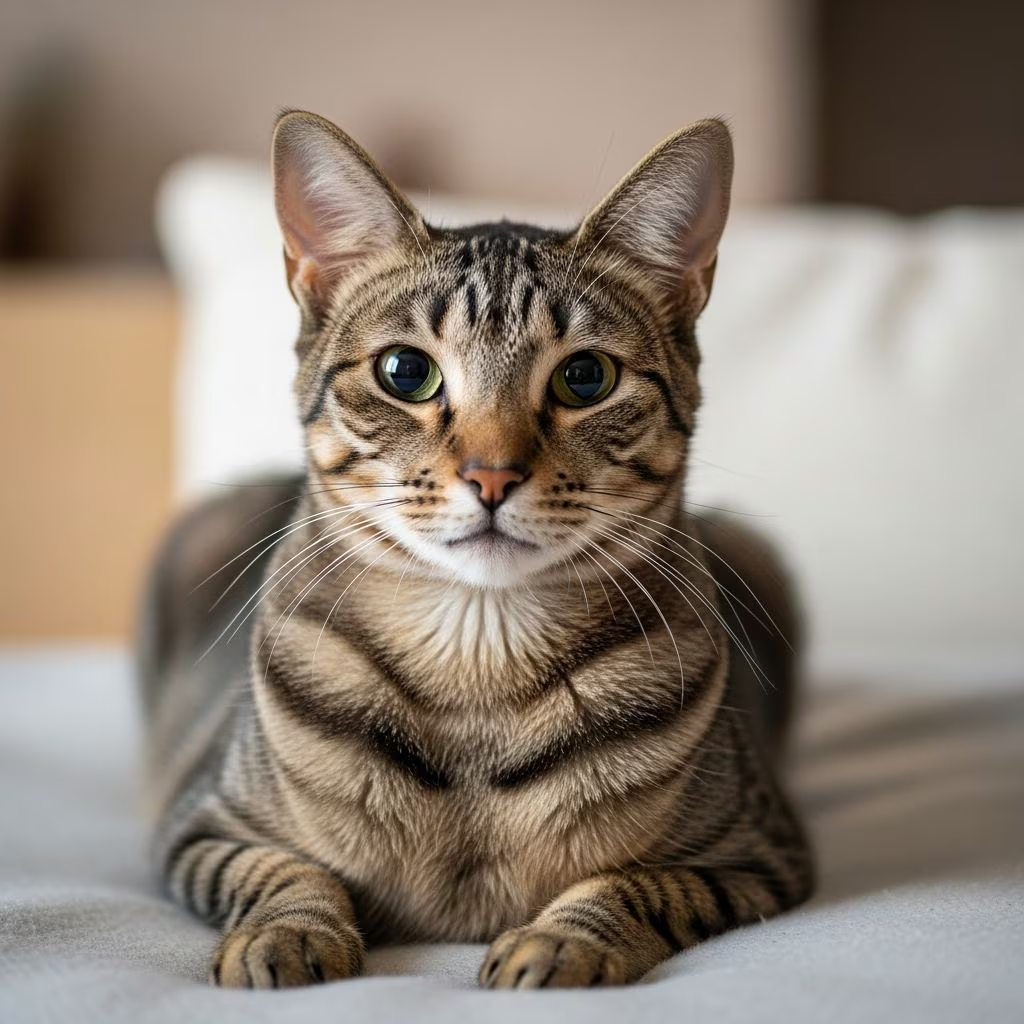
Cushing’s disease, also known as hyperadrenocorticism, is a hormonal disorder in cats caused by excessive production of cortisol from the adrenal glands. This condition, though rare in felines compared to dogs, can significantly impact a cat’s quality of life if not managed properly. Cortisol, often called the “stress hormone,” helps regulate metabolism, immune response, and inflammation, but overproduction leads to a cascade of health issues. Understanding this disease is crucial for cat owners noticing subtle changes in their pet’s behavior or appearance.
What Is Cushing’s Disease in Cats?
Cushing’s disease occurs when the body produces too much cortisol over an extended period. In cats, this can stem from natural overproduction or external factors like medication. The adrenal glands, located near the kidneys, release cortisol in response to signals from the pituitary gland in the brain. When this system malfunctions, cortisol levels spike, affecting multiple organs and systems.
There are two main forms: pituitary-dependent hyperadrenocorticism (PDH), where a pituitary tumor signals excessive cortisol production, and adrenal-dependent hyperadrenocorticism (ADH), caused by an adrenal tumor. A third type, iatrogenic hyperadrenocorticism, results from long-term steroid use for conditions like allergies or asthma.
Types of Cushing’s Disease in Cats
- Pituitary-Dependent Hyperadrenocorticism (PDH): The most common type in cats, accounting for the majority of cases. A benign tumor in the pituitary gland overstimulates the adrenal glands to produce excess cortisol. This form progresses slowly and often presents with neurological signs if the tumor grows large.
- Adrenal-Dependent Hyperadrenocorticism (ADH): Caused by a tumor directly on one or both adrenal glands, leading to autonomous cortisol secretion. These tumors can be benign or malignant, with malignant ones carrying a poorer prognosis.
- Iatrogenic Hyperadrenocorticism: Results from prolonged use of glucocorticoid medications (e.g., prednisolone) to treat inflammatory conditions. This is reversible but requires careful management to avoid withdrawal issues.
Causes of Cushing’s Disease in Cats
The root causes tie directly to the types. For PDH, microscopic pituitary tumors are primary culprits, though the exact trigger for tumor development remains unclear—possibly genetic or age-related factors, as it affects middle-aged to older cats (typically 7-12 years).
ADH arises from adrenal tumors, which may be functional (producing cortisol) or non-functional. Risk factors include breed predispositions (e.g., some reports suggest Poodles or Dachshund mixes, though data in cats is limited) and prior steroid exposure.
Iatrogenic cases stem from therapeutic steroids used for asthma, allergies, or immune-mediated diseases. Even topical or inhaled steroids can contribute if used long-term. Veterinarians aim to minimize steroid use once the underlying issue is controlled.
Symptoms of Cushing’s Disease in Cats
Symptoms develop gradually, often mimicking aging or other illnesses, making early detection challenging. Common signs include:
- Polydipsia and Polyuria (PU/PD): Excessive thirst and urination are hallmark symptoms, leading to litter box accidents or frequent water bowl visits.
- Polyphagia: Increased appetite, causing weight gain or a pot-bellied appearance despite muscle wasting.
- Skin and Coat Changes: Hair loss (alopecia), especially on flanks and abdomen; fragile skin that tears easily (fragile skin syndrome); thin skin prone to bruising and infections.
- Muscle Weakness: Wasting, particularly along the spine, leading to lethargy, reluctance to jump, or a swaying gait.
- Pot-Bellied Abdomen: Due to liver enlargement (hepatomegaly) and fat redistribution.
- Other Signs: Curling ear tips, recurrent infections (skin, urinary, respiratory), increased sexual behavior, behavioral changes, or neurological issues like seizures in advanced PDH.
Not all cats show every symptom; some may lose weight instead of gaining, appearing unkempt and lethargic.
Diagnosis of Cushing’s Disease in Cats
Diagnosing Cushing’s in cats is complex due to overlapping symptoms with diabetes, kidney disease, or hyperthyroidism. A thorough history, physical exam, and bloodwork are initial steps. Key diagnostics include:
- Blood and Urine Tests: Elevated cortisol, glucose, liver enzymes; dilute urine despite polydipsia.
- Low-Dose Dexamethasone Suppression Test (LDDST): Measures cortisol response to synthetic steroid; failure to suppress indicates Cushing’s.
- ACTH Stimulation Test: Assesses adrenal response post-ACTH injection; exaggerated response confirms hyperadrenocorticism.
- Abdominal Ultrasound: Identifies adrenal masses or pituitary enlargement.
- Endogenous ACTH Levels: High levels suggest PDH; low levels indicate ADH.
Advanced imaging like CT/MRI may pinpoint pituitary tumors. Cats often have concurrent conditions like diabetes, complicating diagnosis.
Treatment for Cushing’s Disease in Cats
Treatment varies by type and severity, focusing on cortisol control rather than cure. Success depends on early intervention and owner commitment.
Iatrogenic Cushing’s
Gradual steroid withdrawal under veterinary guidance, switching to alternatives like cyclosporine for allergies. Many cats recover fully and live comfortably.
Naturally Occurring Cushing’s
- Medical Therapy: Trilostane (Vetoryl) is the mainstay, inhibiting cortisol synthesis. Dosed once or twice daily, with monitoring every 1-3 months via ACTH stimulation tests. Symptoms may improve slowly; side effects include lethargy or adrenal crisis if overdosed.
- Surgery:
- Adrenalectomy: Removal of affected adrenal gland for unilateral ADH; high complication risk but offers longest survival if successful.
- Hypophysectomy: Pituitary removal for PDH; highly specialized, risky, with lifelong hormone replacement needed.
- Radiation Therapy: For pituitary tumors, especially with neurological signs; effective with fewer side effects using modern techniques. Follow-up meds may be required.
Supportive care includes treating infections, diabetes management, and a high-protein diet to combat muscle loss.
Prognosis and Management
Prognosis is guarded but improving with trilostane; many cats enjoy months to years of good quality life. Adrenalectomy survivors have the best outcomes, while malignant tumors worsen it. Regular vet visits (every 3-6 months) monitor cortisol, adjust meds, and screen for complications like hypertension or thromboembolism.
Owners should watch for treatment side effects: vomiting, anorexia, or weakness signal overdose. Lifelong management is typical, with no guaranteed cure.
Prevention of Cushing’s Disease in Cats
Prevention focuses on minimizing steroid use: use lowest effective dose shortest duration; explore alternatives early. Routine senior wellness exams catch early signs. No vaccines or genetic tests exist, but breed awareness helps high-risk cats.
When to See a Vet
Seek immediate care for new PU/PD, hair loss, pot belly, or weakness in middle-aged/older cats. Early diagnosis improves outcomes—don’t dismiss as ‘just old age.’
Frequently Asked Questions (FAQs)
What is the most common symptom of Cushing’s in cats?
Excessive thirst and urination (PU/PD) are the most frequent early signs.
Can Cushing’s disease be cured in cats?
Rarely cured, but managed effectively with medication or surgery; iatrogenic cases often resolve fully.
Is trilostane safe for cats with Cushing’s?
Yes, it’s the preferred drug but requires strict monitoring to avoid adrenal insufficiency.
How long do cats with Cushing’s live?
With treatment, many live 1-3 years or more; untreated, quality of life declines rapidly.
Can diet help manage Cushing’s in cats?
High-protein, low-carb diets support muscle mass and diabetes control, but aren’t a primary treatment.
References
- Cushing’s Disease in Cats: Causes, Symptoms, and Treatment — Pet Doctor X. 2023-02-15. https://www.petdoctorx.com/site/blog/2023/02/15/cushings-disease-in-cats
- Can Cats Get Cushing’s Disease? — Carolina Veterinary Specialists. 2020-10-30. https://www.matthews.carolinavet.com/site/pet-health-blog/2020/10/30/cats-cushings-disease
- Cushing’s Syndrome in Cats — Joii Pet Care. N/A. https://www.joiipetcare.com/blogs/health-conditions/cushings-syndrome-in-cats
- Cushing’s Disease (Hyperadrenocorticism) in Cats — PetMD. N/A. https://www.petmd.com/cat/conditions/endocrine/cushings-disease-hyperadrenocorticism-cats
- Hyperadrenocorticism (Cushing’s Disease) — International Cat Care. N/A. https://icatcare.org/articles/hyperadrenocorticism-cushings-disease
- Disorders of the Pituitary Gland in Cats — Merck Veterinary Manual. N/A. https://www.merckvetmanual.com/cat-owners/hormonal-disorders-of-cats/disorders-of-the-pituitary-gland-in-cats



