

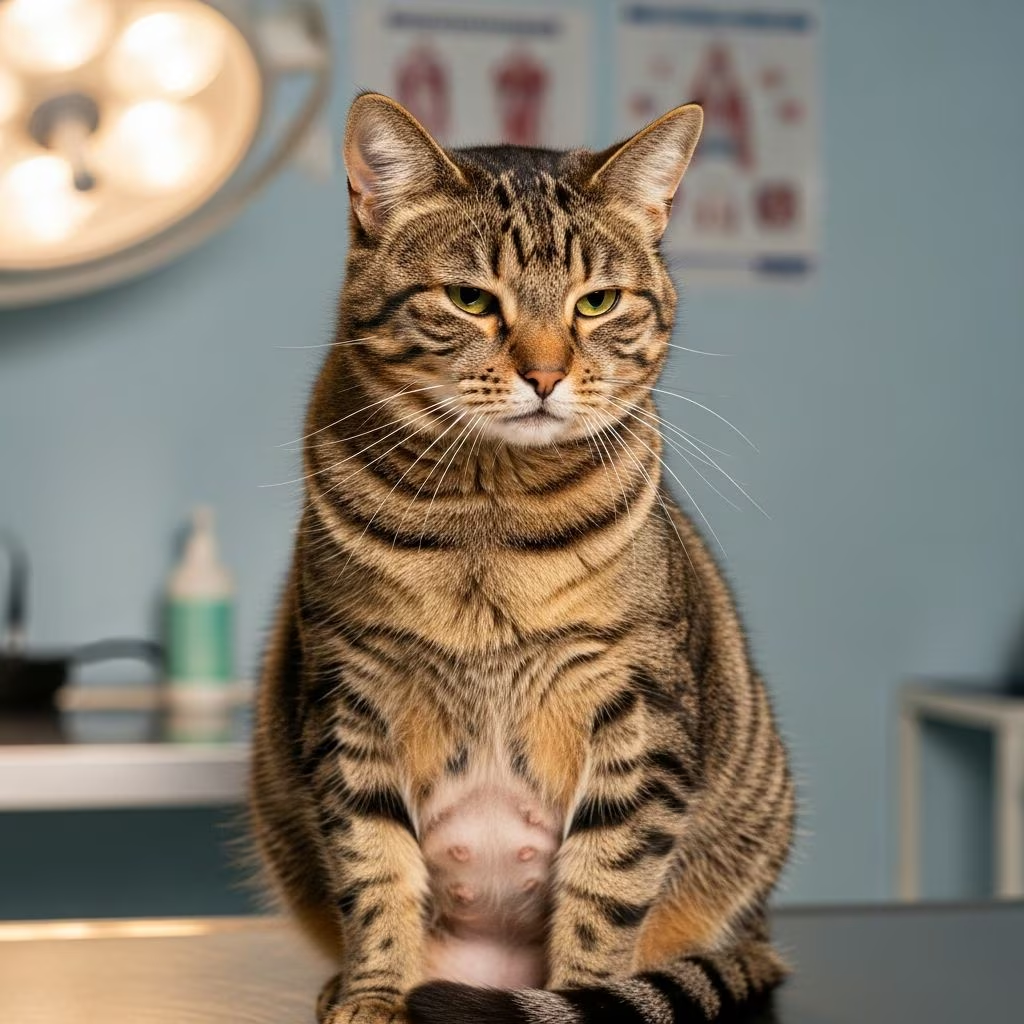
Understanding Cushing’s Disease in Cats
Cushing’s disease, medically known as hyperadrenocorticism, is an endocrine disorder that affects the adrenal glands in cats. This condition occurs when the body produces excessive amounts of cortisol, a hormone that plays a critical role in regulating metabolism, immune function, and stress response. While Cushing’s disease is relatively rare in cats compared to dogs, it remains a serious health concern that requires proper diagnosis and management. Understanding this condition is essential for cat owners, as early recognition and treatment can significantly improve quality of life.
What Causes Cushing’s Disease in Cats?
Cushing’s disease in cats can develop through several different mechanisms. There are three primary types of hyperadrenocorticism, each with distinct causes and treatment approaches.
Pituitary-Dependent Hyperadrenocorticism
The most common form of naturally occurring Cushing’s disease in cats is pituitary-dependent hyperadrenocorticism, accounting for approximately 80 to 85 percent of cases. This condition develops when a benign tumor forms on the pituitary gland, causing it to overproduce adrenocorticotropic hormone (ACTH). ACTH normally stimulates the adrenal glands to release cortisol, but when the pituitary produces excessive amounts, cortisol levels become dangerously elevated.
Adrenal-Dependent Hyperadrenocorticism
The second type involves a tumor developing directly on one or both adrenal glands. These tumors can be benign (adenoma) or malignant (adenocarcinoma). Adrenal tumors cause the affected gland to produce cortisol independently, without normal regulatory control. This form accounts for a smaller percentage of naturally occurring cases but can be more aggressive, particularly when cancer is involved.
Iatrogenic Hyperadrenocorticism
Iatrogenic Cushing’s disease develops as a side effect of prolonged administration of corticosteroid medications. These medications, such as prednisone or dexamethasone, are prescribed to treat various conditions including allergies, asthma, inflammatory bowel disease, and immune-mediated disorders. When given at high doses for extended periods, these medications can suppress the body’s natural cortisol regulation, leading to symptoms identical to naturally occurring Cushing’s disease.
Recognizing the Symptoms of Cushing’s Disease
The clinical signs of Cushing’s disease develop gradually and may be subtle in early stages. Cat owners should be alert to changes in their pet’s appearance, behavior, and bathroom habits.
Early Signs
In the early stages, cats may develop weight gain despite normal or increased appetite. A characteristic “potbellied” or pendulous abdomen often develops, sometimes accompanied by muscle loss over the spine. The liver may become enlarged, contributing to the abdominal distension. Some cats may paradoxically lose weight, which can complicate diagnosis.
Coat and Skin Changes
As the disease progresses, cats typically develop fur loss (alopecia) and an unkempt haircoat. A distinctive feature of Cushing’s disease in cats is fragile skin syndrome, where the skin becomes abnormally thin and delicate. This fragile skin bruises easily, tears readily, and heals slowly. Some cats develop characteristic curling of the ear tips. These skin changes result from the immunosuppressive effects of excessive cortisol.
Behavioral and Systemic Changes
Lethargy, drowsiness, and lack of activity are common as the disease progresses. Cats may become less interested in play and interaction. As hyperadrenocorticism advances, cats demonstrate increased water consumption (polydipsia) and increased urination (polyuria). Recurrent urinary tract infections are frequently observed due to the immunosuppressive nature of the condition. Many cats with Cushing’s disease also develop diabetes mellitus, as excessive cortisol interferes with insulin function.
Diagnosing Cushing’s Disease
Accurate diagnosis is crucial for developing an appropriate treatment plan. Veterinarians use several diagnostic tools to confirm Cushing’s disease and determine its underlying cause.
Initial Assessment
The diagnostic process begins with a thorough physical examination and detailed history. Your veterinarian will assess your cat’s symptoms, medication history, and overall health status. Blood tests and urinalysis are typically performed to evaluate general health and identify secondary complications like diabetes.
Specialized Testing
Several specialized tests help confirm hyperadrenocorticism. The low-dose dexamethasone suppression test (LDDST) is commonly used to screen for Cushing’s disease. In healthy cats, administering dexamethasone suppresses cortisol production, but in cats with Cushing’s disease, cortisol levels remain elevated. The urine cortisol-to-creatinine ratio is another useful screening tool that measures cortisol levels in urine samples.
Determining the Type
Once Cushing’s disease is confirmed, determining which type is essential for treatment planning. The high-dose dexamethasone suppression test helps differentiate between pituitary-dependent and adrenal-dependent forms. Advanced imaging such as ultrasound, CT scans, or MRI may be necessary to visualize the pituitary and adrenal glands, especially when considering surgical intervention.
Treatment Options for Cushing’s Disease
Treatment strategies vary significantly depending on the underlying cause of the disease. Your veterinarian will recommend the most appropriate approach based on diagnostic findings and your cat’s overall health status.
Managing Iatrogenic Hyperadrenocorticism
When Cushing’s disease results from corticosteroid medication use, the primary treatment involves a controlled and gradual withdrawal of the problematic medication. Abrupt discontinuation of corticosteroids can be dangerous, so tapering must occur under veterinary supervision. Alternative medications to treat the underlying condition for which the steroid was prescribed may need to be substituted. Many cats respond well to this approach and go on to live comfortable lives for many months or years without symptoms.
Medication Therapy
For naturally occurring Cushing’s disease, pharmaceutical management is the most commonly recommended treatment approach. Trilostane (brand name Vetoryl®) is the most effective and frequently prescribed medication for cats with Cushing’s disease. This medication works by inhibiting enzyme activity involved in cortisol production, effectively reducing circulating cortisol levels. Trilostane is administered orally once or twice daily, with dosage adjusted based on individual response and cortisol level monitoring.
Mitotane (brand name Lysodren®) is an alternative medication that may be used in some cases, though trilostane generally appears more effective in felines. Drug therapy may help alleviate Cushing’s symptoms, though improvement may take considerable time to manifest. Regular monitoring through blood tests is essential to ensure medication effectiveness and safety.
Surgical Intervention
Surgical removal of an affected adrenal gland (adrenalectomy) can be an effective treatment option when only one adrenal gland is diseased. Success rates are generally good, particularly if the tumor is benign. However, adrenalectomy is a major surgical procedure with inherent risks, and recovery requires careful post-operative management.
Surgical removal of the pituitary gland (hypophysectomy) is a challenging and potentially risky procedure typically reserved for extreme cases. This highly specialized surgery is available only at veterinary specialty centers and universities. It requires significant surgical expertise and carries substantial complication risks.
Radiation Therapy
Radiation therapy has proven effective for treating cats with pituitary tumors causing Cushing’s disease. This treatment is particularly beneficial for cats showing neurological signs such as stumbling, drooling, or seizures. However, radiation therapy availability is limited, as only specialized veterinary centers offer this treatment option.
Prognosis and Long-Term Management
The prognosis for cats with Cushing’s disease varies considerably depending on the underlying cause, treatment response, and overall health status. Naturally occurring hyperadrenocorticism cannot be cured, but it can be effectively managed with appropriate treatment. Cats with successfully removed adrenal tumors have the longest survival times, though the surgery itself carries significant complication risks. Most cats that receive appropriate therapy experience improved quality of life and can enjoy many months or even years with proper management.
Cats with iatrogenic hyperadrenocorticism who respond well to gradual medication withdrawal and receive appropriate alternative treatments typically have the best prognosis. The outlook is more guarded when the underlying cause is a cancerous adrenal tumor, as cancer progression may eventually limit treatment options.
Living with a Cat with Cushing’s Disease
Managing a cat with Cushing’s disease requires commitment and close collaboration with your veterinarian. Regular monitoring through blood tests ensures medications remain effective and safe. Watch for any changes in symptoms, including increased thirst, urination, or appetite changes. Provide easy access to water and litter boxes given the increased urination common in this condition. Monitor your cat’s weight and skin condition, reporting any concerning changes to your veterinarian promptly.
Frequently Asked Questions About Cushing’s Disease in Cats
Q: How common is Cushing’s disease in cats?
A: Cushing’s disease is relatively rare in cats compared to dogs. When it does occur, pituitary-dependent hyperadrenocorticism is the most common form, accounting for approximately 80 to 85 percent of naturally occurring cases.
Q: Can Cushing’s disease in cats be cured?
A: Naturally occurring Cushing’s disease cannot be cured, but it can be managed effectively. Iatrogenic Cushing’s disease caused by steroid medications can often be resolved through gradual medication withdrawal. Cats with successfully removed adrenal tumors may experience the best long-term outcomes.
Q: How long can a cat live with Cushing’s disease?
A: With appropriate treatment and management, many cats with Cushing’s disease can live for many months or even years with good quality of life. The prognosis depends on the underlying cause, treatment response, and whether secondary complications like diabetes develop.
Q: What is the fragile skin syndrome associated with Cushing’s disease?
A: Fragile skin syndrome is a distinctive feature of Cushing’s disease in cats where excessive cortisol causes the skin to become abnormally thin and delicate. Affected skin bruises and tears easily and heals slowly.
Q: How often should a cat with Cushing’s disease be monitored?
A: Cats receiving medication for Cushing’s disease require regular veterinary monitoring, typically including blood tests to assess cortisol levels and medication effectiveness. Your veterinarian will recommend a monitoring schedule based on your cat’s individual needs and treatment response.
References
- Cushing’s Disease in Cats: Causes, Symptoms, and Treatment — Cumberland Animal Clinic. 2022-03-31. https://www.cumberlandanimalclinic.com/site/blog/2022/03/31/cushings-disease-in-cats
- Cushing’s Disease in Cats: Causes, Symptoms, and Treatment — PetDoctorX. 2023-02-15. https://www.petdoctorx.com/site/blog/2023/02/15/cushings-disease-in-cats
- Can Cats Get Cushing’s Disease? — Carolina Veterinary Specialists. 2020-10-30. https://www.matthews.carolinavet.com/site/pet-health-blog/2020/10/30/cats-cushings-disease
- Cushing’s Disease (Hyperadrenocorticism) in Cats — PetMD. https://www.petmd.com/cat/conditions/endocrine/cushings-disease-hyperadrenocorticism-cats
- Hyperadrenocorticism (Cushing’s Disease) — International Cat Care. https://icatcare.org/articles/hyperadrenocorticism-cushings-disease
- Cushings Disease in Cats — VCA Animal Hospitals. https://vcahospitals.com/know-your-pet/cushings-disease-in-cats



