

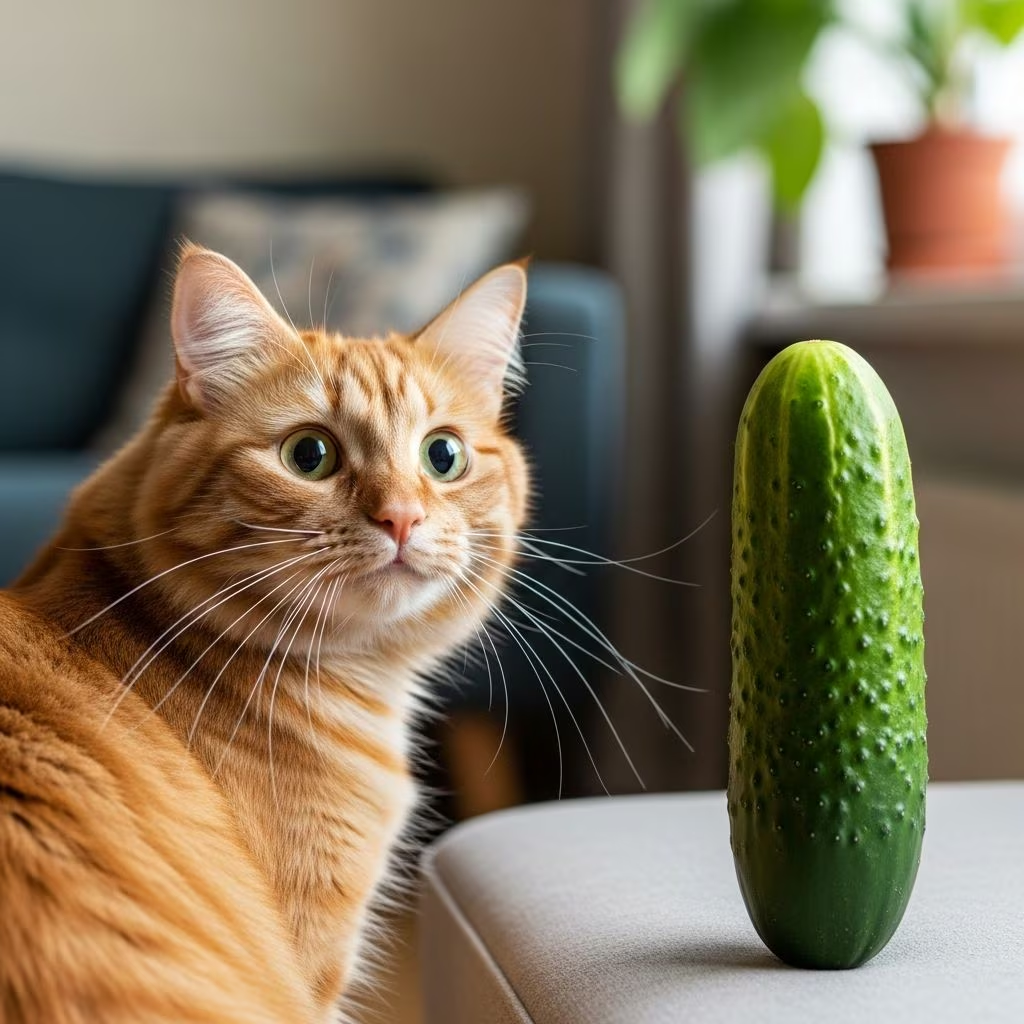
Cats often display intense startle reactions to unexpected objects like cucumbers placed behind them, leaping away in apparent terror. This phenomenon stems from their innate predator avoidance instincts, where sudden novel shapes mimic threats such as snakes in their natural environment.
The Instinctive Roots of Sudden Fears in Cats
Feline fear responses are deeply wired into their evolutionary biology, prioritizing rapid detection of potential dangers. Cats, as both predators and prey in the wild, have developed heightened sensitivity to sudden changes in their surroundings. A motionless green object appearing abruptly can trigger a flight response, as it resembles a coiled serpent ready to strike. Research on cat-human interactions highlights how early socialization influences these reactions; well-socialized kittens require multiple negative experiences to develop wariness, underscoring the potency of innate fear mechanisms.
Indoor cats, confined to predictable spaces, may exhibit amplified reactions to novelties because their environment lacks the variety of outdoor stimuli. Studies observing household cats note they initiate more contacts with inanimate objects indoors, possibly compensating for limited stimulation, which could heighten surprise when something unfamiliar appears.
Decoding the Startle Reflex: Body Language and Triggers
When confronted with a perceived threat like a cucumber, cats exhibit classic fear signals: arched backs, piloerection (fur standing on end), dilated pupils, and flattened ears. These are universal indicators of alarm, evolved to make the cat appear larger and more intimidating while preparing for escape. Owners misinterpret these cues about one-third of the time, especially negative states like stress, leading to mishandled situations.
- Arched back and raised fur: Defensive posture to intimidate.
- Tail swishing or lashing: Sign of agitation building.
- Ears back and low: Alert to danger from all sides.
- Dilated pupils: Heightened arousal state.
- Crouched body: Ready for fight or flight.
Combining vocal cues like growling meows with visual signals provides clearer communication. A rising meow pitch paired with a twitching tail signals escalating frustration, helping owners intervene early.
How Socialization Shapes Fear Thresholds
Early exposure to diverse stimuli critically determines a cat’s fearfulness. Kittens interacting with unfamiliar people weekly or daily before 12 weeks show lower fear responses than those with minimal contact. This aligns with findings that fearfulness correlates with aggression when escape isn’t possible, such as hissing or swatting at novel objects.
Personality traits like fearfulness emerge as distinct factors in large-scale cat studies across breeds. Cats scoring high in fearfulness traits benefit from gradual desensitization, introducing objects like cucumber-like shapes in controlled, positive settings to build tolerance.
| Fear Trait | Early Socialization Impact | Adult Behavior Outcome |
|---|---|---|
| High Fearfulness | Limited stranger exposure <12 weeks | Increased aggression, avoidance |
| Low Fearfulness | Frequent varied contacts | Sociable, resilient to novelties |
| Average | Moderate exposure | Balanced responses, trainable |
Environmental Factors Amplifying Reactions
The context of the cucumber prank—often placed while the cat eats—exploits vulnerability. Feeding heightens focus, making peripheral surprises more jarring. Indoor exclusivity may exacerbate this; cats in static homes interact more with objects, priming them for stronger novelty responses.
Human behavior influences feline stress too. Rough handling or unpredictable movements mimic threats, while gentle approaches foster trust. Cats prefer head strokes and adjust postures to guide petting, rejecting unfamiliar or forceful touches.
Cat Personality and Individual Variations
Not all cats react identically; personality clusters like activity/playfulness, sociability toward humans, and aggression vary across 4,300+ cats studied. Fearful cats ignore novel objects more, while sociable ones engage confidently. Owners high in openness correlate with less anxious cats, suggesting personality meshing affects behavior.
Gender dynamics appear in interactions: cats vocalize more with women and girls who crouch to their level, versus men who stay seated. Children trigger flight due to sudden approaches, even in socialized cats.
Psychological Impact: Stress and Welfare Concerns
Repeated startling erodes trust, potentially leading to chronic anxiety. Cats alleviate owners’ negative moods through proximity and rubbing, but stressed cats withdraw, impacting mutual well-being.
Long-term, poor fear management links to litter issues and excessive grooming, behavioral red flags for welfare.
Safe Ways to Test and Train Fear Responses
Desensitization works: place safe novelties at a distance with treats, gradually closing gaps. Positive reinforcement builds confidence without trauma.
- Introduce object far from food areas.
- Pair with play or food rewards.
- Monitor body language; retreat if stressed.
- Repeat sessions short and frequent.
Common Misconceptions About Cat Fears
Myth: Cucumbers specifically terrify cats. Reality: It’s the suddenness, not the vegetable; bananas or bags elicit similar jumps.
Myth: Cats lack emotions. Science shows they match emotional cues cross-modally, especially high-intensity ones from owners.
Enhancing Cat-Human Bonds Through Understanding
Observing dyadic patterns reveals reciprocity: cats initiate when secure, humans regulate distance. Meshing goals—petting preferred spots—strengthens ties.
Secure attachments mirror dog-owner bonds, with cats recognizing names and responding to owner emotions.
Frequently Asked Questions (FAQs)
Why do cats jump at cucumbers specifically?
The green, curved shape and silent placement mimic snakes, triggering predatory avoidance amid routine like eating.
Is the cucumber prank harmful?
Yes, it induces acute stress; repeated exposure risks anxiety disorders and eroded trust.
How can I reduce my cat’s general fearfulness?
Socialize early, use desensitization, provide enrichment like toys and perches.
Do all cats fear the same things?
No, personality traits like fearfulness vary; breed and upbringing influence thresholds.
Can cats learn to ignore cucumbers?
With gradual exposure and positives, many adapt, proving trainable resilience.
Creating a Fear-Free Home Environment
Enrich spaces with climbing towers, hiding spots, and rotating toys to mimic wild variety. Respect signals: slow blinks signal safety. Routine predictability minimizes surprises, fostering security.
Monitor for chronic signs—hiding, aggression—and consult vets for underlying issues. Informed care transforms reactive cats into confident companions.
References
- The Mechanics of Social Interactions Between Cats and Humans — Frontiers in Veterinary Science. 2021-07-22. https://www.frontiersin.org/journals/veterinary-science/articles/10.3389/fvets.2021.650143/full
- Unanswered Questions and Hypotheses about Domestic Cat–Human Interactions — PMC/NCBI. 2021-10-11. https://pmc.ncbi.nlm.nih.gov/articles/PMC8532687/
- Cat research provides new insights into our furry friends — University of Helsinki. 2023. https://www.helsinki.fi/en/news/cats/cat-research-provides-new-insights-our-furry-friends
- Understanding Cat Behavior: New Study — Cat Wisdom 101. 2023. https://catwisdom101.com/understanding-cat-behavior-new-study/
- Demystifying feline behavior — Penn Today, University of Pennsylvania. 2019-10-17. https://penntoday.upenn.edu/news/demystifying-feline-behavior



