

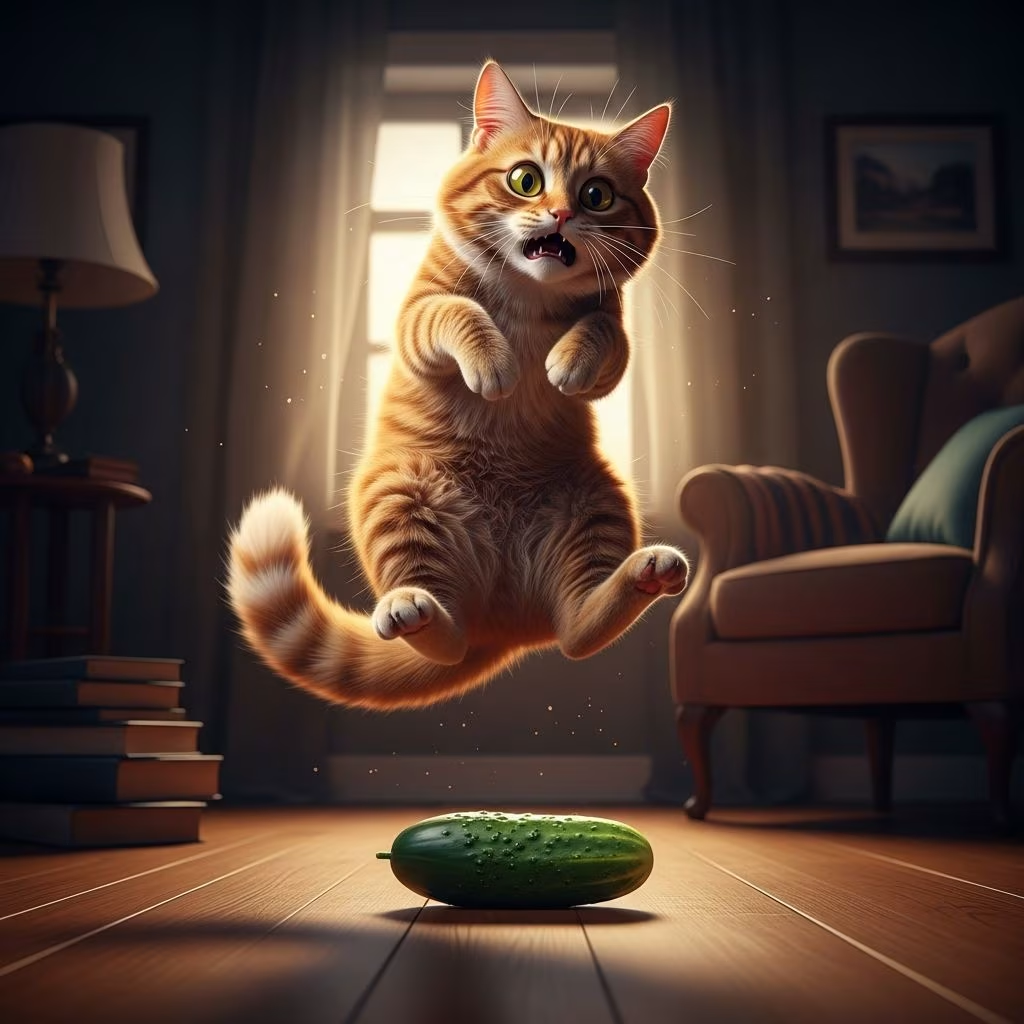
Cats’ explosive reactions to cucumbers have captivated internet audiences, but this phenomenon reveals deep insights into feline instincts and vulnerabilities. These sudden leaps stem primarily from a combination of surprise, unfamiliar shapes, and disrupted safe spaces rather than a specific phobia of the vegetable itself.
The Viral Sensation Explained
The trend exploded through social media videos showing cats frozen mid-meal or rest, only to vault away upon spotting a cucumber placed stealthily behind them. This isn’t mere quirkiness; it’s a glimpse into how cats process their environment with hyper-vigilance.
Cats, as natural hunters, maintain constant awareness of subtle changes. A motionless green object appearing without warning triggers their innate defense mechanisms, leading to dramatic escapes that amuse viewers but distress the animals.
Core Reasons for the Reaction
Several interconnected factors explain why cucumbers provoke such outsized responses in cats. Understanding these helps pet owners foster calmer homes.
Sudden Novelty Overload
The primary driver is the startle reflex, a rapid neurological response to unexpected stimuli. Cats’ peripheral vision detects the cucumber’s arrival without prior cues, flooding their system with stress hormones like cortisol.
Unlike gradual introductions, this ambush violates their expectation of control over their surroundings. Research on feline behavior notes that such interruptions in routine safe zones amplify the panic.
Shape and Color Mimicry
Many observe that cucumbers’ elongated, curved forms and green hue evoke snakes, a potential predator. While domestic cats often hunt snakes, the sudden placement mimics a stealthy ambush from behind.
However, experts like Cornell’s Dr. Pamela Perry argue against an innate snake fear, emphasizing novelty instead. Cats lack a hardwired cucumber aversion but respond to any unfamiliar, snake-resembling item similarly.
Territorial Feeding Disruptions
Videos typically capture cats at their food bowls, a fiercely guarded territory. The cucumber intrudes as a perceived rival or thief, compounding surprise with defensive aggression.
Cats’ superior senses of smell and hearing detect the vegetable’s alien odor and silence, heightening alarm. The American Association of Feline Practitioners highlights how unfamiliar scents trigger stress in produce-naive cats.
Comparative Reactions to Objects
Not all items elicit the same frenzy. Cats differentiate threats based on context and familiarity:
| Object | Common Reaction | Why? |
|---|---|---|
| Cucumber | High leap or freeze | Sudden, snake-like intruder in safe space |
| Toy mouse | Curiosity or play | Familiar, prey-shaped, expected |
| Cord or hose | Wariness or stalking | Snake mimic but gradual exposure |
| Other vegetable (e.g., zucchini) | Similar panic if surprised | Shape surprise, not cucumber-specific |
This table illustrates that reaction intensity ties more to placement and timing than the object alone.
Health Risks of Intentional Startling
While entertaining online, replicating these pranks inflicts real harm. Chronic stress from repeated scares elevates risks for urinary tract issues, gastrointestinal problems, and excessive grooming leading to hair loss.
- Immediate effects: Trembling, dilated pupils, aggression, or hiding.
- Long-term damage: Amygdala-driven fear memories make cats reactive to similar cues, fostering anxiety disorders.
- Physical injury: Panic leaps can cause falls, sprains, or collisions during flight.
Behavioral experts warn that associating owners with fear erodes trust, turning you into a perceived threat and straining the human-cat bond.
Feline Instincts and Evolutionary Roots
Cats evolved as solitary macropredators—apex in small scales but wary of larger foes like birds of prey or reptiles. Their brains prioritize flight over fight, optimizing energy for hunting.
This hypersensitivity served wild ancestors scanning for venomous threats. Domestic life dulls some edges, but instincts persist, especially in relaxed moments mimicking vulnerability.
In peripheral vision, a cucumber’s curve registers as motion-potential danger before full identification, bypassing rational processing.
Alternatives to Pranks for Engagement
Instead of scares, enrich your cat’s world positively:
- Interactive toys mimicking prey movement.
- Puzzle feeders to engage hunting drives safely.
- Scent games with catnip or familiar herbs.
- Calm introductions to novel objects from a distance.
Gradual exposure builds confidence, reducing neophobia (fear of new things).
Debunking Persistent Myths
- Myth: Cats hate all veggies. Many enjoy cucumber slices as hydrating treats when offered willingly.
- Myth: Only cucumbers work. Bananas, bottles, or any surprise object provoke similar jumps.
- Myth: It’s harmless fun. Stress accumulates, risking health as noted by vets.
Signs Your Cat is Over-Stressed
Monitor for these indicators post any surprise:
- Avoidance of food areas.
- Excessive vocalizing or hiding.
- Changes in litter habits.
- Altered sleep or aggression.
If persistent, consult a vet to rule out underlying issues.
Frequently Asked Questions
Can cats eat cucumbers safely?
Yes, in moderation as a low-calorie snack. Slice thinly and introduce slowly to avoid digestive upset.
Why place behind eating cats specifically?
This maximizes surprise in a vulnerable posture, but it’s unethical and avoidable.
Do all cats react this way?
No—confident or exposed cats may ignore or investigate. Personality and experience vary reactions.
How to desensitize a fearful cat?
Use counter-conditioning: pair novel items with treats over sessions, never forcing proximity.
Is the snake theory proven?
Not universally; experts favor general startle over specific phobia.
Building a Stress-Free Environment
Prevent unwanted reactions by designing cat-centric spaces: multiple elevated perches, quiet retreats, consistent routines. Vertical territory reduces competition, and pheromone diffusers soothe nerves.
Regular play sessions burn energy, mimicking hunts without adrenaline spikes. Observe body language—puffed fur or pinned ears signal distress early.
Ultimately, respect cats’ need for predictability. Their world is sensory-rich; disruptions ripple profoundly.
References
- Why Are Cats Scared of Cucumbers? The Science Behind the Meme — Waggel. 2023. https://www.waggel.co.uk/blog/post/why-are-cats-scared-of-cucumbers
- Why Are Cats Afraid of Cucumbers? — Hill’s Pet. 2023. https://www.hillspet.com/cat-care/behavior-appearance/why-are-cats-scared-of-cucumbers
- Why are Cats Scared of Cucumbers? — Providence Vet Hospital. 2023. https://providencevethospital.com/blog/cats-scared-of-cucumbers/
- Why are cats scared of cucumbers? — BBC Science Focus Magazine. 2023. https://www.sciencefocus.com/nature/why-are-cats-scared-of-cucumbers
- The Real Science Behind Cat + Cucumber Videos — YouTube (SciShow). 2018-10-15. https://www.youtube.com/watch?v=SOvE8oBfzs8
- Cats Scared By Cucumbers: Knowing the Facts Behind the Viral … — BehaviorDogtor (PDF). 2018-10. https://behaviordogtor.com/wp-content/uploads/2018/10/Cats-Scared-By-Cucumbers.pdf
- Cats and Cucumbers – Our Behavior Expert Talks About Why Cats Are Freaking Out — Cornell University College of Veterinary Medicine. 2023. https://www.vet.cornell.edu/departments-centers-and-institutes/cornell-feline-health-center/about-center/fhc-updates/cats-and-cucumbers-our-behavior-expert-talks-about-why-cats-are-freaking-out



