

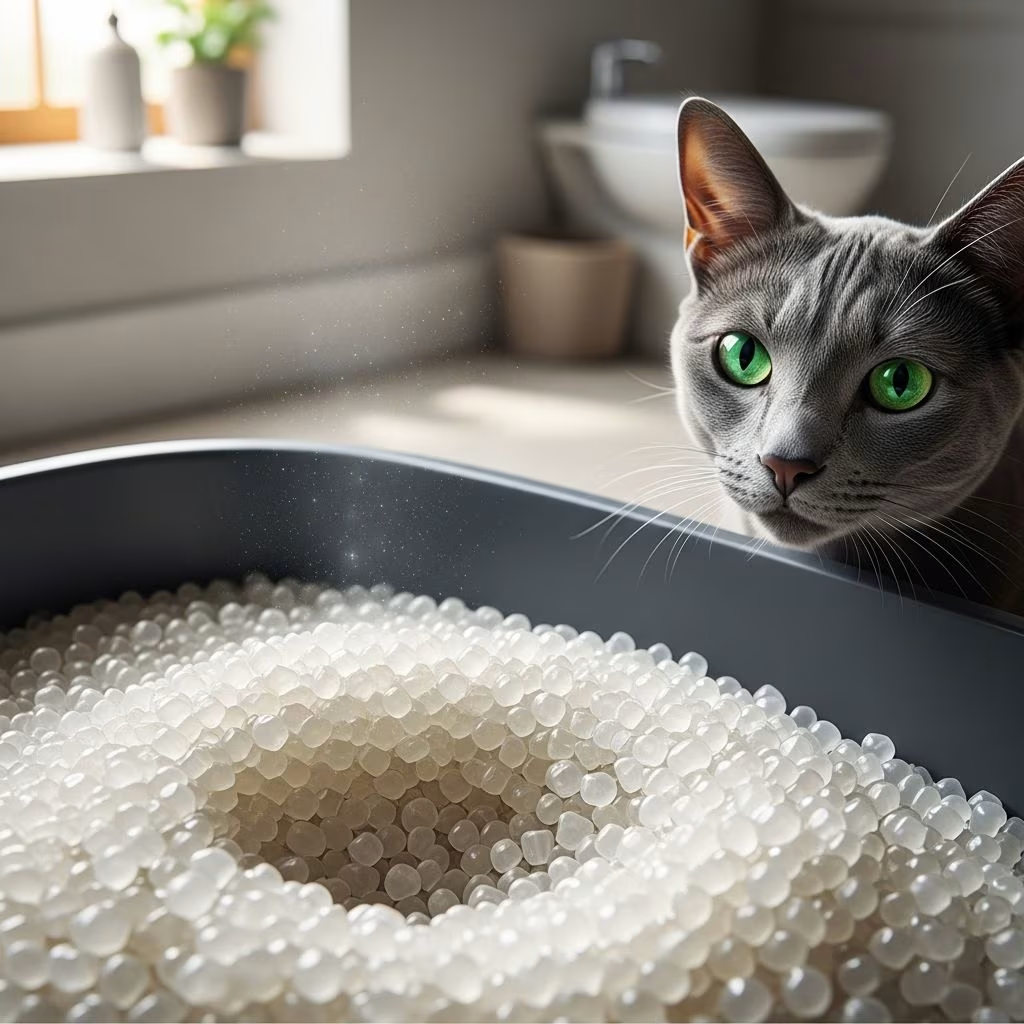
Crystal cat litter stands out for its remarkable ability to absorb liquids and neutralize odors, often outperforming traditional clay-based alternatives in keeping litter boxes fresh for extended periods.
Understanding the Science Behind Crystal Litter
At its core, crystal cat litter consists of silica gel granules, which are amorphous structures designed with microscopic pores. These pores act like tiny sponges, drawing in urine and trapping odor-causing compounds while allowing moisture to evaporate gradually. Unlike clay litters that rely on clumping or scent masking, silica beads wick away liquids rapidly, up to 40% of their weight, maintaining a dry surface.
This evaporation process leaves behind dehydrated waste particles locked inside the crystals, preventing ammonia smells from escaping into the air. For single-cat households, this can sustain effectiveness for 30-40 days with proper care.
Key Advantages of Using Crystal Cat Litter
Cat owners appreciate crystal litter for several practical reasons that enhance daily life and pet comfort.
- Superior Moisture Management: Each granule absorbs liquids efficiently, drying out solid waste too, which minimizes bacterial growth and smells.
- Extended Freshness: Odors remain contained longer, reducing the frequency of full litter changes compared to clay options.
- Minimal Dust Production: Virtually dust-free formulation benefits households with allergy sufferers or respiratory-sensitive cats.
- Lightweight Design: Easier to carry and pour, ideal for seniors or those with limited strength.
Comparing Crystal to Traditional Clay Litters
Crystal litter differs fundamentally from clay in mechanism and upkeep. Clay litters clump urine for scooping, but often generate dust and require daily intensive cleaning. Crystal litter, non-clumping, involves simple stirring to redistribute saturated beads.
| Feature | Crystal Litter | Clay Litter |
|---|---|---|
| Odor Control | Excellent via absorption and trapping | Good, but relies on clumping/scents |
| Dust Level | Very low | High |
| Maintenance | Stir daily, full change monthly | Scoop multiple times daily |
| Weight | Lightweight | Heavy |
| Absorbency | Up to 40% per granule | Variable, surface-level |
Effective Maintenance Routines for Best Results
To maximize odor control, adopt a consistent routine. Scoop solid waste daily and stir the litter thoroughly to expose dry crystals to any pooled liquids. Saturated beads may turn yellowish, signaling time for replacement every 3-4 weeks per cat.
Pair with a high-sided litter box or mat to contain tracking. For multi-cat homes, consider larger boxes or more frequent stirring to handle increased volume. Avoid overfilling, as this hinders absorption.
Safety Considerations and Cat Acceptance
Silica gel in crystal litters is amorphous, not crystalline, making it non-toxic when used as directed. Ingestion of small amounts is generally safe, but monitor kittens or curious cats initially. Most adult cats adapt well, though some prefer the texture of clay.
Transition gradually by mixing with current litter over 7-10 days to encourage acceptance. Low dust reduces paw irritation and respiratory issues.
Ideal Scenarios for Crystal Cat Litter
- Multi-Cat Households: Handles higher waste loads without rapid odor buildup.
- Allergy-Prone Environments: Dust-free nature improves air quality.
- Automated Boxes: Flows smoothly without clogs in self-cleaning systems.
- Busy Lifestyles: Low daily effort suits working professionals.
Potential Drawbacks and Mitigation Strategies
While effective, crystal litter has limitations. Its higher upfront cost can strain budgets, though longevity offsets expenses over time. Non-clumping nature means full changes are needed periodically.
Some cats reject the hard beads, mistaking them for toys, leading to tracking or accidents. Test small quantities first. It may not mask solid waste odors as robustly without additives.
Mitigate by using litter attractants or combining with probiotic formulas for enhanced bacterial control.
Enhancing Performance with Complementary Products
Boost effectiveness with odor neutralizers or enzyme cleaners for deep box sanitization during changes. Litter box liners simplify full dumps, and enclosed designs further contain smells.
For ultimate hygiene, opt for brands claiming 40-day control through infused probiotics.
Frequently Asked Questions (FAQs)
Does crystal cat litter really control odors better than clay?
Yes, its porous structure traps odors more effectively by absorbing liquids and evaporating moisture while retaining smell molecules.
How often should I change crystal litter?
For one cat, replace entirely every 30-40 days; scoop solids daily and stir.
Is crystal litter safe if my cat eats it?
Amorphous silica gel is non-toxic in small quantities, but prevent excessive ingestion.
Why do crystals turn color?
Color change indicates saturation; yellow or brown beads have reached capacity.
Can I use crystal litter in automatic boxes?
Absolutely, its low dust and flow properties prevent jams.
Choosing the Right Crystal Litter for Your Needs
Select based on cat count, allergies, and box type. Prioritize brands with proven absorbency claims and positive user feedback. Start with a small pack to trial.
In summary, crystal cat litter excels in odor management through innovative absorption, offering convenience and cleanliness for discerning pet parents.
References
- Pros & Cons of Crystal Silica Cat Litter — SilicaGel-Desiccant.com. 2023. https://www.silicagel-desiccant.com/blog/pros-and-cons-of-crystal-silica-cat-litter-in-comparison-to-traditional-options
- Pros & Cons of Crystal (Silica) Cat Litter — Tuft & Paw. 2024. https://www.tuftandpaw.com/blogs/cat-guides/pros-cons-crystal-silica-cat-litter
- Crystal Cat Litter Isn’t Toxic — Boxiecat.com. 2024. https://boxiecat.com/blogs/litter-learning-center/crystal-cat-litter-isn-t-toxic
- Is Crystal Litter Safe for Cats? — LadyNPet.com. 2024. https://ladynpet.com/us/blog/crystal-cat-litter/
- Crystal (Silica) Cat Litter: Pros, Cons & Safety Guide — TheRefinedFeline.com. 2024. https://www.therefinedfeline.com/pros-cons-of-crystal-silica-cat-litter/
- Is Crystal Cat Litter Good for Odor Control? — Catster.com. 2024. https://www.catster.com/lifestyle/is-crystal-cat-litter-good-for-odor-control/
- Which Cat Litter to Use: Silica vs. Clay-Based — Chewy.com. 2024. https://www.chewy.com/education/cat/health-and-wellness/which-cat-litter-to-use-silica-vs-clay-based



