

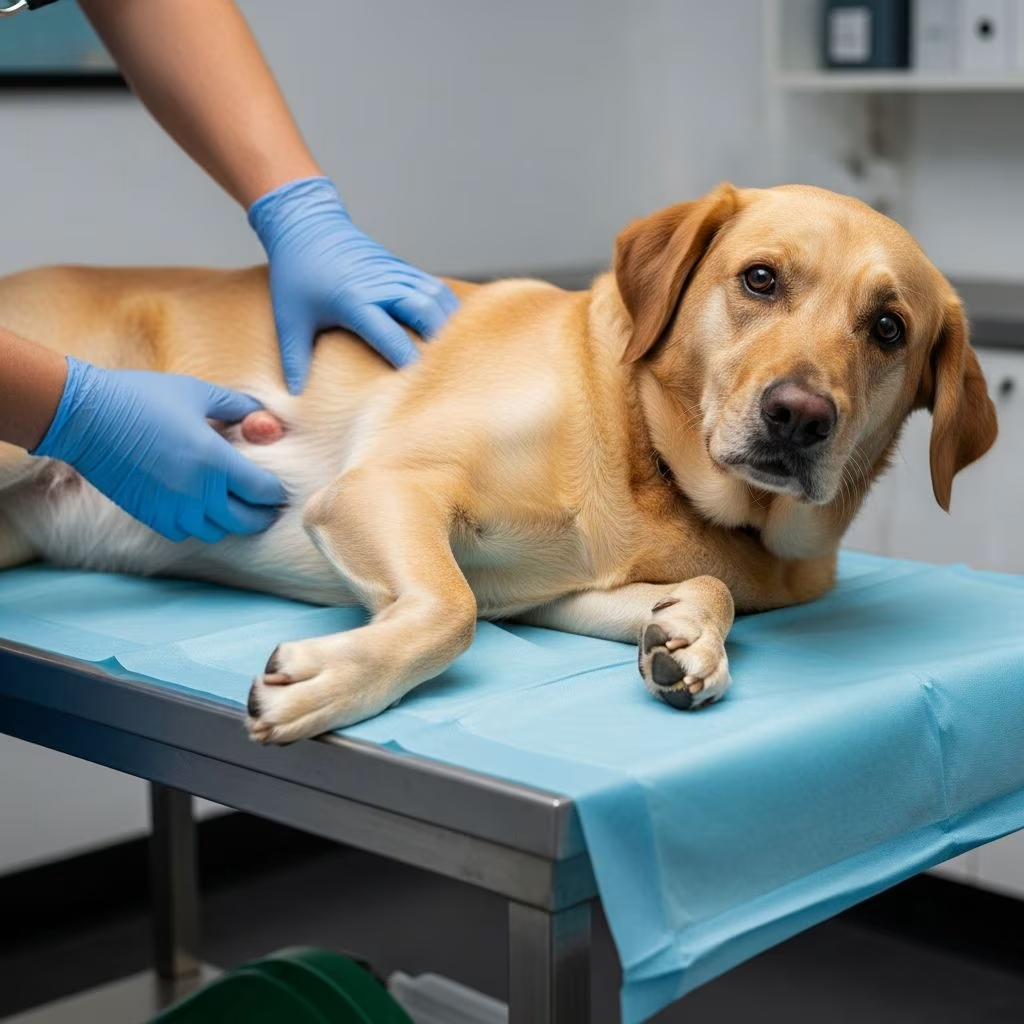
Cryptorchidism, the medical term for undescended testicles, is a congenital condition where one or both testicles fail to move into the scrotum in male dogs and cats. This issue arises during fetal development when testes, initially located near the kidneys, do not complete their descent through the inguinal canal by early puppyhood or kittenhood. Affecting 1-15% of dogs and less commonly cats, it poses significant health risks including heightened cancer susceptibility and potential emergencies like torsion. Understanding this condition empowers pet owners to recognize signs early and pursue timely veterinary care, primarily through surgical neutering.
Understanding the Anatomy and Development Process
In typical development, a puppy’s or kitten’s testicles form in the abdominal cavity close to the kidneys. By birth, they begin their journey downward via the inguinal canal—a narrow passage in the abdominal wall—reaching the scrotum within the first two months for dogs and slightly earlier for cats. This migration is hormone-driven, influenced by testosterone and other factors ensuring proper positioning for temperature regulation, as scrotal placement keeps testes cooler than body temperature, vital for sperm production.
Failure in this descent can leave testicles in various locations: abdominal (deep inside), inguinal (stuck in the canal), or subcutaneous (under groin skin). The right testicle is disproportionately affected, retained over twice as often as the left in unilateral cases, which comprise about 75% of instances.
Genetic Roots and Breed Vulnerabilities
Cryptorchidism is largely hereditary, classified as a sex-limited autosomal recessive trait, more prevalent in purebred and inbred lines than mixed breeds. Owners of certain breeds should be particularly vigilant. Small toy breeds face elevated risks due to genetic bottlenecks in breeding programs.
- Toy Poodles: Among the highest incidence rates.
- Pomeranians: Frequently reported in veterinary studies.
- Yorkshire Terriers: Common in small breeds.
- Chihuahuas: Prone alongside other toys.
- Miniature Schnauzers and Cocker Spaniels: Noted in inbred lines.
- Other notables: Siberian Huskies, Cairn Terriers, Maltese, Boxers, Pekingese, English Bulldogs, and Miniature Dachshunds.
Cats show lower rates (0.37-1.7%), with inguinal retention most common. Incidence varies from 1.2-10% across dogs, underscoring the need for responsible breeding to exclude affected animals and their relatives.
Spotting the Signs: What to Watch For
Often asymptomatic in early stages, cryptorchidism may go unnoticed until routine exams. By 2-4 months, both testicles should be palpable in the scrotum; absence prompts investigation. Retained testes are typically smaller, and bilateral cases may lead to infertility despite testosterone-driven male behaviors like marking or aggression.
Subtle clues include:
- Only one visible testicle in the scrotum (unilateral).
- No palpable testes by 6 months, when inguinal rings close.
- Male behaviors in apparent ‘neutered’ pets, such as urine spraying in cats.
- Enlarged jowls or penile spines in cats indicating intact status.
Rarely painful unless complications arise, like torsion causing acute abdomen distress.
Serious Health Complications and Risks
Undescended testicles face higher temperatures, disrupting normal function and elevating disease risks dramatically. Cancer odds surge 9-14 times, with Sertoli cell tumors and seminomas predominant in abdominal testes. Torsion, a twisting of the spermatic cord, is life-threatening, causing severe pain and necrosis if untreated.
| Complication | Risk Multiplier | Common Locations | Symptoms |
|---|---|---|---|
| Testicular Cancer | 13x higher | Abdominal/Inguinal | Mass detection, hormonal imbalances |
| Spermatic Cord Torsion | Variable | Abdominal | Sudden pain, vomiting, lethargy |
| Infertility | Bilateral cases | All | Reduced sperm, sterility |
| Associated Defects | Higher incidence | N/A | Hernias, patellar luxation |
These risks justify proactive management, as retained testes produce hormones but poor sperm.
Veterinary Diagnosis Methods
Physical exams confirm scrotal absence post-2 months. For abdominal cases, ultrasound or radiographs pinpoint locations pre-surgery, though often exploratory surgery proceeds directly. Hormonal assays (hCG or GnRH stimulation) verify intact status in behaviorally male pets lacking visible testes.
In kittens/puppies, wait until 6 months as testes may fluctuate early; stress can cause temporary retraction.
Treatment: Surgical Neutering as Standard Care
Castration remains the definitive treatment, removing both testes to eliminate risks. Unilateral requires two incisions (scrotal and retention site); bilateral abdominal uses one midline incision. Procedures are routine under general anesthesia, with recovery mirroring standard neuters: rest, e-collar, pain meds.
Hormonal therapies (hCG/GnRH) show limited success, lacking robust controls, and are not recommended over surgery. Breeding cryptorchids is discouraged due to heritability; remove affected dogs and lineage from programs.
Why Early Action Matters for Pet Owners
Detecting cryptorchidism by 6 months prevents crises. Routine puppy checks at adoption/vaccinations catch most cases. Post-diagnosis, surgery before maturity minimizes cancer windows. Pet insurance often covers, offsetting costs (typically $500-2000 depending on complexity).
Owners report improved behavior post-neuter, reducing roaming/marking, enhancing longevity.
Prevention Through Breeding Practices
Eradicate via selective breeding: screen sires/dams, exclude cryptorchids. Genetic counseling for high-risk breeds aids progress. Education reduces prevalence over generations.
Frequently Asked Questions (FAQs)
Can cryptorchid testicles descend later in life?
Rarely after 6 months; inguinal rings close, locking position.
Is cryptorchidism painful for my pet?
Usually not, until complications like cancer or torsion.
Should I breed a unilateral cryptorchid dog?
No, due to heritability; neuter instead.
How much does cryptorchid neuter surgery cost?
Varies; more than standard neuter due to exploration.
Does cryptorchidism affect female pets?
No, it’s male-specific.
Are there non-surgical treatments?
Hormonal options exist but are ineffective long-term.
Armed with this knowledge, pet owners can advocate for their companions’ health, ensuring cryptorchidism does not compromise quality of life.
References
- Retained Testicle (Cryptorchidism) in Dogs — VCA Animal Hospitals. 2023-01-01. https://vcahospitals.com/know-your-pet/retained-testicle-cryptorchidism-in-dogs
- Cryptorchidism/undescended testicles in dogs — PDSA. 2024-06-15. https://www.pdsa.org.uk/pet-help-and-advice/pet-health-hub/conditions/cryptorchidism-undescended-testicles-in-dogs
- Canine and Feline Cryptorchidism — IVIS.org. 2022-05-10. https://www.ivis.org/library/recent-advances-small-animal-reproduction/canine-and-feline-cryptorchidism
- Cryptorchidism — Wikipedia (for background; primary sources cited). 2025-12-01. https://en.wikipedia.org/wiki/Cryptorchidism



