

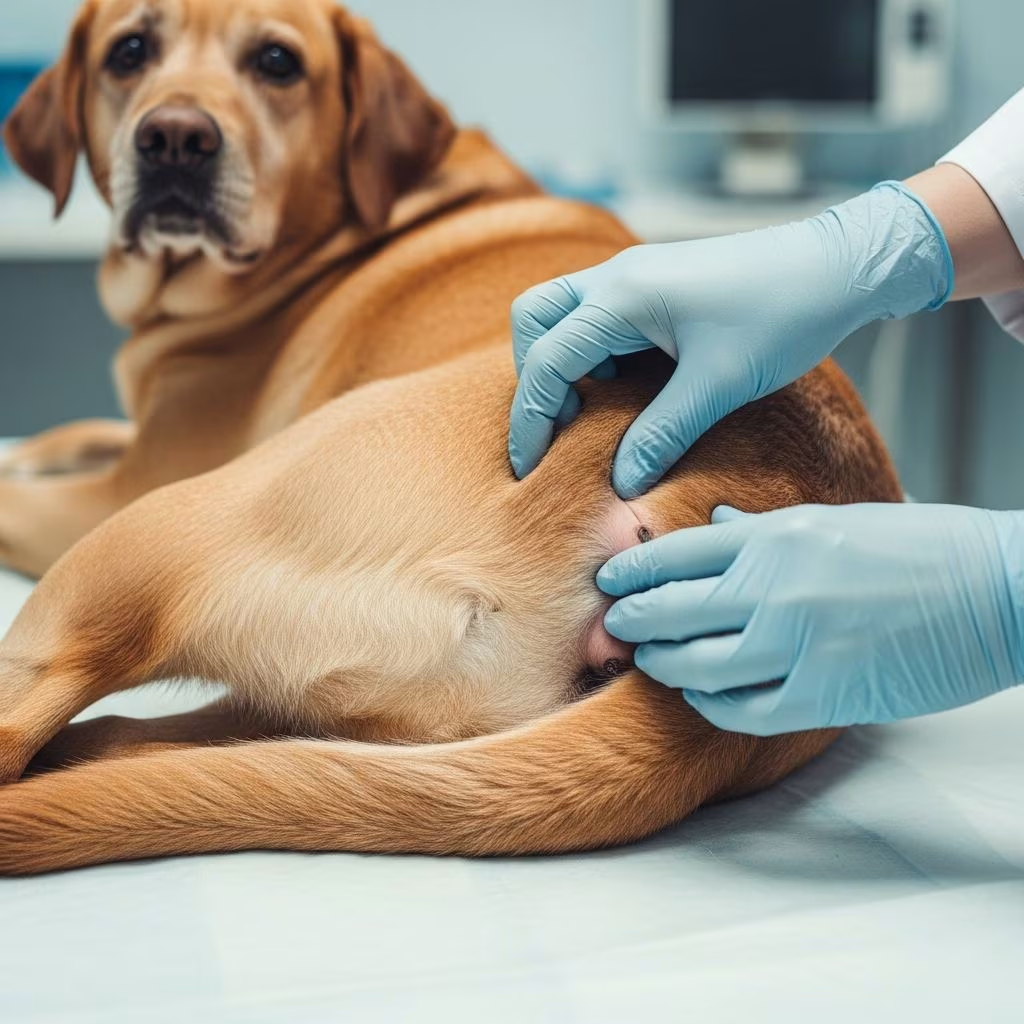
Cryptorchidism, known as undescended testicles, occurs when one or both testes fail to move into the scrotum in male dogs and cats. This congenital issue demands attention due to heightened cancer risks and breeding concerns.
The Developmental Journey of Testicles
Testes originate near the kidneys in the abdomen during fetal growth. They typically descend through the inguinal canal into the scrotum shortly after birth. In dogs, this happens by 2 months, rarely beyond 6 months; in cats, by around 6 months as inguinal rings close.
Failure in this process stems from hormonal imbalances or mechanical obstructions. The condition proves hereditary, appearing more in purebred lines like toy poodles, Pomeranians, Yorkshire terriers, and inbred breeds such as Cocker Spaniels and miniature Schnauzers.
Types and Prevalence Across Species
Unilateral cryptorchidism, affecting one testicle, dominates at about 75% of cases, with the right side twice as common. Bilateral cases, both testicles retained, comprise 25% and often lead to infertility.
- Dogs: Impacts 1%-15% of males, higher in toys and specific breeds.
- Cats: Less documented but follows similar patterns, hereditary in purebreds.
In horses, though less relevant for typical pets, Percherons and Quarter Horses show elevated rates, contrasting low Thoroughbred incidence.
Spotting the Signs in Your Pet
Early detection hinges on physical exams. By 2-4 months, both testicles should be palpable in the scrotum. Absent ones signal potential issues, though newborns may have mobile testes.
Symptoms remain subtle: no pain unless complications arise. Retained testes produce testosterone, driving male behaviors and fertility issues in bilateral cases due to poor sperm output. One normal testicle suffices for fertility, complicating breeding ethics.
| Sign | Unilateral | Bilateral |
|---|---|---|
| Testicles in Scrotum | One present | None present |
| Behavior | Male traits intact | Male traits, infertile |
| Size Difference | Retained smaller | Both absent |
Diagnostic Approaches
Veterinarians start with palpation. Inguinal or abdominal retention requires imaging: ultrasound locates intra-abdominal testes, while X-rays aid pre-surgical planning, though often skipped for exploratory surgery.
Sedation enhances rectal or abdominal ultrasound accuracy, ruling out misidentification like confusing epididymis for a small testicle.
Health Complications and Long-Term Risks
Undescended testes face elevated perils. Higher Sertoli cell tumor incidence plagues abdominal ones. Spermatic cord torsion, rare but acute, causes sudden pain and swelling.
Cancer risk escalates with age; retained testes stay warmer than scrotal ones, disrupting normal function. Fertility persists unilaterally but hereditary risks advise against breeding.
- Cancer: Sertoli cell tumors more common in abdomen.
- Torsion: Vascular twist leads to emergency.
- Infertility: Bilateral cases sterile.
Surgical Interventions Explained
Neutering, removing both testes, stands as the gold standard. Unilateral demands two incisions: scrotal and retention site (inguinal or abdominal). Bilateral abdominal cases use one midline incision.
Cryptorchidectomy in pets mirrors horse procedures under general anesthesia, ensuring complete removal to avert regrowth or remnants. Post-op care mirrors standard neuters: rest, monitor incisions, e-collar use.
Cost Factors and Insurance Considerations
Cryptorchid neuters cost more due to complexity: abdominal surgeries exceed routine ones by 50-200%, varying by location and vet. Pet insurance often covers if pre-existing excluded.
| Procedure Type | Typical Cost Range (USD) | Incisions Needed |
|---|---|---|
| Standard Neuter | 200-500 | 1 |
| Inguinal Cryptorchid | 400-800 | 2 |
| Abdominal Cryptorchid | 600-1500 | 1-2 |
Breeding Implications and Ethical Choices
Hereditary nature disqualifies cryptorchids from breeding. Even unilateral fertile males pass genes, perpetuating the trait. Responsible ownership favors neutering.
Prevention Through Early Action
Screen puppies/kittens at 2 months; neuter by 6 months if unilateral. Genetic selection in breeding reduces incidence. Avoid inbred lines.
FAQs on Cryptorchidism
Can cryptorchidism resolve without surgery?
Rarely; descent post-6 months unlikely as inguinal rings close.
Is cryptorchidism painful for my pet?
Usually not, until torsion or tumor develops.
Should I breed a unilateral cryptorchid dog?
No, due to heritability.
How do vets find abdominal testicles?
Ultrasound or exploratory surgery.
What breeds are prone?
Toy breeds: Poodles, Pomeranians, Yorkies.
Life After Neutering
Post-surgery pets enjoy normal lifespans minus reproductive cancers. Behaviors mellow without testosterone surge, reducing roaming/marking. Weight management prevents obesity.
References
- Retained Testicle (Cryptorchidism) in Dogs — VCA Animal Hospitals. 2023. https://vcahospitals.com/know-your-pet/retained-testicle-cryptorchidism-in-dogs
- Cryptorchidism in Horses — PetMD. 2024. https://www.petmd.com/horse/conditions/reproductive/c_hr_cryptorchidism
- Cryptorchid surgery and simple ophthalmic procedures (Proceedings) — dvm360. 2022. https://www.dvm360.com/view/cryptorchid-surgery-and-simple-ophthalmic-procedures-proceedings
- Canine and Feline Cryptorchidism — IVIS.org. 2023. https://www.ivis.org/library/recent-advances-small-animal-reproduction/canine-and-feline-cryptorchidism



