

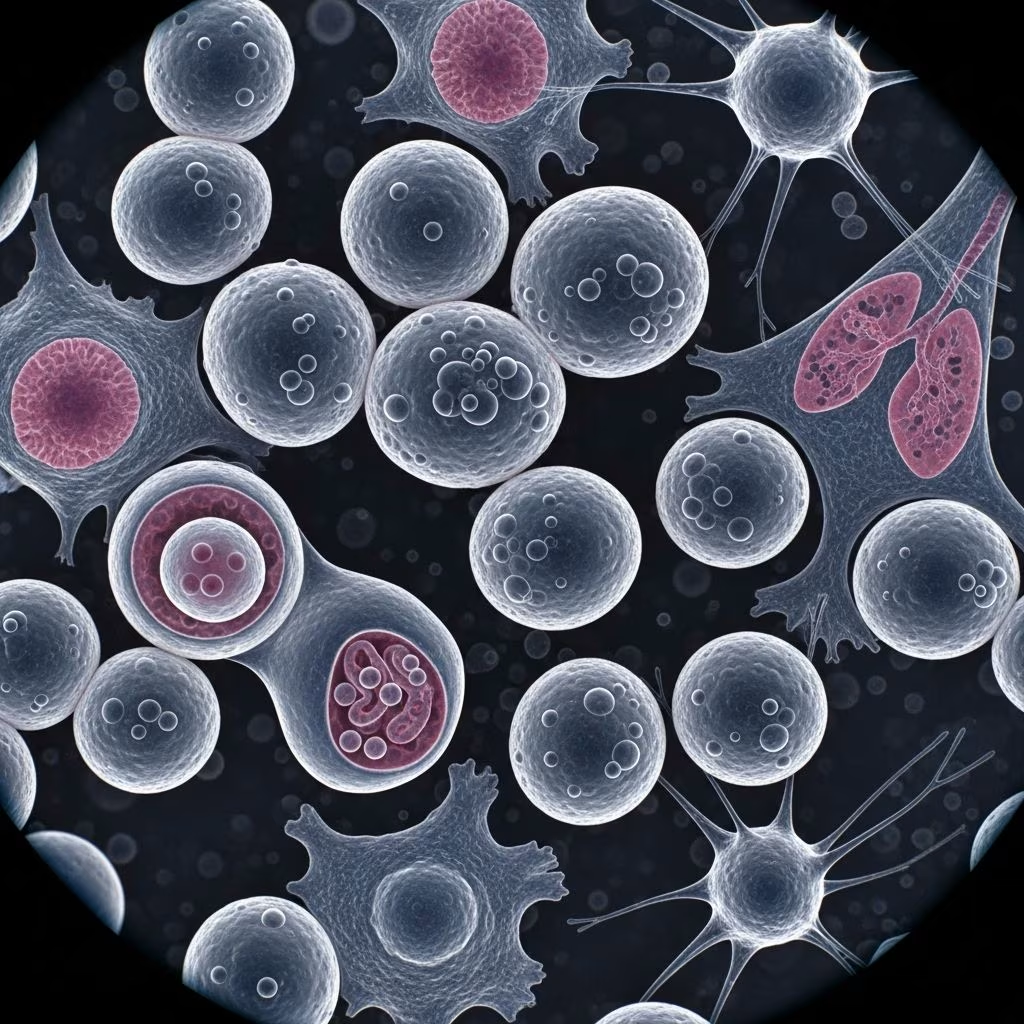
Cryptococcosis represents one of the most prevalent systemic fungal infections impacting a broad spectrum of animals, from household pets to wildlife. Caused primarily by Cryptococcus neoformans and C. gattii, this disease often manifests through respiratory challenges and neurological complications, posing significant risks to affected individuals.
The Nature of the Pathogen
The fungi responsible for cryptococcosis thrive in diverse environments, particularly in association with bird droppings and decaying vegetation. These encapsulated yeasts enter the body via inhalation of spores, leading to primary lung infections that can disseminate systemically. Unlike bacterial pathogens, these fungi evade immune detection through their polysaccharide capsules, allowing silent progression until advanced stages.
In animals, C. neoformans predominates in temperate regions, while C. gattii favors warmer climates like Australia and parts of the Americas. Genetic variants such as VGI and VGII of C. gattii show heightened prevalence in certain locales, contributing to outbreaks in both domestic and wild populations.
Species Susceptibility and Epidemiology
Domestic cats emerge as the most frequently reported victims, with cases documented globally but concentrated in areas like Australia, the United States, Brazil, and Canada. Dogs follow, though typically at younger ages (2-3 years average) compared to cats (6-8 years). Breeds such as Ragdolls and Birmans in cats may face elevated risks, potentially linked to genetic factors or retroviral co-infections like feline leukemia virus (FeLV) or feline immunodeficiency virus (FIV).
Wildlife and exotic species are not spared; koalas and ferrets stand out as key reservoirs, with ferrets showing particular vulnerability. Horses exhibit more pulmonary involvement, while occasional reports span birds, reptiles, and marine mammals. The disease’s zoonotic potential underscores its public health relevance, though direct animal-to-animal or animal-to-human transmission remains negligible.
| Animal Group | Common Species Affected | Key Regions |
|---|---|---|
| Domestic | Cats, Dogs | Australia, USA, Brazil |
| Exotic/Wild | Koalas, Ferrets | Australia, Global |
| Other | Horses, Birds | Varied |
Clinical Manifestations Across Species
Symptoms vary widely, often nonspecific, complicating early detection. In cats, the classic presentation involves nasal cavity involvement: chronic sneezing, serous to mucopurulent discharge, facial swelling, and ulceration around the nose. Cutaneous nodules, particularly on the face and neck, affect up to 40% of cases, appearing as firm, hairless masses.
- Respiratory Signs: Coughing, dyspnea, and tachypnea are less prominent in cats and dogs than in other mycoses but signal lung lesions.
- Neurological Involvement: Seizures, ataxia, behavior changes, and cranial nerve deficits indicate central nervous system (CNS) spread, a grave prognostic factor.
- Ocular and Systemic: Uveitis, chorioretinitis, lymphadenopathy, and disseminated organ failure in advanced stages.
Dogs may present with similar nasal and cutaneous signs but more frequent pulmonary disease. In ferrets and koalas, subcutaneous masses and neurological deficits dominate. Horses often show lung-centric symptoms, while chronic cases in any species lead to cachexia and apathy.
Diagnostic Approaches
Timely diagnosis hinges on combining clinical suspicion with laboratory confirmation. The cryptococcal antigen latex agglutination test (CrAg LIA) boasts over 95% sensitivity and specificity in serum, making it the gold standard for noninvasive screening, especially in cats and dogs.
Cytology from fine-needle aspirates or biopsies reveals characteristic narrow-based budding yeasts with clear capsules, best visualized via Wright’s or India ink staining. Culture on fungal media confirms species via PCR or biochemical tests, distinguishing C. neoformans from C. gattii. Imaging (radiography, CT) aids in assessing lung, nasal, or CNS lesions, while necropsy remains common in undiagnosed wildlife cases.
Frequently Asked Questions
What is the most reliable initial test for cryptococcosis?
The serum cryptococcal antigen test, with >95% accuracy, is preferred for rapid diagnosis.
Can cryptococcosis spread between animals?
No, it is environmentally acquired via spore inhalation; infected animals are not contagious.
Is CNS involvement always fatal?
Not always, but it quadruples mortality risk; early intervention improves odds.
How long does treatment last?
Typically 6-12 months, with lifelong therapy possible in relapsing cases.
Treatment Strategies and Protocols
No universal protocol exists, but guidelines emphasize antifungal therapy tailored to disease severity. For mild-moderate cases, oral azoles like fluconazole (5-10 mg/kg/day) or itraconazole serve as first-line, penetrating CNS well.
Severe or CNS disease demands amphotericin B (0.5-1.5 mg/kg IV, 3x/week), ideally lipid formulations to minimize nephrotoxicity, often combined with flucytosine in cats. Dual therapy enhances efficacy. Treatment monitoring via serial antigen titers every 2-3 months guides duration; titers should negativize before cessation.
| Severity | Primary Drug | Dosage (Cat/Dog) | Duration |
|---|---|---|---|
| Mild-Moderate | Fluconazole | 5-10 mg/kg/day | 6-12 months |
| Severe/CNS | Amphotericin B + Fluconazole | 0.5-1 mg/kg IV (cat); 1-1.5 mg/kg (dog) | Up to cumulative 12-24 mg/kg, then 6-12 months |
| Salvage | Voriconazole/Posaconazole | Varied per species | >6 months |
Surgical excision of accessible nodules augments medical therapy. Supportive care—fluids, nutrition, antiemetics—is crucial. Post-treatment surveillance for 1-2 years detects relapses early.
Prognosis and Prognostic Factors
Survival rates range 45-76% in cats and 27-71% in dogs, favoring localized over disseminated disease. CNS involvement, altered mentation, and high antigen titers (>1:512) predict poorer outcomes. Early diagnosis and owner compliance with prolonged regimens yield favorable results in most feline cases.
Retroviral status in cats worsens prognosis, emphasizing screening. Wildlife cases often prove fatal due to late detection.
Prevention and Environmental Management
Preventing exposure is challenging given ubiquitous spores, but minimizing bird dropping accumulation in enclosures helps. Indoor housing for cats in endemic areas reduces risk. No vaccines exist, but vigilant monitoring in at-risk breeds aids early intervention.
Veterinarians should prioritize cryptococcosis in differentials for chronic nasal, ocular, or neurological signs, especially in endemic zones. Sentinel role of pets highlights environmental contamination.
Research Directions and Challenges
Current gaps include standardized protocols and species-specific therapies. Molecular diagnostics promise better genotyping and resistance profiling. Ongoing studies explore azole resistance in C. gattii, urging surveillance.
In summary, cryptococcosis demands a multifaceted approach: prompt diagnostics, aggressive therapy, and vigilant monitoring to optimize outcomes across species.
References
- Cryptococcosis in domestic and wild animals: A review — Medical Mycology, Oxford Academic. 2023-02-28. https://academic.oup.com/mmy/article-abstract/61/2/myad016/7028776
- GUIDELINE for Cryptococcosis in Cats — ABCD cats & vets. 2024. https://www.abcdcatsvets.org/guideline-for-cryptococcosis-in-cats/
- Cryptococcosis in Cats and Dogs — MiraVista Diagnostics. 2021-07. https://miravistavets.com/wp-content/uploads/2021/07/Vets_CR_CryptococcosisCatsDogs.pdf
- Cryptococcosis in domestic and wild animals: A review — PubMed. 2023-02-07. https://pubmed.ncbi.nlm.nih.gov/36746435/
- Cryptococcus in Wildlife and Free-Living Mammals — PMC / NIH. 2021-01-22. https://pmc.ncbi.nlm.nih.gov/articles/PMC7825559/
- Cryptococcosis — Cornell University College of Veterinary Medicine. N/A. https://www.vet.cornell.edu/departments/cornell-feline-health-center/health-information/feline-health-topics/cryptococcosis



