

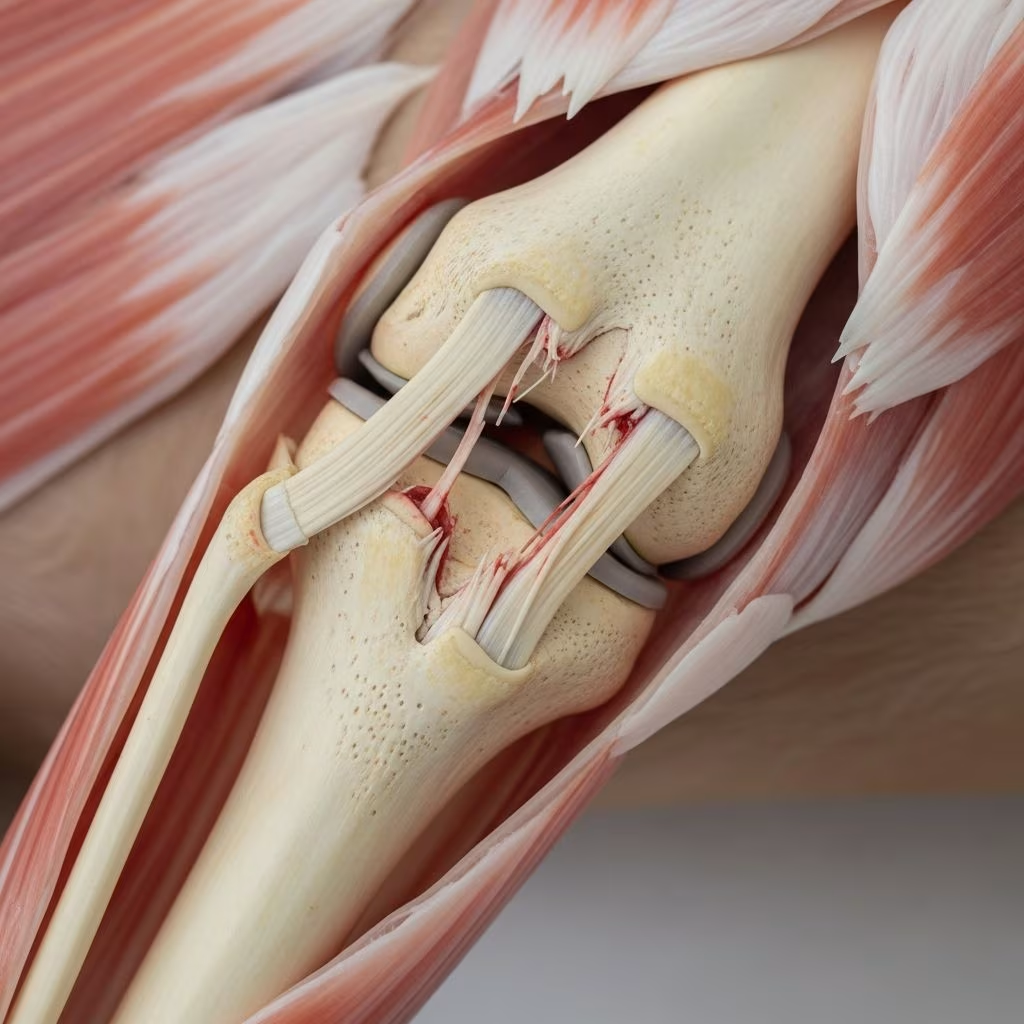
Understanding Cruciate Ligament Rupture in Dogs
The cruciate ligament is a critical structure in your dog’s knee joint that provides stability and support during movement. When this ligament tears or ruptures, it leads to a painful condition known as cruciate ligament rupture or cranial cruciate ligament disease (CCLD). This condition is one of the most common orthopedic injuries affecting dogs, particularly as they age or engage in strenuous activities. Understanding this condition is essential for pet owners to recognize early signs and seek appropriate veterinary care.
What is Cruciate Ligament Rupture?
Cruciate ligament rupture occurs when the ligament that stabilizes the knee joint becomes damaged or completely torn. The cruciate ligament plays a vital role in preventing excessive movement of the tibia (shin bone) relative to the femur (thigh bone). When this ligament fails, the joint loses stability, leading to pain, lameness, and progressive joint damage. This condition can develop gradually over time as the ligament degenerates, or it can occur suddenly due to trauma or vigorous activity.
Causes and Risk Factors
Cruciate ligament rupture in dogs can result from various causes and risk factors. Understanding these can help you take preventive measures to protect your dog’s joints.
Degenerative Changes: Most cases of cruciate ligament disease result from gradual degeneration of the ligament rather than a single traumatic event. Age-related wear and tear, repetitive stress, and changes in the joint structure all contribute to ligament weakening over time.
Weight and Obesity: Dogs that are overweight place excessive stress on their knee joints, accelerating ligament degeneration. Maintaining a healthy weight is crucial for joint health.
Breed Predisposition: Certain breeds, particularly larger dogs and those prone to joint problems, have a higher risk of developing cruciate ligament disease.
Age: Older dogs are more susceptible to ligament degeneration as the tissues naturally lose elasticity and strength with time.
Previous Injuries: Dogs that have experienced previous knee injuries or those with existing joint conditions are at increased risk for cruciate ligament rupture.
Activity Level: Dogs engaged in high-impact activities or repetitive jumping may experience increased stress on their ligaments, potentially leading to rupture.
Clinical Signs and Symptoms
The symptoms of cruciate ligament rupture vary depending on the severity of the injury and whether it occurred suddenly or developed gradually. Pet owners should be aware of these signs to seek timely veterinary care.
Lameness: Limping is the most common sign of cruciate ligament injury. This may appear suddenly during or after exercise in some dogs, or it may be progressive and intermittent in others. The severity of lameness can range from mild stiffness to complete non-weight bearing.
Stiffness: Dogs may show stiffness after rest, which may wear off within a few minutes. Many owners mistakenly attribute this to old age or arthritis when it could indicate ligament problems.
Difficulty Rising: Some dogs find it difficult to rise from a prone position, particularly those affected in both knees simultaneously.
Changes in Gait: You may notice your dog shifting their weight away from the affected leg or developing an abnormal gait pattern. Some dogs may hop on three legs or exhibit what veterinarians call a “pottery” gait.
Swelling and Inflammation: The affected knee may show visible swelling or feel thickened and firm to the touch.
Pain Response: Your dog may vocalize pain when the joint is touched or manipulated, or show signs of discomfort during certain movements.
Behavioral Changes: Reduced motivation to exercise, reluctance to play, increased irritability, and unwillingness to perform activities they previously enjoyed are common behavioral indicators.
Crackling Sounds: Some owners report hearing a “pop” sound when their dog walks or notice crepitus (crackling noise) from the joint.
Restricted Mobility: Your dog may avoid jumping, climbing stairs, or engaging in activities that place stress on the hind legs.
Diagnostic Methods
Accurate diagnosis is essential for determining the appropriate treatment plan for your dog. Veterinarians employ several diagnostic techniques to evaluate cruciate ligament injuries.
Physical Examination: Your veterinarian will perform a thorough physical examination, observing your dog’s gait and palpating the knee joint. The examination typically includes specific manipulations of the knee to assess joint stability and identify laxity (looseness) characteristic of cruciate ligament rupture.
Radiography (X-rays): X-ray imaging can reveal secondary changes associated with cruciate ligament disease, including osteoarthritis, joint effusion (fluid accumulation), and bone changes. High-quality radiographs are essential for accurate assessment.
Advanced Imaging: MRI scans may be recommended in cases of partial tears or early degeneration when other diagnostic methods are inconclusive. MRI provides detailed images of soft tissue structures, including the ligament itself.
Arthroscopy (Keyhole Surgery): In most dogs, exploratory surgery or arthroscopy is used to confirm the diagnosis and investigate possible cartilage tears or other problems within the joint. Arthroscopy allows veterinarians to visualize the joint structures and assess the extent of damage.
Treatment Options
Treatment for cruciate ligament rupture depends on several factors, including your dog’s size, age, activity level, overall health, and the severity of the injury. Both surgical and non-surgical approaches exist, though surgery is generally the most effective long-term solution.
Non-Surgical (Conservative) Management
Non-surgical treatment may be appropriate for mild cases, small dogs, or situations where surgery is not possible due to other health concerns.
Strict Rest and Activity Restriction: Treatment involves strict rest for 6 to 8 weeks while scar tissue forms around the damaged ligament. This means confining your dog to a cage, pen, or small room when unattended. Walks should be limited to toilet purposes only for the first two weeks, then gradually increased on-lead walks under controlled conditions.
Anti-Inflammatory Medications: Pet-specific anti-inflammatory medications such as carprofen (Rimadyl) and meloxicam (Metacam) may be prescribed to reduce pain and inflammation. Human opiates like tramadol (Ultram) may also be recommended for pain management.
Canine Rehabilitation Therapy: Physical therapy and rehabilitation exercises can help strengthen supporting muscles and maintain joint mobility. Hydrotherapy (underwater treadmill exercise) is particularly beneficial as it allows exercise while minimizing joint stress.
Weight Management: Maintaining a healthy weight is crucial for reducing stress on the damaged joint and improving overall recovery outcomes.
Joint Support: Custom orthotics and joint support devices can provide additional stability to the injured knee.
However, it is important to note that small dogs which previously enjoyed long and strenuous walks may never return to their previous level of function with conservative management. In larger dogs, non-surgical treatment often results in persistent lameness and pain.
Surgical Management
Surgery is generally the most effective way to restore joint stability and minimize long-term damage. Several surgical techniques are available, each with distinct advantages.
TPLO (Tibial Plateau Leveling Osteotomy): TPLO is a bone-cutting procedure that changes the angle of the tibia to allow the quadriceps muscle to stabilize the knee joint without requiring an intact cruciate ligament. This technique is favored by many veterinary surgeons because bone healing is more efficient than ligament healing, resulting in more robust repairs. Dogs typically show very reliable return of limb use, with all dogs expected to start weight-bearing on the operated limb within 1 to 3 days. TPLO can even be performed on both stifle joints in a single surgery for dogs with bilateral injuries, which is not possible with other techniques.
TTA (Tibial Tuberosity Advancement): Similar to TPLO, TTA is another bone-cutting procedure that mechanically stabilizes the knee joint. Like TPLO, it benefits from the superior healing properties of bone and provides excellent long-term stability.
Prosthetic Ligament Replacement: This technique uses artificial materials or tissues to replace the damaged ligament. While simpler than bone-cutting procedures, prosthetic replacement has limitations. The primary disadvantages include unpredictability during early recovery stages and mechanical limitations in heavy and athletic dogs. Some dogs become transiently more lame before improvement occurs, while others take many weeks to improve. A proportion of dogs may experience ongoing knee instability and pain. This technique is most commonly recommended for dogs with traumatic cruciate ligament injuries or those with multiple ligament damage.
Arthroscopic (Keyhole) Examination: During surgery, veterinarians perform a magnified examination of the knee joint using arthroscopic techniques. All dogs have inspection of the joint to assess whether secondary injuries to the menisci (cartilage cushions in the joint) have occurred. If meniscal injuries are found, surgical meniscal trimming or repair may be performed, depending on the specific injury and circumstances.
Post-Operative Recovery and Rehabilitation
Recovery does not stop at surgery. Proper post-operative care and rehabilitation are crucial for achieving optimal outcomes.
Immediate Post-Operative Care: After surgery, your dog should be confined to a cage, pen, or small room when unattended for eight weeks. Walks should be limited to toilet purposes only for the first two weeks. Gradually increase lead walks under controlled conditions as your dog demonstrates improved comfort and weight-bearing.
Radiographic Follow-up: Radiography (X-rays) should be performed eight to ten weeks after surgery before giving clearance to return to off-lead exercise. While most dogs are substantially improved by this stage, lameness can take up to six months to fully resolve.
Rehabilitation Program: A tailored rehabilitation plan helps dogs regain strength and mobility. This is coordinated through rehabilitation services with teams of chartered physiotherapists and hydrotherapists experienced in managing cruciate ligament disease. Your orthopedic clinician will coordinate an appointment with a physiotherapist who will perform a thorough clinical examination and design a uniquely tailored rehabilitation plan, including home exercises.
Weight Management: Continue maintaining an appropriate weight to minimize stress on the recovering joint and support long-term joint health.
Pain Management: Continue prescribed medications as directed by your veterinarian to manage pain and inflammation during the recovery period.
Success Rates and Long-Term Outcomes
The prognosis for cruciate ligament rupture is generally favorable with appropriate treatment. Over 90 percent of dogs return to normal activity after TPLO or TTA surgery, meaning dogs are so normal that owners cannot detect lameness at home. Dogs are expected to return to unrestricted exercise without any requirement for ongoing medications. Even performance dogs, including sniffer dogs and military patrol dogs, are expected to return to work after these surgeries.
However, early recognition of osteoarthritis is important. Even in the earliest stages of cruciate ligament injury, osteoarthritis is already present. This does not mean your dog will necessarily develop severe arthritis, but it underscores the importance of early intervention and appropriate management.
Frequently Asked Questions
Q: What is the difference between acute and chronic cruciate ligament rupture?
A: Acute rupture occurs suddenly, often during or after exercise, and causes immediate severe lameness. Chronic rupture develops gradually as the ligament degenerates over time, resulting in progressive or intermittent lameness. Dogs with chronic disease often show symptoms associated with arthritis, such as decreased activity, stiffness, and unwillingness to play.
Q: Can cruciate ligament rupture affect both knees?
A: Yes, some dogs are simultaneously affected in both knees. These dogs often find it difficult to rise from a prone position and may have a “pottery” gait. In severe bilateral cases, dogs may be unable to get up at all. Bilateral injuries can sometimes be treated with bilateral TPLO performed during a single surgery.
Q: Will my dog need surgery?
A: Dogs over 15 kg (33 lb) usually require surgery to stabilize the knee. Most dogs eventually require surgery to correct this painful injury. Non-surgical management may be attempted in mild cases or small dogs, but surgery generally provides superior long-term outcomes.
Q: How long does recovery take after surgery?
A: Most dogs will be confident using the leg well within a few days due to the strength of surgical implants. However, full recovery takes longer. Eight to ten weeks after surgery, radiography is typically performed before clearance to return to off-lead exercise. Complete lameness resolution may take up to six months.
Q: What is the cost of cruciate ligament surgery?
A: Surgical costs vary depending on the technique used, your location, and your veterinary clinic. TPLO and TTA procedures are typically more expensive than prosthetic replacement but offer superior long-term outcomes. Rehabilitation expenses should also be factored into the total cost, as these services are increasingly important for optimal recovery.
Q: Can cruciate ligament rupture be prevented?
A: While you cannot completely prevent cruciate ligament rupture, you can reduce the risk by maintaining your dog at a healthy weight, providing appropriate exercise, avoiding excessive jumping or high-impact activities, and seeking early veterinary care if you notice signs of lameness or joint problems.
Q: Will my dog develop arthritis after cruciate ligament rupture?
A: Osteoarthritis often develops in the affected joint following cruciate ligament rupture. However, appropriate treatment and management can slow its progression. Many dogs with proper surgical repair and rehabilitation live comfortable, active lives despite the presence of some arthritis.
Q: What should I do if I suspect my dog has a cruciate ligament injury?
A: Contact your veterinarian immediately for an examination. Early diagnosis and treatment lead to better outcomes. In the meantime, restrict your dog’s activity, avoid strenuous exercise, and keep them as comfortable as possible.
References
- Cruciate Ligament Rupture in Dogs — VCA Animal Hospitals. Accessed November 2025. https://vcahospitals.com/know-your-pet/cruciate-ligament-rupture-in-dogs
- Cranial Cruciate Ligament Injury in Dogs — Colorado State University Veterinary Teaching Hospital. Accessed November 2025. https://vetmedbiosci.colostate.edu/vth/services/orthopedic-medicine/canine-cruciate-ligament-injury/
- Cranial Cruciate Ligament Injury — Fitzpatrick Referrals. Accessed November 2025. https://www.fitzpatrickreferrals.co.uk/orthopaedics/cranial-cruciate-ligament-injury/
- Cranial Cruciate Ligament Rupture & Treatment — Emergency Vet Australia. Accessed November 2025. https://www.emergencyvet.com.au/for-vets-and-nurses/resource-centre/articles-for-referring-vets/cranial-cruciate-ligament-rupture-treatment.html
- Cruciate Ligament Injury in Dogs — Embrace Pet Insurance. Accessed November 2025. https://www.embracepetinsurance.com/health/cruciate-ligament-injury



