

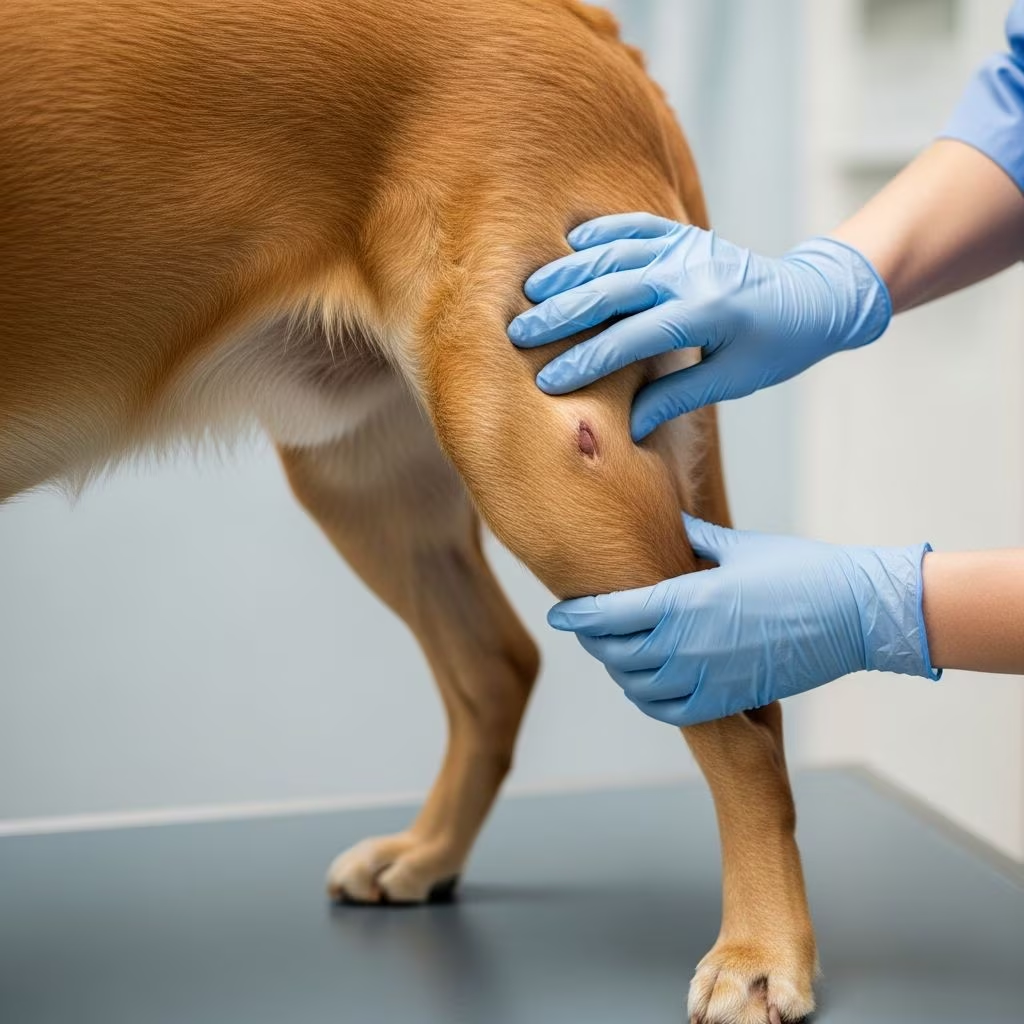
Cruciate Ligament Rupture in Dogs: A Comprehensive Guide
Cruciate ligament rupture is one of the most common orthopedic injuries affecting dogs today. The cranial cruciate ligament (CCL), also known as the anterior cruciate ligament in humans, plays a vital role in stabilizing the knee joint. When this ligament tears or ruptures, it causes pain, lameness, and joint instability that can significantly impact your dog’s quality of life. Understanding this condition, recognizing its symptoms, and knowing your treatment options are essential for any dog owner dealing with this challenging health issue.
Understanding the Cruciate Ligament
The cruciate ligament is a crucial structure within the knee joint that prevents the tibia (shinbone) from sliding forward relative to the femur (thighbone). In dogs, the cranial cruciate ligament serves as the primary stabilizer of the stifle joint—the canine equivalent of the human knee. When this ligament ruptures, the knee joint becomes unstable, leading to pain and functional impairment. Unlike humans, who typically experience cruciate ligament injuries through acute traumatic events like sports injuries, dogs develop this condition through a combination of degenerative factors and wear over time.
Causes and Risk Factors
Cruciate ligament rupture in dogs develops through a complex process rather than a single traumatic event. The ligament gradually degenerates over time due to multiple contributing factors. Age plays a significant role, as the ligament naturally weakens with advancing years. Obesity is another major risk factor—excess weight places additional stress on the knee joint, accelerating ligament degeneration. Certain breeds appear predisposed to this condition, including Labrador Retrievers, Golden Retrievers, and Rottweilers.
Other contributing factors include joint inflammation, abnormal joint anatomy, and previous injuries. Once partial tearing begins, further degenerative changes often accelerate, eventually leading to complete rupture. Dogs with one ruptured CCL have a significantly increased risk of rupturing the ligament in the opposite hind leg, with studies showing up to 40% of dogs developing bilateral ruptures within 18 months of the initial injury.
Signs and Symptoms
Recognizing the clinical signs of cruciate ligament rupture is essential for early intervention. The symptoms can vary depending on whether the rupture is partial or complete, and whether one or both hind legs are affected:
Common Symptoms Include:
– Limping or lameness in the affected hind leg- Reluctance to bear weight on the injured leg- Difficulty rising from a lying or sitting position- Trouble jumping or climbing stairs- Decreased activity level and reluctance to exercise- Pain when the knee joint is touched or manipulated- Swelling and inflammation around the knee area- A “popping” or “clicking” sound when the dog walks- Abnormal sitting position—placing the leg out to the side instead of sitting square- Stiffness, particularly after rest or exercise- Muscle atrophy (decreased muscle mass) in the affected leg- Weight shifting away from the injured leg when standing- Crepitus (crackling sound from bones rubbing together)- Irritability or changes in behavior due to pain
It’s important to note that in some cases, especially with partial tears, symptoms may initially improve with rest before worsening again if the ligament completely ruptures. Dogs with bilateral CCL injuries may show subtle lameness that’s easy to miss since they compensate by shifting weight equally between both affected legs.
Diagnosis and Evaluation
If you suspect your dog has a cruciate ligament injury, your veterinarian will perform a thorough evaluation. The diagnostic process typically begins with a physical examination where your vet assesses your dog’s gait, palpates the knee joint, and performs specific orthopedic tests. The cranial drawer test is the primary diagnostic test, where the veterinarian gently moves the tibia forward relative to the femur to assess joint stability.
Radiographs (X-rays) are essential for confirming the diagnosis and assessing the extent of joint damage and degenerative changes. In some cases, advanced imaging such as ultrasound or MRI may be recommended to evaluate the ligament more clearly and assess any meniscal damage. Your veterinarian may also recommend blood work to ensure your dog is a good candidate for surgery if that treatment option is chosen.
Treatment Options
Treatment for cruciate ligament rupture varies based on your dog’s size, age, activity level, and overall health status. Two primary treatment approaches exist: conservative management and surgical intervention.
Conservative (Non-Surgical) Management
Conservative treatment is aimed at alleviating pain, reducing inflammation, and improving mobility. This approach may be appropriate for smaller dogs weighing less than 25 pounds and for cats, though it requires strict adherence to management protocols.
Key components of conservative management include:
– Weight management and controlled diet to reduce stress on the knee joint- Strict rest and activity restriction to allow healing- Pain management medications prescribed by your veterinarian- Anti-inflammatory medications to reduce joint inflammation- Joint health supplements containing glucosamine and chondroitin- Physical rehabilitation and controlled therapeutic exercises- Therapeutic modalities such as laser therapy or acupuncture- Underwater treadmill or swimming for low-impact exercise- Regular monitoring and adjustments to the treatment plan
While conservative management can be effective at reducing pain and maintaining function, most dogs will eventually require surgical intervention. The progression of arthritis continues regardless of non-surgical treatment, and lameness typically persists or worsens over time in larger dogs.
Surgical Treatment Options
Surgery is the treatment of choice for most dogs with cruciate ligament rupture, particularly those weighing more than 15-25 pounds. Approximately 90% of dogs show significant improvement following surgical repair. Surgery aims to restore stability to the knee joint and prevent further degenerative changes.
The most commonly performed surgical procedures include:
Tibial Plateau Leveling Osteotomy (TPLO)
The TPLO procedure alters the biomechanics of the stifle joint by changing the angle of the tibial plateau. This surgical technique prevents the femur from sliding off the tibia without actually replacing the torn ligament. The surgeon makes a precise cut in the tibia, rotates the bone to the desired angle, and stabilizes it with a metal plate and screws. TPLO is particularly effective in dogs weighing more than 35 pounds and has an excellent success rate. Most dogs can move the limb within a week of surgery, and recovery time is typically faster than alternative procedures.
Tibial Tuberosity Advancement (TTA)
The TTA procedure works similarly to TPLO by altering knee joint biomechanics. Rather than changing the tibial plateau angle, this technique advances the tibial tuberosity (the bony prominence where the patellar ligament attaches). Like TPLO, TTA eliminates the need for the CCL to maintain joint stability. This procedure offers comparable results to TPLO and may be preferred in certain anatomical situations.
Extracapsular Repair
This more conservative surgical approach uses a synthetic material or tissue graft to replace the function of the torn ligament. It’s sometimes recommended for very small dogs or specific cases. While less invasive than osteotomy procedures, it may not provide the same long-term stability.
During any surgical procedure, the meniscus (cartilage pad within the joint) is carefully assessed. If meniscal damage is found, it will be addressed, as meniscal tears cause significant pain and lameness. Studies show up to 15% of dogs may require additional surgery to address meniscal damage that develops post-operatively.
Post-Operative Care and Recovery
Proper post-operative care is crucial for successful recovery and optimal outcomes following CCL surgery. The first 8-12 weeks are particularly critical, as your dog’s bone needs time to heal and stabilize.
Important post-operative guidelines include:
– Strict confinement and activity limitation for a minimum of 8 weeks- Leash-only walking; no running, jumping, or rough-housing- No off-leash activity during the initial recovery period- Pain management medications as prescribed by your veterinarian- Diet modification to prevent weight gain during recovery- Initially allowing outdoor access only for elimination- Passive range of motion exercises and controlled physical therapy starting immediately- Physical rehabilitation to maintain muscle mass and joint function- X-rays at 8-10 weeks post-operatively to assess bone healing- Gradual return to normal activities after 6 weeks, with complete return typically by 2-3 months- Long-term joint supplements to support ongoing joint health
Physical therapy and rehabilitation play crucial roles in recovery outcomes. Evidence shows that dogs receiving formal rehabilitation progress faster and achieve better long-term function regardless of the surgical technique used. Your veterinarian may recommend working with a certified rehabilitation specialist who can guide your dog through progressive exercises designed to strengthen muscles, improve range of motion, and restore normal gait.
Long-Term Prognosis
The long-term prognosis for cruciate ligament rupture is generally good to excellent with appropriate treatment. Greater than 90% of dogs that undergo surgery return to near-normal function within several months. Full function is restored in over half of all surgical cases. However, all dogs with CCL injuries will eventually develop some degree of osteoarthritis, though surgery can slow this progression significantly.
Factors that may affect prognosis include the presence of pre-existing degenerative joint disease, proper post-operative rehabilitation, weight management, and adherence to activity restrictions. Approximately 40% of dogs may develop CCL rupture in the opposite hind leg within 18 months, requiring future surgical intervention.
Frequently Asked Questions
Q: Is surgery always necessary for cruciate ligament rupture?
A: Surgery is not always immediately necessary, especially for small dogs under 15 kg (33 pounds) with well-managed pain. However, most dogs eventually require surgery to correct this painful injury. Conservative management may be attempted initially in smaller dogs, but surgical intervention typically provides better long-term outcomes for larger breeds.
Q: How long does recovery take after CCL surgery?
A: Most dogs show significant improvement within 6-8 weeks, but complete recovery typically takes 2-3 months. Strict activity restriction during the first 8 weeks is essential. Your veterinarian will provide specific guidelines based on your dog’s individual recovery progress.
Q: Can my dog develop a cruciate ligament injury in the other leg?
A: Yes. Studies show that approximately 40% of dogs rupture the cruciate ligament in the opposite hind leg within 18 months of the initial injury. This risk is why weight management and appropriate exercise are so important.
Q: What is the difference between TPLO and TTA surgery?
A: Both procedures alter knee joint biomechanics to compensate for the torn ligament. TPLO changes the angle of the tibial plateau, while TTA advances the tibial tuberosity. Both have excellent success rates, with choice depending on individual anatomy and veterinary surgeon preference.
Q: How much does CCL surgery cost?
A: Costs vary considerably depending on your location and the specific surgical procedure. Generally, expect to invest $1,500 to $4,000 or more per leg. Discuss costs and payment options with your veterinarian during your consultation.
Q: Can physical therapy help my dog recover from CCL surgery?
A: Yes. Formal rehabilitation and physical therapy significantly improve recovery outcomes and speed return to normal function. Ask your veterinarian about certified rehabilitation specialists in your area who specialize in post-operative orthopedic care.
Q: What can I do to prevent cruciate ligament rupture?
A: Maintain your dog at a healthy weight, provide appropriate exercise matched to their age and fitness level, avoid sudden intense activity, and minimize jumping stress on the knees. Regular veterinary check-ups help identify early joint problems before they progress to ligament rupture.
References
- Cranial Cruciate Ligament (CCL) Rupture Symptoms & Treatment — University of Pennsylvania School of Veterinary Medicine. 2024. https://www.uvsonline.com/cranial-cruciate-ligament-rupture/
- Canine Cruciate Ligament Injury — Colorado State University Veterinary Teaching Hospital. 2024. https://vetmedbiosci.colostate.edu/vth/services/orthopedic-medicine/canine-cruciate-ligament-injury/
- Cranial Cruciate Ligament Injuries — CCV Specialists, Gainesville FL. 2024. https://www.ccvetspecialists.com/cranial-cruciate-ligament-injuries
- Cruciate Ligament Rupture in Dogs — VCA Animal Hospitals. 2024. https://vcahospitals.com/know-your-pet/cruciate-ligament-rupture-in-dogs
- Canine Cranial Cruciate Ligament Rupture — Nashville Veterinary Specialists. 2024. https://www.nashvillevetspecialists.com/canine-cranial-cruciate-ligament-rupture
- CCL Injuries in Dogs: What They Are, How to Fix Them — University of Illinois College of Veterinary Medicine. 2024. https://vetmed.illinois.edu/pet-health-columns/ccl-injuries-in-dogs-what-they-are-how-to-fix-them/
- Dog CCL Tear: Emergency Signs, Urgent Steps, and Care Options — Great Southern Veterinary Specialists. 2024. https://gsvs.org/blog/dog-ccl-tear-urgent-orthopedic-care/



