

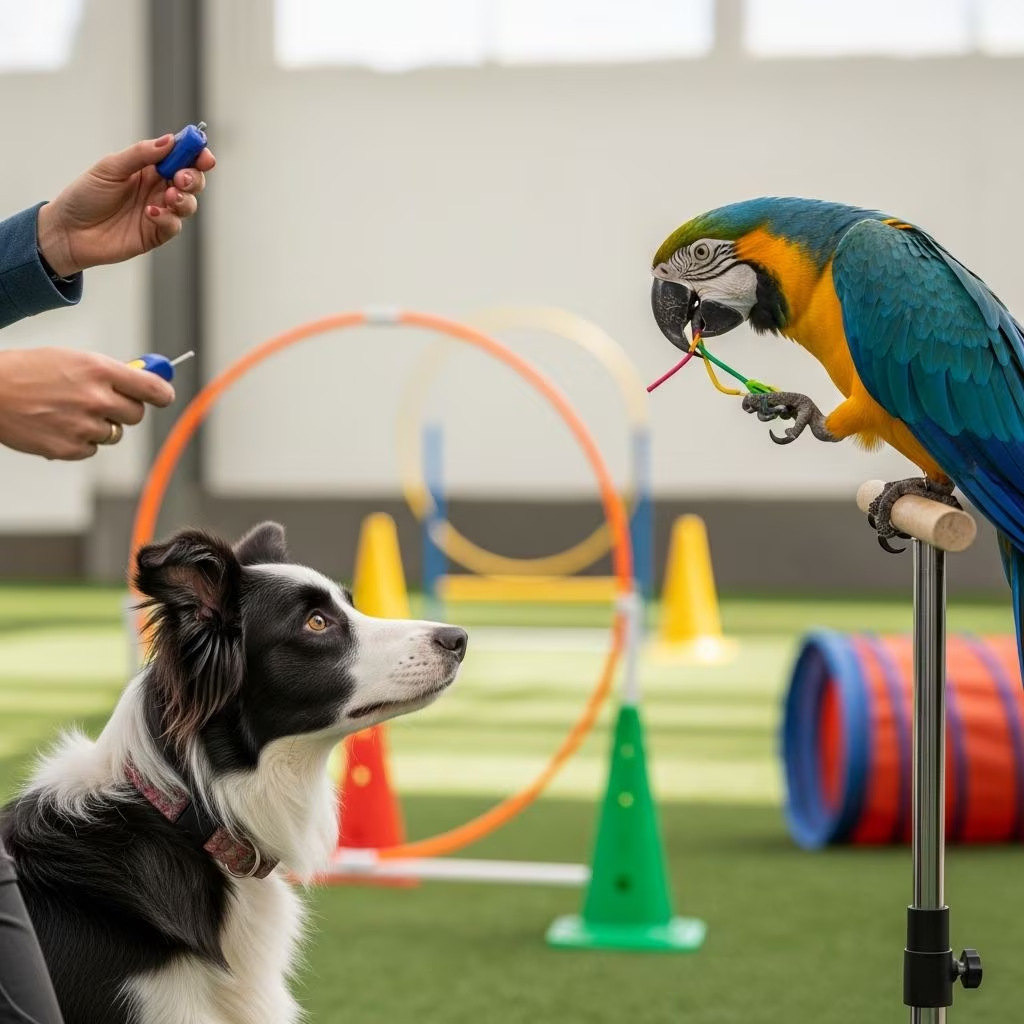
Training dogs becomes profoundly more effective when you draw lessons from other animals. By applying techniques honed on chickens, zoo creatures, and more, trainers develop sharper timing, deeper empathy, and versatile tools like clickers and targeting. This approach fosters not just obedience but lasting partnerships built on trust and understanding.
Why Train Beyond Dogs?
Dogs are uniquely attuned to humans, making initial bonds easy. Yet this familiarity can breed complacency. Working with less domesticated species forces precision in communication and reinforcement. Chickens, for instance, demand exact timing with clickers—sounds marking perfect behaviors instantly followed by treats. This precision translates directly to dogs, eliminating vague praise that confuses them.
Exotic animals teach patience and relationship-building from scratch. Unlike dogs, tigers or primates start wary, requiring consistent rewards to build trust. These skills refine dog training by emphasizing the animal’s viewpoint: what motivates them, what scares them, and how to make cooperation rewarding.
- Precision timing: Clickers bridge the gap between action and reward.
- Empathy boost: Seeing through non-dog eyes uncovers universal motivators.
- Versatile behaviors: Targeting and stationing work across species.
Mastering Clicker Fundamentals Across Animals
Clicker training revolutionizes animal handling by using a distinct sound as a precise marker. The “click!” tells the animal exactly which behavior earned a treat, speeding learning without physical force. Owners of any species can adopt this because it relies on consistency, not strength or intimidation.
Start simple: charge the clicker by pairing its sound with treats repeatedly until the animal anticipates food on hearing it. Then, capture spontaneous behaviors like a chicken pecking a target or a dog sitting. Reward only the desired action, shaping it through successive approximations—breaking complex tricks into tiny, achievable steps.
| Species | Key Clicker Benefit | Dog Training Application |
|---|---|---|
| Chickens | Forces split-second timing | Sharper recall cues |
| Tigers | Builds trust remotely | Reduces leash tension |
| Primates | Encourages problem-solving | Boosts impulse control |
Workshops teaching chicken training have surged because results are immediate and visible. A chicken weaving through an agility course demonstrates your command of markers, directly improving dog heeling or stays.
Targeting: The Universal Behavior Builder
Targeting involves teaching an animal to touch a specific object, like a stick or ball, with nose, paw, or beak. This foundational skill opens doors to chains of behaviors without direct handling, ideal for safety with large or shy animals.
For dogs, basic nose targeting evolves into heel work: hold the target at your side, click and treat touches, then fade the target while marking position. Exotic trainers use it for medical checks—touch a scale for weighing—or enrichment games. Dogs benefit similarly: target a mat for calm settling during visitors.
Variations abound: paw targets for tricks, mouth targets for retrieves. Practice across sessions builds fluency, turning reluctant learners into eager participants.
- Present target, wait for voluntary touch.
- Click and treat immediately.
- Add duration: hold touch for counts.
- Move target to shape positions.
Stationing for Focus and Calm
Stationing means training an animal to go to and stay at a designated spot, like a mat or platform. This creates a reliable starting point for sessions, reducing anxiety and building proximity comfort.
With skittish zoo animals, weeks of stationing precede advanced work. Tigers learn to sit at enclosure fronts for treats; primates station near gates. Dogs gain the same: a bed station prevents jumping greetings, fostering polite waits.
Reinforce heavily at first, thinning schedules as reliability grows. Pair with calm cues like “place” to associate spots with relaxation. This counters high-drive distractions, channeling energy productively.
Observational Mastery and Body Language
Elite trainers excel at observation, noting subtle cues: ear flicks signaling confusion, tail wags indicating joy. Training other species hones this, as chickens lack expressive faces and exotics demand reading micro-signals.
Body language matters more than words. Relaxed posture invites approach; tense shoulders signal stress. Mirror the animal’s calm to de-escalate reactivity. Dogs mirror humans instinctively—your steady stance quiets their frenzy.
Track environmental factors: wind direction affecting scents, footing impacting confidence. Adjust sessions accordingly for peak learning.
Building Deep Relationships Through Reinforcement
Relationships thrive on consistent value exchange. Feed, play, and care strategically to associate you with positivity. Dogs take this for granted; other species teach earning it deliberately.
Shift goals from mere compliance to character development: confidence, focus, sociability. Use play to rehearse real-world skills—chasing toys mimics predation safely, building control.
Avoid pitfalls like unbalanced reinforcement. Differential methods reward alternatives to unwanted actions, like sitting over lunging, reshaping emotional responses.
Overcoming Common Training Hurdles
High-prey-drive breeds chase instinctively, rehearsing hunt in play. Normalize by redirecting to toys, using clickers to mark disengages. Conditioned interrupts like “leave it” pair with rewards, outperforming rewards alone.
For reactive dogs, build owner-look defaults: click glances amid triggers, pairing with high-value treats. Patience prevents escalation.
- Identify triggers early via observation.
- Counter-condition with parallels: triggers predict goodies.
- Gradually desensitize distances.
Practical Drills for Multi-Species Insights
Simulate cross-training at home. Use a dowel for targeting practice. Set up mat stations with treats. Observe neighborhood squirrels through your dog’s eyes to preempt chases.
Enroll in clicker classes—many feature chickens for unbiased skill checks. Track progress journals: note body cues, timing successes, behavior chains.
FAQs
Is clicker training suitable for all dogs?
Yes, its marker precision aids puppies, rescues, and seniors, accelerating learning without force.
How long until targeting helps reactive dogs?
Weeks of daily shorts yield focus shifts; consistency is key.
Why station exotic animals first?
It builds safe proximity, easing all subsequent behaviors—mirrors dog calm zones.
Can I train chickens at home?
Absolutely; cheap, quick feedback loops sharpen any trainer’s timing.
Does body language really override verbal cues?
Often yes—animals prioritize visual signals, so align yours with intent.
Advanced Applications: From Play to Precision Work
Integrate into sports: agility uses stationing for line-ups, targeting for contacts. Therapy dogs station during sessions, targeting for gentle interactions. Herding mimics predation safely via reinforced recalls.
Character focus yields resilient partners. Encourage thinking: puzzle toys post-clicker sessions, varying routines to prevent rote responses.
Long-term, this mindset transforms challenges into opportunities. A chasing dog becomes a trail partner; shy pups gain boldness. Cross-species wisdom ensures holistic growth.
References
- Training Other Species to Become a Better Dog Trainer — Whole Dog Journal. 2023-01-15. https://www.whole-dog-journal.com/training/training-other-species-to-become-a-better-dog-trainer/
- Animal Training 101 — Talented Animals Blog. 2024-05-20. https://talentedanimals.com/blog/animal-training-101/
- How Exotic Animals Made Me a Better Trainer — The Ranch Clicker Training. 2023-08-10. https://theranch.clickertraining.com/how-exotic-animals-made-me-a-better-trainer/
- Predation and Dogs: Normalizing Behavior — Academy for Dog Trainers. 2024-02-28. https://academyfordogtrainers.com/predation-and-dogs-normalizing-behavior/
- Understand Your Dog’s Prey Drive To Enrich Your Life Together — YouTube (Grisha Stewart). 2023-11-12. https://www.youtube.com/watch?v=uHBLvBj0Jqo



