

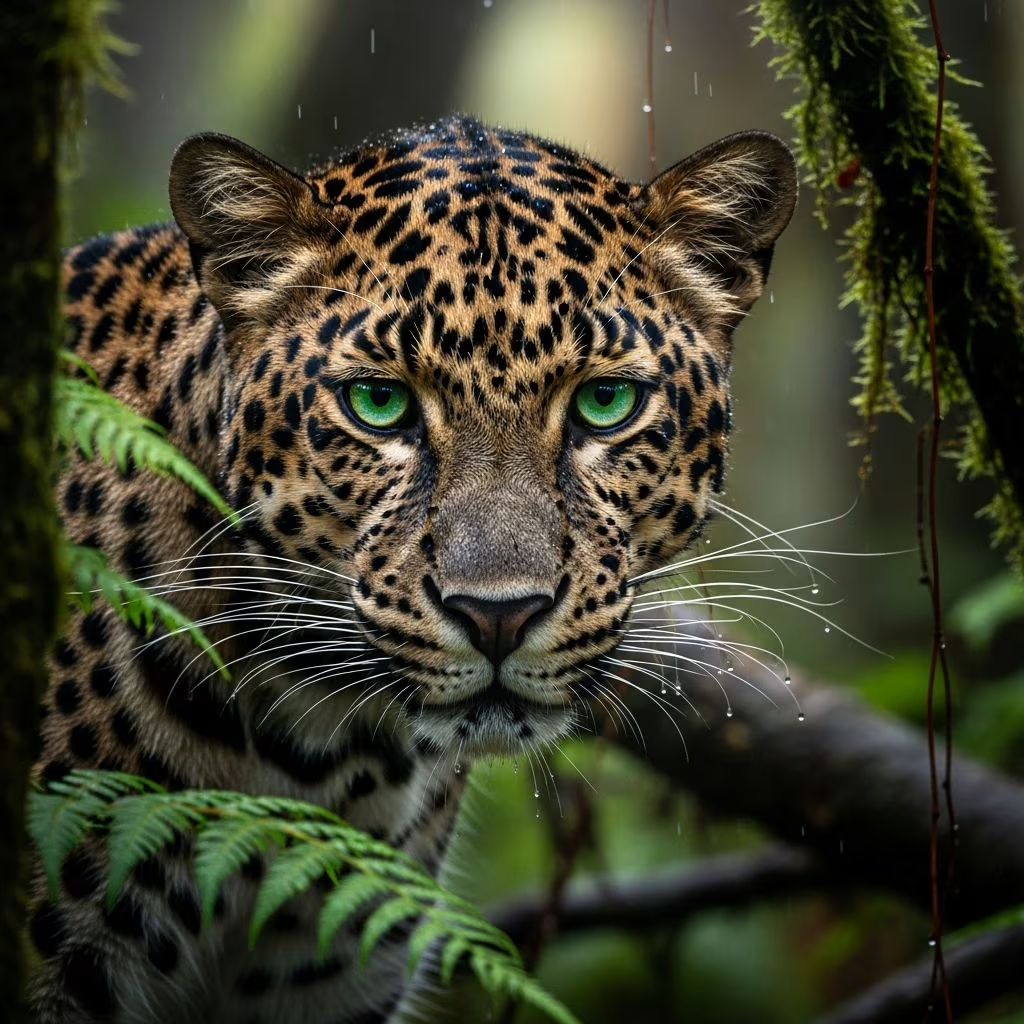
Wild cats represent some of the planet’s most iconic predators, yet many teeter on the brink of disappearance. Critically endangered felines face severe population declines due to habitat fragmentation, illegal hunting, and climate change. This article delves into the most vulnerable species, highlighting their unique traits, pressing dangers, and hopeful recovery strategies based on recent assessments.
The Gravity of Feline Extinction Risks
According to the IUCN Red List, numerous wild cat species classify as critically endangered, signaling populations with fewer than 250 mature individuals or contracting by at least 90% over recent decades. These cats inhabit diverse ecosystems from high-altitude mountains to dense rainforests, but shared threats like poaching for fur and body parts exacerbate their plight. Small wild cats often receive less attention than charismatic big cats, yet their losses disrupt entire food webs.
- Population Metrics: Critically endangered status triggers urgent action, with many species showing ongoing declines.
- Global Distribution: Found across Asia, Africa, South America, and Europe, reflecting widespread environmental pressures.
- Conservation Priority: Targeted interventions have yielded successes, such as slight rebounds in select populations.
Amur Leopard: Ghost of the Russian Far East
The Amur leopard, or Panthera pardus orientalis, roams the temperate forests of Russia’s Primorye region and adjacent China. With spotted coats perfectly camouflaged against snowy backdrops, these elusive hunters prey on deer and hares. Recent estimates peg their wild numbers below 100, a stark improvement from near-extinction in the 2000s due to dedicated reserves.
Poaching for skins and bones drives their peril, compounded by inbreeding from tiny populations. Conservation triumphs include anti-poaching patrols and reintroduction programs, boosting genetic diversity through captive breeding. Camera traps reveal increasing sightings, offering glimmers of hope amid ongoing habitat encroachment from logging.
Iberian Lynx: Spain’s Striped Survivor
Once widespread across the Iberian Peninsula, the Iberian lynx (Lynx pardinus) now clings to fragmented scrublands in Spain and Portugal. Known for tufted ears and short tails, this medium-sized cat specializes in hunting rabbits, which comprise 80-90% of its diet. Downlisted from critically endangered to vulnerable in recent years, populations hover around 2,000 but remain precarious.
Rabbit disease outbreaks and road mortality pose acute risks, alongside genetic bottlenecks. Spain’s LIFE Iberlince project exemplifies success: habitat restoration and captive releases have tripled numbers since 2002. Continued monitoring via radio collars ensures adaptive management against emerging threats like climate-induced prey shifts.
Asiatic Cheetah: Iran’s Sprinting Rarity
The Asiatic cheetah (Acinonyx jubatus venaticus) inhabits Iran’s vast deserts, distinguished by its unmatched speed—up to 100 km/h in bursts—and distinctive mantle in cubs. Fewer than 50 roam free, primarily in Dasht-e Kavir Protected Area. Prey depletion from overgrazing livestock and retaliatory killings by herders fuel their decline.
Iran’s Cheetah Conservation Project deploys GPS collars and builds artificial water points, while community education reduces conflicts. Genetic studies underscore the need for metapopulation management to avert inbreeding depression.
Arabian Leopard: Arabian Peninsula’s Shadow Dweller
Panthera pardus nimr, the Arabian leopard, navigates rugged mountains from Oman to Yemen. Smaller than mainland kin, it sports pale coats suited to arid terrains. Critically endangered with under 200 individuals, isolated subpopulations face fragmentation.
Traps set for jackals inadvertently claim leopards, while habitat loss to development intensifies pressures. Oman’s Arabian Leopard Project employs camera grids and release pens, fostering wild births and expanding ranges.
Borneo Bay Cat: Rainforest Phantom
Endemic to Borneo, Catopuma badia—the bay cat—haunts lowland forests with its reddish-brown fur and long legs. Sightings are rare; perhaps 2,200 remain, though likely fewer. Logging and palm oil plantations obliterate their secretive habitats.
Local NGOs partner with indigenous communities for patrols, while protected areas like Deramakot Forest Reserve safeguard cores. Non-invasive genetics from scat samples track densities and movements.
Flat-Headed Cat: Southeast Asia’s Aquatic Hunter
Prionailurus planiceps thrives in wetlands from Thailand to Sumatra, its flattened skull aiding fish-catching prowess. Endangered with declining trends, numbers may fall below 2,500 due to drainage for agriculture.
Peat swamp destruction threatens this semi-aquatic specialist. Camera trap networks in Malaysia reveal foraging behaviors, informing wetland restoration priorities.
Andean Cat: High-Altitude Enigma
Leopardus jacobita patrols the Andes above 3,000 meters in Peru, Bolivia, Chile, and Argentina. With fluffy fur and striped faces resembling ancient felines, it hunts mountain viscacha amid sparse snowfields. Fewer than 1,400 adults persist.
Rodenticide poisoning from herder livestock and mining encroachments endanger it. The Andean Cat Alliance unites transboundary efforts, vaccinating vicuñas to bolster prey and installing nest boxes for rodents.
Conservation Strategies: Pathways to Recovery
Unified approaches combat feline crises. Protected areas expanded 20% globally since 2010, per IUCN data. Captive breeding pairs with rewilding, as in Iberian lynx programs, enhance viability.
| Species | Key Threats | Success Metrics |
|---|---|---|
| Amur Leopard | Poaching, logging | Population doubled since 2007 |
| Iberian Lynx | Prey disease, roads | From 62 to 2,000+ adults |
| Asiatic Cheetah | Grazing, conflict | Protected areas increased |
| Arabian Leopard | Traps, development | First wild cubs in years |
| Borneo Bay Cat | Deforestation | Improved camera data |
Community involvement proves pivotal: eco-tourism in leopard ranges generates revenue rivaling poaching profits.
Challenges Ahead: Emerging Pressures
Climate change alters prey distributions, forcing range shifts into human domains. Disease spillover from domestic cats introduces pathogens like feline leukemia. Illegal trade persists via dark web markets, demanding international enforcement.
Funding gaps hinder scaling successes; annual needs exceed $500 million for big cats alone.
FAQs on Endangered Wild Cats
What defines a critically endangered cat?
A species faces extremely high extinction risk in the wild, with populations often under 250 mature individuals.
Which wild cat has the smallest population?
The Asiatic cheetah, with fewer than 50 in Iran.
Can endangered cats be saved?
Yes, as evidenced by Iberian lynx recoveries through habitat and prey management.
How does poaching impact felines?
It targets skins, bones for traditional medicine, decimating numbers rapidly.
What role does the IUCN play?
It assesses statuses biennially, guiding global conservation priorities.
Individual Actions for Feline Futures
Support certified sustainable palm oil to curb deforestation. Advocate for stronger CITES enforcement. Donate to verified NGOs like Panthera or WWF. Reduce single-use plastics mitigating wetland pollution.
By amplifying awareness, we fortify defenses for these apex guardians of biodiversity.
References
- List of Endangered Species — Animal Welfare Institute. Accessed 2026. https://awionline.org/content/list-endangered-species
- Endangered Cat Species List — Wild Cat Family. 2025-11. https://www.wildcatfamily.com/wild-cat-lists/endangered-cat-species-list/
- 2024 Endangered Cat Species List — Big Cat Rescue. 2024. https://bigcatrescue.org/conservation-news/2024-endangered-cat-species-list
- IUCN Red List Search: Felidae — IUCN. Accessed 2026. https://www.iucnredlist.org/fr/search?taxonomies=101738&searchType=species
- On the brink of extinction: The 11 rarest cats — Discover Wildlife. Accessed 2026. https://www.discoverwildlife.com/animal-facts/mammals/worlds-rarest-cats



