
Crimson Rosella: Personality, Food & Care Guide
Complete guide to crimson rosella care, diet, behavior and personality for pet owners.
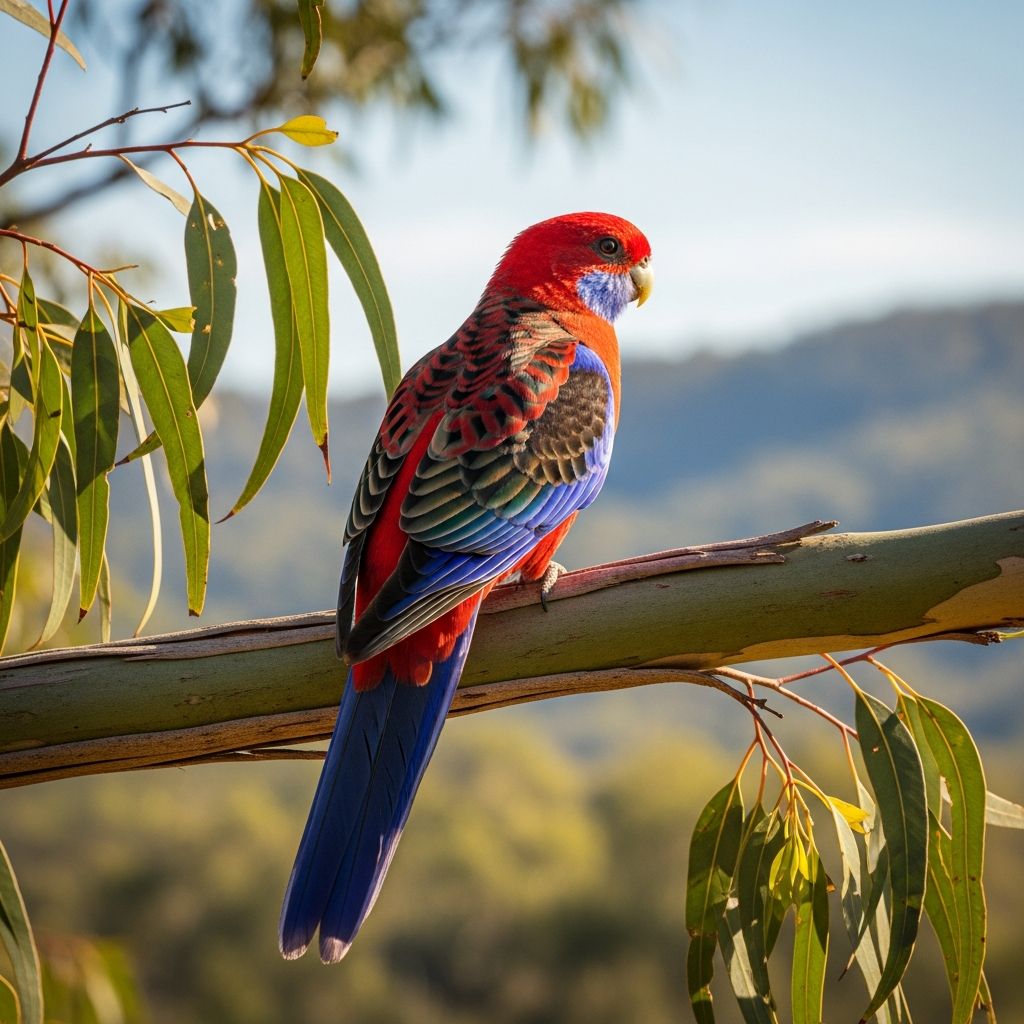
Crimson Rosella: A Complete Pet Care & Personality Guide
The crimson rosella is one of the more popular rosella species and for good reason. With their striking appearance and captivating personality, these medium-sized parrots have become beloved companions for bird enthusiasts worldwide. Native to eastern and southeastern Australia, crimson rosellas are commonly seen in parks and gardens in their native habitat. Their colors are eye-catching, and their whistle sounds are equally enchanting, making them a favorite choice for those considering adding a feathered friend to their household.
Physical Characteristics & Identification
The crimson rosella is an eye-catching bird distinguished by its brilliant crimson body with contrasting indigo-blue face and wings, making it visually striking among other parrot species. These medium-sized parrots typically measure between 30 to 37 centimeters in height and weigh between 136 to 170 grams. Their distinctive long, scalloped tail features blue and black bands that enhance their elegant appearance, while their strong, broad beak is ideal for feeding on a variety of seeds and fruits.
Young crimson rosellas are fascinatingly different from their adult counterparts. Juveniles display olive-green to yellowish-olive plumage initially, which gradually transforms into an adult’s characteristic crimson and blue coloration. This color transformation is a gradual process that takes approximately 15 months, making it challenging to recognize a young crimson rosella without knowledge of their early coloration. All juveniles feature the characteristic blue cheeks from a young age, providing one consistent identifier across age groups.
Color Variations & Forms
Crimson rosellas exhibit several color forms beyond the nominate bird’s predominantly red plumage. The ‘Yellow Rosella’ has crimson areas replaced with light yellow and a more greenish tail. The ‘Adelaide Rosella’ is intermediate in color, ranging from yellow with a reddish wash to dark orange. Birds from northern Queensland are generally smaller and darker than their southern counterparts. All color forms maintain similar patterns with the distinctive blue cheeks and patterned wings characteristic of the species.
Personality & Behavior
Understanding the personality of crimson rosellas is essential for prospective owners. These birds generally are not as cuddly as other parrot species. A rosella might not tolerate petting but will be content to ride around on your shoulder, making them suitable companions for those who appreciate a more independent bird. A very tame rosella is a good bird for a child who is mature enough to behave properly around any bird. However, as with all birds, there is always the possibility of biting, so care should be taken with a child’s tender fingers.
Rosellas are somewhat social birds that make great aviary birds and can retain their pet quality in a flighted situation if owners take the time to play with them regularly. In the wild, young crimson rosellas typically travel together in flocks, while adult birds tend to gather in small groups or pairs. Crimson rosellas aren’t afraid to get close to humans and may come by to say hello, particularly if you have something to feed them. These birds can be chatty and are usually heard giving chirps or clucks, although they will start shrieking if threatened or scared.
Social Structure & Communication
Outside of the breeding season, crimson rosellas tend to congregate in pairs or small groups and feeding parties. The largest groups are usually composed of juveniles, who will gather in flocks of up to 20 individuals. When they forage, they are conspicuous and chatter noisily. Crimson rosellas have a distinct, melodic call that is often heard before the birds are visible. Rosellas are monogamous birds, and during the breeding season, adult birds will not congregate in groups and will only forage with their mates. They exhibit courtship displays that include vocalizations and mutual feeding between pairs, behaviors that help strengthen pair bonds before the breeding season.
Diet & Nutrition
A proper diet is crucial for maintaining the health and vitality of your crimson rosella. These parrots have developed strong bills specifically for crushing and eating seeds and fruits. Their diet consists largely of seeds and fruits, making nutritious parrot food essential for pet crimson rosellas. Owners should provide high-quality pellets as the foundation of their diet, supplemented with fresh fruits and vegetables to ensure proper nutrition.
In their natural environment, crimson rosellas also aid in pest control by feeding on numerous types of insects. This natural behavior can be encouraged in captive birds through varied dietary offerings. A balanced diet should include vitamin and mineral supplementation to support bone health, immune function, and feather condition. Fresh water should be available at all times, and food should be changed regularly to prevent spoilage and bacterial growth.
Housing & Care Requirements
Providing appropriate housing is fundamental to the wellbeing of your crimson rosella. Several important features should be incorporated into any cage setup:
Cage Security & Design
The cage must be adequately secured with double security doors that can keep the birds from escaping and prevent predators from getting in. This dual-layer protection is essential for indoor and outdoor aviaries. Covered shelters within the cage provide a comfortable place to sleep and protect the birds on sunny days, offering necessary refuge and security.
Perching & Environmental Enrichment
Wooden perches are good spots for resting and provide easy spots for chewing, an important natural behavior for parrots. Chestnut, hazel, sycamore, eucalyptus, and ash branches make good perches for these birds and should be replaced regularly as they become worn or soiled. Environmental enrichment through toys, foraging opportunities, and regular interaction with caregivers is vital for mental stimulation and behavioral health.
Lifespan & Health Considerations
The crimson rosella can live up to 30 years in captivity, with typical lifespans ranging from 15 to 25 years. This lifespan is similar to other medium-sized parrots like the Galah or Cockatiel. Compared to larger parrots such as Macaws or Cockatoos, which can live for over 50 years, the rosella has a relatively moderate lifespan. Understanding this long-term commitment is essential before acquiring a crimson rosella as a pet.
Regular veterinary check-ups, a balanced diet, adequate exercise, and mental stimulation are all crucial factors in promoting longevity and quality of life. Birds should be monitored for signs of illness, including behavioral changes, appetite loss, or physical abnormalities. Preventative care through proper nutrition and living conditions can significantly impact a bird’s overall health and lifespan.
Breeding Information
For those interested in breeding crimson rosellas, understanding their breeding behaviors and requirements is essential. The breeding season typically occurs from September to January. Nesting sites are tree hollows, preferably located high in a tree and lined with wood shavings and dust. These tree hollows are typically greater than one meter in depth in tree trunks, limbs, and stumps, which may be up to 30 meters above the ground.
Breeding Cycle Details
| Breeding Parameter | Details |
|---|---|
| Breeding Season | September to January |
| Clutch Size | 4 to 8 eggs (usually 5) |
| Incubation Period | 20 days |
| Time in Nest | 35 days |
| Parental Care | Female incubates; both parents feed young |
| Post-Fledging Dependency | 35 days after leaving nest |
The nesting site is selected by the female, and once chosen, the pair will prepare it by lining it with wood debris made from the hollow itself by gnawing and shredding it with their beaks. They do not bring in material from outside the hollow. Only one pair will nest in a particular tree, and pairs will guard their nest by perching near it and chattering at other rosellas that approach. They will also guard a buffer zone of several trees’ radius around their nest, preventing other pairs from nesting in that area.
The female alone incubates the white eggs for 20 days. For the first six days after hatching, only the mother feeds the nestlings. After this time, both parents feed them. Young birds typically become independent in February, after which they spend a few more weeks with their parents before departing to become part of a flock of juveniles. Juveniles reach maturity and gain adult plumage at approximately 16 months of age.
Suitability as Pet Birds
Crimson rosellas make excellent pets for the right owner. Their combination of striking appearance, moderate size, and relatively manageable personality makes them suitable for experienced bird owners and families with older children. These birds thrive when provided with appropriate housing, nutrition, social interaction, and mental enrichment. Their somewhat independent nature means they may not demand the constant attention required by some other parrot species, making them ideal for owners seeking a more self-reliant feathered companion.
The ecological significance of these birds extends beyond their appeal as pets. In their native habitats, the nests of the Crimson Rosella, located in hollows of large trees, assist in the sustenance of tree-dwelling microecosystems. As a prey species, they are crucial for maintaining the food chain, supporting predatory animals such as larger birds and mammals. Thus, the Crimson Rosella contributes in multiple ways to the sustenance, growth, and balance of the ecosystems it inhabits.
Frequently Asked Questions About Crimson Rosellas
Q: How long do crimson rosellas typically live?
A: Crimson rosellas can live up to 30 years in captivity, with typical lifespans ranging from 15 to 25 years. Their longevity makes them a long-term commitment for pet owners.
Q: Are crimson rosellas good pets for families with children?
A: Yes, a very tame crimson rosella is a good bird for a child who is mature enough to behave properly around any bird. However, supervision is necessary as all birds have the possibility of biting.
Q: What do crimson rosellas eat?
A: Crimson rosellas primarily eat seeds and fruits. Pet birds should be provided with high-quality parrot food supplemented with fresh fruits, vegetables, and appropriate nutritional supplements.
Q: Can crimson rosellas be kept in aviaries?
A: Yes, rosellas make great aviary birds and can retain their pet quality in a flighted situation if owners take the time to play with them regularly.
Q: Do crimson rosellas like to be petted?
A: Crimson rosellas generally are not as cuddly as other parrot species and might not tolerate petting, but they will be content to ride around on your shoulder.
Q: How much space does a crimson rosella need?
A: Crimson rosellas require adequate cage space with wooden perches, sheltered areas for sleeping, and double security doors. They benefit from aviary-style housing when possible.
Q: What makes crimson rosellas different from other rosella species?
A: Crimson rosellas are distinguished by their bright blue cheek patches, brilliant crimson body coloration, and blue wings. They are among the most popular rosella species for both wild observation and captive care.
References
- Crimson Rosella — The Australian Museum. 2024. https://australian.museum/learn/animals/birds/crimson-rosella/
- Crimson Rosella – Platycercus elegans — BirdLife Australia Birds in Backyards. 2024. https://www.birdsinbackyards.net/species/Platycercus-elegans
- What to Know About the Crimson Rosella — WebMD Pets. 2024. https://www.webmd.com/pets/what-to-know-about-the-crimson-rosella
- Crimson Rosella — Wikipedia. 2024. https://en.wikipedia.org/wiki/Crimson_rosella
- Crimson Rosella Personality, Food & Care — Lafeber Company. 2024. https://lafeber.com/pet-birds/species/crimson-rosella/
- My Bird Buddy – Crimson Rosella Species Guide — My Bird Buddy. 2024. https://app.mybirdbuddy.com/birds/northern-flicker/df34363c-6384-4b2d-81ae-c8a9455ea2fd
Similar Articles








Read full bio of medha deb


