

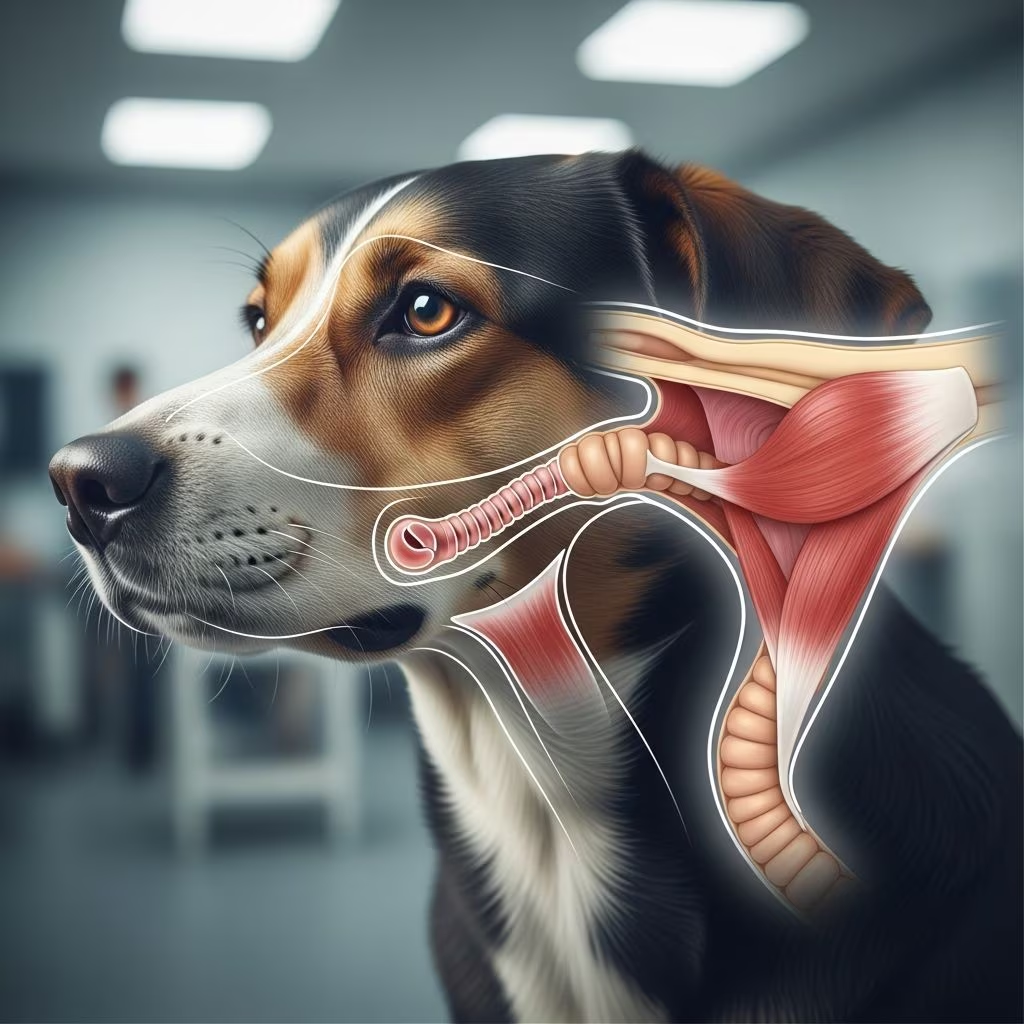
This condition represents a key motility issue at the upper esophagus, where the cricopharyngeus muscle fails to relax properly during swallowing, leading to food retention and potential complications in small animals like dogs and cats.
Fundamentals of Upper Esophageal Function
The esophagus serves as a vital conduit for food and water from the pharynx to the stomach, relying on coordinated muscle actions. In small animals, the upper esophageal sphincter (UES), primarily the cricopharyngeus muscle, acts as a gatekeeper. Normally, it relaxes in response to a swallow, allowing passage, then contracts to prevent reflux. When this mechanism falters, termed cricopharyngeal achalasia or UES achalasia, swallowed material pools in the pharynx or proximal esophagus, causing regurgitation and risking aspiration pneumonia.
Anatomical parallels between canines and humans highlight why dogs model esophageal disorders well. Both feature similar striated muscle in the upper esophagus transitioning to smooth muscle lower down, with peristaltic waves propelling contents. Disruptions often stem from neuromuscular issues or structural anomalies, prevalent in breeds with conformational predispositions.
Recognizing Clinical Manifestations
Owners frequently notice signs shortly after weaning, as puppies or kittens attempt solid foods. Common indicators include:
- Immediate regurgitation of undigested food or milk, often unchanged in appearance.
- Excessive salivation or gagging during meals.
- Respiratory distress from aspiration, manifesting as coughing or nasal discharge.
- Weight loss, dehydration, and failure to thrive due to poor nutrient intake.
- Recurrent pneumonia, signaled by fever, lethargy, and abnormal lung sounds.
These symptoms mimic other conditions like megaesophagus or foreign bodies, necessitating thorough veterinary evaluation. Brachycephalic breeds, such as Bulldogs or Pugs, face heightened risks due to airway obstructions exacerbating reflux and motility problems.
Underlying Etiologies and Risk Factors
Cricopharyngeal achalasia arises from primary dysfunction of the cricopharyngeus muscle or secondary to pharyngeal issues. Primary forms link to idiopathic neuropathy or congenital defects, while secondary cases associate with:
- Myasthenia gravis or hypoadrenocorticism affecting nerve-muscle signaling.
- Inflammation from gastroesophageal reflux (GER), common post-anesthesia or in brachycephalics.
- Structural lesions like strictures from prior esophagitis or foreign bodies.
GER, the leading esophageal issue in dogs, weakens the lower esophageal sphincter (LES), allowing acid backflow that irritates the entire esophagus, including the upper sphincter. Chronic vomiting, as in parvovirus cases, compounds this by promoting esophagitis.
Diagnostic Approaches
Accurate diagnosis requires multimodal imaging and functional tests. Initial steps include:
- Plain radiographs to detect aspiration pneumonia or megaesophagus dilation.
- Contrast videofluoroscopy (barium swallow) to observe UES relaxation failure and pharyngeal retention.
- Endoscopy for direct visualization of inflammation, strictures, or foreign material.
Advanced techniques like high-resolution manometry (HRM) measure pressures, revealing hypertonic UES or weak peristalsis, though less common in veterinary practice. pH-impedance testing quantifies reflux events. Bloodwork rules out systemic diseases, while neuromuscular tests confirm myasthenia.
The table below compares key diagnostic tools:
| Method | Strengths | Limitations |
|---|---|---|
| Videofluoroscopy | Dynamic swallowing view | Radiation exposure |
| Endoscopy | Biopsy capability | Requires sedation |
| HRM | Pressure metrics | Specialized equipment |
| Plain X-rays | Quick, accessible | Static, misses motility |
Therapeutic Strategies
Treatment targets symptom relief, complication prevention, and function restoration. Conservative measures include:
- Upright feeding with elevated bowls to leverage gravity.
- Soft, frequent small meals of low-fat, high-moisture diets.
- Sucralfate or proton-pump inhibitors (e.g., omeprazole) for esophagitis protection.
- Prokinetics like cisapride to enhance motility, preferred over metoclopramide.
For refractory cases, surgical intervention via cricopharyngeal myectomy—partial muscle resection—yields good outcomes, especially in young dogs, with success rates over 80% in reducing regurgitation. Balloon dilation treats associated strictures effectively, avoiding surgery. Gastrostomy tubes bypass the esophagus during healing.
Aspiration pneumonia demands antibiotics, oxygen therapy, and monitoring. Long-term, addressing breed-specific risks like BOAS in brachycephalics improves prognosis.
Preventive Measures and Prognosis
Early intervention prevents irreversible damage like strictures or chronic pneumonia. Owners should monitor weaning puppies closely, transitioning gradually to solids. Routine anesthesia protocols minimize GER risks with preemptive antacids.
Prognosis varies: congenital cases respond well to myectomy if uncomplicated, while secondary achalasia depends on resolving the primary issue (e.g., myasthenia treatment). Untreated, morbidity from malnutrition and pneumonia is high.
Related Esophageal Conditions
Cricopharyngeal achalasia often coexists with broader esophageal afflictions:
- Megaesophagus: Generalized dilation from motility failure, managed similarly with positioning.
- Esophagitis: Erosive inflammation from reflux, treated with acid suppression.
- Strictures: Annular scars post-injury, dilated via endoscopy.
- Diverticula: Outpouchings trapping food, requiring resection.
Differentiating these guides targeted therapy, emphasizing comprehensive diagnostics.
Frequently Asked Questions (FAQs)
What breeds are most prone to cricopharyngeal achalasia?
Great Danes, Irish Setters, and brachycephalic breeds like Bulldogs show higher incidence due to genetic or conformational factors.
Can diet alone resolve symptoms?
Dietary modifications aid management but rarely cure primary dysfunction; surgery often needed for full relief.
Is surgery risky for small pets?
Myectomy is low-risk in experienced hands, with complications like infection rare and manageable.
How do I distinguish regurgitation from vomiting?
Regurgitation is passive, undigested; vomiting is active, with abdominal effort and bile.
What if my pet develops pneumonia?
Seek immediate care—antibiotics and supportive care are crucial to prevent fatalities.
This FAQ section addresses common owner concerns, promoting informed pet care.
Emerging Research Directions
Veterinary gastroenterology advances with HRM adaptation from human medicine, promising precise motility profiling. Translational studies using dogs for human achalasia therapies could revolutionize both fields. Ongoing trials explore neuromodulators and minimally invasive sphincter ablations.
References
- A Comparative Assessment of the Diagnosis of Swallowing Impairment in People and Dogs — PMC/NCBI. 2022-06-20. https://pmc.ncbi.nlm.nih.gov/articles/PMC9228035/
- Recognizing and treating esophageal disorders in dogs and cats — dvm360. 2023-01-15. https://www.dvm360.com/view/recognizing-and-treating-esophageal-disorders-dogs-and-cats
- What Are The Most Common Dog Esophagus Problems And Treatment Options — Safari Veterinary Care Centers. 2024-05-10. https://www.safarivet.com/blog/what-are-the-most-common-dog-esophagus-problems-and-treatment-options-in-houston-tx/
- Disorders of the Esophagus in Cats — Merck Veterinary Manual. 2025-02-01. https://www.merckvetmanual.com/cat-owners/digestive-disorders-of-cats/disorders-of-the-esophagus-in-cats
- Esophageal Swallowing Impairment in Canines — PMC/NCBI (section excerpt). 2022-06-20. https://pmc.ncbi.nlm.nih.gov/articles/PMC9228035/



