

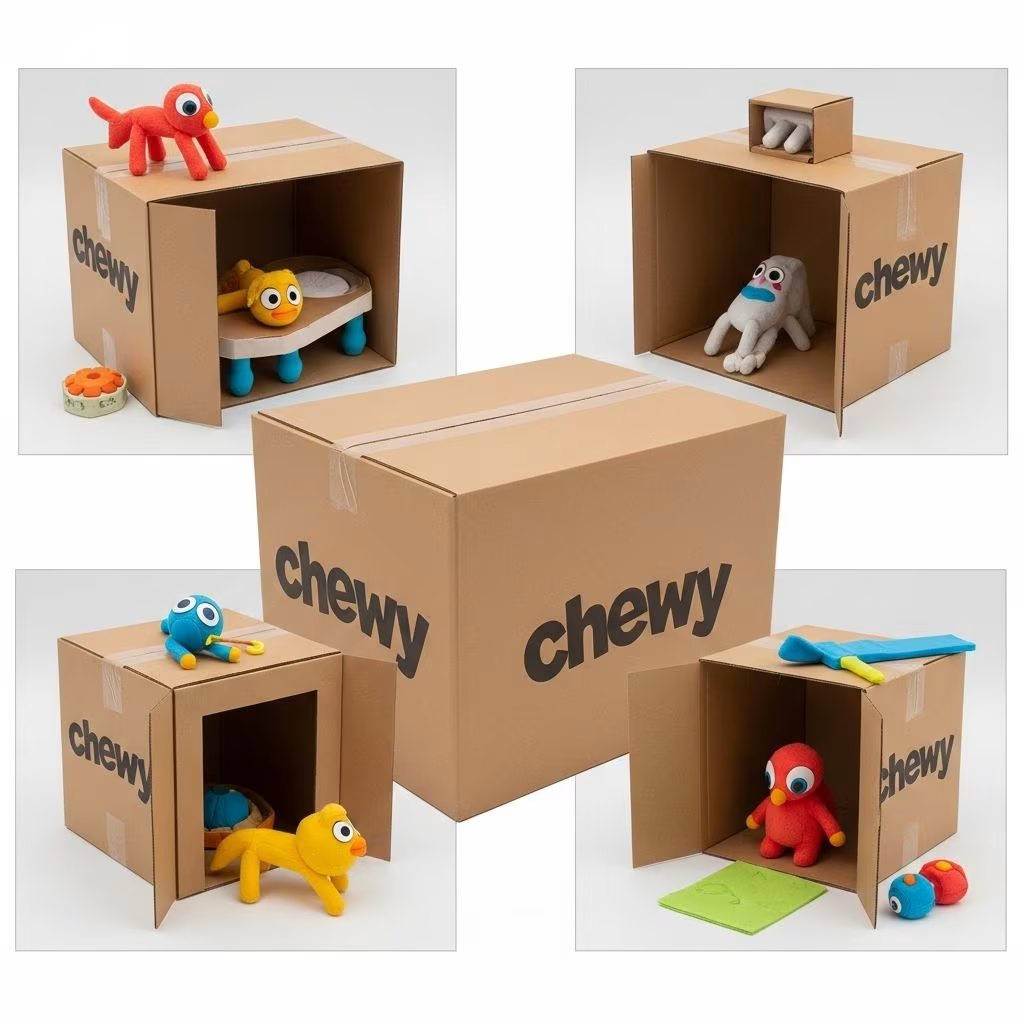
4 Creative Uses for Your Chewy Box: Kids Edition
When your pet supplies arrive from Chewy, you’re not just getting quality products for your furry friend—you’re also receiving a blank canvas for creativity. Rather than immediately tossing those sturdy cardboard boxes into recycling, consider the endless possibilities they offer for both entertainment and learning. Kids love building, creating, and playing, and Chewy boxes provide the perfect material for imaginative projects that cost nothing extra and teach valuable lessons about sustainability and resourcefulness.
Whether your children are looking for a rainy day activity or you want to encourage creative thinking, Chewy boxes can be transformed into everything from elaborate playhouses to educational toys. Not only do these projects provide hours of entertainment, but they also offer an excellent opportunity for kids and parents to bond over hands-on crafting. Let’s explore four fantastic ways to repurpose your Chewy boxes into exciting creations that will captivate your children’s imagination.
1. Build a Cardboard Playhouse or Fort
One of the most popular uses for Chewy boxes is constructing a personal playhouse or fort—a project that can keep kids entertained for hours. This classic DIY creation appeals to children of all ages and requires minimal additional materials beyond what you likely already have at home.
Why Kids Love It: A homemade cardboard playhouse provides a sense of ownership and accomplishment that store-bought structures simply cannot match. Children take pride in helping construct their own special space, and the customization possibilities are virtually limitless.
Materials You’ll Need:
– Multiple Chewy boxes (the more boxes, the larger your structure)- Packing tape or duct tape- Markers, paint, or construction paper for decoration- Scissors or utility knife (for adult use)- Optional: string lights, fabric scraps, or cushions for interior comfort
Construction Steps: Begin by arranging your boxes in the desired configuration—either stacked vertically to create a multi-story structure or arranged in a line for a single-level design. Securely tape the boxes together at all connection points. Cut out windows and doorways, leaving enough wall structure for stability. Let your children decorate the exterior and interior with markers, paint, or paper, creating their own personalized design. Add finishing touches like windows cut from clear plastic, a roofline created from additional cardboard, or interior furnishings like blankets and pillows.
Educational Value: Building a playhouse teaches children about spatial reasoning, structural engineering, and problem-solving. They learn to think about weight distribution, stability, and how different configurations affect the overall integrity of the structure.
2. Create an Obstacle Course or Maze
Transform your Chewy boxes into an exciting physical activity by constructing an indoor obstacle course or maze. This project combines creativity with active play, making it perfect for days when outdoor activities aren’t possible.
Design Possibilities: You can create a simple maze by arranging boxes in interconnected pathways on the floor, or build a more complex three-dimensional obstacle course with boxes arranged at different heights. Cut tunnels through some boxes and create jumping platforms with others, challenging kids to navigate the entire course.
Materials and Tools:
– 6-12 Chewy boxes (depending on your desired complexity)- Packing tape- Markers for labeling and decoration- Optional: foam padding for safety, fabric for roof coverage
Building Your Obstacle Course: Start by mapping out your design on the floor to ensure you have enough space. Arrange boxes to create different challenges—crawl tunnels, jump platforms, climbing walls, and weaving paths. Use tape to secure everything firmly, ensuring there are no unstable areas that could cause accidents. Decorate the course with markers or paint to make it visually engaging, perhaps creating a theme like a jungle adventure or space mission.
Physical and Cognitive Benefits: Obstacle courses promote gross motor skill development, balance, coordination, and body awareness. Kids also develop problem-solving skills as they figure out how to navigate different challenges efficiently.
3. Craft DIY Board Games and Activity Boxes
Chewy boxes can be transformed into board games, card holders, or activity boxes—a project that combines crafting with game creation. This activity encourages children to think creatively about game design and rules while creating something they can play repeatedly.
Game Ideas: Design a simple board game using the flat surface of a flattened box as your game board, decorate it with markers, and create game pieces from cardboard scraps or other household items. Alternatively, create a sensory activity box filled with textured materials, puzzles, or sorting activities for younger children.
Materials Needed:
– Chewy boxes (flat or assembled)- Markers, paint, or construction paper- Dice (store-bought or handmade)- Game pieces (buttons, coins, or handmade tokens)- Scissors- Optional: laminating sheets for durability
Creation Process: Decide on your game type and rules with your children. Design the board layout using markers or paint, including starting positions, obstacles, and goal spaces. Create accompanying cards or instruction sheets. For activity boxes, divide the interior of a sturdy box into sections using cardboard dividers, then fill each section with different activities or sensory items. This becomes a wonderful rainy-day resource that children can access independently.
Educational Components: Game creation teaches probability, mathematics, strategic thinking, and creative problem-solving. Children learn about game balance, rules, and what makes activities engaging for different age groups.
4. Design a Pet Playhouse for Your Cats or Small Animals
If your household includes feline or small furry friends, Chewy boxes make excellent pet furniture and enrichment toys. This project serves double duty—keeping your kids engaged in a creative activity while providing entertainment for your pets.
Why Pets Love Cardboard: Cats and small animals naturally gravitate toward boxes because they provide security, comfort, and a sense of personal territory. Cardboard boxes are perfect for scratching, climbing, and hiding—behaviors that are deeply ingrained in their nature.
Materials for Pet Projects:
– Large Chewy boxes (sturdy enough to support your pet’s weight)- Packing tape- Markers for decoration- Scissors or utility knife- Optional: pet bed, catnip, scratching posts, or climbing platforms
Project Ideas: Create a simple cat house by cutting an entrance hole in one side of a box, then personalizing it with paint or markers. For a more elaborate project, stack multiple boxes to create a cat condo with multiple levels and entry points. Kids can design window openings for cats to look out from, create climbing platforms between boxes, or even build a castle-inspired structure with turrets and drawbridges.
Customization Options: Allow children to decorate their pet creation however they imagine—painting it to match your home décor, adding a cozy bed inside, or creating themed designs. The key is that the finished project should be safe for your pets, with no sharp edges or toxic materials.
Benefits for All: This project teaches children about animal behavior and enrichment while creating a functional item that genuinely benefits your pets. Kids learn responsibility by contributing to their pet’s comfort and happiness, and they can enjoy watching their pets use and enjoy the creation they made.
Additional Tips for Successful Chewy Box Projects
Safety Considerations: Always supervise younger children when using cutting tools. Ensure all taped edges are secure and there are no sharp corners or exposed staples that could cause injury. For projects involving pets, make sure all materials are non-toxic and the structure is stable and won’t collapse under the animal’s weight.
Decoration Ideas: Kids can personalize their projects using markers, paint, construction paper, fabric scraps, or printed images. Encourage them to develop themes or designs that reflect their interests—whether that’s favorite animals, space themes, or fantasy castles.
Sustainability Message: These projects teach children about reducing waste and finding creative second uses for materials. Discussing how recycling and repurposing materials is good for the environment helps instill eco-friendly values from a young age.
Storage and Reuse: When projects are no longer in use, boxes can still be recycled. However, many structures can be disassembled and reassembled in new configurations, extending their playful life indefinitely.
Frequently Asked Questions (FAQs)
Q: Are Chewy boxes safe for kids to play with?
A: Yes, Chewy boxes are safe for kids when used properly. They’re made from sturdy, non-toxic cardboard. However, always supervise younger children and ensure all sharp edges are covered or removed, and that the structure is stable and won’t collapse.
Q: What size Chewy box works best for these projects?
A: Larger boxes work best for most projects, as they provide more space and are easier for children to cut and decorate. However, smaller boxes can be combined to create larger structures, giving you flexibility regardless of the box sizes you receive.
Q: How long will these cardboard projects last?
A: With proper care and indoor use, cardboard box projects can last several months to a year or more. Avoid exposing them to moisture, and periodically check for wear and tear. Reinforcing tapes and joints as needed can extend the lifespan significantly.
Q: Can I use damaged or dented Chewy boxes for these projects?
A: Absolutely! Dents and minor damage don’t affect the functionality of your projects. In fact, using boxes that might otherwise be discarded is a great lesson in sustainability and resourcefulness.
Q: What’s the best way to decorate cardboard boxes?
A: Markers and paint work well on cardboard and dry quickly. Construction paper can be glued on for added color and texture. For outdoor durability, consider using acrylic paint. Avoid overly wet paints that can cause the cardboard to deteriorate.
Q: Are there any age restrictions for these projects?
A: These projects can be adapted for any age group. Younger children (3-5) can help decorate while adults handle cutting and assembly. Older children (6+) can participate in more of the construction with supervision, and tweens and teens can plan and execute entire projects independently.
Q: Can pets get hurt from playing in cardboard boxes?
A: Cardboard is generally safe for pets. However, ensure there are no staples, sharp edges, or toxic adhesives exposed. Monitor your pet initially to ensure they interact with the box safely, and check periodically for deterioration.
References
- Chewy Box Craft: DIY Cat House Cat Furniture Castle Craft — Chewy Editors. Chewy Inc. https://www.chewy.com/education/cat/pet-parenting/chewy-box-cat-castle



