

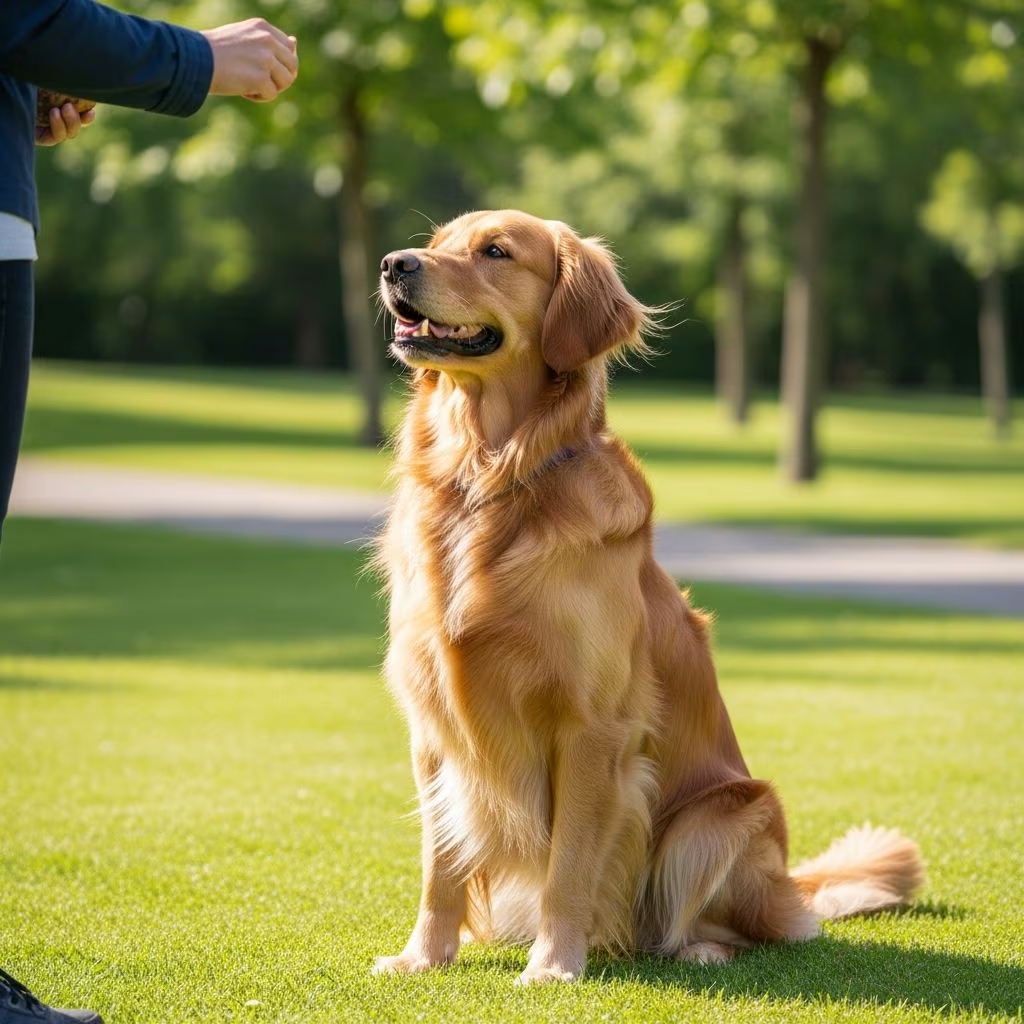
Training your dog with standard commands like sit or stay forms a solid foundation, but incorporating creative variations elevates the process. These unique cues allow for clearer communication, reduce confusion in multi-dog homes, and add excitement to sessions. By selecting words that resonate with your lifestyle and your dog’s temperament, you create a personalized vocabulary that fosters better obedience and strengthens your relationship.
Why Choose Unique Commands for Your Dog
Dogs thrive on consistency, yet everyday words like ‘sit’ can blend into background noise amid family chatter. Opting for distinctive terms such as ‘park it’ instead prevents mix-ups and sharpens focus. This approach also accommodates dogs with hearing impairments through paired hand signals or non-verbal cues, making training inclusive. Moreover, fun commands keep sessions lively, preventing boredom and boosting retention rates during practice.
Customization extends to household dynamics. In environments with children or other pets, commands like ‘freeze’ for stay signal immediate compliance without startling anyone. Research from canine behavior experts emphasizes that varied cues enhance cognitive development, as dogs learn to associate specific sounds with actions more reliably.
Essential Position Commands with Fresh Twists
Position-based instructions form the core of obedience training. Traditional ones work well, but creative alternatives provide clarity and engagement. Here’s a curated list of effective options:
- Park it: Directs the dog to lower its rear to the ground promptly. Ideal for greetings or mealtime control.
- Flop: Encourages full belly-down position, promoting relaxation in high-energy pups.
- Stand tall: Instructs the dog to rise on all fours, useful for grooming or vet exams.
- Front and center: Calls the dog to position directly in front of you, sitting neatly.
- Sidekick: Guides the dog to your left side in heel position, perfect for walks.
To teach these, pair the verbal cue with a lure like a treat, repeating consistently. Gradually fade the lure, rewarding only correct responses to build muscle memory.
Action-Oriented Commands for Daily Adventures
Actions propel your dog into motion, essential for play, exercise, and safety. Unique phrasing here prevents overlap with casual speech:
- Zoom here: A high-energy recall, summoning the dog from a distance with enthusiasm.
- Scatter: Releases the dog from a hold, signaling free movement after a stay.
- Backup: Prompts the dog to retreat, creating space in tight quarters.
- Circle back: Instructs a full loop behind you to heel position.
- Load up: Directs entry into cars, crates, or beds effortlessly.
Practice in low-distraction settings first, then introduce variables like toys or noises. Positive reinforcement, such as praise or toys, solidifies these behaviors over time.
Behavior Management Cues to Curb Mischief
Managing unwanted actions requires precise, calm directives. Creative commands interrupt distractions without escalating tension:
| Command | Purpose | Training Tip |
|---|---|---|
| Ignore | Avoid tempting items like food or objects | Cover item, reward for looking away, then uncover gradually |
| Release | Drop held items safely | Trade for higher-value treat; never chase |
| Chill out | Lower energy levels | Use in excited moments, pair with deep breaths as model |
| Outta there | Exit furniture or unwanted spots | Gently guide down, reward four-on-floor |
| Easy does it | Slow pace during walks or eating | Sing-song tone to de-escalate arousal |
These cues promote self-control, reducing incidents like counter surfing or jumping. Consistency across family members ensures uniform responses.
Fun and Trick Commands to Spark Joy
Beyond utility, playful commands enrich bonding and mental stimulation. They showcase your dog’s intelligence while providing exercise:
- Paw party: Lift one paw for shake, great for social greetings.
- Twirl: Spin in a circle on command, energizing playtime.
- High five: Tap paw to hand at shoulder height.
- Wave hello: Paw lift without contact, charming for visitors.
- Army crawl: Belly wiggle forward, building core strength.
Break tricks into micro-steps: shape behaviors by rewarding approximations. Sessions of 5-10 minutes daily yield impressive results without fatigue.
Advanced Navigation and Utility Commands
For active lifestyles involving hikes, travel, or agility, specialized cues streamline interactions:
- Tread lightly: Pause at thresholds like doors or curbs.
- Pathfinder: Sniff and follow a trail, enhancing scent work.
- Harness time: Hold still for gear attachment.
- Reverse gear: Back away from paths or people.
- Spot on: Nose-touch to hand, redirecting focus.
Integrate these into routines, like pre-walk prep. Hand signals amplify effectiveness, especially outdoors.
Mastering Consistency and Reinforcement Techniques
Success hinges on repetition and positivity. Use high-value rewards initially, transitioning to life rewards like walks. Mark correct actions with a clicker or enthusiastic ‘yes!’ to bridge cue and reward. Vary command volumes to mimic real-life scenarios, from whispers indoors to shouts afar.
In multi-pet homes, individualized cues prevent confusion—perhaps ‘blue sit’ for one dog. Track progress in a journal to identify sticking points. Professional trainers recommend 15-minute daily drills for optimal retention.
Common Pitfalls and How to Avoid Them
Avoid overloading with too many new words at once; master 3-5 before expanding. Never repeat commands endlessly—reset with a motivator if ignored. Steer clear of punishment, as it erodes trust. If progress stalls, consult a certified trainer for tailored advice.
Frequently Asked Questions
Can puppies learn unique commands?
Yes, start simple from 8 weeks, using short sessions to match attention spans.
What if my dog ignores new cues?
Revert to basics, ensure motivation, and practice distraction-free first.
Are hand signals necessary?
They reinforce verbs, aid deaf dogs, and work in noisy environments.
How many commands are ideal?
20-30 covers essentials; prioritize safety and daily needs.
Do breeds affect command choice?
Tailor to energy levels—high-drive breeds suit action cues, calmer ones positional.
References
- Vocabulary Lessons for Dogs — The Naked Dog Training. 2019-01-29. https://www.thenakeddogtraining.com/traininghowtos/2019/1/29/vocabulary-lessons-for-dogs
- My List of Commands — Obedience Road. N/A. https://www.obedienceroad.com/blog/my-list-of-commands
- Top 10 Essential Dog Commands Every Owner Must Know — K9 Mania Dog Training. N/A. https://k9maniadogtraining.com/top-10-essential-dog-commands-every-owner-must-know/
- The Ultimate List Of Dog Trick Ideas — Success Dogs. N/A. https://www.successdogs.com/dog-training-lessons/dog-trick-ideas/
- A List of Dog Commands & Hand Signals for Beginners — Taste of the Wild Pet Food. N/A. https://www.tasteofthewildpetfood.com/articles/training-and-behavior/list-of-dog-commands-hand-signals-for-beginners/



